Freelance Software Engineers in Narayanganj
Sign Up
Post a job
Sign Up
Log In
Filters
2
Projects
People
Abdul Awal
pro
Dhaka, Bangladesh
Webflow, Framer, Astro, WordPress & Shopify Agency | UI/UX
New to Contra
Follow
Message
Webflow, Framer, Astro, WordPress & Shopify Agency | UI/UX

0
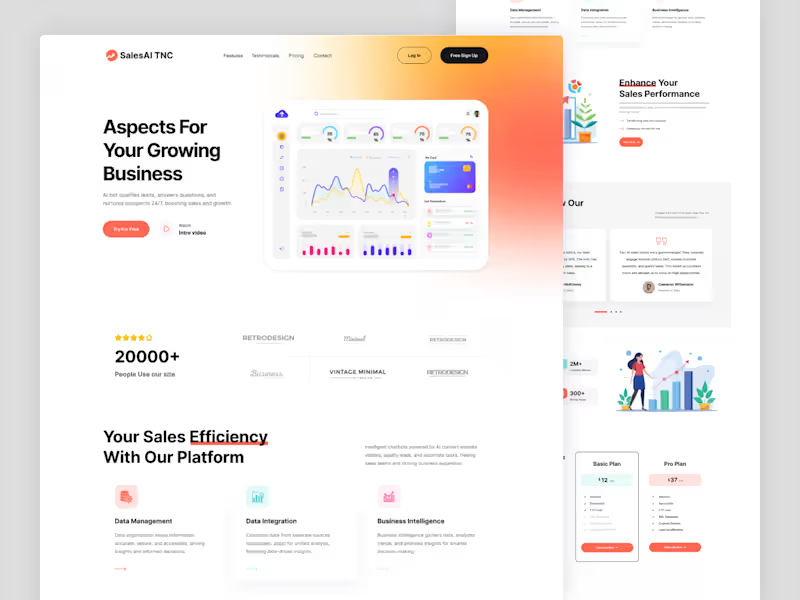
SalesAi TNC - Technology Website Template
0
2
0
ProjManage TNC - Technology Website Template
0
0
1
Luxury Yacht Rental Business Website template created as Figma, Webflow, Astro, Framer versions.
1
202
1
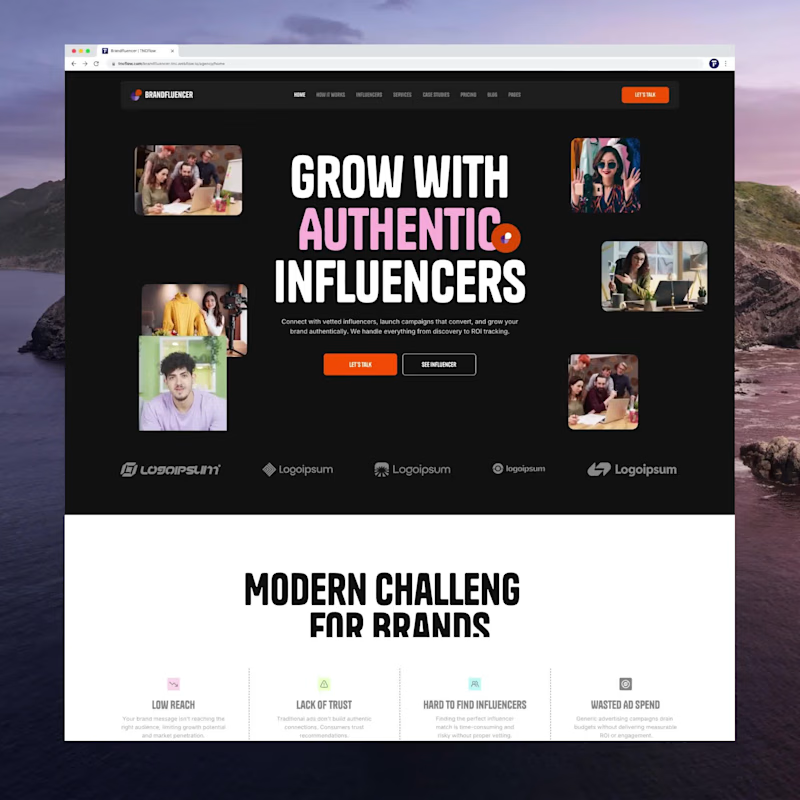
Multipurpose Influencer Marketing Website Template created as Webflow, Framer. Astro, Figma, HTML Versions.
1
198
Software Engineer
(2)
Follow
Message
Tousif Ahmed
Dhaka, Bangladesh
AI FullStack Engineer | 6+ Years of EXP
6
Followers
Follow
Message
AI FullStack Engineer | 6+ Years of EXP
0
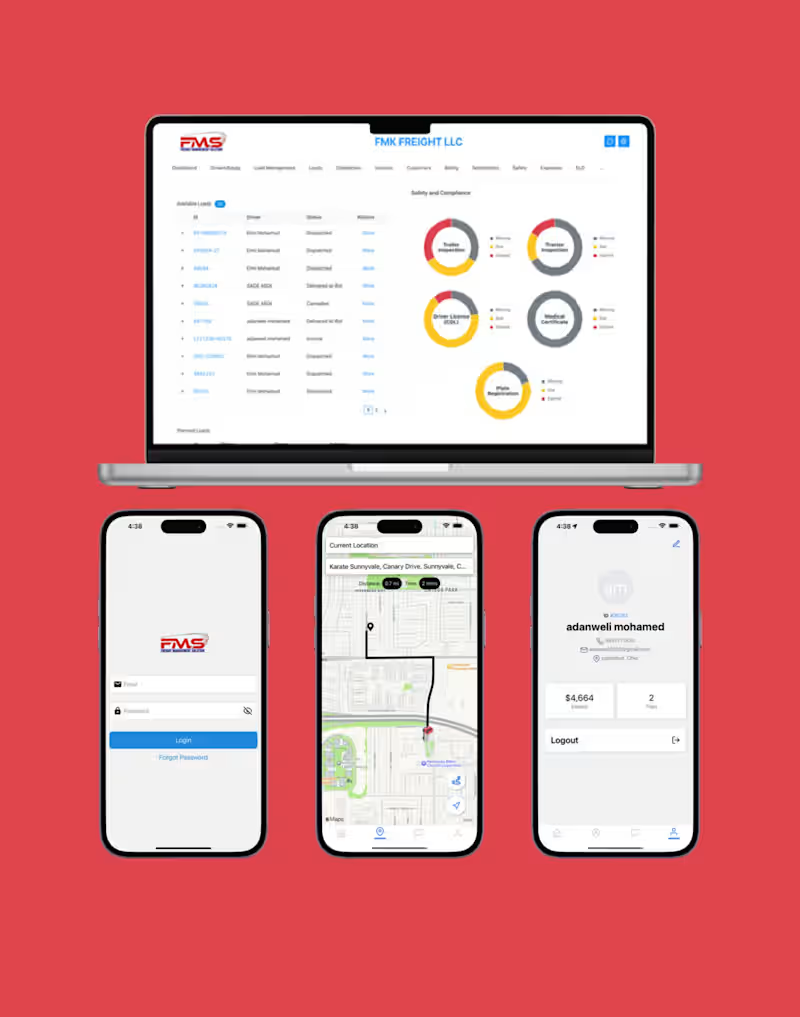
Freight Management Solution | Digital Freight Management System
0
8
0
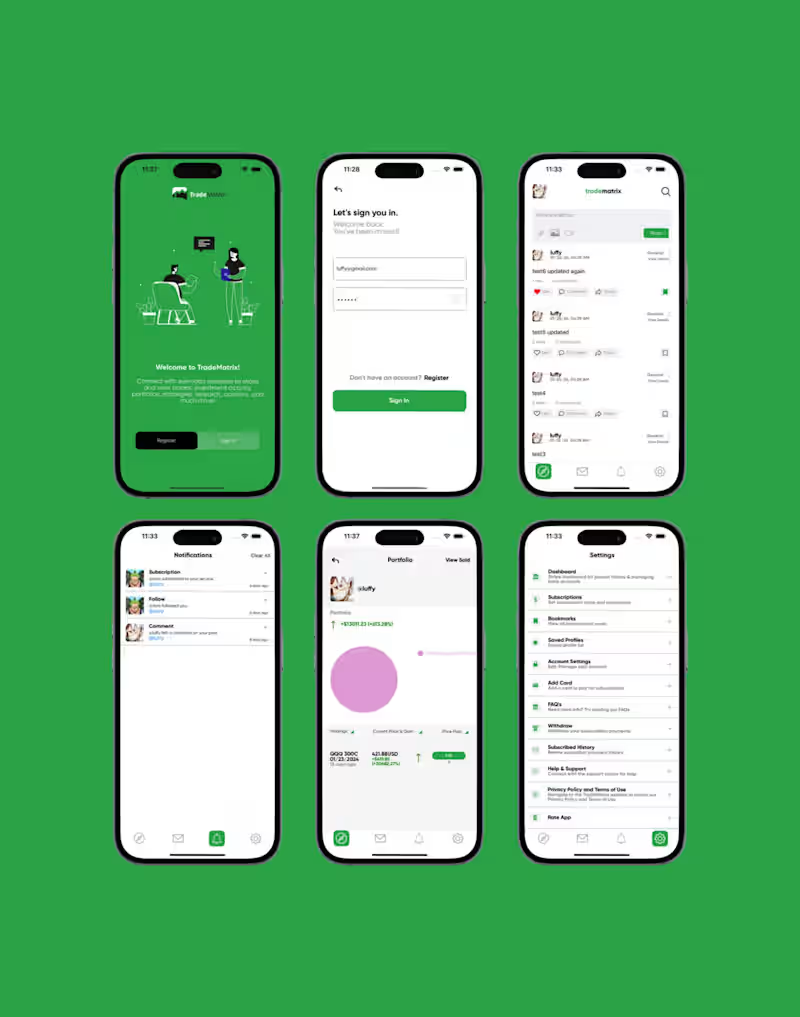
Tradematrix | The Social Network for Investors
0
30
0
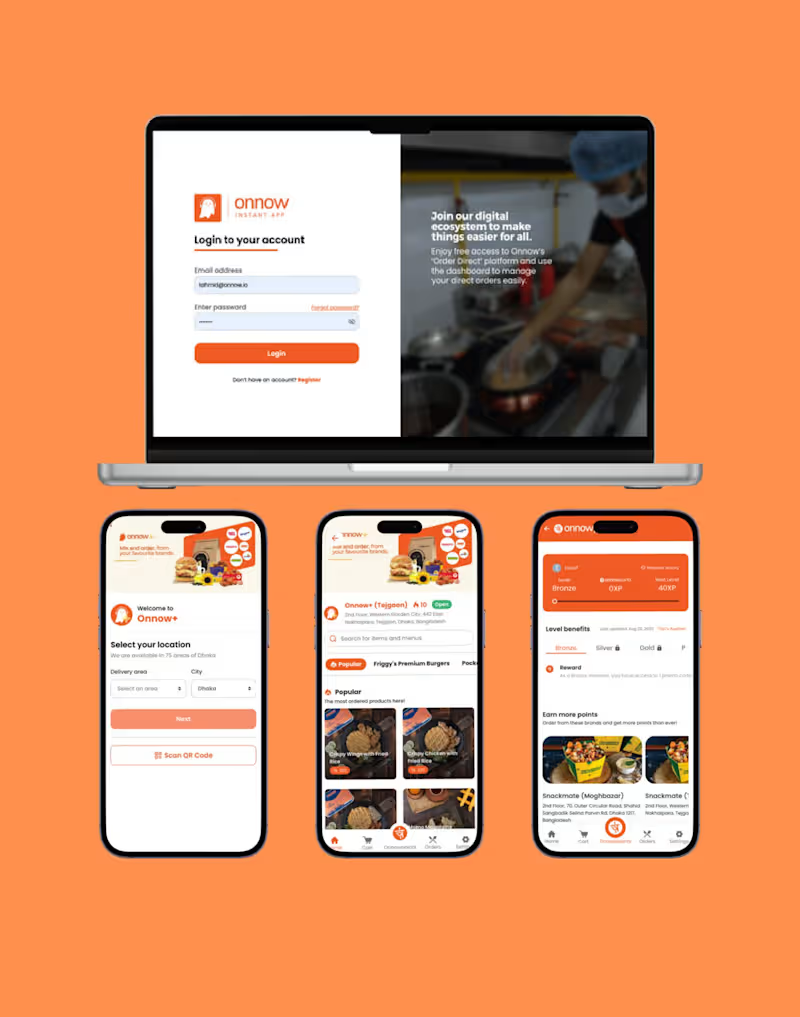
Onnow | Made food easily accessible to over 165M people
0
12
0
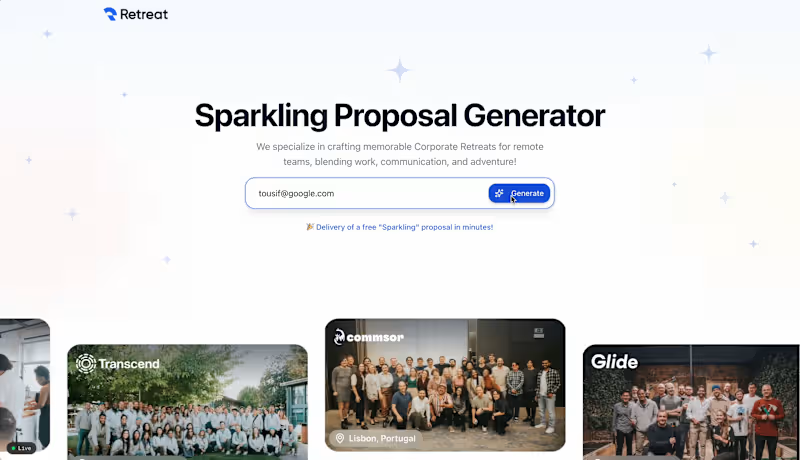
Sparkling Proposal Generator
0
5
Software Engineer
(3)
Follow
Message
Redowan Trafder
Dhaka, Bangladesh
I design and build automation,web & software products
$1k+
Earned
1x
Hired
7
Followers
Follow
Message
I design and build automation,web & software products
0
From Fiverr payout problems to my first payment on Contra š Today is a special day for me. I just received my project payment on Contra and the story behind it is probably more interesting than the payment itself. I started freelancing on Fiverr, and for a long time it was my main platform for working with international clients. Recently, I was working on a large software project for a Canadian client. This wasn't a simple website project. I was developing a complete Lottery POS & Management Software including the POS system, seller management, ticket generation, thermal printing, draw management, commissions, reporting, role-based access, QR/barcode workflows, offline synchronization, and the overall backend architecture. The project was divided into multiple milestones. Everything was going smoothly. Until the final milestone. Then Fiverr happened. When I was ready to receive the final project payment, my Payoneer account was suddenly closed without any clear reason. That created a serious problem. The project was completed, the client was ready to pay, but my normal payout route was suddenly unavailable. At that point, I had two choices: Keep trying to solve the payout problem... or find a better way to handle the project. So I talked to my client and suggested: "Why don't we move the project to Contra?" The client agreed. And that's how I ended up here. Today, I received my payment on Contra. Honestly, the feeling is different. It's not just: "I got paid." It's: "I successfully delivered a real software product to an international client, moved the project to a new platform when things went wrong, and still managed to complete the payment successfully." That feels rewarding. This project also reminded me why I enjoy software development so much. I wasn't just designing screens or building a landing page. I was working on an actual business system that needs to handle: ā Sellers ā POS terminals ā Lottery tickets ā Draws ā Commissions ā Printing ā Reports ā Permissions ā Data synchronization ā Future scalability That's the kind of work I want to do more of. Real software. Real businesses. Real problems. And now I'm officially starting my Contra journey. Huge thanks to my client for trusting me through the transition from Fiverr to Contra, and thanks to the Contra community for being part of this next chapter. First payment on Contra: received. Next milestone: build bigger software. š
0
111
1
Case Study: Simple Tagger - Shopify Store Automation App 1. Executive Summary Simple Tagger ā Automate Tag is a Shopify automation application designed to help merchants automatically organize and classify their store data using configurable tagging rules. Instead of manually tagging customers, products, and orders, merchants can define conditions that trigger automated tagging actions. This transforms repetitive administrative work into an automated workflow. The product follows a straightforward automation model: Event/Data ā Conditions ā Rule Evaluation ā Automatic Tag ā Activity Tracking The app is positioned as an affordable Shopify micro-SaaS product, with subscription plans beginning at approximately $4/month. 2. Business Problem Shopify merchants frequently need to categorize their customers, orders, and products. For example, a merchant may want to identify: High-value customers Large orders Customers from specific countries Specific product categories Repeat customers Special customer segments Orders requiring manual attention Without automation, merchants have to repeatedly inspect Shopify data and manually assign tags. This creates several problems: Time consumption Manual tagging becomes increasingly difficult as order volume grows. Human error Merchants may forget to tag an order or apply the wrong tag. Inconsistent store organization Different staff members may use different tagging conventions. Poor scalability Manual workflows become impractical for high-volume Shopify stores. Limited operational visibility Merchants need to know whether automation rules are actually executing successfully. Simple Tagger addresses these problems by turning tagging into an automated rules-based process. 3. Product Solution The central concept of Simple Tagger is a configurable automation engine. A merchant creates a rule containing: Trigger / Data Condition ā Logical Conditions ā Tagging Action For example: Example 1: High-Value Order Condition: Order value > $1,000 Action: Add tag: VIP-ORDER Example 2: Geographic Customer Segmentation Condition: Customer location = Canada Action: Add tag: CANADA Example 3: Product-Based Classification Condition: Product type = Shoes Action: Add tag: SHOES Example 4: Multiple Conditions Conditions: Product type = Shoes AND Order value > $200 Action: Add tag: HIGH-VALUE-SHOE-ORDER This allows merchants to create more sophisticated store-management workflows without writing code. 4. Core Product Features 4.1 Automated Tagging The primary feature automatically applies tags to Shopify objects according to predefined rules. Supported objects include: Orders Customers Products This eliminates repetitive manual classification. 4.2 Multi-Condition Rules The application supports rules involving multiple conditions. Instead of creating a separate automation for every possible scenario, merchants can combine conditions to create more precise workflows. For example: Customer location = United States AND Order value > $500 ā Apply: US-HIGH-VALUE This increases the flexibility of the automation engine. 4.3 Real-Time Processing The application is designed around real-time automation. When relevant Shopify events occur, the system evaluates the applicable rules and executes the corresponding tagging action. This means merchants do not necessarily need to manually initiate a synchronization process. 4.4 Activity Monitoring Automation systems require visibility. Simple Tagger includes activity/logging functionality that allows merchants to monitor automation activity and understand whether rules are executing successfully. This provides operational transparency and helps identify problems with automation rules. 4.5 Rule Templates The application includes predefined templates intended to help merchants create common automation workflows more quickly. This reduces the learning curve for users who may not understand automation logic immediately. 4.6 Bulk Reprocessing Higher-tier functionality provides bulk reprocessing capabilities. This is particularly useful when a merchant creates a new rule and wants it applied to existing Shopify data rather than only future events. For example: A merchant creates: Order > $500 ā VIP They may then need the rule applied to historical orders. Bulk processing makes that possible at scale. 4.7 Workflow Builder The higher-tier product offering includes a workflow-building capability. This indicates a progression from simple single-condition tagging toward more sophisticated automation workflows. The product therefore has the potential to evolve from a tagging utility into a broader Shopify workflow automation platform. 5. User Workflow A typical merchant workflow can be represented as follows: This workflow keeps the merchant interaction simple while moving the complexity into the automation engine. 6. Target Customers The product is primarily relevant to Shopify merchants who have enough operational volume to benefit from automation. Primary Customers Growing Shopify stores High-order-volume merchants Multi-product stores Stores with customer segmentation requirements Stores with complex order-management workflows Shopify agencies managing multiple stores Secondary Customers Shopify consultants E-commerce operations teams Marketing teams Customer-support teams Merchants performing CRM segmentation 7. Pricing Strategy The product uses a tiered SaaS subscription model. Plan Approx. Monthly Price Intended Customer Basic $4/month Small stores Growth $20/month Growing stores Pro $59/month Advanced merchants Business $199/month High-volume businesses Annual billing is also offered at discounted rates. The pricing strategy follows a common SaaS progression: Low entry price ā Increased usage limits ā Advanced functionality ā Enterprise-scale usage This allows merchants to start with a low financial commitment and upgrade as their automation requirements grow. 8. Monetization Model The product uses recurring subscription revenue rather than a one-time purchase. The primary monetization variables are: Number of automation rules Number of automation executions/runs Advanced workflow functionality Bulk processing Higher operational limits This is a strong model for a Shopify application because the merchant's usage tends to increase together with store growth. A simplified revenue model is: MRR = Paying Stores Ć Average Revenue Per Store For example: If an application reaches: 1,000 paying stores with an average revenue of: $20/month then: MRR = $20,000 and: ARR = $240,000 This demonstrates why relatively small Shopify utilities can become attractive SaaS businesses when distribution is strong. 9. Technical Product Architecture A likely high-level architecture for this type of application would be: A scalable implementation would typically separate: Shopify Integration Layer Responsible for: OAuth API communication Webhooks Store authentication Shopify data synchronization Rule Engine Responsible for: Condition evaluation AND/OR logic Rule prioritization Rule activation/deactivation Execution Engine Responsible for: Applying actions Handling retries Preventing duplicate execution Recording execution results Data Layer Stores: Merchant/store information Rules Conditions Actions Execution history Usage statistics Application configuration Monitoring Layer Tracks: Successful executions Failed executions Processing time API errors Rule activity Usage limits 10. Security and Permissions Because the application interacts with Shopify customer, product, and order data, permission management is an important part of the product architecture. The application requires access to relevant Shopify resources to perform its automation functionality. Potential security considerations include: OAuth-based store authentication Shopify access-token protection Least-privilege API scopes Secure webhook validation Encryption of sensitive credentials Tenant isolation Audit logging Rate-limit handling Secure API communication Data-retention policies For a production Shopify SaaS, multi-tenant isolation is particularly important because one application's backend may serve many independent Shopify stores. 11. UX Strategy The product benefits from having a relatively simple user experience despite the complexity of the underlying automation system. The ideal UX can be structured around five steps: Step 1 ā Select Object Choose: Order Customer Product Step 2 ā Define Condition Example: Order Value > $500 Step 3 ā Select Action Example: Add Tag ā VIP Step 4 ā Activate Turn the automation on. Step 5 ā Monitor Review execution history and success/failure information. This reduces the cognitive load compared with traditional workflow automation systems. 12. Competitive Positioning Simple Tagger operates in a useful niche between: Manual Shopify administration and Large-scale workflow automation platforms Its competitive advantage can be summarized as: Simple automation focused specifically on Shopify tagging and store organization. Rather than attempting to solve every possible e-commerce automation problem, the product focuses on a narrow operational problem. This can be advantageous because a narrowly defined product can communicate its value more clearly. 13. Strengths 1. Clear Problem Definition The application solves a specific operational problem rather than attempting to be an overly broad platform. 2. Low Entry Price A low starting price reduces adoption friction for small Shopify merchants. 3. Recurring Revenue The subscription model creates predictable recurring revenue potential. 4. Automation Value The product saves merchants repetitive operational work. 5. Expandable Architecture Tag automation can potentially evolve into broader Shopify workflow automation. 6. Scalable Customer Model The SaaS model allows the same software infrastructure to serve many Shopify stores. 14. Potential Weaknesses The product also faces several challenges. Limited Initial Scope Tagging alone may not provide enough value for some merchants to justify higher subscription prices. Strong Competition Shopify already has a large ecosystem of automation and workflow applications. Platform Dependency The application depends heavily on Shopify APIs, policies, rate limits, and platform changes. Retention Challenge Once merchants configure their rules, the product can become a "set-and-forget" utility. This can reduce engagement unless the application continuously demonstrates operational value. Discoverability A Shopify App Store application needs strong: SEO Reviews Screenshots App Store conversion Merchant trust Onboarding to compete successfully. 15. Growth Opportunities The product could expand beyond simple tagging. Potential future capabilities include: Customer Automation Customer segmentation VIP identification Customer lifecycle tags Repeat-purchase detection Order Automation Fraud-risk classification High-value order detection Fulfillment categorization Geographic routing Product Automation Inventory-based tags Product lifecycle tags Collection automation Supplier-based classification Marketing Automation Integration with: Email platforms SMS platforms CRM systems Advertising platforms This could turn the application into a broader: Shopify Store Automation Platform rather than simply a tagging application. 16. Strategic Analysis The most interesting aspect of Simple Tagger is not the tagging feature itself. The strategic opportunity is the automation engine underneath it. Tagging is simply the initial use case. Once the application has: Shopify event processing Condition evaluation Rule management Action execution Execution monitoring Merchant configuration Usage metering the same infrastructure can support many other actions. For example: At that point, the product moves from a tagging application toward a general-purpose Shopify automation platform. 17. Business Model Opportunity A broader version of the product could use a usage-based SaaS model. Possible pricing dimensions: Rules Number of active workflows. Executions Number of automation runs. Stores For agencies managing multiple Shopify stores. Advanced Actions Premium integrations and workflow actions. Historical Processing Premium access to bulk/historical processing. This provides multiple opportunities for expansion revenue. 18. Key Lessons The product demonstrates several important SaaS principles. Lesson 1: Solve a Small Problem First A narrowly defined operational problem can be easier to market than a large, complicated platform. Lesson 2: Automation Creates Recurring Value If the product continuously saves merchant time, subscription pricing becomes easier to justify. Lesson 3: Usage-Based Limits Create Natural Upgrade Paths Small merchants can start cheaply while larger merchants pay more because they consume more resources. Lesson 4: Infrastructure Can Become the Real Product The initial tagging functionality can serve as an entry point into a much larger automation ecosystem. Lesson 5: Shopify Provides a Large Distribution Platform Building on Shopify gives developers access to a large ecosystem of merchants, but competition and platform dependency must be considered. 19. Conclusion Simple Tagger ā Automate Tag represents a focused Shopify SaaS product built around a straightforward business problem: automating repetitive store classification and tagging tasks. Its product strategy combines: Simple automation Rule-based conditions Real-time processing Activity monitoring Tiered subscriptions Usage-based limitations Advanced functionality for larger merchants The strongest long-term opportunity is not merely selling automated tags. The underlying rule engine can become the foundation for a much broader Shopify automation platform. From a business perspective, the product illustrates how a relatively narrow operational problem can be converted into a recurring-revenue SaaS product when the solution is easy to understand, inexpensive to adopt, and capable of scaling with merchant usage.
1
117
1
I developed a complete, scalable POS platform for a growing business, with a strong focus on reliability, security, hardware readiness, and long-term scalability. The project was valued at $7,000+ and involved building the core POS experience, administrative management system, backend architecture, authentication, transaction workflows, reporting, device management, and a foundation designed to support up to 5,000 POS devices. The most important part of the project was understanding the business requirements first and then translating them into a practical software system. The development also included dedicated support and a structured issue-reporting portal, allowing the client to report problems directly and receive ongoing development support. The initial development timeline was around 6 weeks, but the core system was delivered significantly earlier, in approximately 4 weeks, while maintaining a strong focus on functionality and stability. This project involved much more than simply building screens. It required designing the underlying architecture so the platform could grow with the business, while keeping the system maintainable and ready for future hardware and operational integrations.
1
209
0
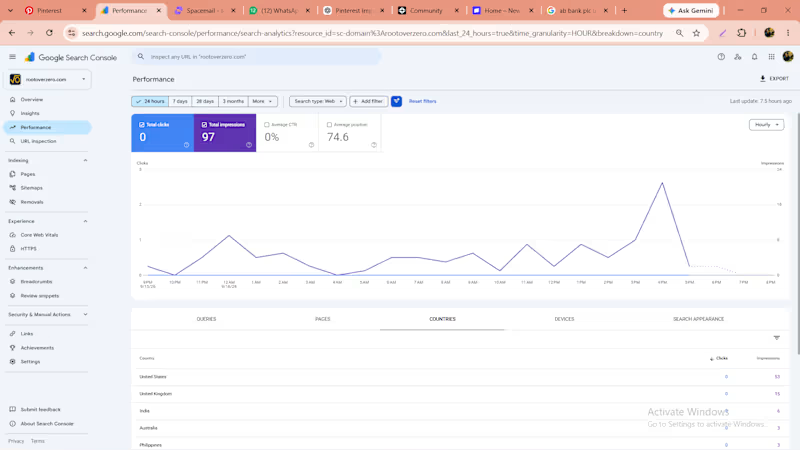
I recently started something new: Root Over Zero ā a business Iām building from the ground up with a strong focus on organic growth. Instead of immediately putting money into ads, Iām experimenting with SEO, content, useful web tools, and platforms like Pinterest to see how far I can take a business through organic discovery. The interesting part is that itās already starting to work. Google has indexed the website, and Iām beginning to see impressions coming from the US and UK. Pinterest is also starting to pick up some of the content, so Iām now testing which topics, visuals, and content formats can turn those impressions into actual visitors. Iām taking the organic route intentionally. I want to build an asset that compoundsāwhere every useful article, tool, search ranking, and piece of content can continue bringing people in months after itās published, instead of having traffic disappear the moment an ad budget stops. Itās still very early, but seeing people from markets Iāve never actively reached discover something I built is probably the most exciting part of the experiment. Iāll be documenting the process as I go. Root Over Zero: https://rootoverzero.com What would you focus on first if you were building a new business todayāpaid growth or organic growth? And why? #RootOverZero #SEO #OrganicGrowth #DigitalMarketing #WebDevelopment #WebDesign #UIUX #ProductDesign #SaaS #Startup #Entrepreneurship #GrowthMarketing #PinterestMarketing #ContentMarketing #GoogleSEO #BusinessGrowth #Contra
0
48
Software Engineer
(3)
Follow
Message
Desh Chowdhury
Dhaka, Bangladesh
Senior Full stack developer | React, Next, Node expert
8
Followers
Follow
Message
Senior Full stack developer | React, Next, Node expert
0
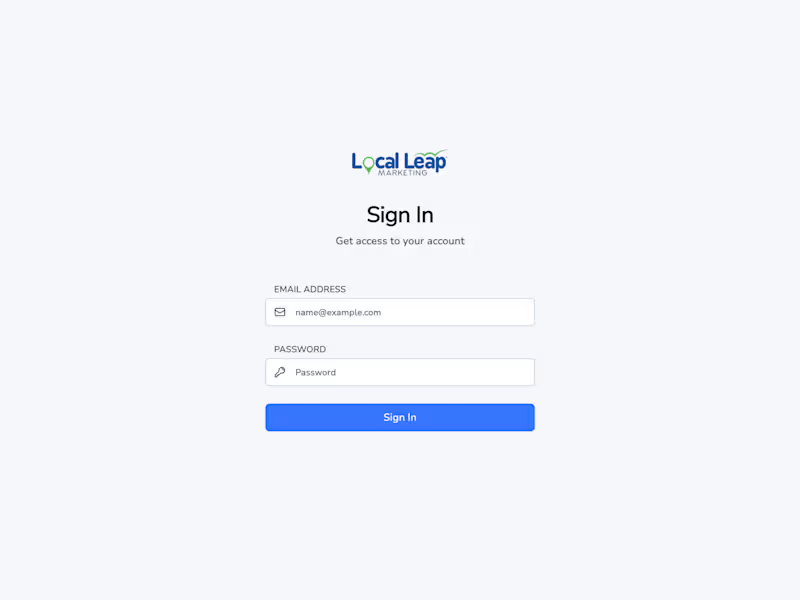
LocalLeap | A CRM Dashboard | React, Next, Node, MySQL, Prisma
0
27
0
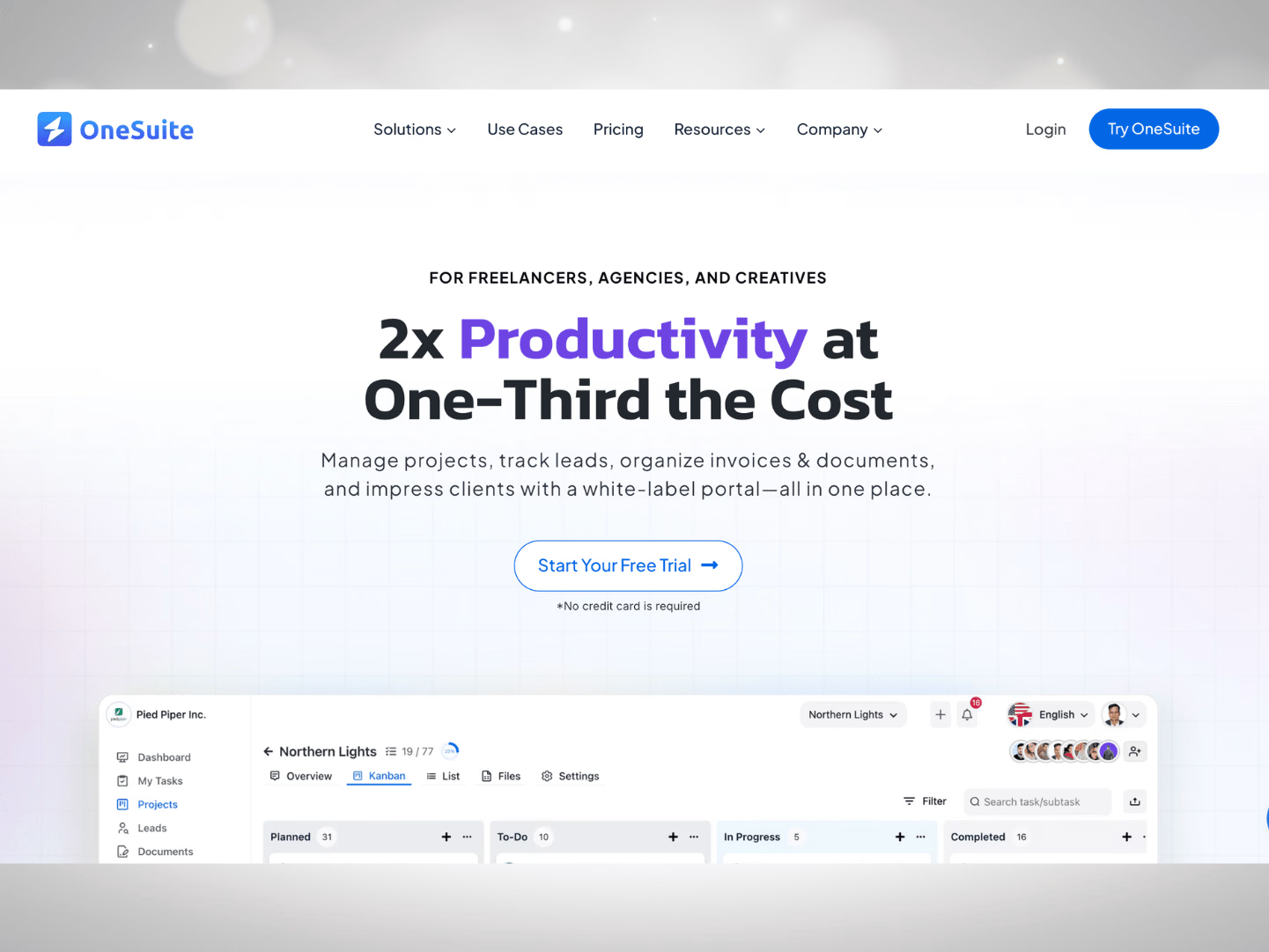
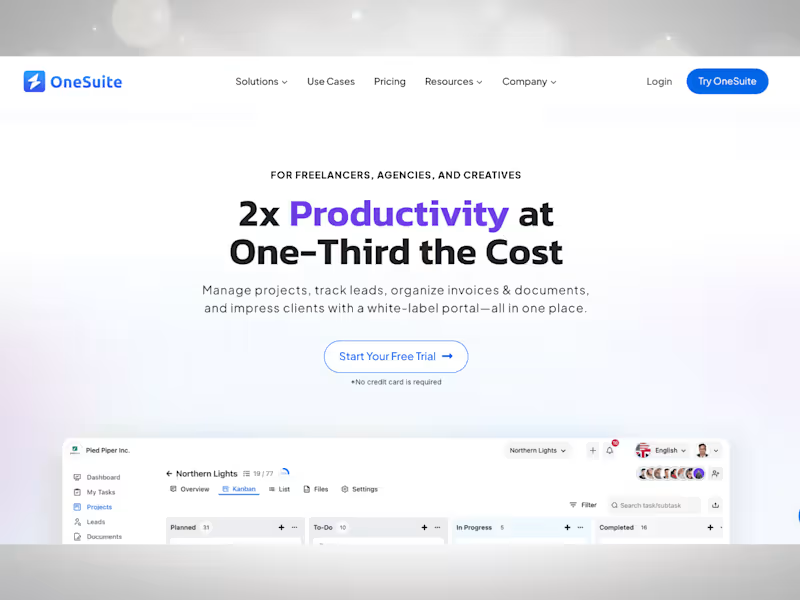
OneSuite | A complete SASS | Web app using React,Next & Node
0
26
0
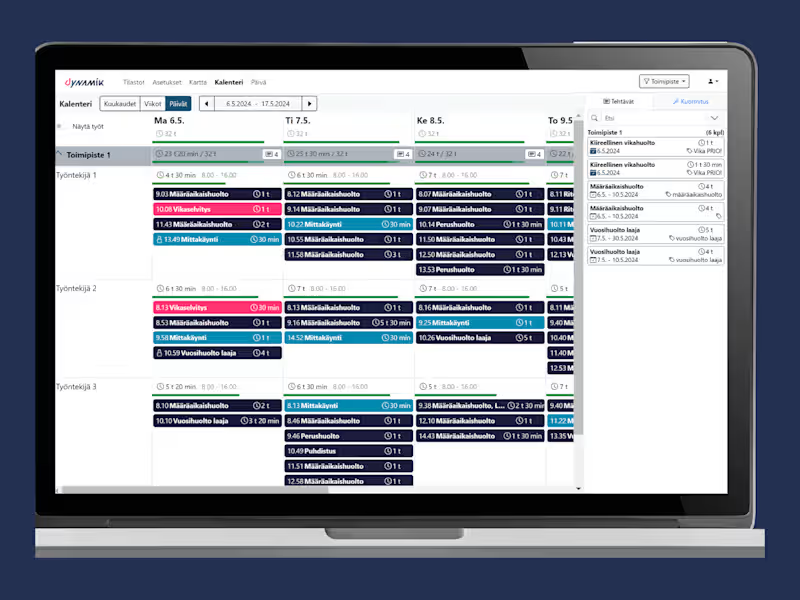
Dynamik Allocator | Task Optimization Software | Dotnet, AI
0
28
View more ā
Software Engineer
(2)
Follow
Message
Abu Nadim
Bangladesh
7yr Web & Mobile Dev Pro
Follow
Message
7yr Web & Mobile Dev Pro
0
Responsive Esports Website For Bangladesh Boxing Foundation
0
4
0
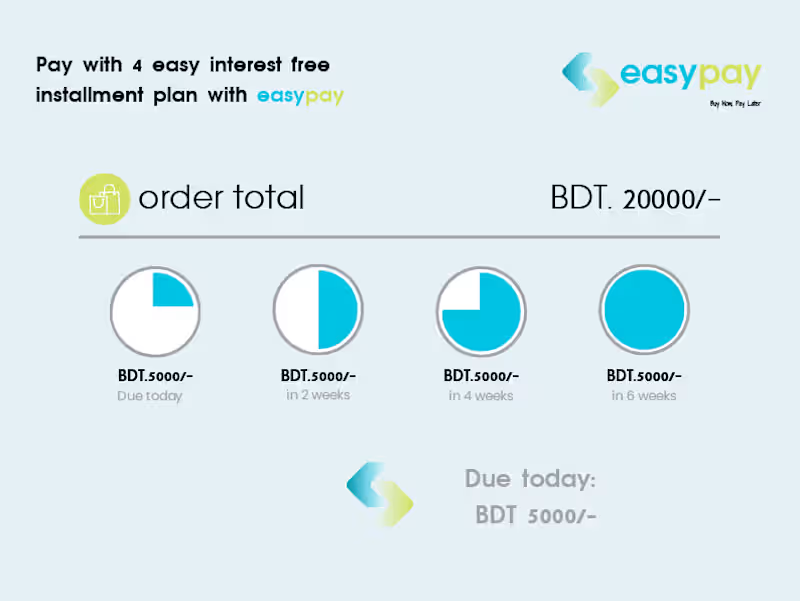
Easypay
0
22
0
Ecommerce Website For Uzzu Ummu & Zohra
0
8
View more ā
Software Engineer
(3)
Follow
Message
Md Shijan Ali
Dhaka, Bangladesh
Frontend Engineer | Vue.js Expert | React.js Expert | Open
Follow
Message
Frontend Engineer | Vue.js Expert | React.js Expert | Open
0
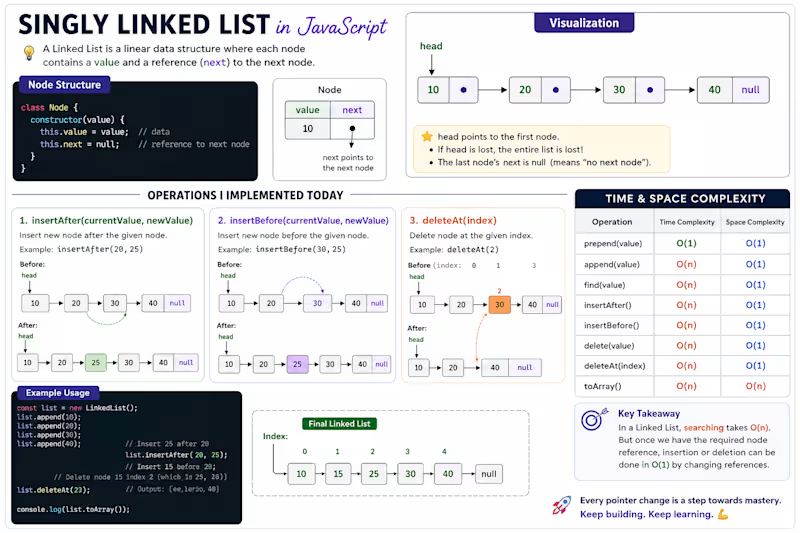
Singly Linked List Practice ā JavaScript Today I practiced implementing a Singly Linked List from scratch using JavaScript. After understanding the core structure, I challenged myself to implement additional operations rather than simply following an existing implementation. Implemented Operations prepend(value) append(value) find(value) delete(value) insertBefore(currentValue, newValue) insertAfter(currentValue, newValue) deleteAt(index) toArray() Complexity Analysis prepend() ā Time: O(1) | Space: O(1) append() ā Time: O(n) | Space: O(1) find() ā Time: O(n) | Space: O(1) insertBefore() ā Time: O(n) | Space: O(1) insertAfter() ā Time: O(n) | Space: O(1) delete() ā Time: O(n) | Space: O(1) deleteAt() ā Time: O(n) | Space: O(1) Key Learning The most important part of this exercise was understanding how node references and next pointers control the structure of a Linked List. For example, inserting a node doesn't require shifting existing elements like an Array. Instead, we update the relevant references: Before: 10 ā 20 ā 40 After inserting 30: 10 ā 20 ā 30 ā 40 This was a great exercise for strengthening my understanding of data structures, traversal, references, and algorithmic thinking. Next challenge: Reverse a Singly Linked List from scratch. #JavaScript #DSA #DataStructures #Algorithms #Programming #Learning
0
31
0
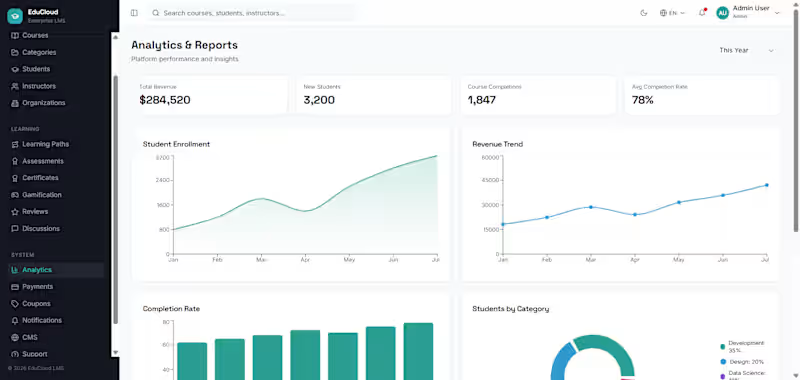
Built a comprehensive School Management System designed to simplify and centralize daily academic and administrative operations. The platform provides a modern, responsive interface for managing students, teachers, classes, attendance, exams, results, fees, and other essential school activities from a single system. The system focuses on reducing manual work, improving data organization, and giving administrators and staff a clear overview of school operations. Key features include: => Student & teacher management => Class & subject management => Attendance tracking => Exam & result management => Fee & payment management => Admin dashboard & reports => Role-based access control => Responsive design for desktop, tablet & mobile I focused on creating a scalable architecture, intuitive user experience, and reliable workflows that can support the day-to-day operations of a modern educational institution.
0
71
0
EstateHub is a modern real estate SaaS MVP built with React, TypeScript, and Vite, designed for scalable web application development. It features role-based dashboards (customer, agent, admin), secure authentication, and advanced property search with filters, maps, and booking system. Includes analytics, notifications, and full CRUD admin panel. Built with optimized performance, API integration readiness, and responsive UIāideal for SaaS dashboard development, MVP web app development, and custom CRM solutions
0
42
0
HRMaster is a modern Human Resource Management SaaS MVP built with React, TypeScript, and Vite. It features role-based dashboards (Super Admin, HR, Manager, Employee) to manage employees, attendance, payroll, recruitment, and performance. Includes secure authentication, analytics, and full CRUD admin panel. Designed with scalable web application architecture, API integration, and optimized performance. Ideal for SaaS dashboard development, custom CRM development, and MVP web app solutions.
0
49
Software Engineer
(5)
Follow
Message
Mobashir Monim
Dhaka, Bangladesh
Self-managed full stack developer and entrepreneur

Follow
Message
Self-managed full stack developer and entrepreneur
0
Calendar and Scheduling
0
10
0
Service Agreements
0
11
0
Point of Sale
0
12
0
Inventory Management
0
3
Software Engineer
(6)
Follow
Message
Saiful Islam
Narayanganj, Bangladesh
NodeJS Developer
Follow
Message
NodeJS Developer
0
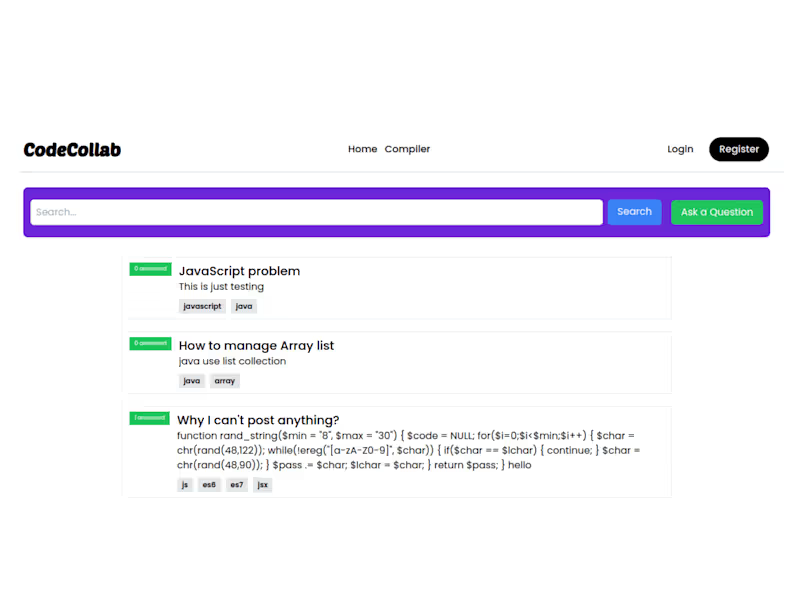
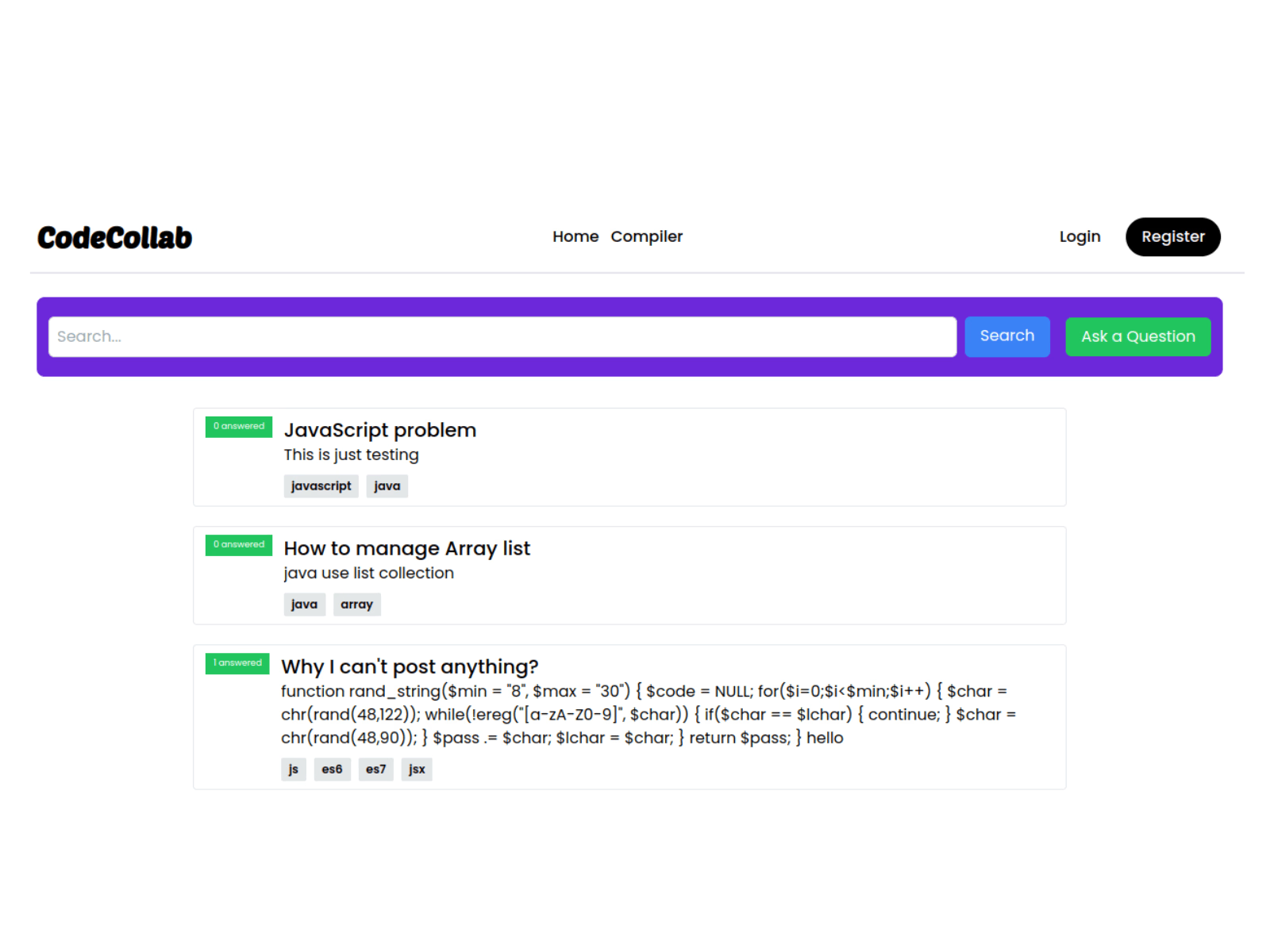
CodeCollab : A Q n A Blog System
0
16
0
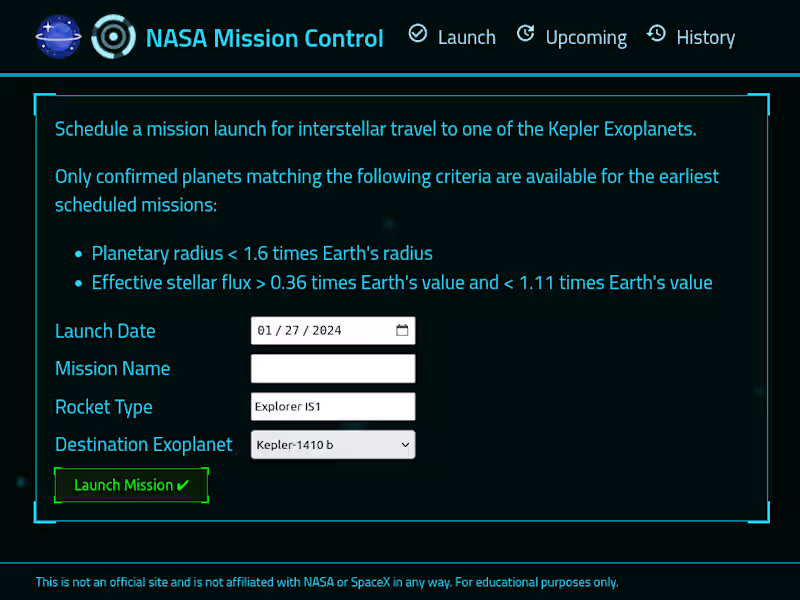
NASA Habitable Planet API
0
19
0
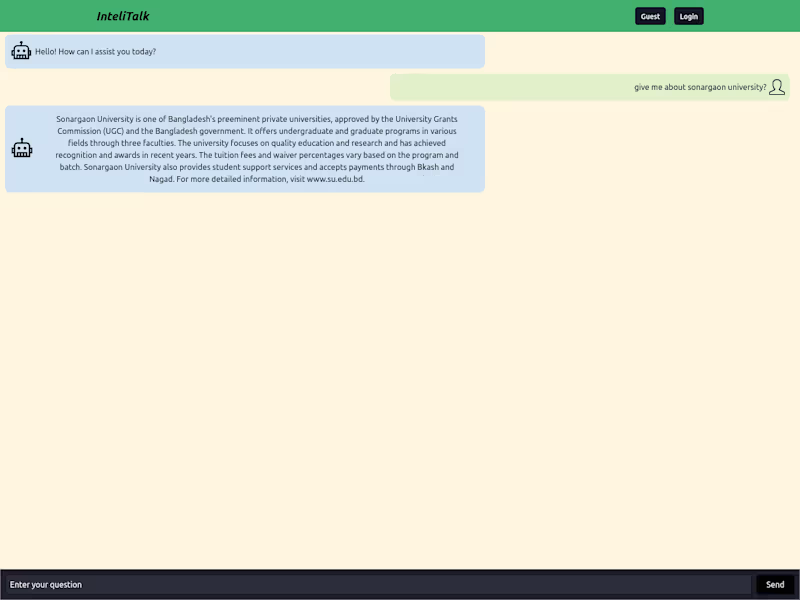
InteliTalk: A Chatbot For University
0
25
View more ā
Software Engineer
(3)
Follow
Message
Explore people