Projects using Rhino 3D in LagosProjects using Rhino 3D in LagosLuxury Diaper Backpack Design | Soft Goods Product Design | CAD Development | Manufacturing Tech Pack
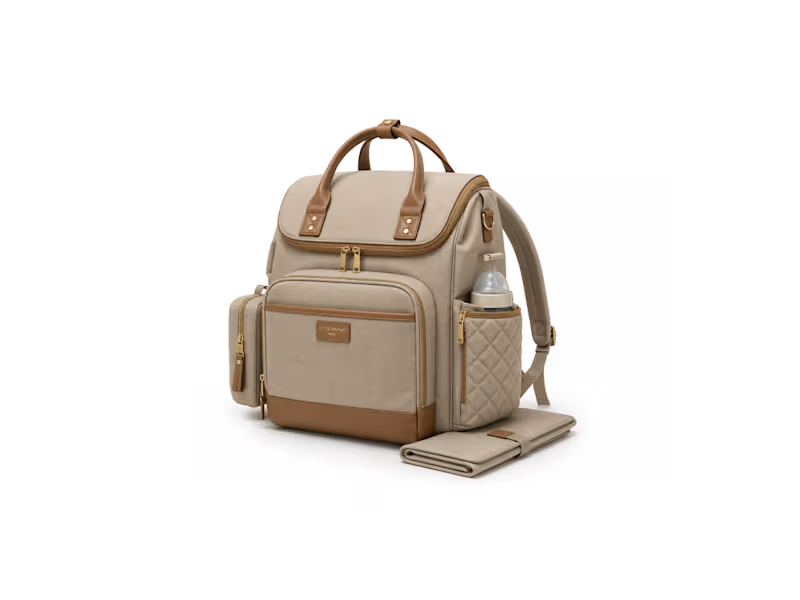
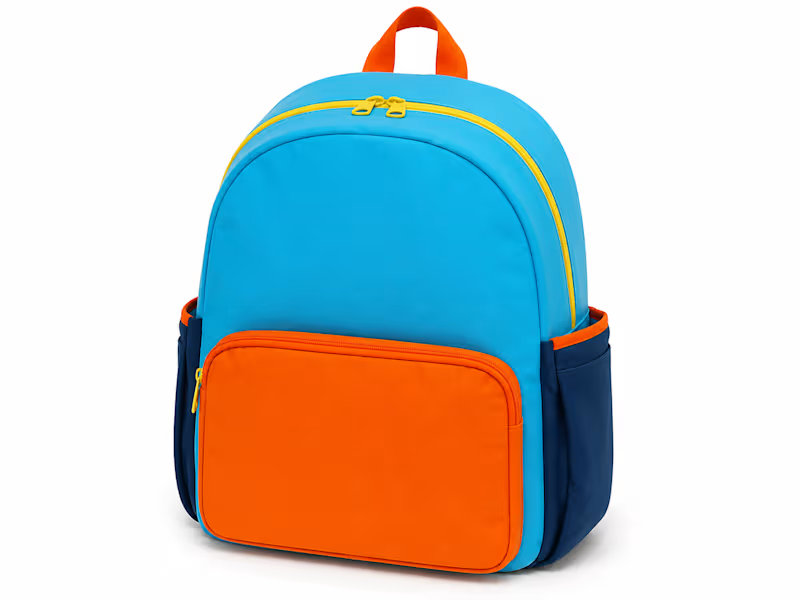
This project showcases the complete design and development of a premium diaper backpack, taking the product from concept through manufacturing-ready documentation.
The objective was to create a modern diaper bag that balances functionality, organization, comfort, and premium aesthetics while ensuring the design can be efficiently manufactured at scale.
The development process focused on solving real user needs for parents by optimizing storage, accessibility, durability, and carrying comfort. Every compartment, panel, stitch line, zipper, hardware component, and material selection was carefully engineered to improve usability while maintaining a refined premium appearance.
Beyond the exterior styling, this project includes detailed engineering documentation used for manufacturing, allowing suppliers and production teams to accurately understand construction methods, materials, hardware, dimensions, and assembly requirements.
Project Scope
• Product Strategy & User-Centered Design
• Soft Goods Product Design
• Industrial Design
• Product Concept Development
• CAD Surface Modeling
• Multi-View Product Development
• Internal Layout Design
• Pocket Configuration
• Hardware Selection
• Material & CMF Development
• Manufacturing Construction Design
• Exploded Assembly
• Technical Documentation
• Manufacturing Tech Pack
• Bill of Materials (BOM)
• Photorealistic Product Rendering
Key Features
• Spacious main storage compartment
• Multiple insulated bottle holders
• Waterproof exterior materials
• Dedicated wipe pocket
• Easy-access organization pockets
• Ergonomic padded shoulder straps
• Breathable back panel
• Premium vegan leather accents
• Gold-finished hardware
• Reinforced structural construction
• Foldable changing mat
• Stroller attachment compatibility
• Durable bottom protection
Deliverables
✔ Product Research & Planning
✔ Industrial Design
✔ Soft Goods Engineering
✔ Concept Development
✔ CAD Modeling
✔ Product Visualization
✔ Multi-View Product Presentation
✔ Material & Color Specification (CMF)
✔ Hardware Specification
✔ Exploded Assembly
✔ Manufacturing Drawings
✔ Production Tech Pack
✔ Bill of Materials (BOM)
✔ Manufacturing Documentation
Design Approach
A successful soft goods product is more than an attractive render. It must be manufacturable, durable, cost-efficient, and intuitive for the end user.
This project demonstrates a complete workflow, from defining user requirements and product architecture to selecting materials, engineering construction details, documenting manufacturing specifications, and creating production-ready assets for suppliers.
The result is a product that is not only visually refined but also designed with manufacturing feasibility and long-term performance in mind.
I work with startups, consumer brands, manufacturers, and entrepreneurs to transform product ideas into production-ready designs through industrial design, soft goods development, CAD engineering, manufacturing documentation, and photorealistic visualization. Duffel Bag Product Design | Soft Goods Design | CAD Engineering | Tech Pack Development
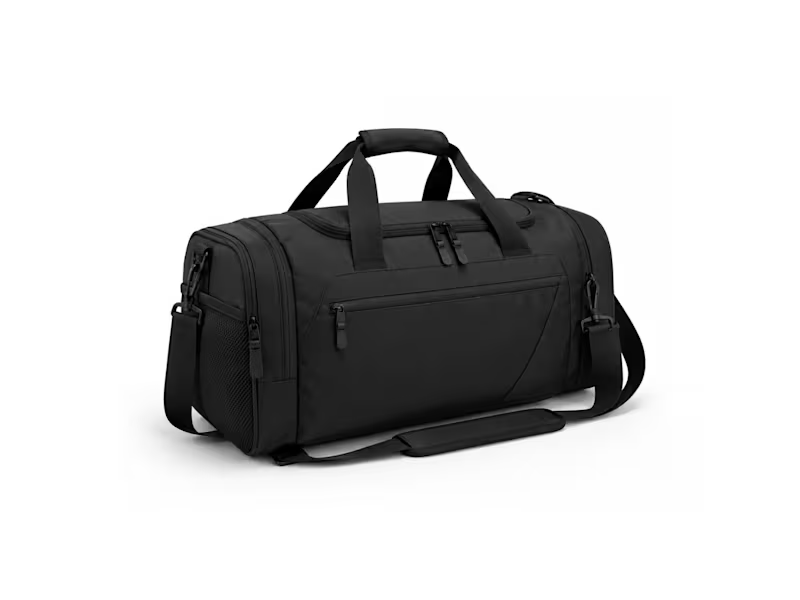
This project showcases the complete product development process for a modern travel duffel bag, from concept exploration through manufacturing-ready documentation.
The objective was to create a premium travel bag that combines clean aesthetics, efficient organization, durability, and production feasibility while maintaining a minimalist design language.
Rather than focusing only on appearance, the project was developed with manufacturing in mind. Every design decision, from panel construction and zipper placement to hardware selection, material specification, and assembly sequence, was carefully considered to create a product that can move efficiently from concept to production.
Project Scope
• Product Strategy & Feature Planning
• Soft Goods Product Design
• Industrial Design
• Design Sketches & Concept Development
• CAD Modeling
• Manufacturing-Oriented Construction Design
• Material & CMF Selection
• Hardware & Trim Specification
• Exploded Assembly Development
• Technical Drawings
• Production Tech Pack
• Bill of Materials (BOM)
• Product Visualization & Photorealistic Rendering
Design Highlights
The bag features a spacious main compartment, dedicated shoe compartment, internal organization pockets, water bottle pocket, reinforced carry handles, removable shoulder strap, premium hardware, durable construction, and water-resistant materials designed for everyday travel, business trips, and gym use.
Special attention was given to:
• Ergonomic usability
• Material optimization
• Manufacturable panel construction
• Durable stitch reinforcement
• Production-ready dimensions
• Assembly efficiency
Deliverables
✔ Product Concept
✔ Industrial Design
✔ Photorealistic Product Renderings
✔ Multi-View Product Presentation
✔ Manufacturing Drawings
✔ Exploded Assembly
✔ Material Specification
✔ CMF Development
✔ Technical Pack
✔ Bill of Materials (BOM)
✔ Production Documentation
I help startups, product companies, and brands transform product ideas into manufacturing-ready designs through industrial design, CAD engineering, technical documentation, and realistic product visualization. The best medical devices are the ones patients barely notice they're wearing.
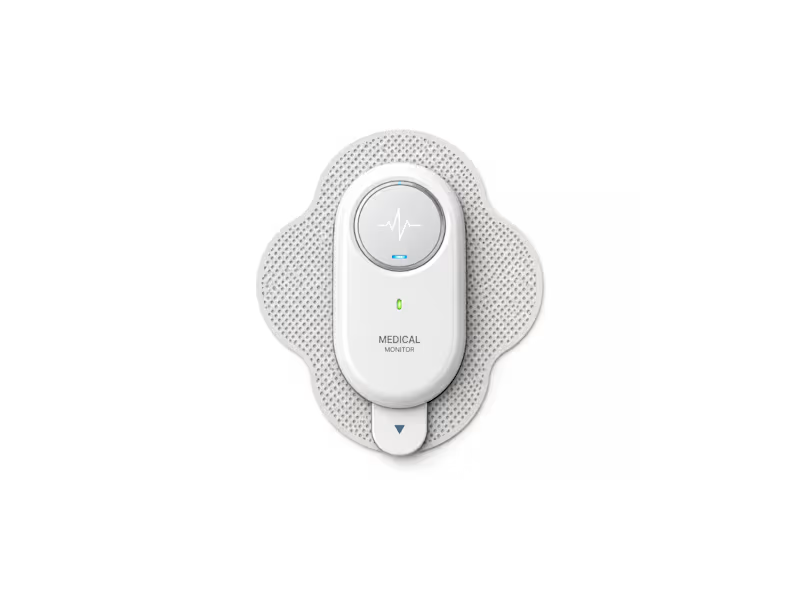
Designing a medical wearable isn't just about fitting electronics into a compact enclosure.
It's about designing for people who may wear the device for hours—or even days, at a time.
That changes the design priorities completely.
Instead of asking, "How can we make it look better?", designers often ask:
How can we make it feel invisible?
For a wearable medical monitor, several factors become critical:
Comfort comes first
A device that causes skin irritation or feels bulky is less likely to be worn consistently. Smooth edges, lightweight materials, and thoughtful ergonomics all contribute to long-term comfort.
Every interaction should be effortless
A patient shouldn't need to read a manual to understand the product. Clear indicators, simple controls, and intuitive feedback reduce confusion and improve confidence.
Reliability over complexity
Medical devices operate in real-world conditions. Sweat, movement, accidental bumps, and daily wear all influence the design. Every component has to perform consistently throughout its intended use.
Design supports trust
The appearance of a medical product also matters. Clean surfaces, balanced proportions, and a clear visual hierarchy help communicate professionalism and reliability before the device is even turned on.
One thing I've learned from designing products is that successful medical devices don't try to impress people.
They focus on making healthcare more comfortable, more intuitive, and more dependable through thoughtful engineering and human-centered design.
Good industrial design isn't just about creating products.
Sometimes, it's about improving someone's everyday experience in ways they may never consciously notice.
#IndustrialDesign #ProductDesign #CAD The smaller the product, the harder the design challenge.
One of the biggest misconceptions about product design is that smaller products are easier to create.
In reality, they're often much more difficult.
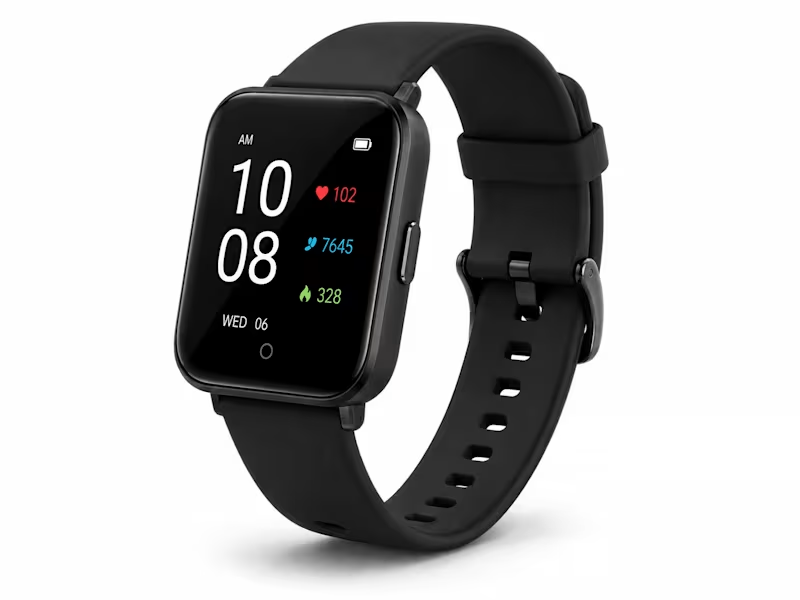
Take a smartwatch as an example.
Inside a device that fits comfortably on your wrist, engineers have to package a display, battery, processor, sensors, antennas, vibration motor, charging system, buttons, and multiple circuit boards, all within a compact enclosure that's lightweight, durable, and comfortable enough to wear all day.
Every millimeter matters.
Increasing the battery size may improve battery life, but it reduces the available space for sensors.
Making the enclosure thinner can improve aesthetics, but it may reduce structural strength or limit component placement.
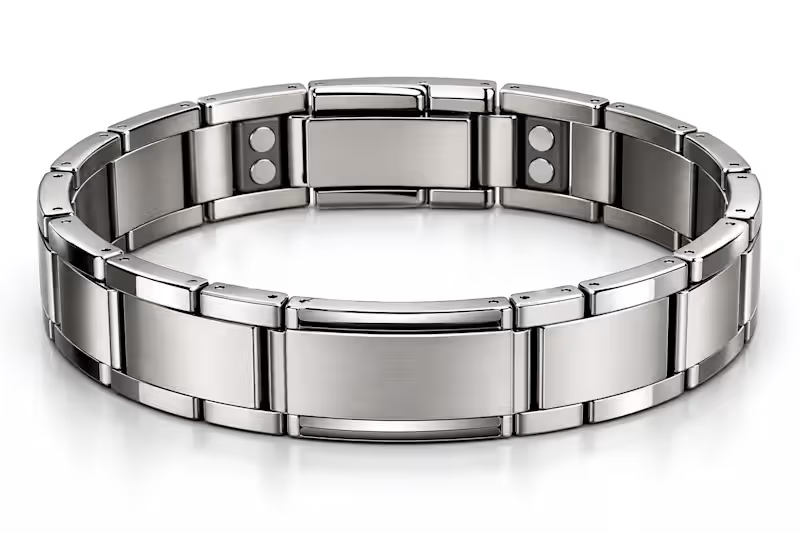
Even the shape of the wristband influences comfort, weight distribution, and how accurately the health sensors maintain contact with the skin.
This is where industrial design becomes a balance between human factors and engineering.
The goal isn't simply to fit everything inside a smaller package. It's to create a product that feels effortless to wear, intuitive to use, and practical to manufacture at scale.
When you look at a smartwatch, you're seeing much more than a display and a strap.
You're looking at hundreds of design decisions compressed into a device that's only a few millimeters thick. What makes a consumer product feel "premium"?
Most people assume it's the material.
In reality, premium products are the result of hundreds of engineering and design decisions working together.
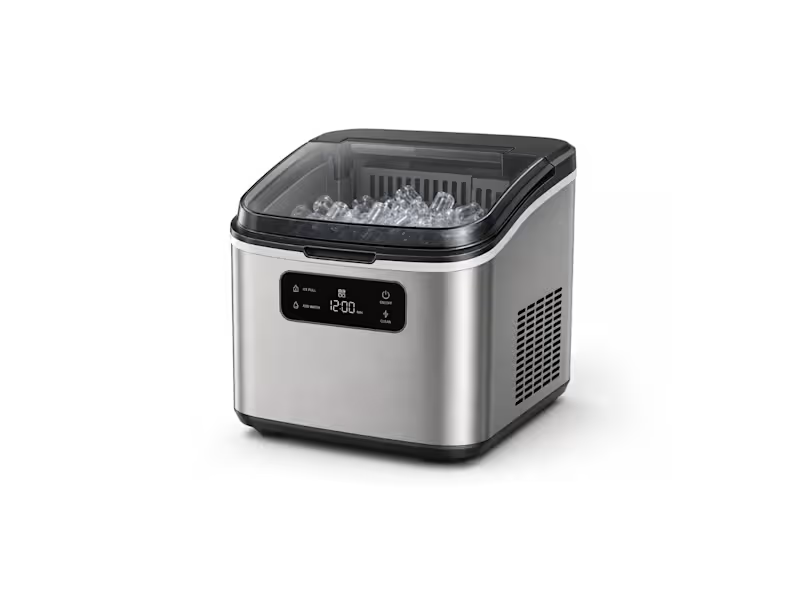
Take an ice maker like this.
At first glance, it looks like a simple countertop appliance. Under the outer shell, however, every component has to work within tight space constraints while remaining easy to manufacture and assemble.
Here are a few design principles commonly used in products like this:
A balanced visual hierarchy
The control panel is positioned where users naturally look first, reducing the learning curve and making the interface intuitive.
Material contrast
Brushed metal paired with matte polymer creates a perception of quality while allowing each material to serve its functional purpose.
Efficient internal packaging
The compressor, condenser, fan, water reservoir, and ice-making mechanism all compete for limited space. Good product design is often about arranging these components efficiently without compromising airflow or serviceability.
Design for Manufacturing (DFM)
A visually appealing enclosure still needs to be manufacturable. Wall thickness, fastening methods, draft angles, and assembly sequences are considered long before the product reaches production.
One lesson I've learned from product design is that users rarely notice good engineering.
They simply notice that a product feels intuitive, reliable, and well made.
That's exactly what good industrial design should achieve. Why every cutout on an electrical enclosure matter
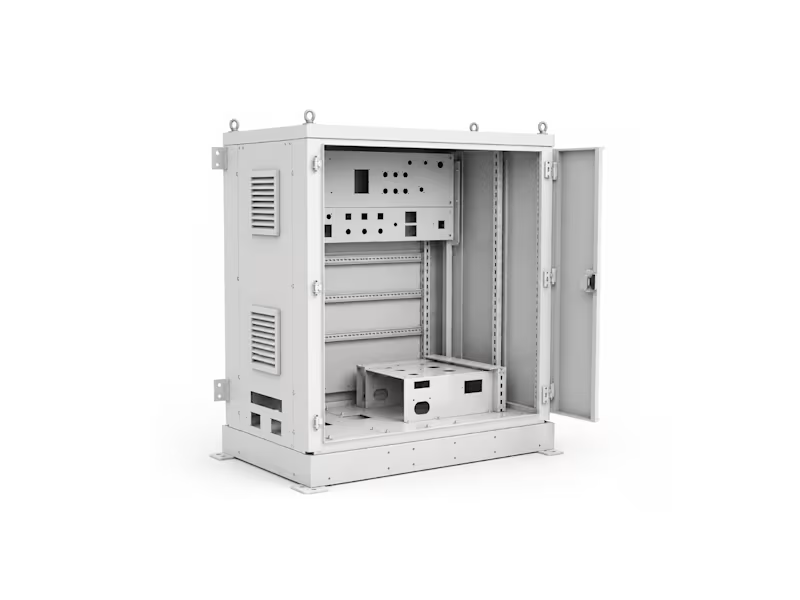
At first glance, an electrical enclosure looks like a simple metal box.
In reality, every hole, vent, mounting point, and panel opening has a purpose.
When designing an enclosure like this, I'm thinking far beyond the exterior appearance.
Here are a few of the engineering considerations that influence the design:
• Airflow and thermal management for internal electronics
• Structural rigidity without adding unnecessary weight
• Efficient cable routing and maintenance access
• Mounting locations for DIN rails, panels, and electrical components
• Manufacturing constraints such as bending, punching, and assembly
• Ease of installation and long-term serviceability
Good enclosure design isn't just about fitting components inside.
It's about creating a product that's practical to manufacture, simple to assemble, and reliable throughout its lifecycle.
Every opening you see in this model was placed with functionality and manufacturability in mind.
What's the first thing you look for when reviewing an enclosure design—cooling, accessibility, or manufacturability?