Freelancers using Google Apps in KarachiFreelancers using Google Apps in Karachi
Full-Stack & AI Developer | Next.js, AI Agents
$25k+
Earned
7x
Hired
5.0
Rating
46
Followers
Full-Stack & AI Developer | Next.js, AI Agents
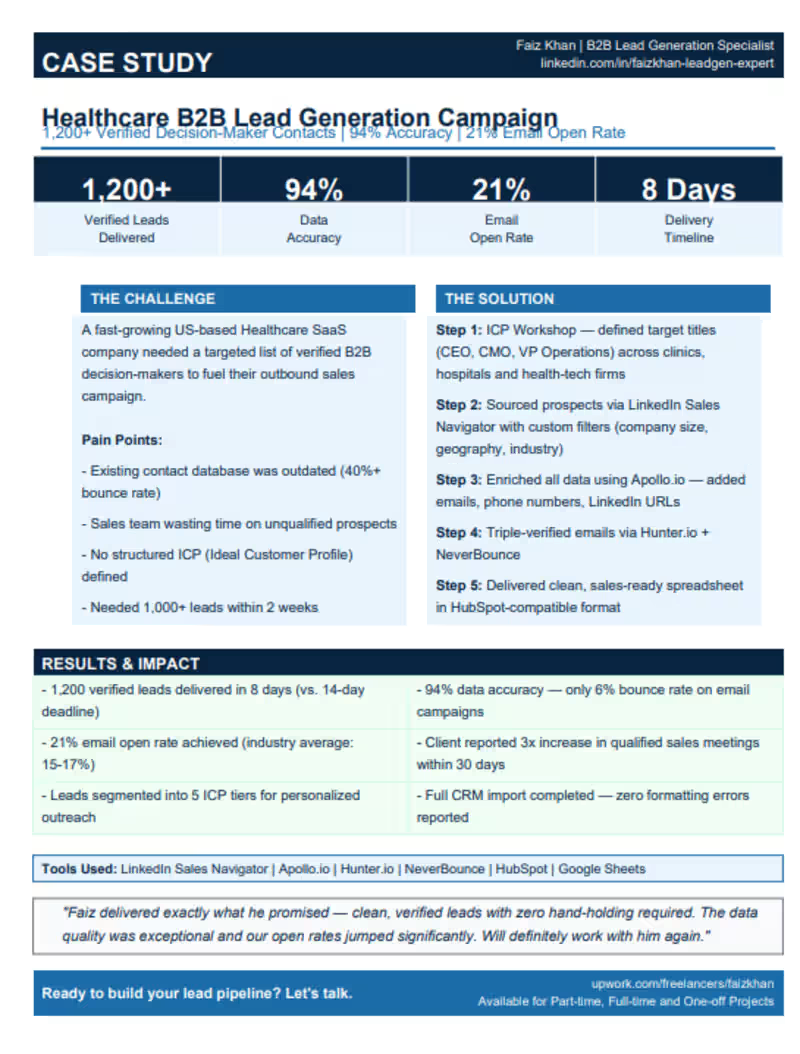
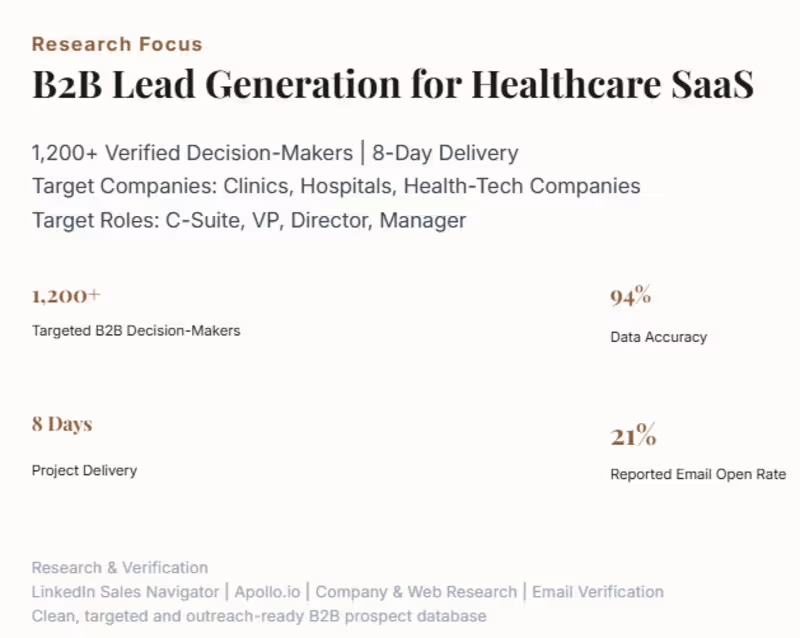
Helping Businesses Turn Their ICP Into Qualified B2B Leads
Ahmer Anis is a Gothic Horror Author & eBook Cover Designer.

6
Followers
Ahmer Anis is a Gothic Horror Author & eBook Cover Designer.

Graphic Designer & AI Creator helping businesses build bette
New to Contra
Graphic Designer & AI Creator helping businesses build bette

Cover image for How to Make Money on
How to Make Money on Facebook: 13 Practical Steps to Build, Grow, and Monetize Your Page Are You Posting on Facebook but Making Nothing? Many people create excellent content, share useful information, and regularly post videos and Reels, yet they still struggle to make money from Facebook. Why? Because creating content alone is not enough. If you want to turn Facebook into a source of income, you need a clear strategy, a specific audience, consistent content, and a proper understanding of how Facebook works. Facebook is no longer just a platform for connecting with friends. It has become a powerful ecosystem for business, branding, content creation, community building, and monetization. Thousands of creators and businesses in Pakistan and around the world are using Facebook to build audiences and create income opportunities through videos, Reels, digital products, services, affiliate marketing, brand collaborations, and other business models. But many people make the same mistake: they create a page, publish a few posts, wait for viral results, and quit when nothing happens. If you want long-term success, you need a roadmap. Here are 13 practical steps that can help you build a successful Facebook presence. They will not magically turn you into a billionaire, because apparently the internet has not invented that button yet, but they can put you on a much stronger path. Choose Your Niche The first step is deciding what you want your Facebook page to be about. Choose a niche that combines: Your interests Your skills Audience demand Opportunities for growth and monetization Some popular niches include: Study Abroad Digital Marketing Small Business Ideas Education Travel Food Technology Health and Fitness Motivation Job Updates Personal Finance AI and Technology Example If you live in the Czech Republic, you could create content for international students about: Student visas Living expenses Universities Part-time jobs Accommodation Travel Student life The key is to provide useful and accurate information instead of simply reposting whatever the internet has decided is true that morning. Learn more: "Meta for Business" (https://reference-url-citation.invalid/0) Create a Professional Facebook Page Creating a Facebook Page is easy. Building a professional brand requires more effort. Your page should have: A simple and memorable name A professional profile picture A high-quality cover image A clear bio Relevant contact information The correct category Consistent branding Example If your niche is Digital Marketing, your profile picture, cover photo, bio, posts, videos, and overall visual identity should support that theme. A professional appearance helps visitors immediately understand who you are and what value you provide. Learn more: "Facebook Pages for Business" (https://reference-url-citation.invalid/1) Understand Your Audience One of the biggest mistakes creators make is creating content for everyone. You need to know exactly who you are trying to help. Ask yourself: Who is my target audience? What problems do they have? What questions do they ask? What information are they searching for? What type of content do they enjoy? Example If you create content for Pakistani students interested in studying abroad, they may want information about: How to find scholarships How to apply for a student visa How to find universities How to get part-time jobs How much studying abroad costs When your content solves real problems, people have a reason to follow you. Learn more: "Meta Business News" (https://reference-url-citation.invalid/2) Learn Content Creation Good content is the foundation of a successful Facebook page. You do not necessarily need expensive equipment. You need useful ideas and the ability to communicate them clearly. Learn the basics of: Video recording Video editing Thumbnail design Script writing Storytelling Basic graphic design Short-form video creation Example Instead of saying: «"A scholarship is available."» Create a useful video explaining: Who is eligible What the scholarship covers Required documents Application deadline Official website Application process Useful information gives people a reason to watch, save, share, and follow your content. For free video education, resources such as Think Media and Primal Video can be useful starting points. "Think Media on YouTube" (https://reference-url-citation.invalid/3) "Primal Video on YouTube" (https://reference-url-citation.invalid/4) Create a Content Plan Do not wake up every morning and ask yourself: "What should I post today?" That is a surprisingly effective way to turn content creation into daily panic. Create a content calendar instead. Example Weekly Plan Monday: Educational video Wednesday: Short Reel Friday: Q&A or problem-solving post Sunday: Success story or case study You can also organize your content around different categories such as: Education + Entertainment + Inspiration + Problem Solving A content plan makes it easier to remain consistent and maintain quality. Publish High-Quality Videos Quality does not necessarily mean expensive cameras. Focus on the things viewers actually notice. Your videos should have: A strong opening Clear audio Good lighting Easy-to-understand information Appropriate video length Captions when useful A clear call to action The first few seconds are particularly important because viewers can scroll away faster than humanity can lose interest in a perfectly good conversation. Example Call to Action "If you found this information useful, follow the page for more practical tips." Your goal should not simply be to get views. You want viewers to take meaningful actions such as watching, sharing, commenting, saving, or following. Understand How the Facebook Algorithm Works You do not need to become an algorithm scientist. You do need to understand what makes people engage with your content. Pay attention to metrics such as: Watch time Retention Shares Comments Reactions Follows Clicks Instead of focusing only on the number of views, study why people watched or ignored your content. If one topic consistently generates stronger engagement, create more content around that subject. Learn more: "Meta Business News" (https://reference-url-citation.invalid/5) Stay Consistent Many creators stop after 20 or 30 posts because they do not see immediate results. That can be a mistake. Building an audience usually takes time. A video can sometimes gain attention long after it was originally published, while another video may disappear into the digital wilderness despite your best efforts. Focus on producing useful content consistently over the long term. Think in terms of months and years, not days and weeks. Consistency does not mean posting poor-quality content every day. It means developing a sustainable publishing routine that you can maintain. Build Trust Trust is one of your most valuable assets as a creator. Never build your page around: Fake information Misleading headlines False promises Fake income claims Unverified news Manipulated screenshots Use reliable sources whenever possible. Listen to your audience. Read comments. Correct mistakes when necessary. If people trust your information, they are more likely to return, recommend your page, and eventually become customers or supporters. Trust creates long-term value. Learn to Use Facebook Insights Do not create content blindly. Review your page's available analytics regularly. Look at questions such as: Which videos generated the highest watch time? Which posts received the most shares? Which topics attracted the most engagement? Which content generated new followers? When is your audience most active? Then use that information to improve your next content plan. Your analytics are not just numbers. They are feedback from your audience. Learn more: "Meta Business Help Center" (https://reference-url-citation.invalid/6) Build a Community A successful Facebook page is not just a collection of posts. It is a community. Encourage people to participate by: Asking questions Creating polls Responding to comments Going live Sharing behind-the-scenes content Asking for opinions Creating useful discussions Do not treat your audience as numbers. Talk to real people. A strong community can become one of the most valuable assets behind a successful creator business. Start Exploring Monetization Once your content, audience, and page meet the relevant eligibility requirements, Facebook and Meta may provide different monetization opportunities depending on your location, account status, content, and current policies. Potential income streams can include: Facebook content monetization Brand collaborations Affiliate marketing Digital products Online courses Consulting or professional services Sponsored content Selling products or services However, not every monetization method is available to every creator. Eligibility requirements, programs, policies, and availability can change over time. Always check the official Meta resources before making business decisions based on a specific monetization feature. Learn more: "Meta for Creators" (https://reference-url-citation.invalid/7) Keep Learning The digital world changes constantly. New features appear. Algorithms change. Audience behavior changes. New content formats become popular. Successful creators continue learning. Make a habit of: Learning new skills Testing new content formats Studying your analytics Improving your storytelling Experimenting with new features Learning from successful creators Reviewing your mistakes The goal is not to become perfect. The goal is to become better than you were last month. Useful Official Resources Facebook for Creators: "Facebook for Creators" (https://reference-url-citation.invalid/8) Meta for Business: "Meta for Business" (https://reference-url-citation.invalid/9) Meta Blueprint: "Meta Blueprint" (https://reference-url-citation.invalid/10) Final Thoughts Making money on Facebook is not simply about going viral. It is about building a valuable audience around useful content. Choose a clear niche. Build a professional page. Understand your audience. Create useful content. Study your analytics. Build trust. Stay consistent. Develop a community. Then explore monetization opportunities that are actually available to you. If you can consistently publish even one valuable piece of content a day, focus on solving real problems, and keep improving your skills, you can gradually build: A recognizable personal brand A loyal audience Multiple income opportunities Valuable digital assets A sustainable online business There is no guaranteed formula for becoming rich on Facebook. But there is a much more realistic formula: Value + Consistency + Trust + Learning + Patience = Long-Term Opportunity Success rarely happens overnight. But consistent work in the right direction can compound over time. Disclaimer This article is provided for educational and informational purposes only. Facebook monetization, earnings, reach, and eligibility depend on factors such as content quality, audience, location, account status, and Meta's current policies and programs. Monetization is not guaranteed, and creators should always check Meta's official policies and eligibility requirements before making financial or business decisions. Hashtags #FacebookEarning #FacebookPageGrowth #DigitalMarketingPakistan #OnlineEarningPakistan #FacebookMonetization #ContentCreatorTips #SocialMediaSuccess #EarnFromFacebook #FacebookMarketing #CreatorEconomy #FacebookReels #DigitalMarketing #ContentCreation #OnlineBusiness #LearnAndEarn
1
4
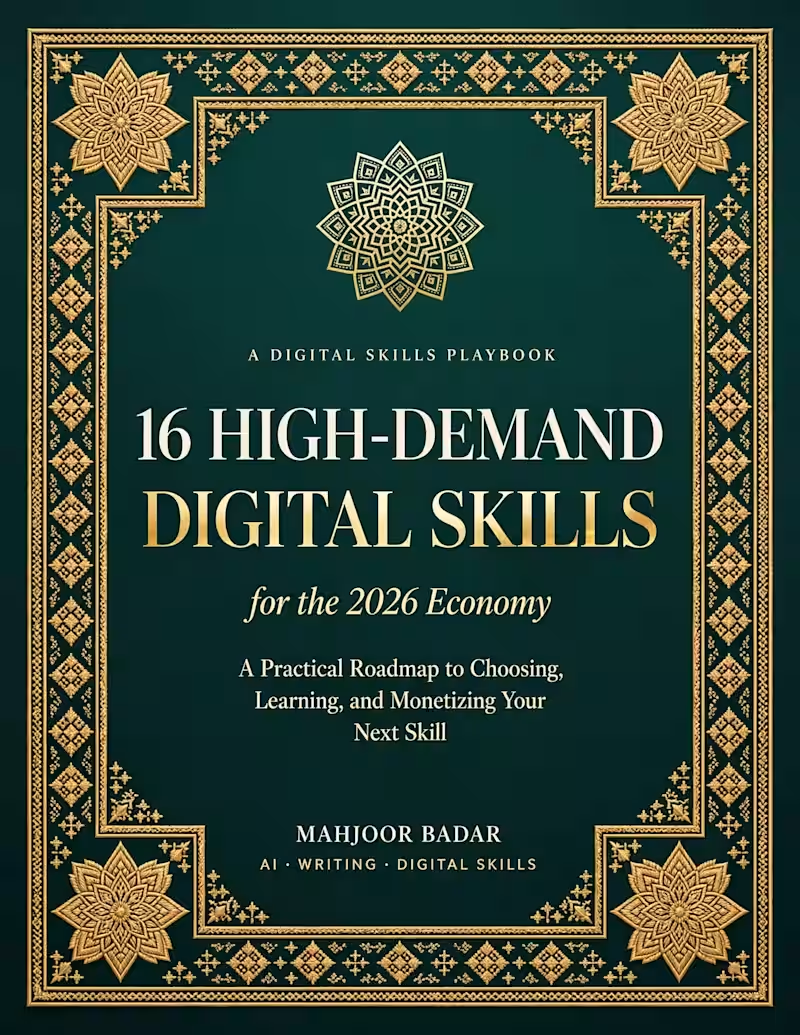
Cover image for 16 High-Demand Digital Skills for
16 High-Demand Digital Skills for the 2026 Economy A Practical Roadmap to Choosing, Learning, and Monetizing Your Next Skill The world of work is changing faster than ever. Artificial intelligence, remote work, automation, digital businesses, and the creator economy are transforming how people learn, work, and earn online. A traditional degree can still be valuable, but having practical digital skills can give you another powerful advantage: the ability to create value from anywhere. The real question is no longer: «“What job should I get?”» It is increasingly becoming: «“What valuable skill can I learn and use to solve problems for people and businesses?”» Here are 16 high-demand digital skills worth exploring in the 2026 economy. --- 1. Artificial Intelligence & Prompt Engineering AI has become a practical productivity tool for writers, designers, marketers, developers, researchers, and business owners. Learning how to work effectively with AI can help you: - Generate and improve ideas - Research information - Create content - Automate repetitive tasks - Analyze data - Build AI-powered workflows Prompt engineering is only one part of the skill. The bigger opportunity is learning how to use AI to solve real problems. --- 2. AI-Assisted Content Creation Businesses constantly need content. That includes blog posts, social media content, newsletters, scripts, product descriptions, presentations, and marketing materials. AI can dramatically speed up the process, but human judgment, editing, originality, and strategy remain important. The valuable skill is not simply “using AI.” It is creating useful content faster with AI while maintaining quality. --- 3. Graphic Design Visual communication remains essential. Businesses need: - Social media graphics - Presentations - Advertisements - Brand materials - eBook covers - Thumbnails - Digital products Tools such as Canva and other modern design platforms have made design more accessible. However, knowing which template button to press is not the same as understanding design. Typography, composition, hierarchy, branding, and visual communication still matter. --- 4. Video Editing Video has become one of the most important forms of digital communication. You can build a career by learning: - Short-form video editing - YouTube editing - Educational videos - Promotional videos - Social media reels - AI-assisted video production You do not necessarily need expensive equipment. A capable computer or even a smartphone, combined with the right software and skills, can be enough to start. --- 5. SEO Search Engine Optimization helps websites and content become more discoverable through search engines. SEO involves much more than adding keywords. Important areas include: - Keyword research - Search intent - Content strategy - On-page SEO - Technical SEO - Internal linking - Backlink strategy - Content optimization SEO can become particularly valuable when combined with writing, content marketing, or website development. --- 6. Copywriting Copywriting is the art of using words to encourage a specific action. That action could be: - Buying a product - Signing up for a newsletter - Booking a service - Downloading a resource - Clicking an advertisement Good copywriters understand psychology, customer problems, benefits, clarity, and persuasion. AI can generate text. But businesses still need people who understand what should be said, who it should be said to, and why it should matter. --- 7. Social Media Marketing Social media is no longer simply a place to share photos and updates. Businesses use platforms such as LinkedIn, Instagram, Facebook, TikTok, YouTube, and others to build audiences and generate customers. A social media marketer may work on: - Content planning - Strategy - Community management - Analytics - Advertising - Brand positioning - Content creation The strongest marketers focus on business outcomes rather than simply chasing likes. --- 8. Web Design Every serious business needs a digital presence. Web designers create websites that are: - Attractive - Easy to navigate - Mobile-friendly - Fast - Conversion-focused You can start with no-code platforms and website builders before moving into more advanced technologies. Learning basic HTML, CSS, UX principles, and modern website tools can significantly expand your opportunities. --- 9. No-Code & Automation You do not always need to become a professional programmer to automate business processes. No-code and low-code platforms allow people to connect applications and create automated workflows. For example: Form submission → Spreadsheet → AI processing → Email notification → CRM update Businesses are willing to pay for automation because saving employees several hours every week can have real financial value. --- 10. Data Analysis Businesses generate enormous amounts of data. The challenge is turning that data into useful decisions. Data analysis skills can include: - Excel or Google Sheets - Data cleaning - Visualization - Reporting - Basic statistics - Business intelligence - AI-assisted analysis You do not need to become a mathematician to start. A strong understanding of spreadsheets and analytical thinking can already be useful. --- 11. Cybersecurity As more businesses move online, protecting digital systems becomes increasingly important. Cybersecurity professionals help organizations protect: - Accounts - Networks - Websites - Customer information - Devices - Digital infrastructure This field requires serious learning and ethical responsibility, but it offers a wide range of career opportunities. --- 12. Software & App Development Programming remains one of the most powerful digital skills. Developers can build: - Websites - Mobile applications - SaaS products - APIs - Automation systems - AI applications - Internal business tools Modern AI coding assistants can make development more accessible, but understanding programming concepts remains extremely valuable. AI may help write code. You still need to understand what that code is supposed to accomplish. --- 13. Digital Marketing Digital marketing combines multiple skills to help businesses attract and retain customers. It can include: - SEO - Content marketing - Email marketing - Social media - Paid advertising - Analytics - Conversion optimization Learning how these channels work together can be more valuable than learning a single marketing tactic in isolation. --- 14. Email Marketing Email remains one of the most useful channels for building direct relationships with an audience. Businesses use email for: - Newsletters - Product launches - Promotions - Customer education - Automated sequences - Lead nurturing A good email marketer understands audience segmentation, messaging, timing, and conversion. The inbox may look old-fashioned, but apparently it refuses to die. --- 15. Personal Branding Your skills are important. But being discoverable can be just as important. Personal branding means communicating: Who you are + What you know + Who you help + What you can do Platforms such as LinkedIn, Medium, YouTube, and other social networks can help professionals demonstrate their expertise. Instead of simply saying: «“I am a designer.”» You can publish your designs, explain your process, share useful knowledge, and demonstrate your results. Your content becomes part of your portfolio. --- 16. Digital Product Creation One of the most interesting opportunities in the digital economy is creating products that can be sold repeatedly. Examples include: - eBooks - Templates - Notion systems - Canva templates - Printables - Online courses - Prompt packs - Design resources - Spreadsheets - Digital guides The advantage is scalability. Instead of exchanging your time for money every time, you can create a useful digital product and sell it repeatedly. However, creating the product is only half the job. You also need marketing, distribution, positioning, and customer understanding. --- Which Skill Should You Learn? Do not try to learn all 16 skills at once. That is an excellent strategy if your goal is to become professionally overwhelmed. Instead, choose one primary skill based on three factors: 1. What interests you? You are more likely to continue learning something you genuinely enjoy. 2. What are businesses willing to pay for? A skill becomes commercially useful when it solves a real problem. 3. What can you demonstrate? Build projects while learning. A portfolio often communicates your ability more effectively than simply saying: «“I completed a course.”» --- The Power of Combining Skills You do not necessarily need to become the world's best person at one skill. Sometimes the real advantage comes from combining several complementary skills. For example: AI + Content Writing + SEO can become an AI-powered content service. Graphic Design + Social Media + Marketing can become a social media design business. No-Code + AI + Automation can become an automation service. Writing + Personal Branding + Digital Products can become an audience-based digital business. The future belongs not only to specialists, but also to people who can combine skills intelligently. --- A Simple Learning Roadmap If you are starting from zero, follow a simple process. Step 1: Choose One Skill Pick one skill instead of trying to learn everything simultaneously. Step 2: Learn the Fundamentals Use free tutorials, books, courses, documentation, and practical exercises. Step 3: Build Projects Do not spend months only watching tutorials. Create something. Step 4: Build a Portfolio Show what you can actually do. Step 5: Start Small Offer your skill to small businesses, creators, entrepreneurs, or clients. Step 6: Improve Through Real Work Client work exposes weaknesses that tutorials conveniently hide. Step 7: Add Complementary Skills Once you become comfortable with your primary skill, add another skill that increases its value. --- Final Thoughts The digital economy is creating new opportunities, but opportunities do not automatically create income. A skill becomes valuable when you can use it to solve a real problem. You do not need to master everything. Choose one skill. Learn it. Practice it. Build projects. Create a portfolio. Find people who need that skill. Then keep improving. The goal is not to collect certificates. The goal is to become useful. And in a rapidly changing economy, being useful is still one of the safest skills of all. --- About the Author Mahjoor Badar writes about AI, digital skills, online work, digital products, and practical ways to use technology for learning and earning. This article is based on the digital skills framework presented in the book “16 High-Demand Digital Skills for the 2026 Economy.”
1
2
24
B2B SaaS Content Writer Helping Software Companies Grow
New to Contra
B2B SaaS Content Writer Helping Software Companies Grow

Lead Generator | Sales Copywriter | Content Writer
Dream big,stay positive,work hard and enjoy life.

Efficient HR Solutions & Virtual Assistance