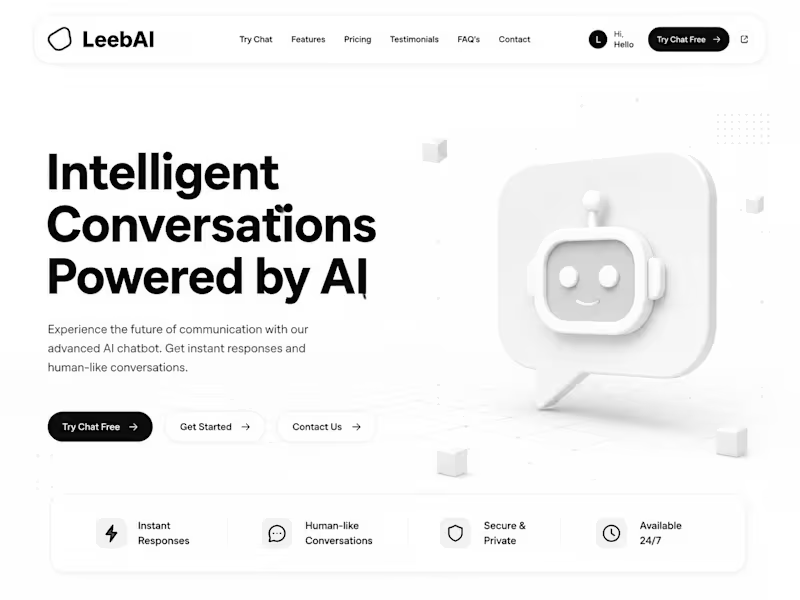
Projects using Python in IslamabadProjects using Python in IslamabadLeebAI All-in-One AI Platform (Web & Mobile)
Project Overview: LeebAI is a fully AI-powered, all-in-one platform that brings together the world's top AI models including ChatGPT, Gemini, DeepSeek, Flux, Stability AI, and Claude under a single roof. The platform is available on both web and mobile, designed for users who want to leverage AI for text generation, image creation, coding, research, file analysis, and content summarization all without switching between multiple tools.
My Role: Full Stack Developer & AI Engineer Built the entire platform from scratch, including frontend, backend, AI integrations, and mobile application.
Key Features Built:
Multi-model AI chat interface (ChatGPT, Gemini, DeepSeek, Claude, and more)
AI image generation (Flux, Stability AI)
Deep research & web research tools
File attachment & document analysisYouTube video & website
link summarization
Code generation & debugging assistant
Subscription-based access with multiple pricing tiers
Full admin panel for user & subscription management
Outcome: The platform was successfully delivered for a startup client acquired via Upwork. LeebAI is currently live and performing exceptionally well, serving users across web and mobile. Videon – AI Video understanding system
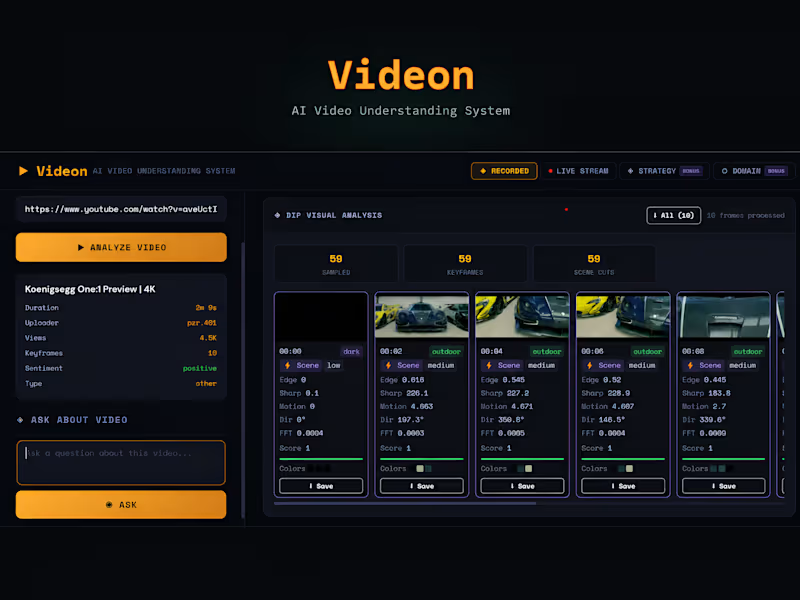
A full-stack AI pipeline for analyzing live streams and recorded YouTube videos, developed as a university project pushed to production-level complexity.
Implements a 12-technique computer vision pipeline (Gaussian blur, Sobel, CLAHE, optical flow, HOG, K-Means) for keyframe extraction and visual feature analysis, feeding results to an LLM for intelligent video understanding. Includes domain-specific analysis modules for medical, trading, law, and education content, plus a strategy-extraction engine that auto-generates pseudocode and Python stubs directly from video content. Agent Evaluation Dashboard — Full-Stack LLM Observability Tool
Teams running AI agents in production need visibility into how those agents actually perform not just whether they respond, but how accurate, fast, and cost-efficient they are. I built a full-stack observability dashboard to solve exactly that: a single place to track accuracy, latency, API cost, and schema compliance across multiple LLM models and agent types.
What I built
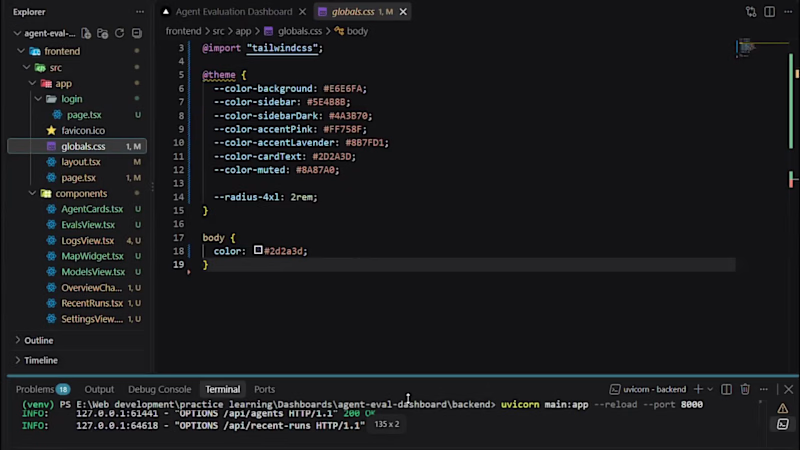
A responsive Next.js (App Router) frontend styled with Tailwind CSS — deep purple sidebar, live accuracy/latency charts (Recharts), filterable eval-run tables, and per-model performance comparisons
A Python FastAPI backend serving the dashboard's data layer, with token-based authentication protecting every route
Full session handling: login, protected pages, automatic redirect for unauthenticated users
A fully responsive layout collapsible drawer sidebar on mobile, reflowing grid on tablet/desktop