Projects using LangChain in IslamabadProjects using LangChain in IslamabadInForm - AI-Driven Physiotherapy App for Diagnosis, Rehab & Recovery Tracking
The core problem it solves:
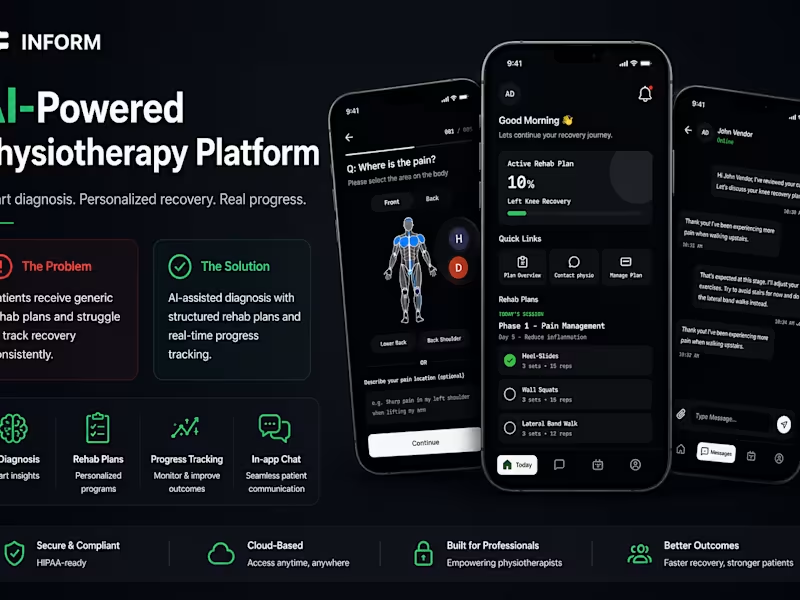
Patients struggle to get timely, structured physiotherapy guidance, while physiotherapists are overwhelmed managing cases, tracking progress, and creating personalized rehab plans manually. Existing systems either lack intelligence or lack control.
This product creates a complete digital workflow where diagnosis, communication, and recovery are all connected into a single system.
What was built:
A full AI-powered physiotherapy platform with mobile apps for patients and a web-based admin system for physiotherapists.
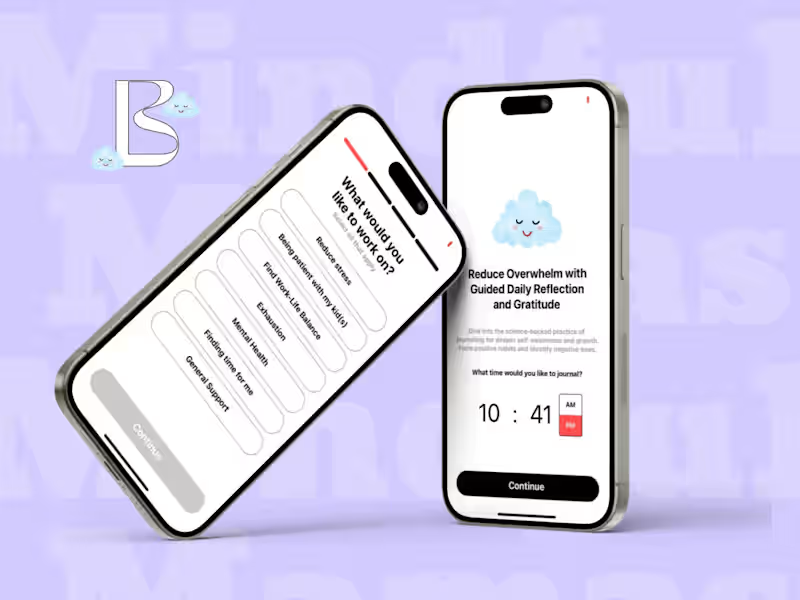
Patients begin by submitting structured symptom data through guided questionnaires. Instead of jumping directly to conclusions, the system uses an AI diagnosis engine to analyze patterns and generate internal clinical suggestions. These suggestions are never shown to patients, they act as decision support for physiotherapists, ensuring every diagnosis remains human-approved.
Once a case is created, physiotherapists review patient data, validate or override AI recommendations, and communicate directly through an in-app messaging system. Every interaction is tied to a structured case, ensuring context is never lost.
The system then moves into recovery management.
Physiotherapists create personalized rehab plans with multi-phase programs, exercise libraries, and video guidance. Patients follow these plans inside the app, logging progress, completing KPI-based milestones, and moving through recovery phases in a structured way.
A key part of the system is the progress tracking engine. Patients log metrics, complete phase-based goals, and unlock new stages only when criteria are met. Physiotherapists get real-time visibility into adherence, performance, and patient feedback, making the system both trackable and measurable.
Alongside this, an intelligent chatbot handles general queries and reduces load on physiotherapists. When confidence is low or cases become complex, the system escalates conversations into structured cases with full context preserved.
Technical architecture:
Built as a scalable mobile-first system using React Native for patient apps and React.js for the admin panel, with a Node.js/Nest.js backend and Python powering AI-driven diagnosis logic. Data is managed through PostgreSQL, with secure authentication and encrypted communication layers.
The AI layer is designed as a support system, not a replacement. It uses LLM-based reasoning to assist diagnosis and continuously improves through feedback loops based on physiotherapist decisions, creating a human-in-the-loop learning system.
Deployed on cloud infrastructure (AWS/GCP), with Stripe integration for subscription-based access and a modular architecture designed for future AI expansion.
Business model built in from day one:
Subscription-based access for patients, with clear pathways to expand into AI-assisted rehab recommendations, outcome analytics, and protocol optimization.
The system is designed to evolve into a data-driven recovery platform where every patient interaction improves future treatment accuracy, turning clinical workflows into scalable intelligence. 🤖 AI Contract Assistant
📌 Project Overview
Manual document and contract reviews create massive bottlenecks in corporate compliance and legal workflows. Enterprise teams spend hundreds of hours cross-referencing incoming agreements, submissions, and partner emails against strict organizational rules.
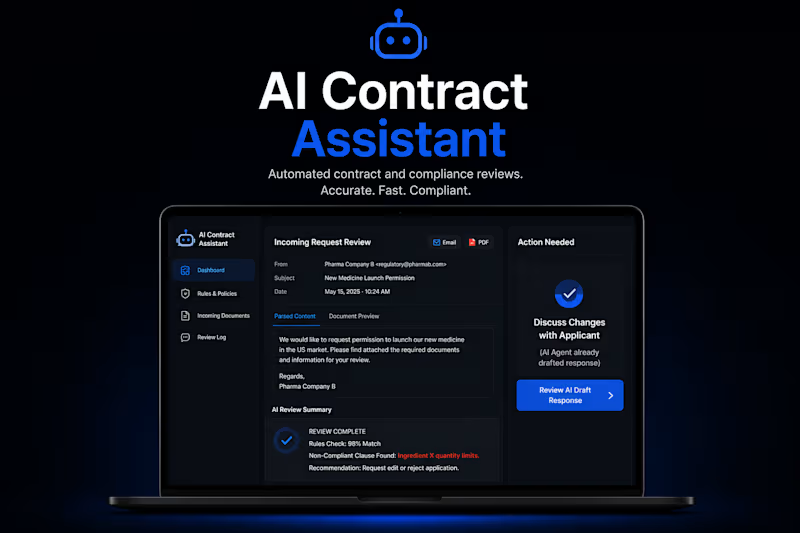
To eliminate this friction, I engineered the AI Contract Assistant. This platform allows organizations to define their business rules, policies, and regulatory compliance standards once—and automatically reviews all incoming emails, contracts, and applications in real time.
⚡ Core Workflow
One-Time Rules Setup: Organizations upload internal policy documents, safety guidelines, and legal requirements into a secure vector database.
Automated Ingestion: The system captures incoming emails, PDFs, Word documents, and application files instantly.
AI Rule Validation: The engine cross-references every clause and term against pre-defined rules, generating instant risk reports.
Autonomous Counter-Response:
If Compliant: The AI automatically progresses the application and communicates with the sender.
If Non-Compliant: The AI drafts a precise, itemized report explaining exact violations and required changes.
🛠️ Key Features
Custom Rule Engine: Define complex legal, pharmaceutical, financial, or internal company guidelines effortlessly.
Smart Multi-Format Parsing: Extracts and processes text from scanned PDFs, .docx files, and raw emails.
Autonomous Email Agent: Handles back-and-forth communication without requiring manual oversight.
Risk Heatmaps & Dashboards: Real-time visual tracking of compliance status, red flags, and missing clauses.
Complete Audit Trail: Full history of every review, rule check, and outgoing response for accountability.
💻 Tech Stack
Frontend: Next.js, React, TailwindCSS, TypeScript
AI & Orchestration: LangChain, OpenAI GPT-4, LlamaIndex
Vector Database: Pinecone (Multi-tenant architecture)
Backend: Python, FastAPI, Celery
.
.
.
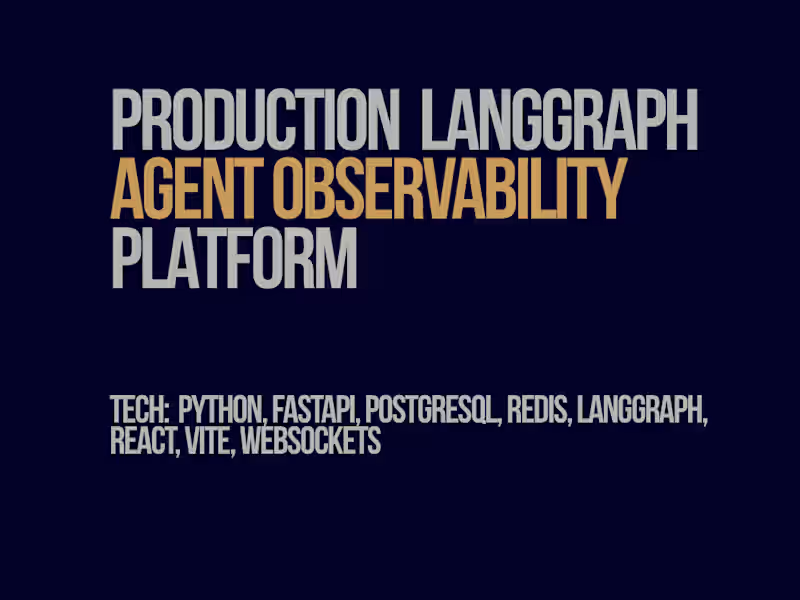
#AIContractAssistant #LegalTech #ArtificialIntelligence #FullStackDeveloper #LangChain #OpenAI #Pinecone #NextJS #PythonDeveloper #FastAPI #AutomatedWorkflows #EnterpriseSaaS #B2BSoftware #ContractAutomation #ComplianceAI #FreelanceDeveloper #ContraHire Built a production-ready observability platform for AI agents using FastAPI, PostgreSQL, Redis, LangGraph, React, and WebSockets.
The platform provides real-time visibility into agent execution, including traces, token usage, cost, latency, and errors.
Key capabilities:
• Real-time agent trace ingestion
• Execution tracking
• WebSocket-based live updates
• Token and cost monitoring
• Latency and error tracking
• Agent execution dashboard
• Instrumented research and customer-support agents
Tech: Python, FastAPI, PostgreSQL, Redis, LangGraph, React, Vite, WebSockets Automated Multi-Agent AI Support & Lead Triage Pipeline
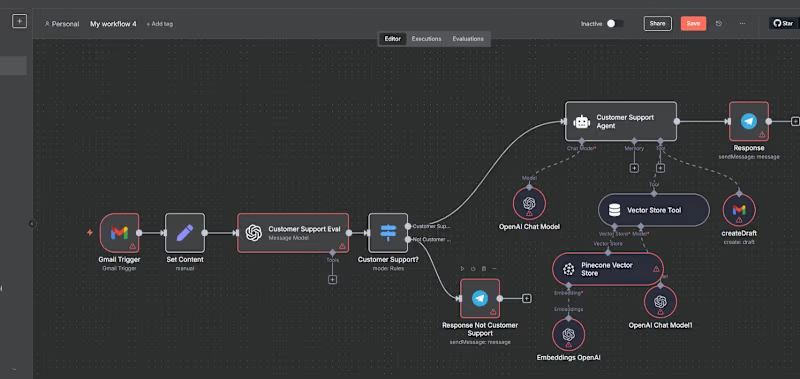
Are your high-ticket clients waiting hours for an email response? This intelligent multi-agent n8n workflow instantly screens, analyzes, and responds to customer emails in real-time, utilizing advanced RAG (Retrieval-Augmented Generation) to deliver human-like support instantly.
Project Overview:
This is an enterprise-grade AI automation system designed to eliminate manual customer support queues. Instead of simple auto-replies, it uses a multi-agent routing structure combined with a dynamic knowledge base to handle complex inquiries autonomously.
How It Works (Under the Hood):
Instant Inbound Triage: A Gmail Trigger catches incoming emails instantly, extracting raw content for processing.
AI Intent Classification: An initial OpenAI model acts as a gatekeeper, analyzing the email to determine if it is a valid customer support request or irrelevant noise.
Conditional Routing: An advanced router splits the path: non-support emails receive a polite automated Telegram update, while actual support tickets are routed to the main AI engine.
Context-Aware AI Agent: The core Customer Support Agent is equipped with an OpenAI Chat Model, conversational memory, and a custom Vector Store Tool.
Pinecone RAG Integration: The agent queries a Pinecone Vector Database (powered by OpenAI Text Embeddings) to fetch real-time, accurate company documentation and context, eliminating hallucinations.
Automated Action & Response: Once the resolution is drafted, the system automatically creates a draft in Gmail for review and sends an instant internal notification via Telegram.
Why This Wins Clients (The Value Pitch):
Zero Hallucinations: Connected to a live vector database (Pinecone) so the AI only speaks from approved company data.
Reduced Overhead: Cuts down customer support response times from hours to under 60 seconds.
Production-Ready Architecture: Designed with modern n8n AI sub-nodes, structured tools, and modular scaling capabilities.