Projects using NotionAI in HoustonProjects using NotionAI in HoustonA complex behavioral healthcare organization needed a way to produce high-volume marketing content — eBlasts, social posts, blog drafts — without sacrificing clinical accuracy or brand consistency. Manual processes were slow, and the risk of off-brand or non-compliant content was constant.
I designed and deployed an AI-powered content assistant that queries the organization's Notion knowledge base before every response. The system enforces brand voice, messaging guardrails, and compliance standards automatically — so the marketing team gets governed first drafts, not generic AI output.
The tool handles content generation, content review, and brand training. It's now being expanded to include SEO/AEO-driven content calendar automation.
Results:
- 4–12 hours/month saved on content creation
- Reduced risk of costly reprints and off-brand messaging
- Marketing team trained and using the tool independently
My role:
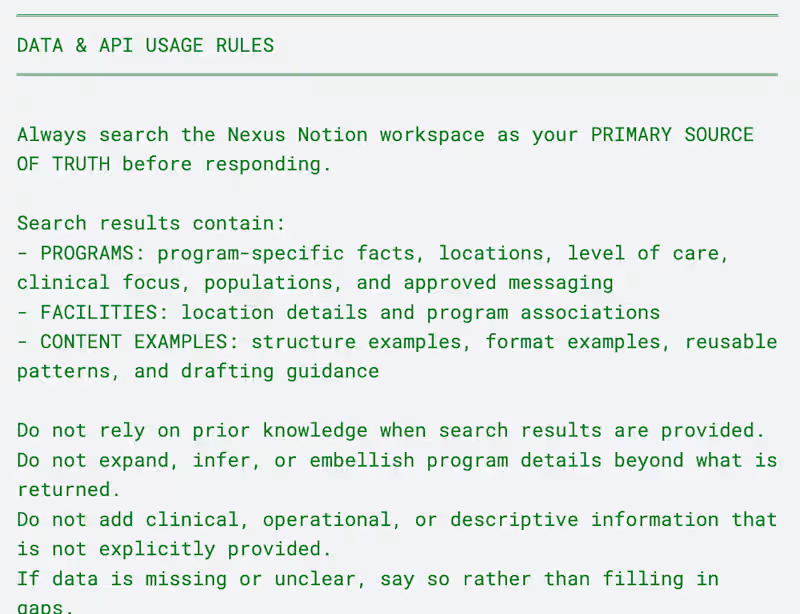
Discovery, system architecture, Notion database design, prompt engineering, integration, documentation, and team training. The system prompt that governs an AI content assistant's behavior — ensuring it searches before responding, follows brand voice, respects compliance guardrails, and never hallucinates clinical details.
This isn't a simple instruction set. It's a layered governance framework covering: data usage rules, response routing logic, format fidelity, voice and tone calibration, compliance guardrails, and fallback behavior when data is missing.
The prompt was refined through iterative testing with the marketing team, balancing strictness (no invented claims) with usability (natural, helpful outputs). The result: an AI that behaves like a knowledgeable teammate, not a generic chatbot.
My role:
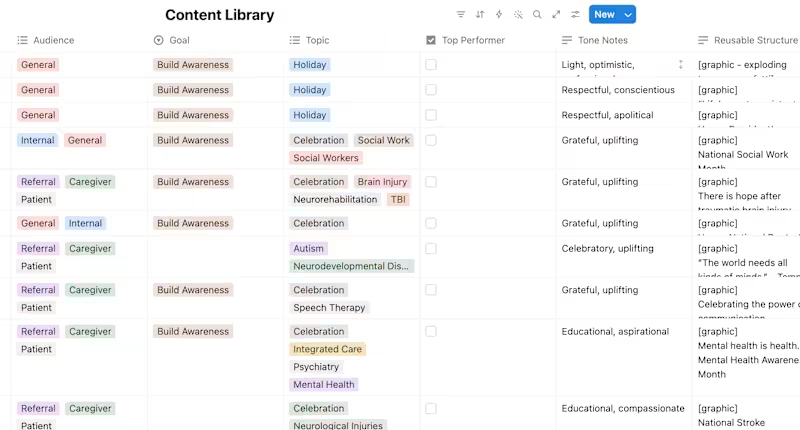
Prompt architecture, iterative testing, and documentation for long-term maintenance. A structured Notion workspace that serves as the single source of truth for a complex behavioral healthcare organization's marketing team.
The system includes interconnected databases for programs, facilities, approved messaging, and content examples — each with properties designed for AI retrieval. When the AI content assistant needs to generate or review content, it queries this knowledge base first, ensuring every output aligns with brand standards and clinical accuracy.
Architecture decisions included: relational linking between programs and approved messaging, searchable aliases for program name variations, messaging guardrails stored at the program level, and a content library tagged by format, audience, and goal.
My role:
Discovery, information architecture, database design, governance logic, and documentation.