Freelancers using Fuser in Greater Noida
Freelancers using Fuser in Greater Noida
Sign Up
Post a job
Sign Up
Log In
Filters
2
Projects
People
Ayush Shukla
Greater Noida, India
UI/UX Designer • No-code Builder • AI Architect
$1k+
Earned
69
Followers
expert
Follow
Message
UI/UX Designer • No-code Builder • AI Architect
7
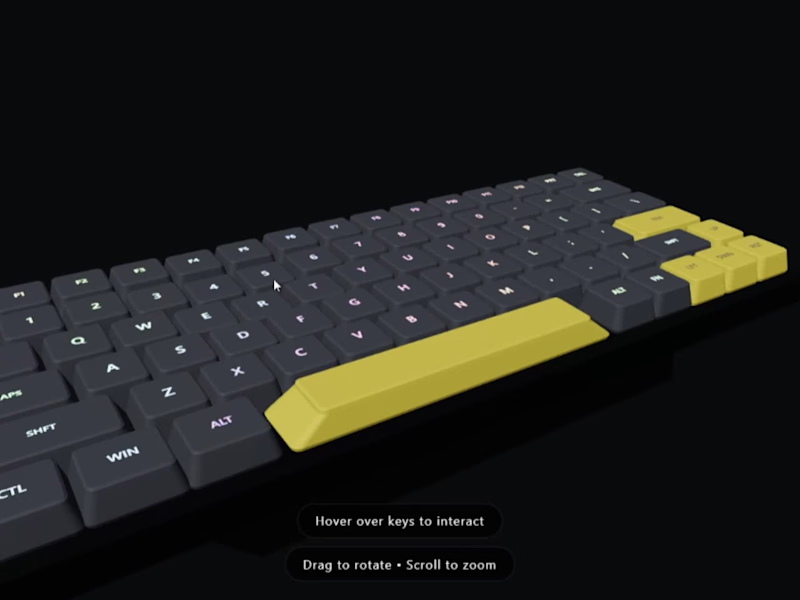
A product is easy to build. A brand is what makes it unforgettable. So I built BRANDRY! A workflow that takes a single input—a keyboard—and expands it into a complete, premium brand system. — I didn’t want random outputs. I wanted something that thinks like a design studio. Everything starts with the input image. I analyze: • materials • lighting • form • design language From that, the entire brand direction is derived. — Then the system builds across four layers: 1. Logo: A refined mark inspired by the product—never copied, always reinterpreted. 2. Moodboard: Colors, textures, and visual cues extracted and elevated into a cohesive direction. 3. Brand Identity: A dark, premium system—typography, palette, and visual language working together. 4. Website Mockup: A cinematic presentation—displayed on devices, placed in a real environment, lit like a product ad. And to bring everything together, I leaned heavily on the Compositor Node. Every output is carefully layered: • controlled lighting • depth and shadows • balanced composition Then inside the Creative Code Node, I used Three.js to construct a 3D version of the product. That added: • real depth • accurate lighting interaction • natural integration into scenes Workflow: https://app.fuser.studio/view/03af9496-bc89-4f76-a1b7-00c25c7fb513 The product doesn’t feel placed—it feels built into the frame. …this one’s my second submission.
6
7
365
8
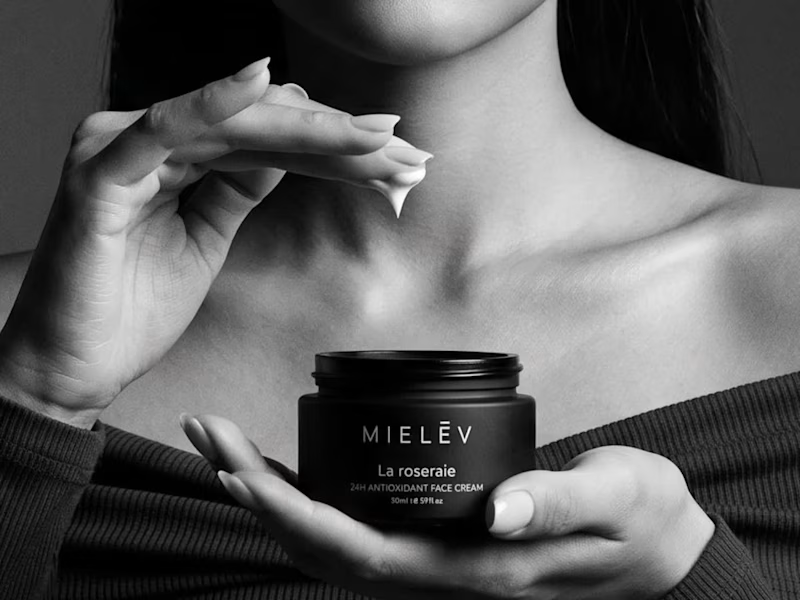
Most AI outputs look impressive. But they still don’t feel like a real ad. That gap is exactly what I set out to close with AUREL🚀 — I didn’t approach this like prompting. I approached it like building a creative pipeline. Everything starts with structure. I used the Compositor Node as the core—treating every visual like a layered campaign build: • model as the primary subject • product placed with intent • controlled lighting and shadow passes • grain and texture for depth Nothing is random. Every layer is composed to feel like it went through an actual art direction process. That’s where the “ad feel” comes from. — Then I pushed the product beyond flat placement. Inside the Creative Code Node, I brought in Three.js to generate a 3D version of the product. This changed everything. Now the product: • has real depth • reacts to light correctly • sits naturally inside the frame It’s not pasted in—it’s constructed into the scene. — From there, I designed the system to branch into four distinct campaign directions: - Luxury Editorial — minimal, high-contrast, fashion-first - Streetwear — gritty, neon-lit, high energy - Futuristic — cinematic, immersive, sci-fi driven - Surreal — abstract, dreamlike, expressive Each theme has its own composition logic, not just a visual style. Workflow: https://app.fuser.studio/view/fb2d0257-c565-493f-a2a8-099d2b9dd598
6
8
367
10
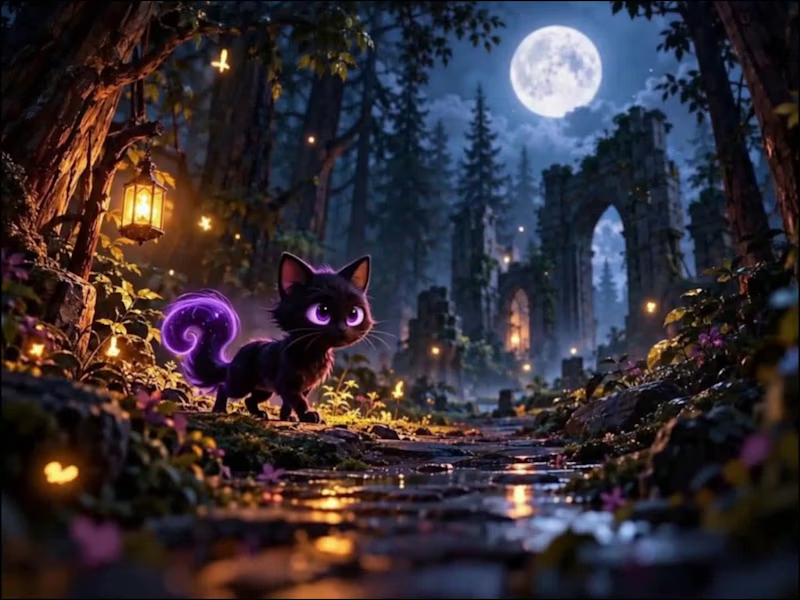
BEYOND THE VEIL ✨ What started as two simple fantasy scenes became a completely different world. For this challenge, I wanted to create a cinematic transition where reality itself feels like it’s breaking apart before revealing another world. Instead of manually building every layer, mask, distortion, and reveal, I directed invideo Editor’s AI agent to build the effect directly on my timeline. I could describe the look I wanted, let the agent handle the heavy lifting, then refine the result myself until it felt right. That made the process way easier — I could focus more on the creative direction and less on the repetitive technical work. From original forest → reality fracture → celestial world. Built with invideo Editor. 🎬✨ invideo Editor is free to try @Invideo @invideo.creators #invideoeditor
10
10
422
66
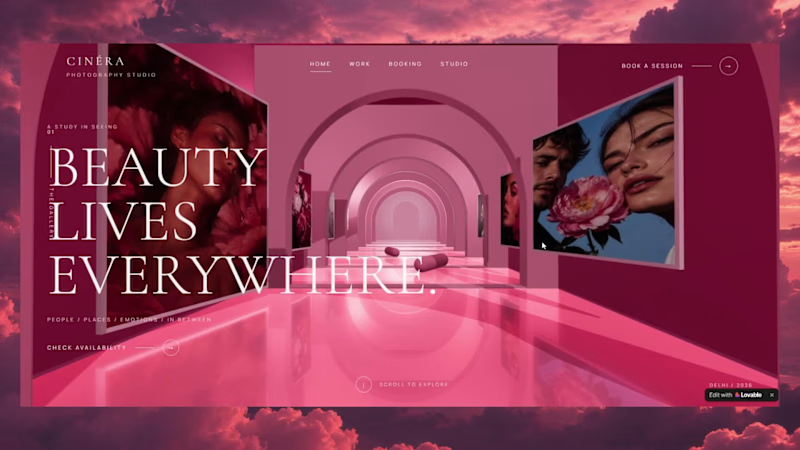
I wanted to make a photography website that felt more like an experience than a portfolio. So I built CINÉRA (https://cinera-app.lovable.app) — a cinematic photography studio website with a 3D gallery, interactive archive, real availability, and a complete booking flow. You can explore the work, pick a date and time, add your shoot details, and get booked without the usual back-and-forth. On the studio side, there’s a dashboard to manage bookings and inquiries, plus automatic booking confirmations to take a bit of the repetitive work off the photographer’s plate. This was built for an appointment-based business challenge, and honestly, I had way too much fun making it.
38
66
7K
Fuser
(2)
Follow
Message
Explore people