Freelancers using ChatGPT in Dublin
Freelancers using ChatGPT in Dublin
Sign Up
Post a job
Sign Up
Log In
Filters
2
Projects
People
Projects we love
Projects we love
Standout projects making waves around the web
View more
Message
26
Anna Peredelskaia
pro
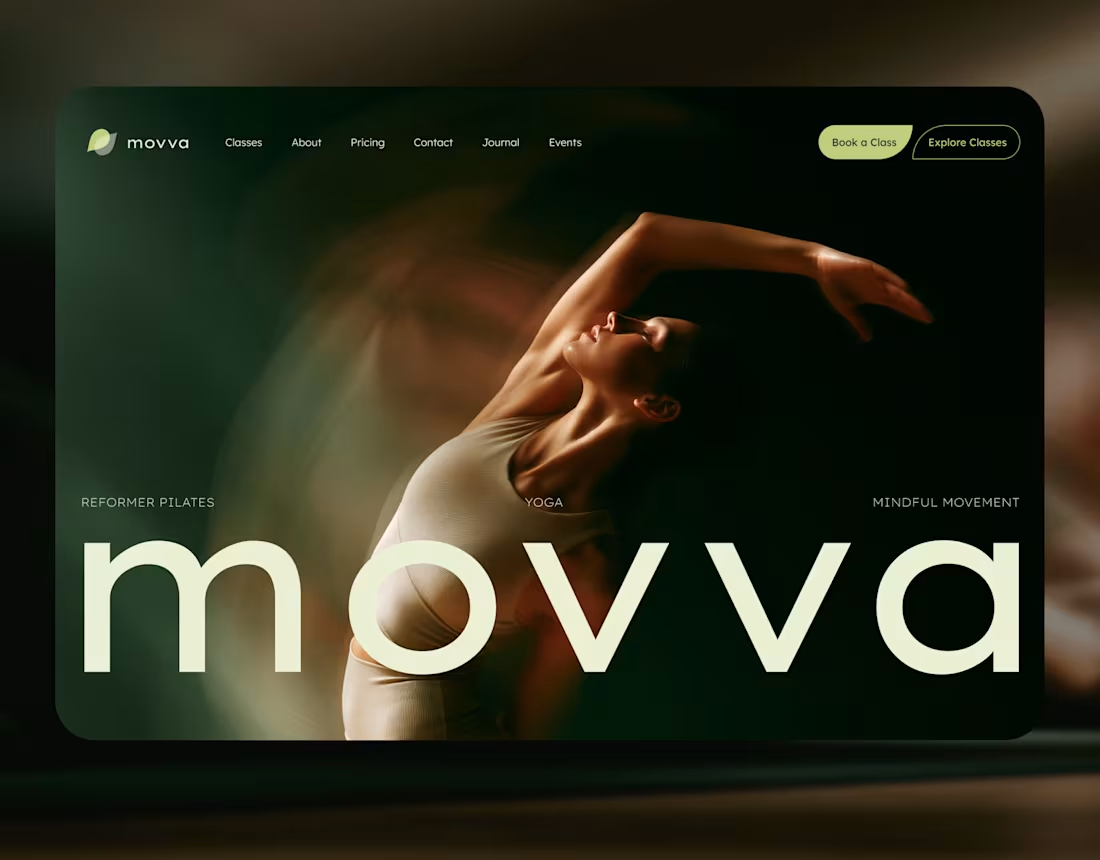
MOVVA — Yoga & Pilates Website Design and Webflow Development
1
26
383
Message
42
Maxim Zvarici
pro
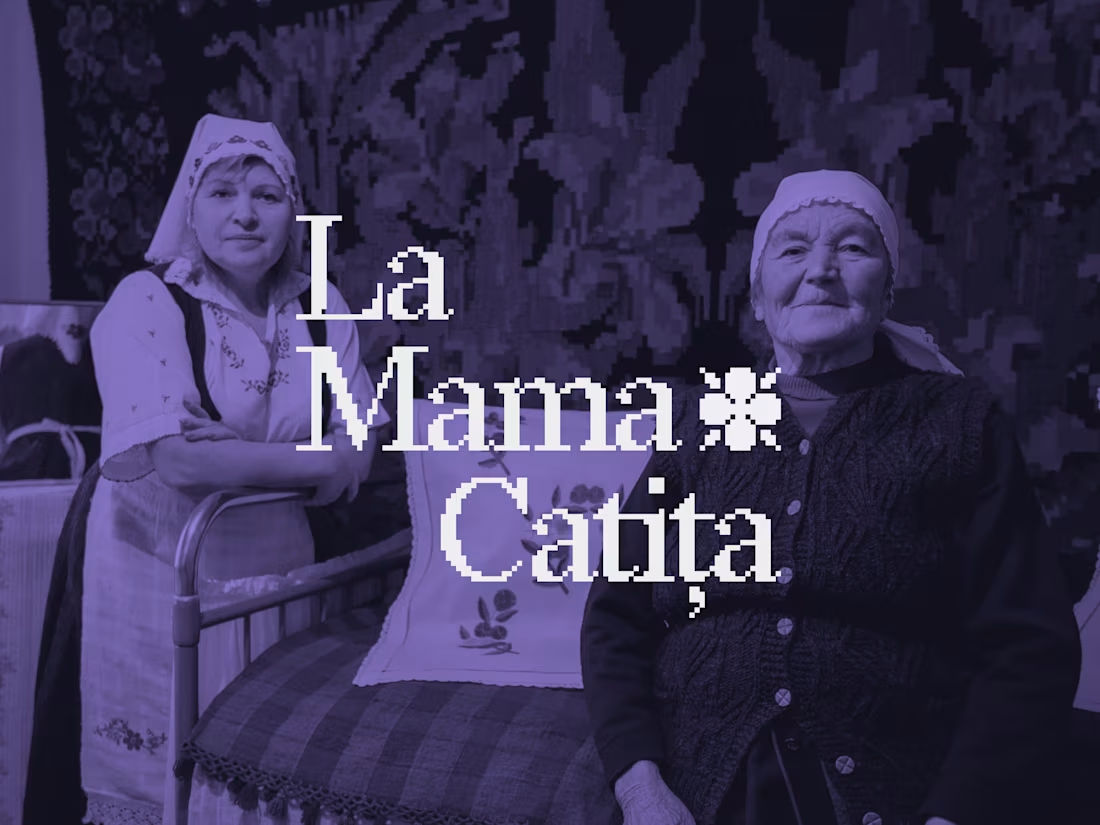
La Mama Catița Visual Identity Design
1
42
804
Message
25
Sasha Beglova
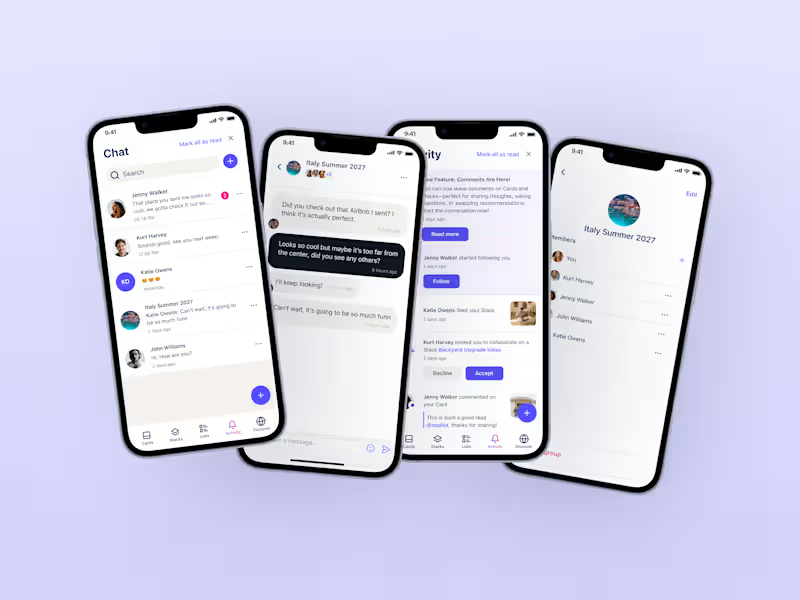
Stacklist | UI/UX & Graphic Design
25
560
Message
35
Flávia Jackeline
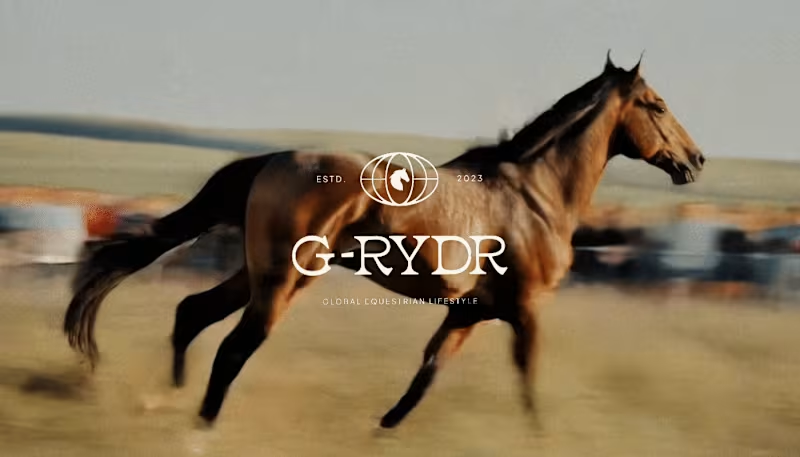
Visual Identity Design for G-RYDR — Equestrian Lifestyle
1
35
404
Web design projects using Framer
Framer
The best modern websites built on the leading web design tool, Framer
View more
Message
37
Kyle Panilan
max
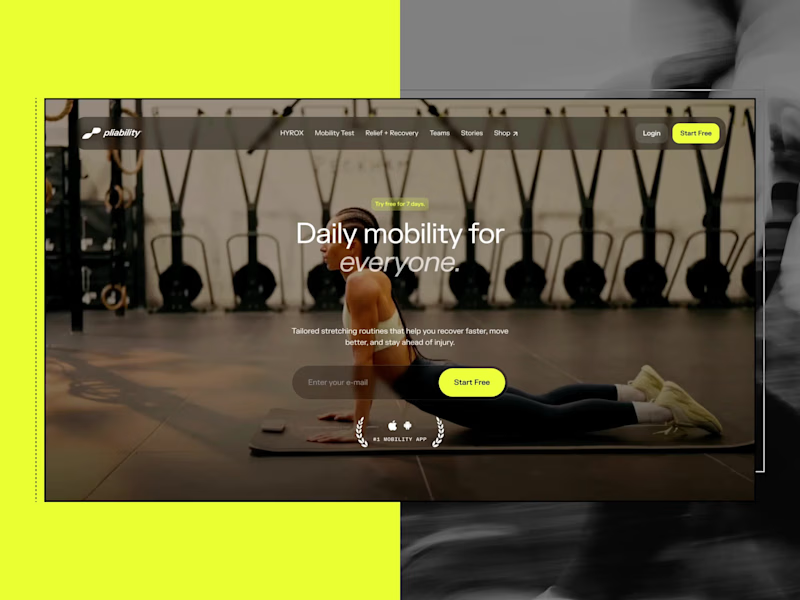
Framer Website for pliability: the #1 Mobility App in the World
1
37
764
Message
9
Domenico Griffo
pro
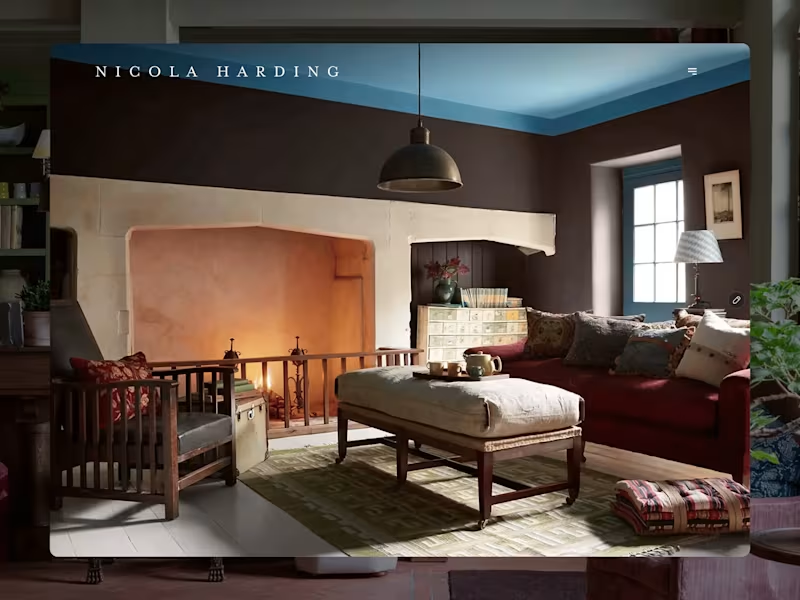
Nicola Harding & Co
9
163
Message
6
Rachel Cohen
pro
Starfish Studios Website Redesign
6
157
Message
14
Studio Ilker
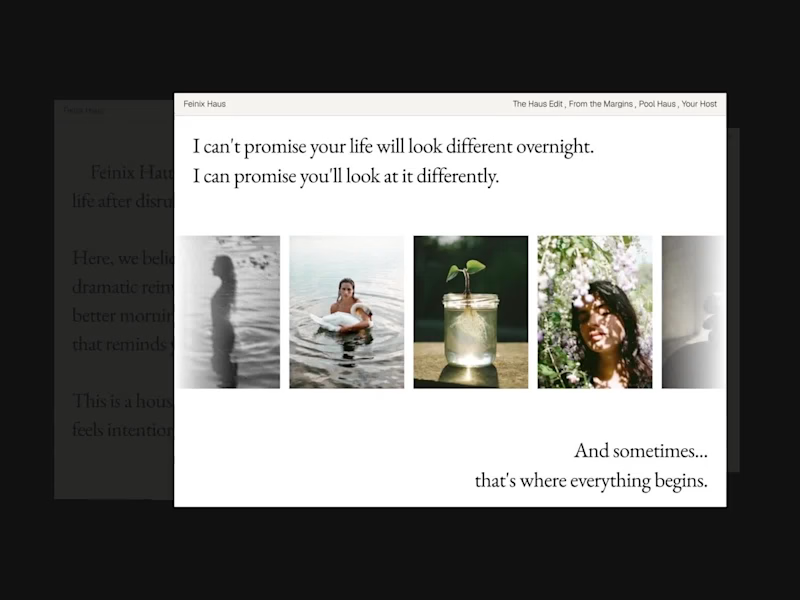
Feinix Haus Website
14
694
AI projects
AI
New projects from the best AI creators
View more
Message
13
Lisa Demchenko
max
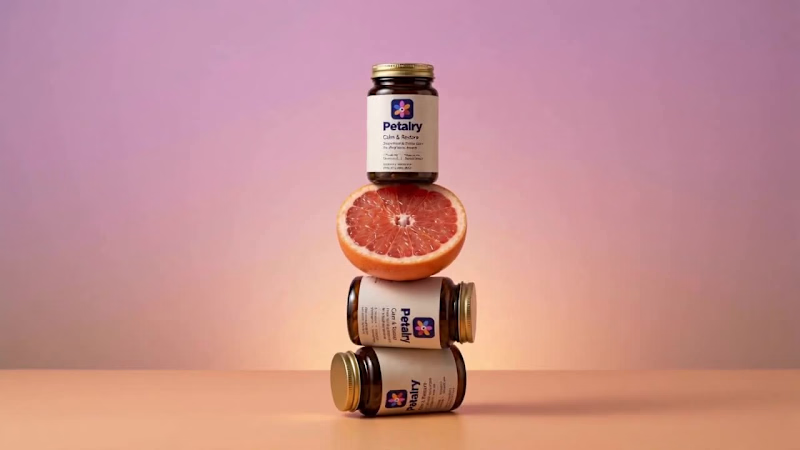
Petalry Brand Identity Development - Kittl exploration
13
404
Message
10
Alexandru Köllo
max
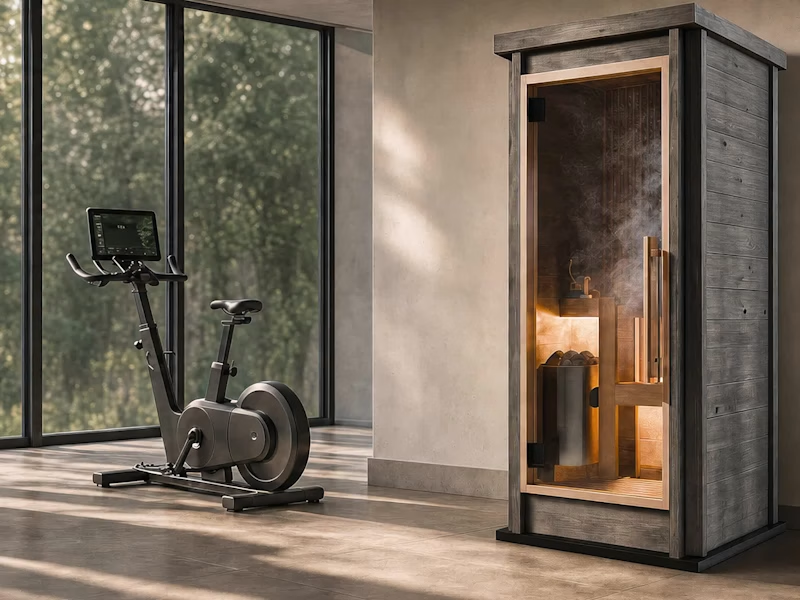
AI Product Visuals: Luxury Sauna Collection
10
166
Message
21
Darya Batyr ✦
max
Kotoba: Giving Voice AI a Human Visual Identity
21
356
Message
4
Viktor Gavrilovic
pro
MatchPro: Building soccer tournament schedules in seconds
4
129
Brand design projects
Brand design
Bold visual identities and branding systems created by top independent designers
View more
Message
13
Chantal Jemmott
pro
Label Redesign
13
219
Message
11
Olga & Joyd Branding ✦ Web Design
pro
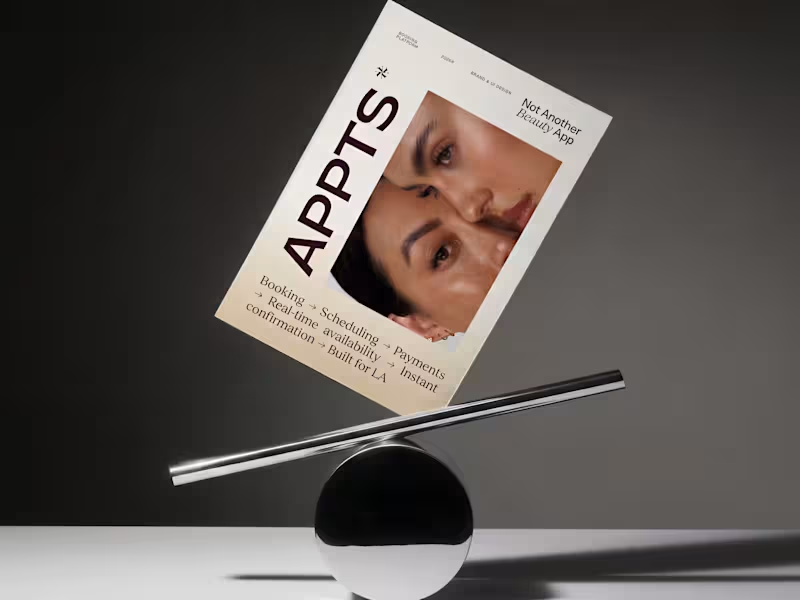
APPTS — Brand Identity & Mobile App Design
11
160
Message
8
Dane Kowachek
pro
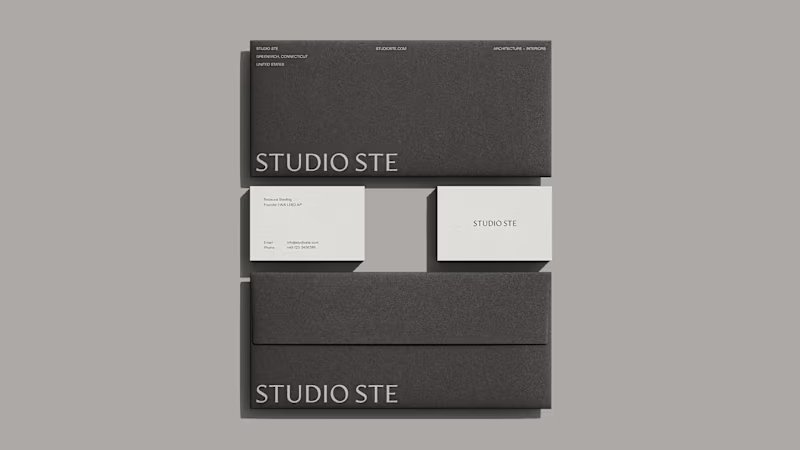
Brand Identity Development for Studio STE
8
98
Message
26
Daniel G Bright
max
Spektra Visual Identity Development
26
498
Video editor projects
Video editing
Creative video edits made using today’s best editing tools
View more
Message
15
Jen Lai
pro
Gritzy | Social Media + OOH Animations
15
280
Message
14
Mykola Malyhin
pro
Aura | AI SaaS Explainer Video & Real UI Product Demo
14
132
Message
13
Bohdan Serdiuk
pro
Bolt New Slides V2 launch video
13
145
Message
11
Blahomyr Popok
max
Explainer video for PerformancePay - a motion design explainer
11
196
Standout projects
Standout projects
More projects we love that are making waves across the web
Message
1
Muhammad Muhammad
I started this self-initiated project with a simple challenge: how do you make a rental-property brand feel connected to its world without reaching for the usual roofline or building icon? I kept coming back to two ideas: access and space. A key represents the first; a floor plan represents the second. I brought them together in a compact symbol: a key whose head contains three rooms. From there, I wanted the idea to do more than sit beside a wordmark. The rooms became a repeating pattern, the geometry informed the icon set, and the same shape guided a small logo animation. I also built out the wider identity across color, typography, product screens, social assets, and physical touchpoints, with guidelines to keep it consistent. The part I found most interesting was making one idea work at different scales, from a tiny app icon to a broader visual system while keeping the result calm and clear. Plotvera is a concept project, so the applications are illustrative rather than launch materials. I made it to explore how a focused brand idea can carry through an entire system. See the identity and design system (https://plotvera.lovable.app/) I’d love to know: which detail makes the idea click for you. The key, the rooms, or the way the symbol carries into the system?
1
1
51
Message
5
Jonathan Moore
pro
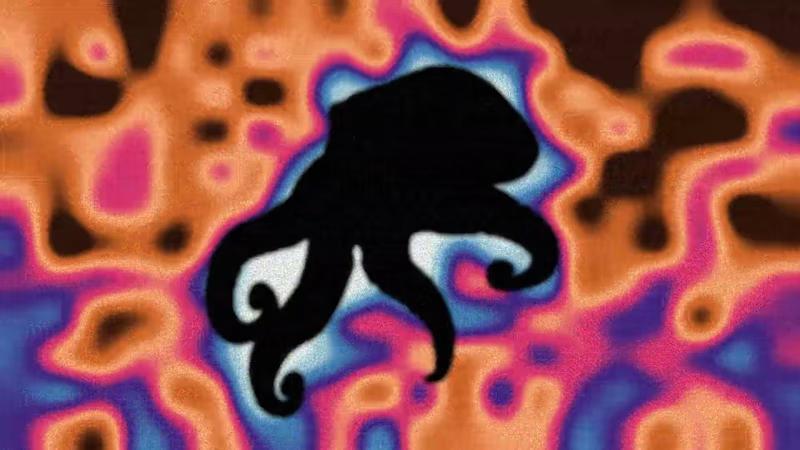
A motion study for AEONIS, a concept health optimisation and longevity clinic. The octopus can regrow its own limbs, so it became the brand’s subject: a living case for repair and renewal. I modelled and animated the turn in Blender, then rebuilt every frame as its own print: thermal heat maps, negative scans, overcast silhouettes, paper studies, mist and colour bleed. Each image changes on twos like stop motion, so the octopus turns continuously while its look never settles. AEONIS is a fictional brand created for this piece.
2
5
189
Message
31
Alex Lombrozo
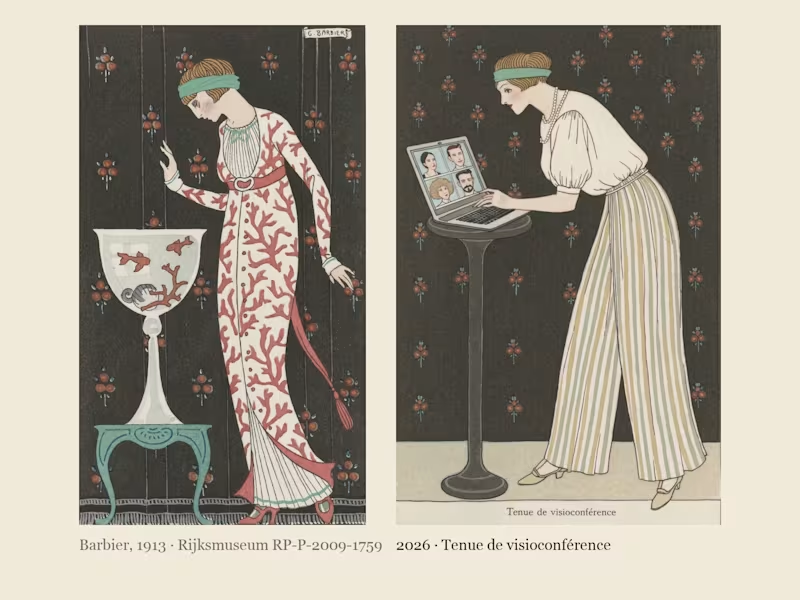
Costumes Parisiens 2026: George Barbier's Paris fashion plates of 1913, dressed for the way we live now. In 1913 George Barbier drew the latest Paris fashion for the Journal des Dames et des Modes: flat stencil colour, one elegant figure per plate, and a caption announcing the look, like "Robe d'intérieur" or "Manteau de théâtre". I found his Costumes Parisiens plates at the Rijksmuseum, where they are in the public domain, cropped ten of them down to the bare stencil and built a Recraft V4 Style from them. Costumes Parisiens 2026 keeps his poses and his captions and dresses them for how we actually live now: a silk blouse over pyjama trousers for the video call, a red delivery backpack worn over a fur-trimmed coat, a theatre coat embroidered with 99 unread badges, a necklace of charging cables, earbuds worn as pearl drops, a ring light carried like a parasol. Same magazine, a hundred and thirteen years later; only the accessories have changed.
12
31
3.1K
Message
31
Artem Prokhorov
The New Book of Beasts A Medieval Bestiary of Modern Human Nature What if medieval bestiaries described the habits of modern people instead of mythical creatures? For the Recraft × Contra Styles Challenge, I created Illuminated Bestiary, a custom Recraft Style inspired by public-domain illustrations from 13th–15th-century manuscripts. I used historical references from the Public Domain Image Archive to explore medieval animal anatomy, ornamental details, ink drawings, and muted natural pigments. Then I applied the style to eight imaginary beasts, each representing a familiar modern behavior: overthinking, people-pleasing, doomscrolling, procrastination, ghosting, perfectionism, attention-seeking, and impostor syndrome. The result is a collection of creatures that look like they belong in a centuries-old manuscript, even though their habits are very much our own. Recraft project (https://www.recraft.ai/project/d06723de-c5da-43bb-99c5-75e5272d81e4) Custom Style (https://www.recraft.ai/styles/322e5547-e4ac-4689-baed-db70dc04d9a3) Historical Sources (https://<https://pdimagearchive.org/>) Social Post (https://www.linkedin.com/feed/update/urn:li:activity:7519324821240045569/)
11
31
2K
Message
2
Francisc Toth
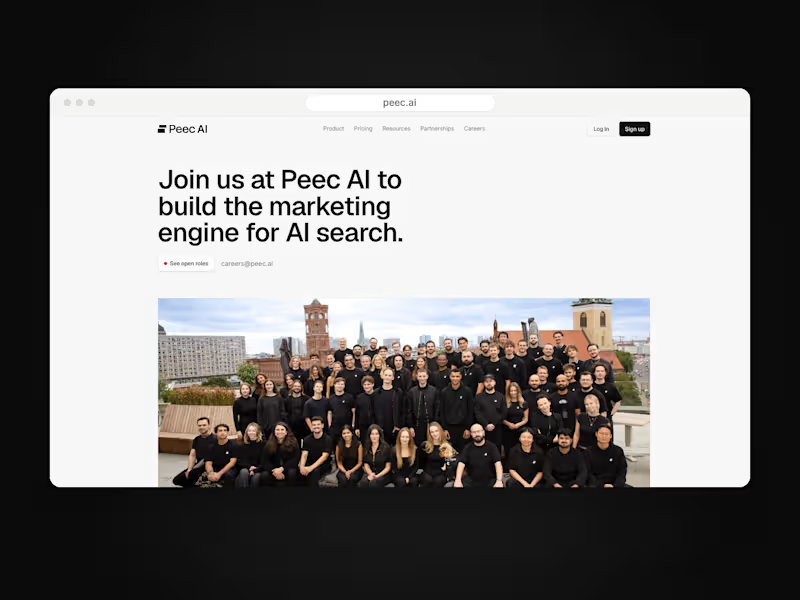
Peec AI is a Berlin AI-search analytics startup. On a 7+ month Framer retainer I design and build their marketing site as an embedded website team: careers page connected to Ashby, pricing with currency switching, product pages like Actions, a three-step lead qualification funnel, the CMS blog and changelog, and long-form report pages, plus ongoing maintenance and speed work. peec.ai
1
2
46
Message
35
Naz Hashem
pro
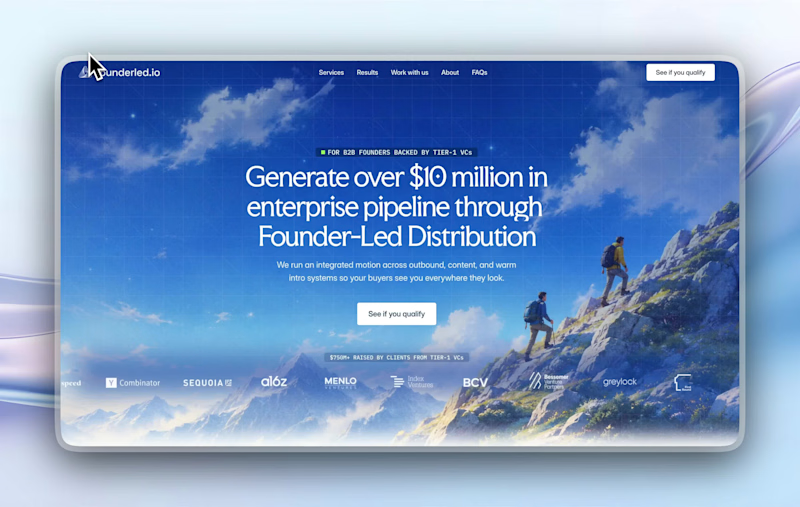
recent website revamp for Founderled (https://founderled.io). Founderled is the the trusted GTM partner behind 25+ founders who've raised over $750M from Tier-1 VCs like YC, Sequoia, a16z. cooking as usual @ clarity design studio (https://designwithclarity.co)https://cal.com/clarity-design-studio/discovery-call
15
35
638
Message
15
Alex Lazar
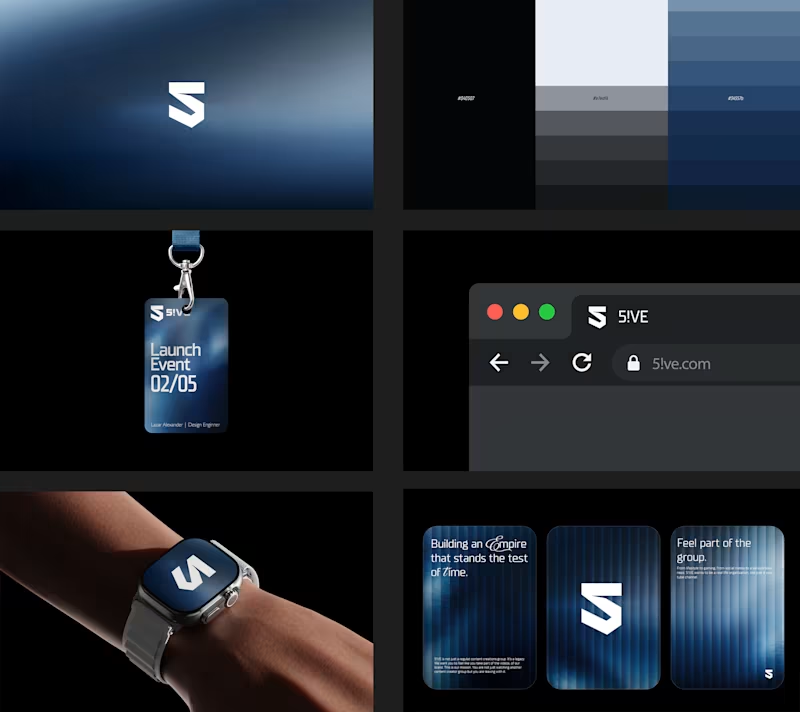
Branding Design for a AI Startup The client wanted a solution to its boring and non-convertible logo and we came with with a solution by creating a branding that converts and speaks to its clients.
8
15
248
Message
11
Emisho Victor
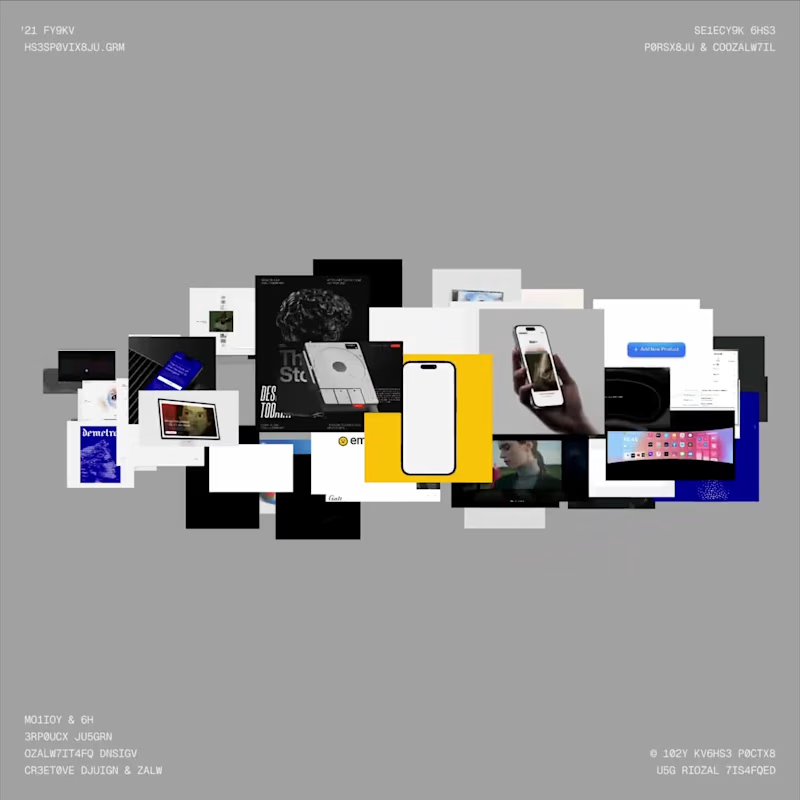
I recently built a new portfolio using Codex, and one of my favorite parts is the interactive spatial gallery mode I created. I wanted the website to feel alive and encourage people to get a little lost exploring the work. Best experienced on desktop: https://emishovictor.com P.S. I'm open to new product design opportunities! I'm also happy to share my résumé and private portfolio, which features more detailed case studies of my product design work.
3
11
219
Message
15
Muhammad Abdullah
pro
Meet Arvonn. A strategic branding agency for SaaS, fintech and tech companies. One idea at the centre, carried through strategy, identity, voice and systems. Gravity, by design. hi@arvonn.com (mailto:hi@arvonn.com) #brandingagency #brandstrategy #brandidentity
2
15
496
Message
10
Edward Sseruyiga
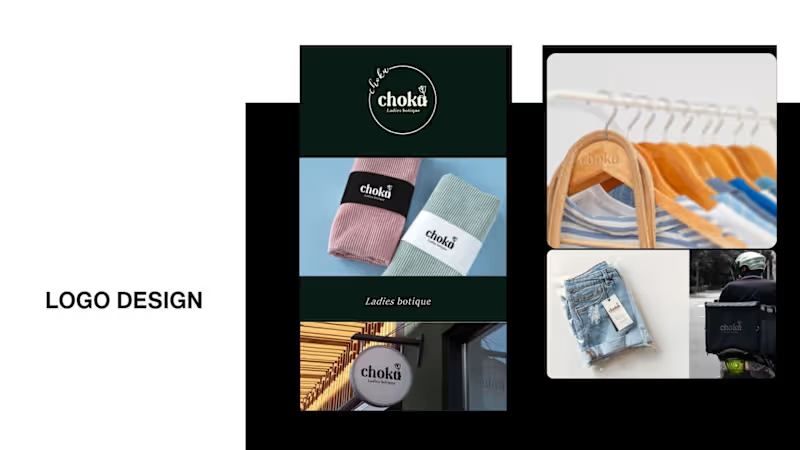
It’s been a minute since my last post here on Contra. While my main focus usually lives in photo editing and digital design, I was digging through the archive recently and thought it’d be fun to share a couple of branding projects from the past: Slide 1: Seart Visuals apparel & merchandise branding (1 year ago) Slide 2: Choku Ladies Boutique identity and mockups (2 years ago) Brand identity isn't my everyday lane, but tackling projects like these taught me a lot about visual consistency across different mediums. I’d love to hear your thoughts or see any feedback from fellow designers. Great to connect with the community again.
14
10
2.4K
Message
17
Mati Design
pro
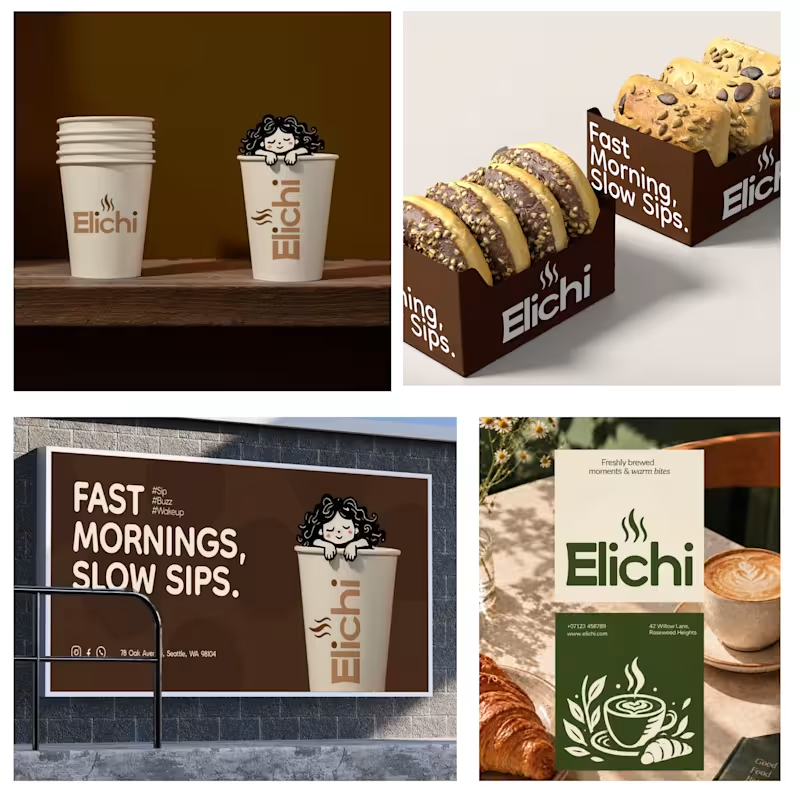
Giving Elichi Cafe Its Own Visual Voice. I developed a distinctive visual direction for Elichi Cafe, focusing on the character and personality behind the brand. Every design choice contributes to a unified identity that feels intentional and recognizable.
3
17
363
Message
24
faro soliman
pro
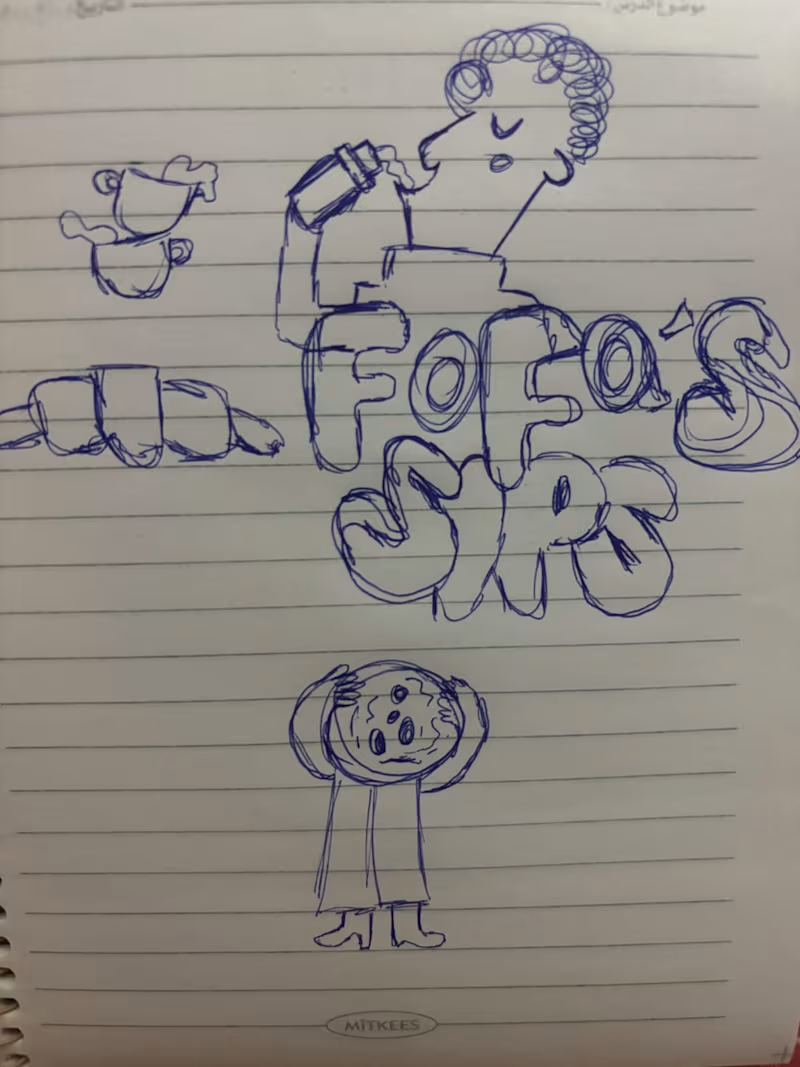
I turned one of my notebook doodles into a whole brand identity. And honestly this was way more fun than I expected I usually work on UI/UX and digital products so I wanted to take a step back from screens and explore something completely different: illustration-led branding. I took my original FOODAS sketch and built an entire visual world around it from the logo and mascot illustrations to the color palette packaging, cups, and menus The goal wasn't to make it look perfectly polished and predictable I wanted it to feel playful, a little weird, and still premium. Now I'm curious about one thing: Can playful, imperfect illustrations make a brand feel more premium or do you think premium branding needs to be more minimal? I have a feeling designers will disagree on this one
12
24
1.1K
Message
37
Niks Pisarevs
max
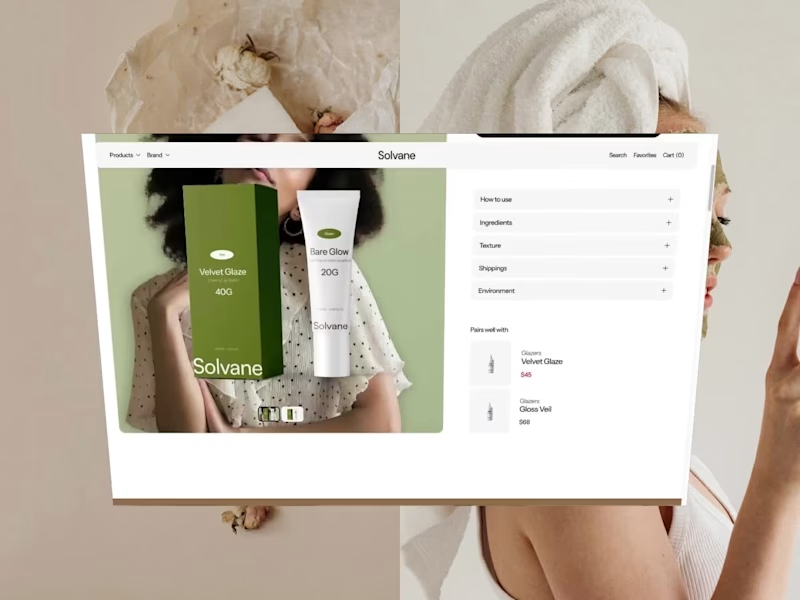
Solvane is a tranquil, editorial front store for a conscious skincare line, crafted using Framer with Framer Commerce and Shopify. Warm neutrals and large lifestyle photography allow the products to breathe. Beneath that is product listing pages with variants, an ever-present add to cart feature and full Shopify checkout – all without writing any code.
16
37
610
Message
10
Reyda Dönmez
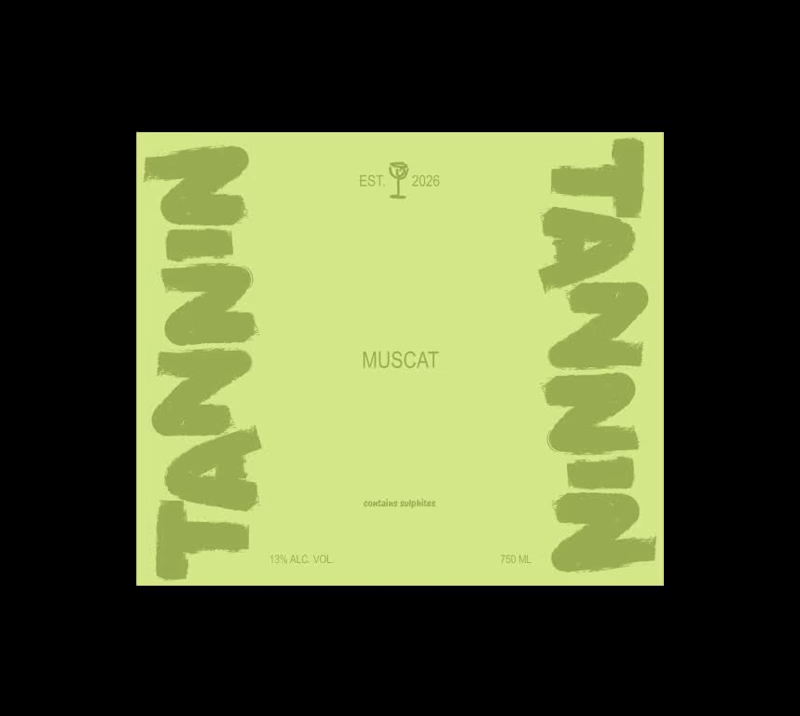
Wine labels with Figma motion. 🍷
1
10
167
Message
15
Neda Filiposka
pro
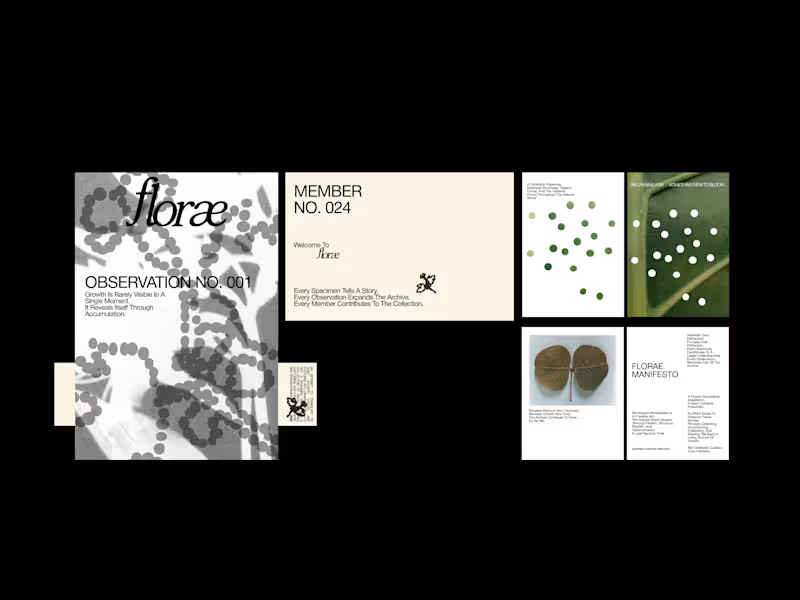
What if a botanical brand functioned as an archive rather than a catalogue? FLORAE is a speculative identity exploring the relationship between nature, observation, and time. Imagined as a living botanical archive, the brand documents the small, often overlooked changes through which growth reveals itself. Each specimen becomes a record. Each observation adds to a growing collection. Together, they form an evolving archive of botanical forms, patterns, and transformations. The visual identity draws from scientific documentation, editorial typography, organic textures, and a restrained botanical palette. Numbered observations, specimen records, and archival language establish a visual system that feels both analytical and alive, balancing the precision of documentation with the unpredictability of nature. Rather than presenting nature as something static to be collected, FLORAE treats it as something to be observed, interpreted, and continuously rediscovered.
5
15
364
Message
17
Sahil Roy
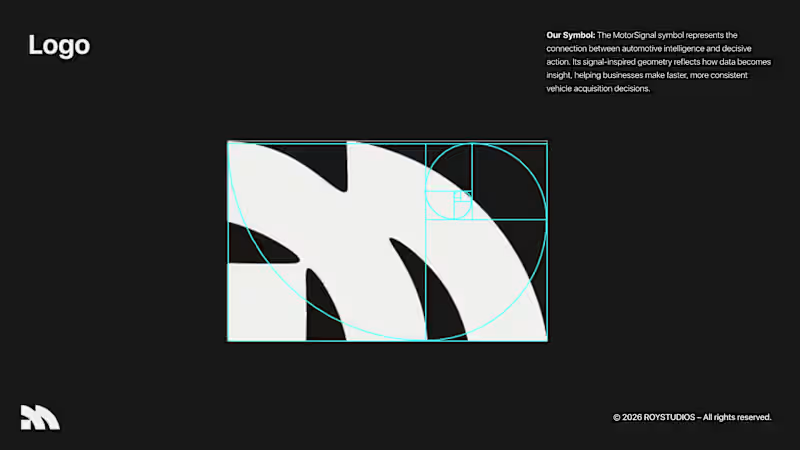
Hi Brand Designer and Inpirees, I just finished designing an AI automative B2B SaaS branding. This is a self-made project that I challenged myself to test the skills of my newly unlocked branding skills. 🤞 Motor Signal is an AI-powered vehicle quotation software that helps businesses to evaluate their user's motor vehicles easily and faster. This was a very niche industry that I chose to do a project on. I want you guys to be the judge for this project, and give me your wisdom on this project and how you guys would design this project if it were you. 🤏
3
17
261