
Wellos — Healthcare SaaS Frontend Architecture & Scalable Design Systems
Wellos was an emerging healthcare SaaS platform developed within RVO Health. The platform was being expanded to bring capabilities from established wellness programs, including Real Appeal and Quit for Life, into a more flexible, unified product experience.
These programs supported different healthcare needs, including weight management, coaching, activity tracking, and smoking cessation. The challenge was building an architecture that could support distinct customer journeys, integrations, and product branding while making it easier to add programs over time.
I joined the initiative as a Staff Software Engineer, bringing more than a decade of experience designing and implementing shared frontend component systems at scale.
Frontend Architecture & Design System
I helped establish a reusable React and TypeScript component architecture built around React Aria, Class Variance Authority (CVA), and Tailwind CSS.
React Aria provided accessible interaction primitives, while CVA enabled consistent component variants and states. We developed a shared Tailwind styling foundation that teams could adopt across the broader healthcare vertical, letting each team apply its own branding through separate theme configurations.
This approach reduced duplicated implementation work while maintaining consistency across products and giving each program flexibility in its visual identity.
Complex Workflows & Sensitive Data Boundaries
Supporting multiple healthcare programs introduced important architectural considerations. Each program required its own customer journeys, application state, and backend API interactions.
I advocated for explicit state-machine modeling to make workflow transitions and safeguards easier to reason about. When the team chose to keep its existing Redux architecture, I developed a Redux approach that established clearer boundaries between program-specific workflows.
These safeguards helped reduce the risk of unintended cross-program interactions and sensitive healthcare information being sent to unrelated services. Backend authorization and data protection remained separate responsibilities.
Hands-On Frontend Implementation
Alongside the architectural work, I translated Figma designs into React and TypeScript interfaces and implemented much of the shared component system and frontend foundation.
The goal was to give teams reusable building blocks for new features, customer journeys, and branded experiences without repeatedly rebuilding common UI functionality.
Outcome & Impact
I established key architectural patterns and delivered substantial frontend implementation supporting Wellos's planned expansion into additional healthcare programs.
My involvement concluded during a company-wide reduction in force before the broader initiative was completed. The architectural foundation and implementation work I contributed were intended to support continued development and future product expansion.
Technologies: React, TypeScript, React Aria UI Components, Class Variance Authority (CVA), Tailwind CSS, Redux, Figma
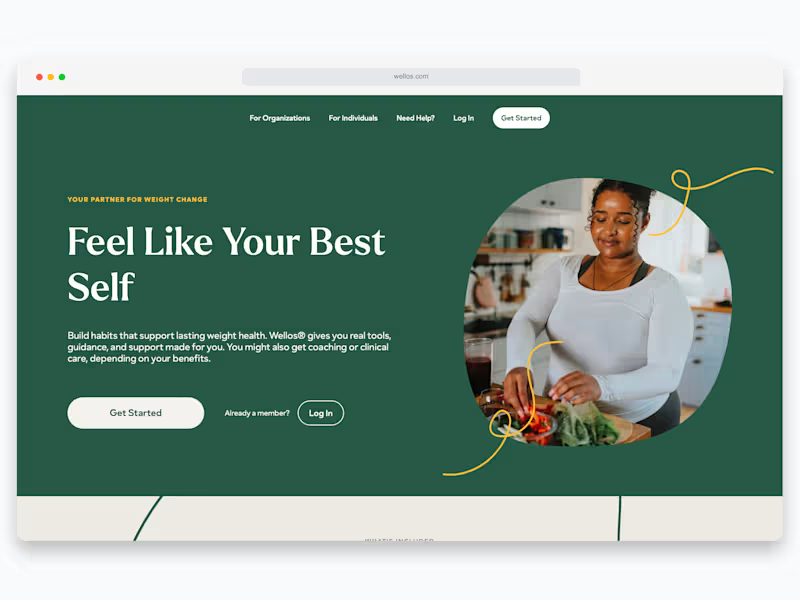
Visual Assets: An actual Wellos homepage screenshot, accompanied by conceptual illustrations of the shared frontend architecture, workflow isolation, and reusable component system. The diagrams represent architectural concepts from my work, not original internal documentation.
1
1
172

SoftwareJoe.net (http://SoftwareJoe.net) is a personal portfolio I created to present my work across industrial automation, embedded systems, desktop software, AI, and web development.
The site gives potential clients and employers a structured way to explore my technical background, review detailed project case studies, browse skills by category, and contact me directly. Each project goes beyond screenshots by outlining the architecture, technologies, responsibilities, and practical results behind the work.
I built the site with React and TypeScript, using responsive layouts and Motion animations to keep the experience polished without distracting from the technical content. I also implemented search optimization, structured metadata, performance monitoring, analytics, social previews, and PWA support.
1
276
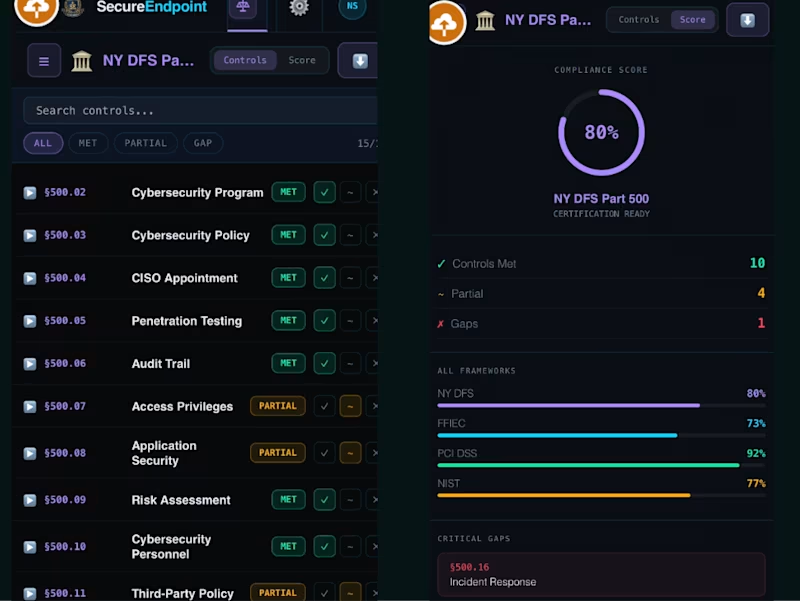
Built a full stack enterprise SaaS platform for FDIC-regulated financial institutions. Includes a real-time endpoint security dashboard monitoring 1,300+ endpoints, automated EOL/EOS detection, remediation queue with script execution, and ServiceNow integration. Also built SecureAudit, a multi-framework compliance module with real-time scoring across NY DFS Part 500, FFIEC, PCI DSS, and NIST. Built solo from concept to production using React, Node.js, and PostgreSQL.
2
140
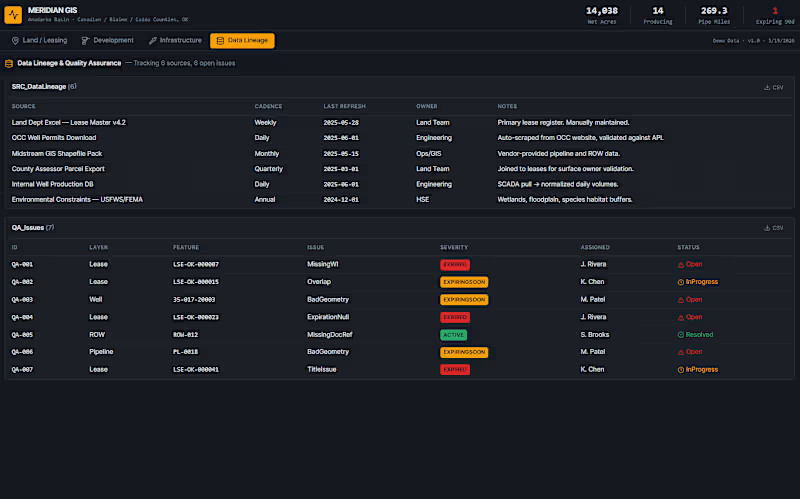
Lead the planning and development of a full-stack geospatial dashboard for upstream oil & gas operations in the Anadarko Basin (Oklahoma). It consolidates lease management, well development planning, pipeline/ROW infrastructure, and data quality tracking into a single decision-support tool, replacing scattered Excel sheets, PDFs, and disconnected GIS layers.
Who It Solves Problems For:
Land Teams — track lease expirations, HBP status, curative issues, and WI/NRI across hundreds of tracts
Development Engineers — plan pad sites, visualize SHL/BHL well paths, and assess DSU coverage
Operations / Midstream — monitor pipeline inventory, easement status, and ROW constraints
Management / A&D — executive KPIs, acreage-at-risk summaries, and portfolio-level confidence scoring
0
70


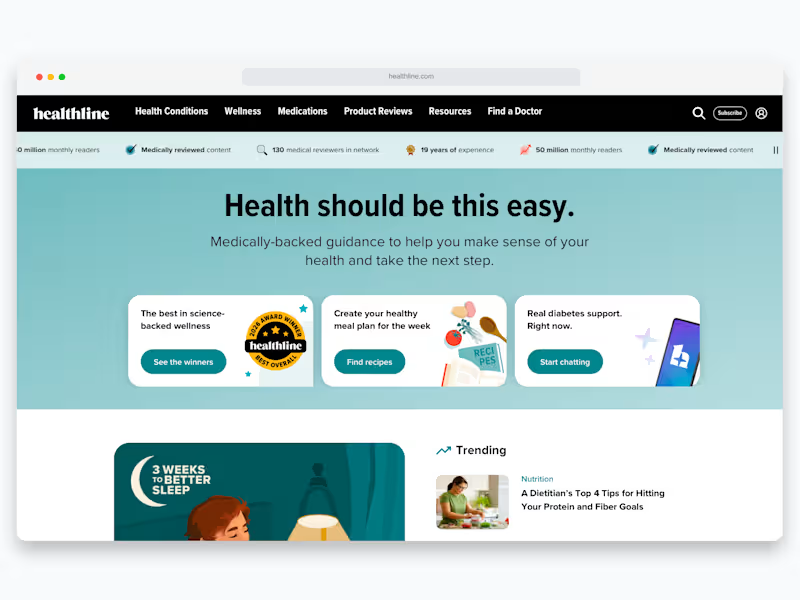
Building a shared foundation for Healthline Media’s digital products
Healthline Media operated multiple high-traffic digital health properties that had evolved with separate frontend implementations. As new products and experiences launched, that model created duplicated engineering work, inconsistent implementation patterns, and added maintenance overhead.
As a Staff Software Engineer at RVO Health, I helped modernize that architecture around a shared React and TypeScript platform. The work focused on building a reusable engineering foundation that could support multiple products while letting individual experiences retain their own requirements and identity.
From independent implementations to a shared platform
The modernization brought frontend development into a Rush-managed monorepo and established common architecture, shared UI components, Storybook documentation, development tooling, and engineering standards.
Rather than treating each new experience as an independent implementation, teams could build on an established foundation. Teams could develop shared functionality once and use it across products, while keeping product-specific features appropriately isolated.
My contributions included frontend architecture, reusable component patterns, TypeScript adoption, technical decision-making, architectural documentation, development standards, and collaboration with engineering and product teams as the platform evolved.
Architecture designed for reuse
A major goal was to make reuse practical without creating unnecessary coupling between products. The platform provided common foundations for UI, application structure, tooling, testing, and development workflows while leaving room for individual product needs.
This architecture also became strategically important when we developed Real Appeal RX, a new enrollment experience representing a significant business opportunity. Instead of creating another independent frontend and adding to the existing duplication, we extended the shared platform for the new product.
Engineering impact
The work's value extended beyond a framework migration. It changed how the organization could deliver new frontend experiences.
Teams gained a more consistent development model, reusable components and patterns, stronger documentation, and a foundation that could evolve across products. New work could begin from established architecture rather than repeatedly solving the same underlying engineering problems.
The result was a frontend platform designed to make future product development faster, more consistent, and easier to maintain.
About the visuals
The live Healthline experience shown here reflects the current public site and may have evolved since my direct involvement. The architecture and transformation diagrams are portfolio representations of the engineering approach and platform modernization work I contributed to during my time at RVO Health; they are not internal company artifacts.
2
243

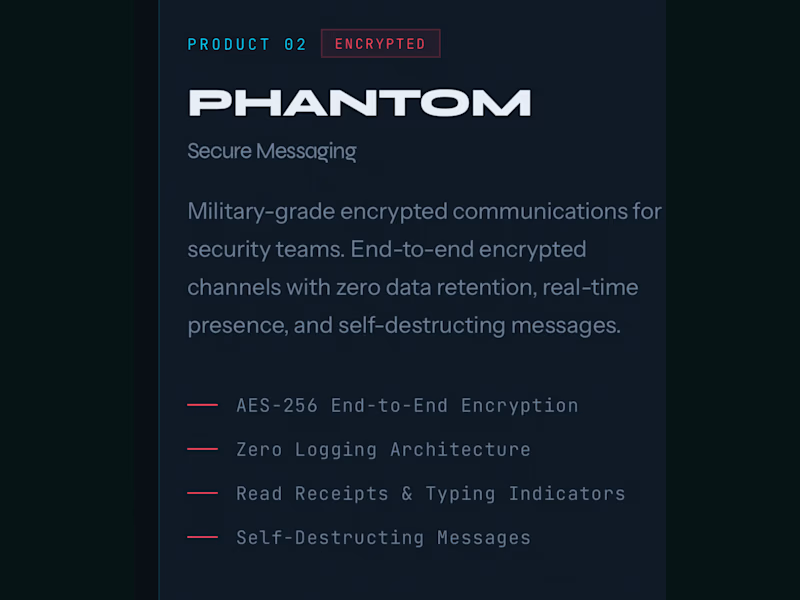
Built PHANTOM, a production encrypted messaging platform with AES-256 end-to-end encryption, zero data retention architecture, and self-destructing messages. Features real-time presence, read receipts, typing indicators, and group messaging. Built with React/Vite frontend deployed on Netlify and Node.js/PostgreSQL backend on Railway.
2
117
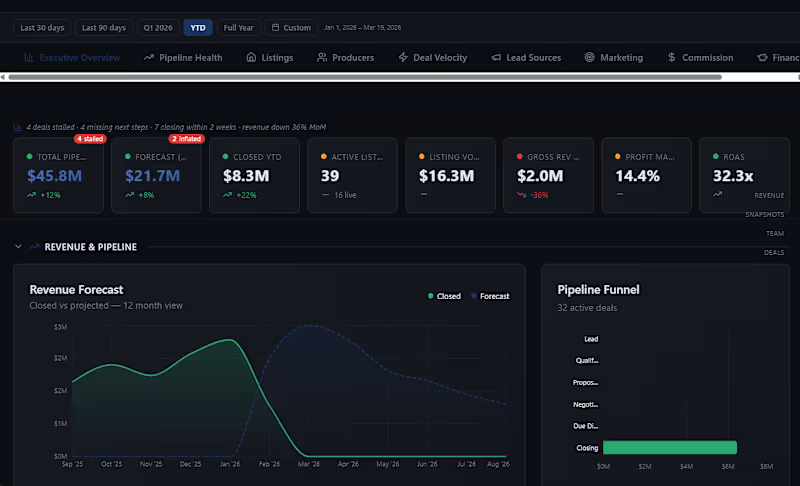
One dashboard. Every metric that matters, pipeline, agents, commissions, marketing ROI, and P&L, updated live and color-coded so problems jump off the screen.
No more stitching spreadsheets before Monday meetings. Know which deals are stuck, who's crushing quota, and where your next dollar's coming from, in seconds.
Built for managing brokers and brokerage owners who'd rather lead than dig through data.
Ready to see your numbers this clearly?
4
145