Daiyaan Syed
Founder @studio_omakase
Ready for work
Daiyaan is ready for their next project!
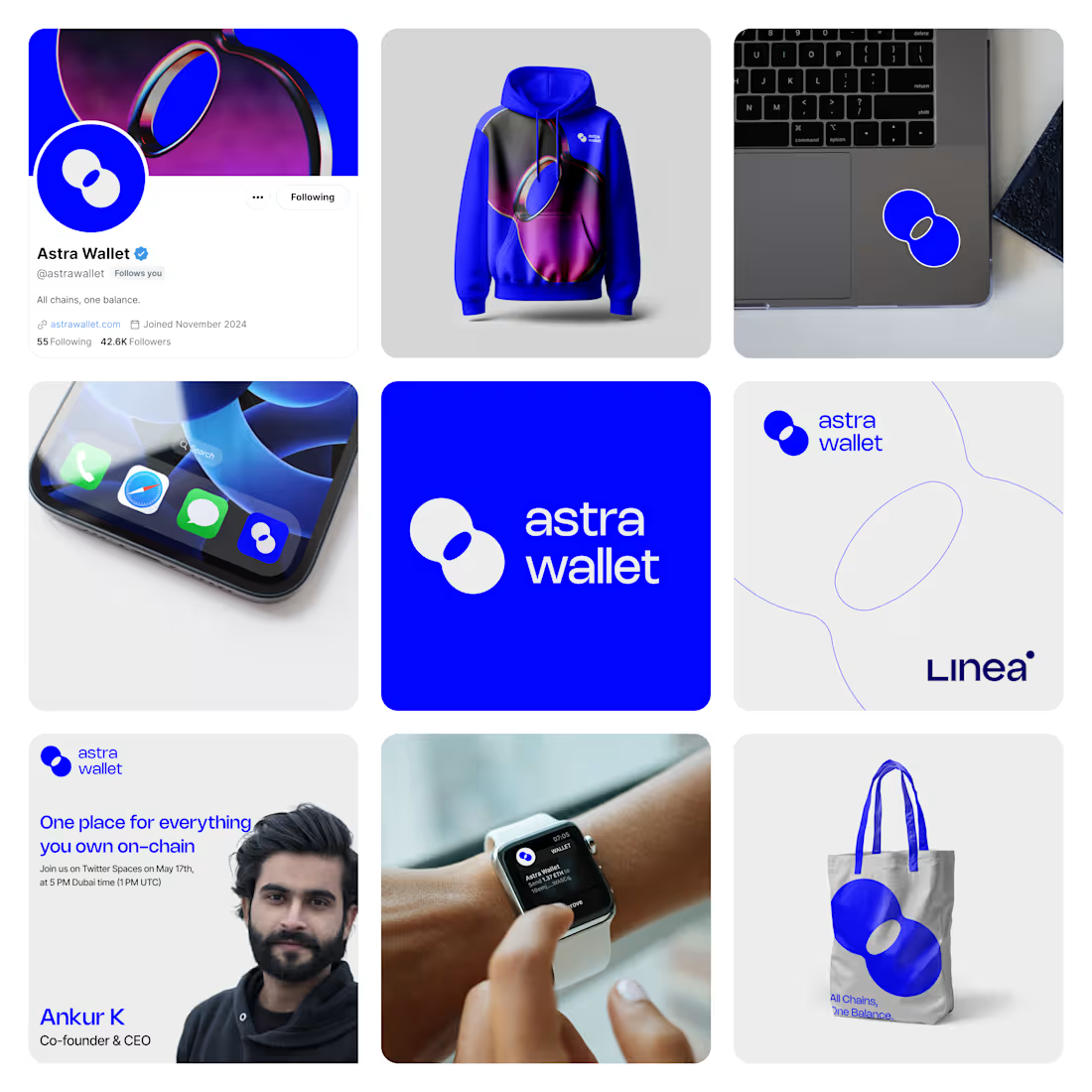
Designed a complete brand identity system for a chain-abstracted crypto wallet - from logomark and color system to merchandise, co-branding, and digital touchpoints.
The Brief:
Astra Wallet set out to simplify the multi-chain crypto experience with a single, unified balance across all networks. The product promise - "All Chains, One Balance" - needed a brand identity that could match: accessible enough to onboard newcomers, sharp enough to earn credibility with crypto-native users.
I was tasked with developing the full brand identity system from the ground up - logo, color palette, typography, brand applications, and co-branding frameworks.
Direction A - "Signal" (Blue)
Concept: The logomark is built around a speech-bubble-meets-portal form - a shape that suggests both communication and movement between worlds (chains). The cutout within the mark hints at a keyhole or passage, reinforcing the idea of access and entry.
Color System: A bold, saturated blue (#0038FF range) anchors the identity, giving it instant recognition and a confident, institutional feel without being corporate. The palette pairs with deep gradients (violet to magenta) for editorial and social moments.
Typography: Clean, lowercase sans-serif wordmark. The all-lowercase treatment keeps the tone approachable and modern - no shouting, just clarity.
Applications designed:
Social media profile and header system (Twitter/X)
Branded merchandise - hoodie, tote bag
App icon and smartwatch UI
Laptop sticker and device mockups
Co-branding lockup with ecosystem partner
Twitter Spaces event promotional asset
Editorial/blog cover system
Why this direction works: It's instantly ownable. The blue is aggressive in the best way - it cuts through the noise of the typical Web3 visual landscape (dark themes, neon gradients). The logomark scales beautifully from a favicon to a tote bag.
Direction B - "Terrain" (Teal & Green)
Concept: This direction takes a different posture - quieter, more editorial, with a nod to sustainability and groundedness. The logomark is a folded flag or ribbon shape, suggesting movement and signaling without being loud.
Color System: Deep teal (#0D4D4D range) paired with a bright mint/green accent. The combination feels fresh and distinct - almost no one in Web3 owns this palette. A soft lavender is used as a secondary accent for editorial content.
Typography: Bolder, more expressive type treatment with mixed-weight pairings. The editorial moments (like "Inside the System: Chain Abstraction") lean into magazine-style layouts.
Applications designed:
Editorial/blog cover with photography integration
Branded merchandise - t-shirt, tote bag, sticker pack in sealed packaging
App icon and mobile device mockup
Co-branding lockup with ecosystem partner
Conference/event branding
Twitter Spaces event promotional asset
Social media profile system
Why this direction works: It carves out a completely different lane. Where most wallets go loud and techy, this direction feels like a lifestyle brand that happens to be in crypto. The editorial system is especially strong - it could power a content-driven growth strategy naturally.
Across Both Directions
Each direction was developed as a complete system, not just a logo. The goal was to demonstrate how the brand would live across every touchpoint a crypto wallet actually needs - from the app icon someone sees 50 times a day, to the merch a community member wears to a conference, to the co-branding moment with an L2 partner.
Key deliverables across both:
Primary logomark + wordmark lockup
Color system (primary, secondary, accent)
Typography system
Social media templates
Merchandise design (apparel, accessories, stickers)
Device and app mockups
Co-branding/partnership framework
Event and editorial content templates
Outcome
Two fully realized brand directions presented as competing visions - each viable, each with a distinct strategic rationale. The project demonstrates end-to-end brand thinking: from a product truth ("All Chains, One Balance") through to the tote bag someone carries at events.
0
52
There's something broken about the job market that nobody with the power to fix it has the incentive to fix.
Job boards make money per listing. Real or fake, they get paid either way. Companies face zero consequences for posting roles they never plan to fill. And the entire cost of this system falls on the person spending 45 minutes tailoring their resume for a position that was dead before they opened it.
These are called ghost jobs. Listings that companies keep active to look like they're growing, to collect resumes for later, to satisfy internal HR metrics, or to make current employees feel replaceable. This is not a fringe problem.
A January 2025 Clarify Capital study found that 1 in 3 employers have posted listings with no intention of hiring. ResumeBuilder surveyed 650+ hiring managers and found that 40% of companies posted at least one fake job in the past year. In tech, 79% of those fake listings were still active when researchers checked. A LiveCareer survey of 918 HR professionals found that 93% post ghost jobs either regularly or occasionally.
I kept seeing people I know burn weeks applying to listings that had been up for months with hundreds of applicants and zero movement. The frustration wasn't about rejection. Rejection is fine. It was about silence. About spending real time and emotional energy on something that was never real to begin with.
So I built Verity.
It's a free Chrome extension that scores job listings before you apply. Open any listing on LinkedIn, Indeed, or Glassdoor. Verity analyzes it in seconds and gives you a verdict: likely real, uncertain, or probably a ghost.
Every verdict is transparent. You see exactly why. Posting age. Repost history. Whether a recruiter is attached. How specific the description is. Whether salary is disclosed. How many applicants are piling up with no sign of hiring activity. No black box. No subscription. No data collection.
I didn't build this because I think I can fix the hiring system. I built it because the least we can do is give people the information to stop wasting their time on listings that were never meant for them.
0
62
People don't just go out for coffee anymore. They go out for vibes.
Aura is an iOS app that helps you discover beautiful places near you- rated not by food or service, but by aesthetic atmosphere.
Every place is tagged with traits like Warm Minimal, Golden Hour, Lush Courtyard, Old World Charm, and Moody & Intimate. Each spot carries an Aura Score representing its visual atmosphere.
The entire product- concept, design system, interface, data structure, and implementation in React Native + Expo- was built in under 4 hours. Seeded with 35 locations across Bengaluru.
A constraint-driven experiment in building software around feeling rather than function. Sometimes the fastest way to explore an idea is to build it and see how it breathes.
0
75
Everyone knows they overspend. Nobody changes because of a pie chart.
Tilt is a financial awareness app for the Indian market. Instead of charts and dashboards, it uses a persona named Aubrey a sharp, slightly cynical voice that watches your spending and actually reacts to it.
Three food orders in one day? Aubrey notices. 90% of income gone with a week left? She has thoughts. A 14-day logging streak? Acknowledged reluctantly.
The thesis: people don't change because of numbers. They change because of narrative.
Under the surface sits the Council six AI personas, each with a different financial philosophy. Only Aubrey ships in the MVP. The rest unlock as you build history.
Dark UI. Monospaced type. Single orange accent. Designed to feel like mission control, not mobile banking.
0
74