The network for creativity
Join 1.25M professional creatives like you
Connect with clients, get discovered, and run your business 100% commission-free
Creatives on Contra have earned over $150M and we are just getting started
Back to feedPost

I recently learned an important Azure cost lesson while deploying an AI-powered essay review app.
The app used Python, Flask, LangGraph, the OpenAI API, and several services running on Azure Kubernetes Service.
At one point, I stopped the AKS cluster because I wanted to control costs. Later, I was surprised to see more than $170 on my Azure bill.
The lesson was that stopping an AKS cluster is not the same as assuming every related cloud cost has disappeared.
AKS depends on several underlying Azure resources, such as virtual machines, disks, load balancers, public IP addresses, networking, storage, and databases. Some costs may also come from resources outside the cluster or from usage that had already been accumulated before the cluster was stopped.
For me, the key lesson was:
Stopping a cloud service is not the same as reviewing the full cloud bill.
When deploying apps to Azure, especially with AKS, it is important to regularly check Cost Management, related resource groups, node resource groups, disks, public IPs, load balancers, storage, and databases.
This experience reminded me that cloud deployment is not only about getting an app online. It is also about understanding infrastructure, monitoring cost, and choosing a setup that fits the stage of the project.
I am now much more careful about cloud cost management, especially when building MVPs and AI-powered applications.

The network for creativity
Join 1.25M professional creatives like you
Connect with clients, get discovered, and run your business 100% commission-free
Creatives on Contra have earned over $150M and we are just getting started





Related posts


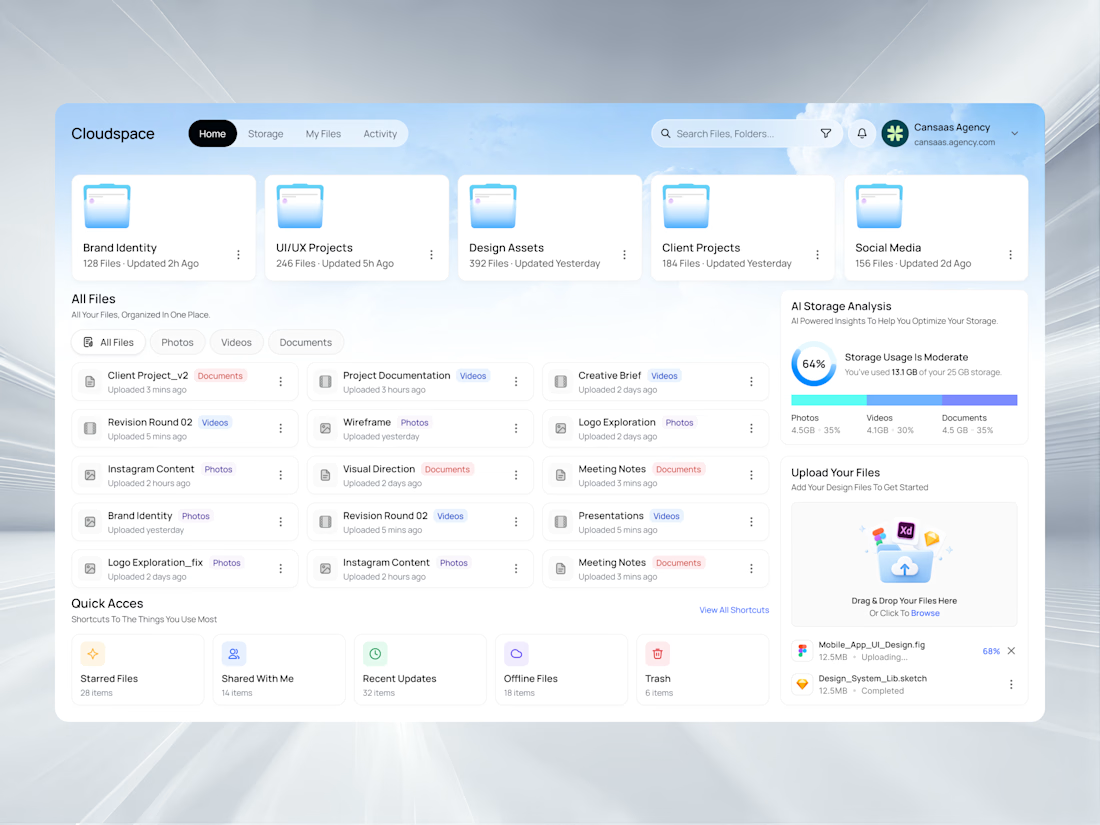
Cloudspace brings cloud storage, file organization, folder management, AI storage analysis, upload tracking, and quick access shortcuts into one clean dashboard experience. With soft blue visuals, glassmorphism cards, intuitive filters, spacious layouts, and clear file categorization, the interface makes managing digital assets feel simpler, faster, and more enjoyable.
📩 Collaborate with Us? Contra Cansaas Agency

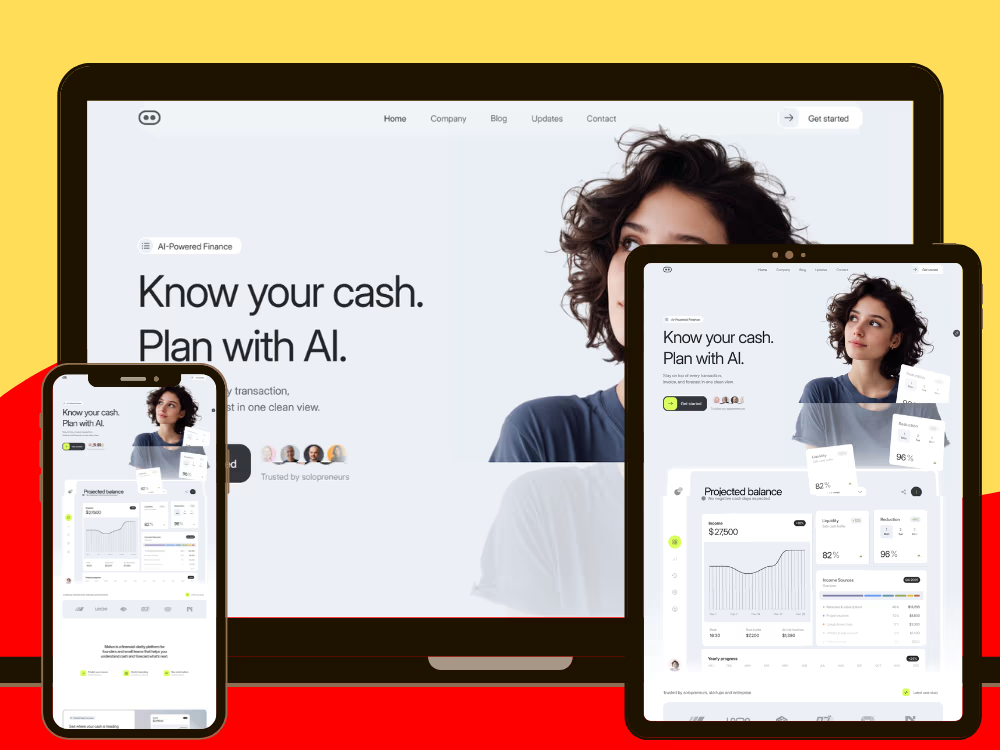
Designed and developed a modern SaaS website for Makro, an AI-powered financial clarity platform built to help founders and small teams understand their cash position, control spending, track invoices, and forecast what comes next.
The challenge was to communicate a sophisticated financial product without making the experience feel complicated or overly technical. The website needed to make concepts like cash flow, runway, forecasting, expenses, invoices, and financial insights immediately understandable while positioning Makro as a modern alternative to spreadsheet-heavy financial management.
The homepage establishes the product proposition immediately with a clear focus on helping businesses understand their cash and plan ahead with AI. Interactive dashboard visuals then give visitors a visual preview of the platform, showing projected balances, financial trends, transactions, and key financial information before they even sign up.
A major focus was product storytelling through UI/UX. Instead of relying on long explanations, the website uses realistic product interfaces to demonstrate how Makro works. Visitors are introduced to capabilities such as smart expense categorization, bank synchronization, AI-generated financial insights, invoice tracking, upcoming-bill detection, and anomaly detection.
The website also breaks down Makro's core financial intelligence into clear user benefits. Users can monitor projected balance and runway, understand what drives revenue, track recurring commitments and upcoming payments, and measure business progress over time. This creates a strong connection between product features and the real financial decisions founders need to make.
From a visual design perspective, the experience combines clean SaaS layouts with bold typography, high-contrast sections, product mockups, subtle interface details, and carefully structured content blocks. The dark sections create visual separation while allowing the financial dashboards and product interfaces to become the primary visual focus.
The website also incorporates a strong conversion architecture. Visitors move naturally from understanding the problem, to exploring the product, to reviewing features, pricing, customer stories, FAQs, and finally taking action. Pricing is presented through clearly differentiated plans, while testimonials demonstrate how the platform can help businesses improve cash visibility, planning, and financial decision-making.
The testimonial section reinforces the product's positioning around practical business outcomes, including reducing dependence on spreadsheets, improving cash visibility, identifying cash gaps earlier, and making more confident hiring and spending decisions.
The result is a polished, conversion-focused SaaS website that combines AI product positioning, financial dashboard storytelling, SaaS UI/UX, feature visualization, pricing presentation, social proof, and responsive web design into a cohesive digital experience.
Key Focus Areas:
• SaaS Website Design
• AI Finance Product Website
• FinTech UI/UX Design
• SaaS Product Marketing Website
• Dashboard & Product Visualization
• AI-Powered Product Positioning
• Financial SaaS Website Architecture
• Feature & Benefit Presentation
• Pricing Page Design
• Customer Testimonials & Social Proof
• Conversion-Focused UX
• Responsive Web Design
• Product Storytelling
• Financial Dashboard Presentation
• Modern SaaS Brand Experience


Hey! Saw you're new here too. That Makro project is solid for a first post. Let's connect - I'm also building my Contra with 3D motion work.