The network for creativity
Join 1.25M professional creatives like you
Connect with clients, get discovered, and run your business 100% commission-free
Creatives on Contra have earned over $150M and we are just getting started
Back to feedPost

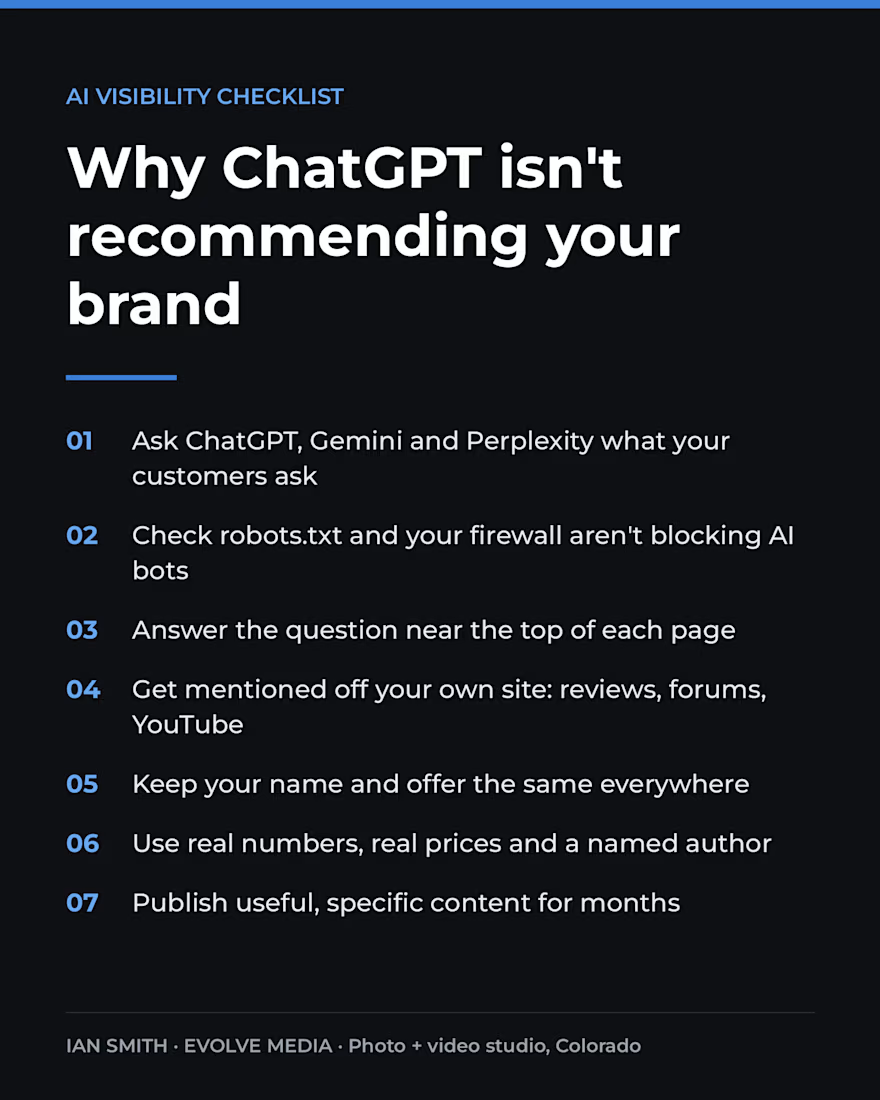
Ask ChatGPT for the best product in your category. If your brand never comes up, you're invisible to a growing group of buyers.
More shoppers now ask ChatGPT, Gemini or Perplexity what to buy. Here's the checklist I run when a brand never shows up in those answers.
First, ask the tools the questions your customers ask, and write down who gets mentioned. Then check that your robots.txt and firewall aren't blocking the bots these tools use. If they can't read your site, they can't recommend you.
Next, look at your pages. Do they answer the question near the top: what it is, who it's for, what it costs? And is your brand talked about anywhere besides your own site, like reviews, forums, YouTube or LinkedIn?
Keep your name and offer the same everywhere, and back it up with real numbers and prices. This builds slowly. The brands that show up usually published useful, specific content for months, not one trick.
Full checklist: https://evolvemediatips.substack.com/p/why-ai-assistants-arent-recommending
The network for creativity
Join 1.25M professional creatives like you
Connect with clients, get discovered, and run your business 100% commission-free
Creatives on Contra have earned over $150M and we are just getting started



Related posts

Most AI chatbots have the same problem: they can sound convincing even when they're wrong.
I wanted to build one that doesn't simply generate answers—but actually has evidence behind them.
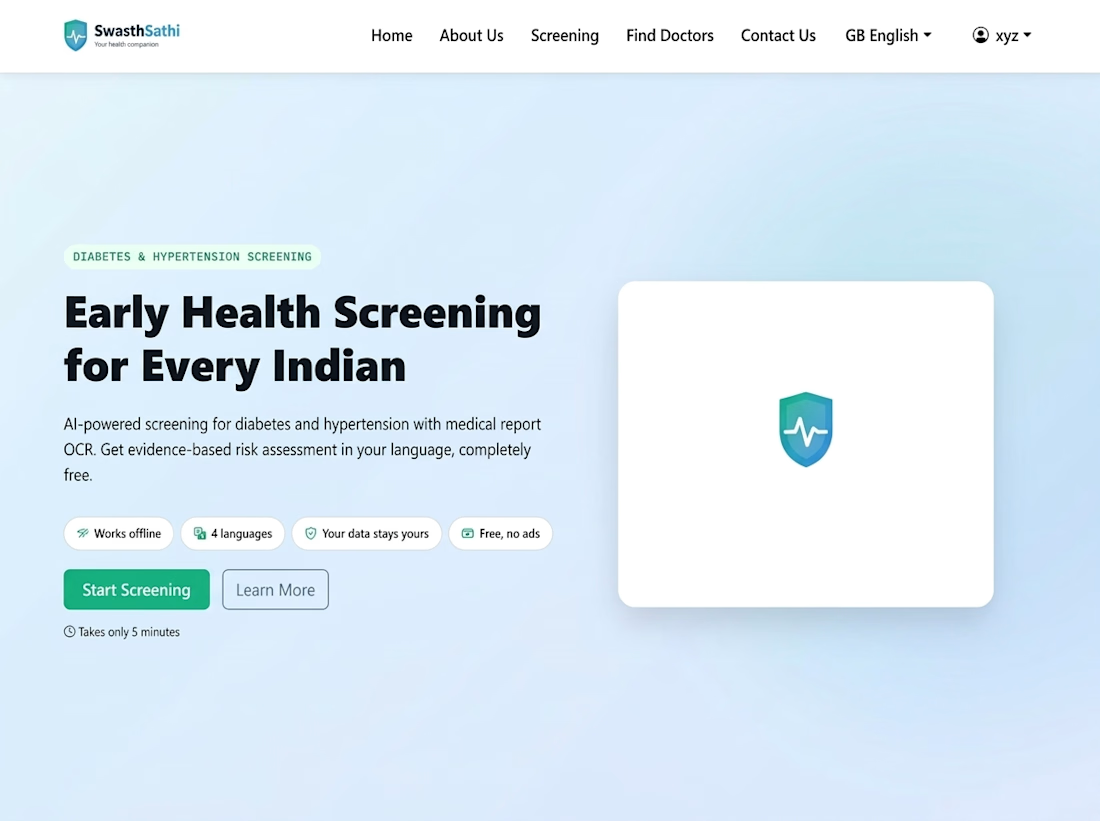
That's one of the things I worked on with SwasthSathi, a health-screening platform that received a ₹10,000 prototype development grant.
For its AI assistant, I implemented a pipeline that:
→ Extracts information from uploaded medical reports using OCR
→ Retrieves relevant medical guidelines using embeddings and pgvector
→ Generates responses grounded in retrieved information
→ Uses layered cost controls to prevent unnecessary API usage
The goal wasn't to make AI sound smarter. It was to make its answers more grounded, useful, and responsible.
And in a healthcare context, knowing when the system shouldn't confidently answer is just as important as generating a good response.
SwasthSathi provides health information and screening support—not diagnoses.
Working on this made me more interested in building AI features that solve actual problems rather than adding a chatbot just because a product can have one.
I'm now open to AI engineering projects involving:
• RAG over company documents and knowledge bases
• AI features integrated into existing web applications
• Document processing and intelligent workflows
• AI-powered MVPs and prototypes
Not every problem needs RAG, though. Sometimes a simpler solution is better. I'd rather figure that out with you before writing code.
If you're building a product that works with documents, data, or complex workflows, what would you want AI to actually do in it?
Want to see it in action?


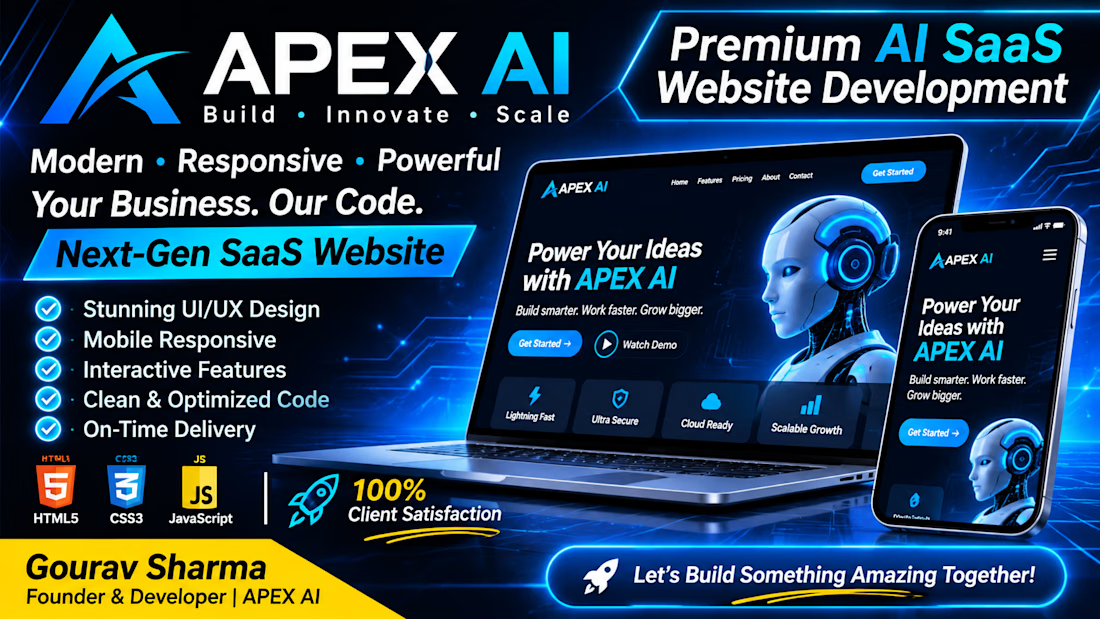
I provide professional AI engineering, AI automation, chatbot development, and full-stack web development services.
Project Services:
Custom AI Chatbots & AI Assistants
AI-Powered Web Applications
Business Process Automation
n8n Workflow Development & Integration
Full-Stack Website Development
API Integration & Backend Development
Custom Software Solutions
My Approach:
I focus on building practical, scalable, and user-friendly solutions that help businesses automate operations, improve productivity, and grow faster.
I prioritize clean development, reliable functionality, transparent communication, and on-time delivery.
Let's turn your ideas into powerful digital solutions.
Gourav Sharma
AI Engineer | Founder | Full-Stack Developer
APEX AI

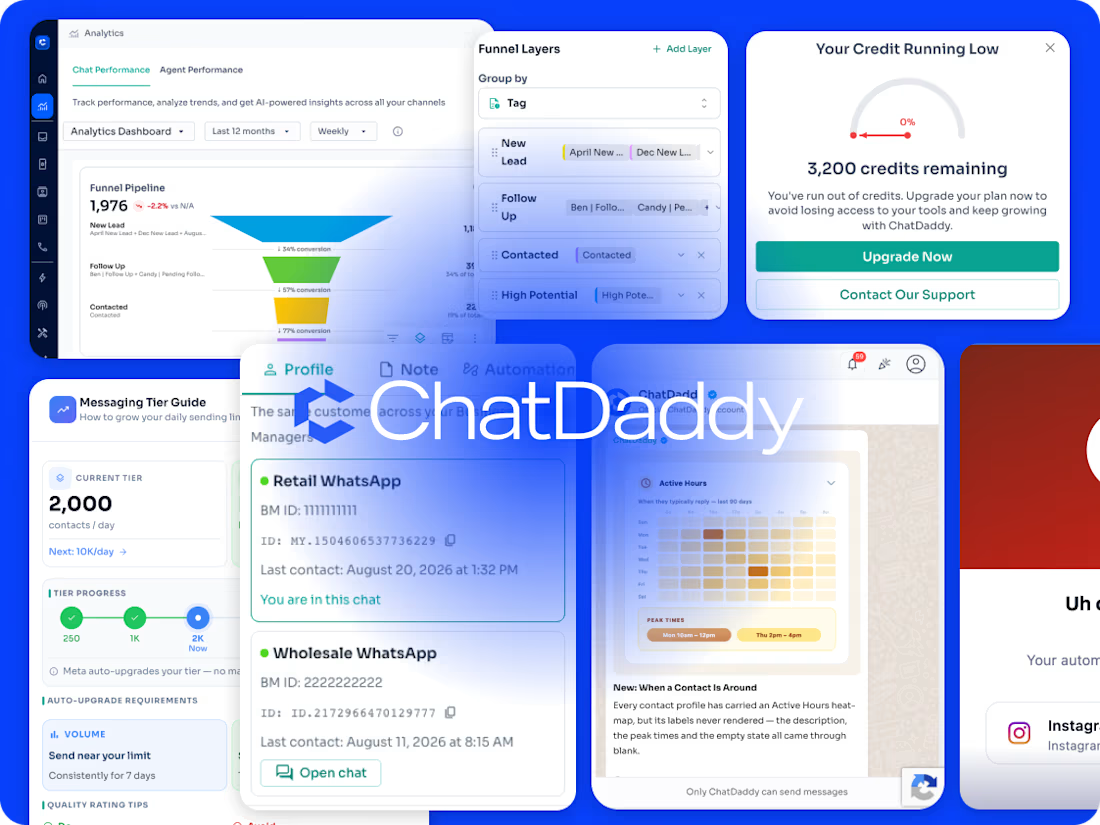
I own ChatDaddy's product end to end: roadmap, design, QA, and the AI agents that run it.


Owning roadmap, QA and the agents in one role is where AI changes PM work the most. How do you QA agent behavior before a release, scripted test chats or reviewing real transcripts?