The network for creativity
Join 1.25M professional creatives like you
Connect with clients, get discovered, and run your business 100% commission-free
Creatives on Contra have earned over $150M and we are just getting started
Back to feedPost
Most AI chatbots have the same problem: they can sound convincing even when they're wrong.
I wanted to build one that doesn't simply generate answers—but actually has evidence behind them.
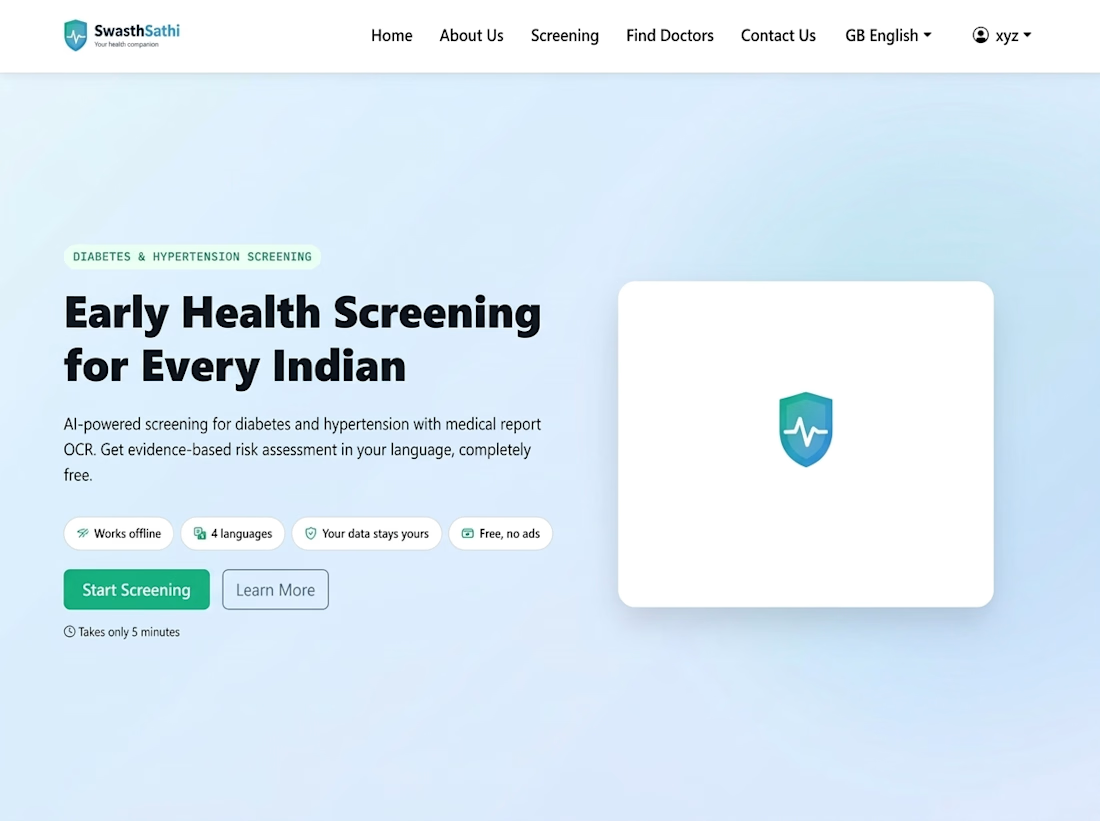
That's one of the things I worked on with SwasthSathi, a health-screening platform that received a ₹10,000 prototype development grant.
For its AI assistant, I implemented a pipeline that:
→ Extracts information from uploaded medical reports using OCR
→ Retrieves relevant medical guidelines using embeddings and pgvector
→ Generates responses grounded in retrieved information
→ Uses layered cost controls to prevent unnecessary API usage
The goal wasn't to make AI sound smarter. It was to make its answers more grounded, useful, and responsible.
And in a healthcare context, knowing when the system shouldn't confidently answer is just as important as generating a good response.
SwasthSathi provides health information and screening support—not diagnoses.
Working on this made me more interested in building AI features that solve actual problems rather than adding a chatbot just because a product can have one.
I'm now open to AI engineering projects involving:
• RAG over company documents and knowledge bases
• AI features integrated into existing web applications
• Document processing and intelligent workflows
• AI-powered MVPs and prototypes
Not every problem needs RAG, though. Sometimes a simpler solution is better. I'd rather figure that out with you before writing code.
If you're building a product that works with documents, data, or complex workflows, what would you want AI to actually do in it?
Want to see it in action?


Thanks, Liu. Abstention was a requirement from day one: in a health context, declining is a correct answer, not a failure.
Both layers, with one caveat:
• Retrieval: each question pulls the top 5 of 31 curated guideline passages. If the best match scores below 0.5 cosine...
The network for creativity
Join 1.25M professional creatives like you
Connect with clients, get discovered, and run your business 100% commission-free
Creatives on Contra have earned over $150M and we are just getting started



Related posts

How can you tell it’s AI? 👀
I use Claude as an essential part of my work as a designer. But you can tell when a designer just hands the whole job over to AI.
After going through the Frontier Design Benchmark by Contra Labs, these are a few tells I keep spotting:
1. The factory hero: a pill, a headline, two buttons, a screenshot and a glow. It could belong to any brand.
2. Colorful pills everywhere: badges and tags on every element. When everything is a pill, nothing stands out.
3. Glow on everything: gradient title, glowing button, neon cards, a lit background. None of it leads.
What AI tells have you spotted?


The factory hero is so real, I see that pill, headline, two buttons and glow combo everywhere now. AI is great for speeding up the build, but the direction still has to come from a person.

hey there 👋 I'm working on an AI startup that matches you with people who dress like you.
I made two intros for the site and honestly, I'm not sure which one to use. I have a slight favourite, but I want to see what everyone thinks first.
which one would you keep?
7 voted
44%
9 voted
56%
16 votes
Closed

For a 'people who dress like you' product I'd lean fast cuts, quick outfit flashes sell the matching idea before anyone reads a word. The grid could make a great second section once people want to browse. What's your slight favourite?

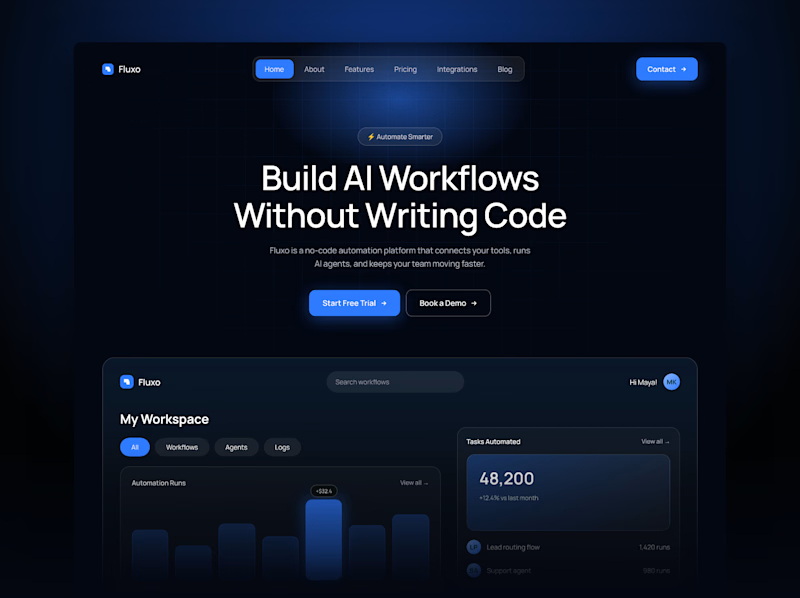
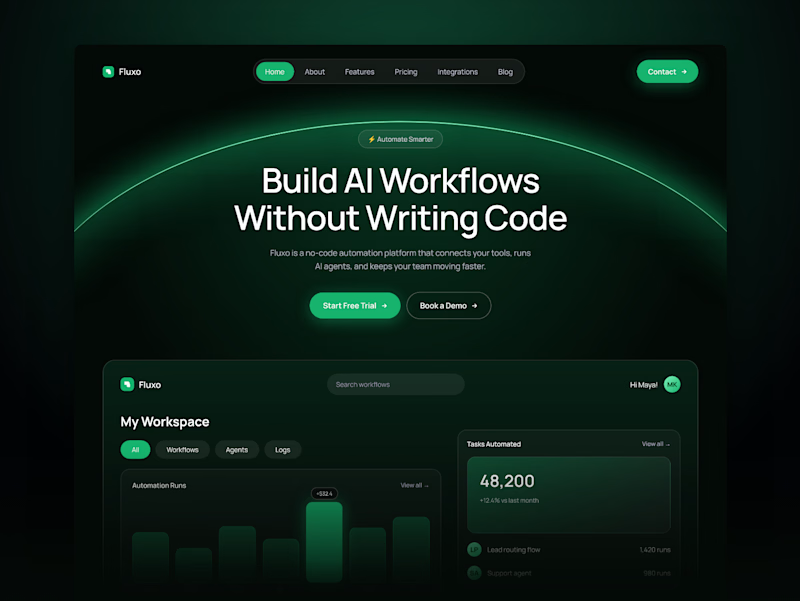
One AI automation hero. Two accent colors.
Blue feels dependable and familiar, the color of tools you trust.
Green feels active and fresh, like a workflow that’s running smoothly.
Vote in the comments: 💙 or 💚


1 voted
33%
2 voted
67%
3 votes
Closed

Deep 🔥