The network for creativity
Join 1.25M professional creatives like you
Connect with clients, get discovered, and run your business 100% commission-free
Creatives on Contra have earned over $150M and we are just getting started
Back to feedPost

What Happens When You Automate Your Business Properly?
One of the biggest shifts my clients experience isn’t just saving time, it’s gaining control.
Imagine this:
→ New leads instantly captured and organized
→ Emails and messages sent automatically at the right time
→ Data updated across all platforms without errors
→ AI handling repetitive tasks while you focus on strategy
No delays. No missed opportunities. No manual chaos.
That’s what I build, systems that quietly handle the heavy lifting in the background.
If your current workflow feels overwhelming, it’s not your fault… it’s just not optimized yet.
The right automation changes everything.
The network for creativity
Join 1.25M professional creatives like you
Connect with clients, get discovered, and run your business 100% commission-free
Creatives on Contra have earned over $150M and we are just getting started



Related posts

Hi Community! Sharing a recent project that mixes two things I love: web design and workflow automation.
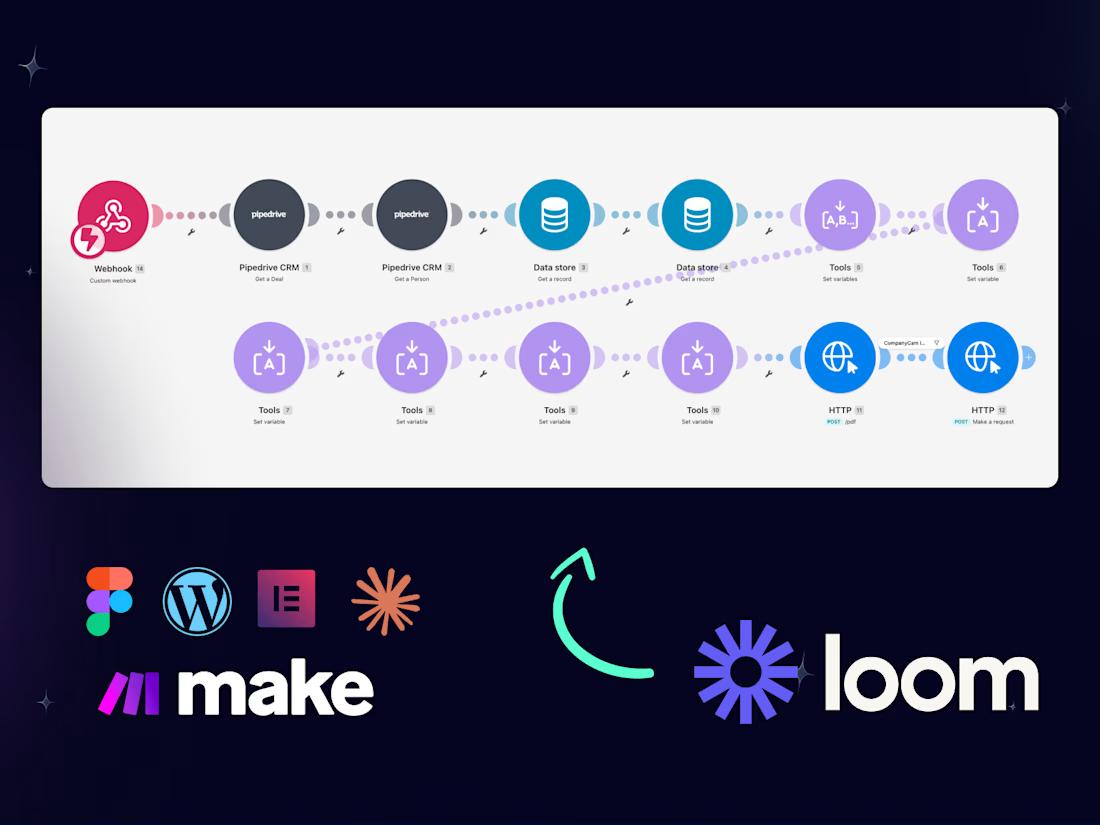
For Knaughty Log, a log home restoration company, I redesigned the website in WordPress + Elementor and connected it to Make and Pipedrive:
→ Form submit creates the deal in Pipedrive with all project details
→ A Make scenario generates the proposal automatically
→ When the deal is approved, a second scenario creates the work order
Biggest lesson: the website is only half the job. Clients feel the value when the lead keeps moving after the form submit, so I now scope automation from the first call, not as an add-on.
Full case study with video walkthroughs: https://contra.com/p/7LN6clRe-website-lead-automation-make-pipedrive-or-knaughty-log
Curious how others handle this: are you adding automation to your web projects? Make, n8n or Zapier?

The second Make scenario firing on deal approval is the part most web builds never reach, and it's where the client feels the handoff. I'd put one plain email right after the form submit telling the homeowner when the proposal will arrive, so the automated one isn't a surprise....

Automation should make work easier — not create another system that needs constant attention.
The most useful business automations often start with small, repetitive tasks:
• Moving information between tools
• Sending follow-ups
• Processing incoming requests
• Generating reports
• Organizing data
Before automating a workflow, understand how it works manually. If the process is unclear or constantly changing, automation may only make the confusion faster.
The best automation removes friction, reduces repetitive work, and gives people more time to focus on decisions that actually matter.
At Shipmind Labs, we build custom software, integrations, and automation solutions around real business workflows.
What task would you automate first if you could?

What if your finance dashboard caught the money you paid twice? 👀
This is Plug, a product I designed and built.
It scans every vendor payment, flags duplicates and overpayments, and shows exactly why: same invoice, same amount, paid 2 days apart. One click starts the recovery, with approvals and an audit trail.
The design rule I followed: never let AI act without showing its evidence first.
Would you trust an AI to flag your payments? 👇


Showing why it was flagged is smart.