The network for creativity
Join 1.25M professional creatives like you
Connect with clients, get discovered, and run your business 100% commission-free
Creatives on Contra have earned over $150M and we are just getting started
Back to feedPost

Designed a SaaS that builds and maintains a team’s knowledge base on its own.
Most teams know they need one. Few have time to write it, and nobody has time to keep it updated. So the same questions keep landing in support, and new team members learn everything by asking around.
This tool turns the support tickets a team already has into docs that stay current. When an answer changes in a ticket, the article changes with it.
My focus on the design side was making auto generated content feel trustworthy. Each article shows which tickets it came from and when it was last updated, so teams can rely on it without double checking.
Fewer repeated tickets, faster onboarding, and a knowledge base that keeps up with the product.
The network for creativity
Join 1.25M professional creatives like you
Connect with clients, get discovered, and run your business 100% commission-free
Creatives on Contra have earned over $150M and we are just getting started



Related posts

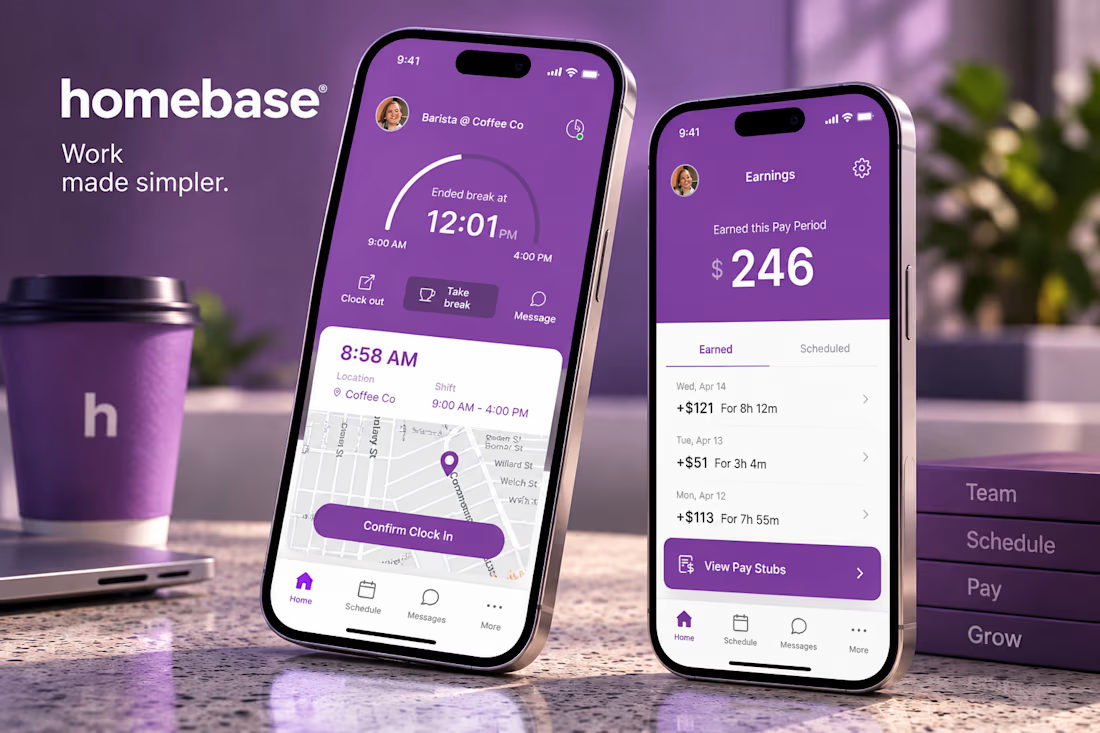
I collaborated as a Staff Product Designer on Homebase, working through the Hakuna studio. I contributed to designing experiences for a workforce management platform, focusing on modules such as employee scheduling and payroll to make everyday tasks clearer and easier to manage. 👉 https://www.joinhomebase.com/




scheduling AND payroll in one project is a lot of screens. how long were you on it?

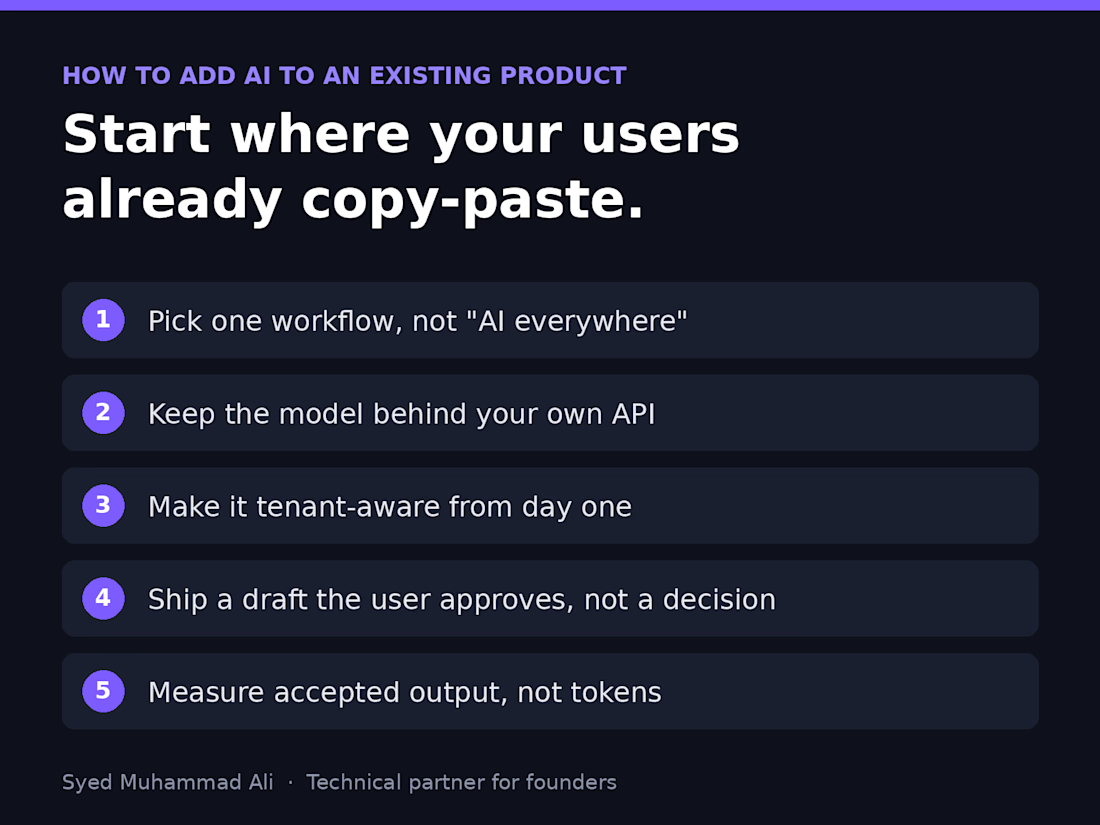
Before you add AI to your product, find the screen where your users already copy and paste.
That's usually where the real AI feature lives. Not a chatbot in the corner, but a step people already do by hand: summarising a ticket, drafting a reply, tagging an upload, pulling fields out of a PDF.
Here's the order I follow when a founder asks me to add AI to an existing SaaS:
1. Pick one workflow, not "AI everywhere." Watch where users leave your app to paste something into ChatGPT and come back. That round trip is your feature.
2. Keep the model behind your own API. One service owns prompts, retries, logging and cost limits, so you can switch providers without touching the frontend.
3. Make it tenant-aware from day one. Each customer's data, prompts and usage stay scoped to their account, or the first enterprise security review will stop you.
4. Ship a draft, not a decision. Let the AI suggest and the user approve. You earn trust and get real feedback before you automate anything.
5. Measure accepted output, not tokens. If users rewrite most of what it produces, the prompt or the context is wrong, and that's your real roadmap.
Most AI features that flop didn't fail because of the model. They were bolted onto the wrong step.
What's the one task your users still copy into ChatGPT?

Watching where users paste into ChatGPT and come back is such a practical way to find the real feature. Most teams start with the chatbot instead.