The network for creativity
Join 1.25M professional creatives like you
Connect with clients, get discovered, and run your business 100% commission-free
Creatives on Contra have earned over $150M and we are just getting started
Back to feedPost

In 90 days, AI stopped being a tool I use and became a teammate I manage.
Here's what actually changed, from where I sit as a software engineer:
→ Agents went mainstream. JetBrains found 90% of professional developers use coding agents weekly and 68% daily. Claude Code usage doubled since January (18% → 39%). Codex went 3% → 16%.
→ Models learned to drive computers. GPT-6 Astra (Sep 3) was pitched on computer use and software engineering, and shipped with gated access over its cyber capabilities.
→ Output limits blew open. Gemini 4 Argon (Sep 30) can write up to 1M tokens in one response, up from 64K. Also gated at launch.
→ Agents did real, checkable work. Dozens of Claude agents formalized Fermat's Last Theorem in Lean in 11 days: 13M lines, machine-verified. (Formalization, not a new proof. The verification is the point.)
→ The plumbing grew up. MCP's July spec went stateless, so agent tooling now deploys like ordinary web infrastructure.
→ Open weights kept pace. Alibaba released Qwen3.8-Max as a 2.4T-parameter open-weights model.
My take: code generation is getting cheap. Judgment isn't.
Anthropic's agentic coding report says engineers use AI in roughly 60% of their work but can fully delegate only 0–20% of tasks. The bottleneck has moved to architecture, review, testing, security, and keeping things alive in production.
That's where I spend my time: shipping AI features (agents, RAG, LLM integrations) into real products, with the guardrails that make them survive contact with users.
What's one task you'd hand to an agent tomorrow, and one you never would?
#AI #SoftwareEngineering #AIAgents #LLM #FullStack


managing agents instead of just using them is exactly the shift I've felt too ngl
Same here. The agents are the easy part now, the real work is the judgment calls around them.
The network for creativity
Join 1.25M professional creatives like you
Connect with clients, get discovered, and run your business 100% commission-free
Creatives on Contra have earned over $150M and we are just getting started











Related posts

You have a point but a time is coming when that manual work will be fully automated with Ai.
As most of us are still doing manual work some people are busy training Ai to take over that activities in nearby future

Manual work is always better than ai slop you can use ai for some clips but full video made with ai is unprofessional and a waste of money and resources

The point about people quietly training AI on today's manual tasks is the part most of us underestimate. Do you think the craft shifts to directing and curating those models, rather than disappearing entirely?

Sunny Rock — Cinematic Paris Travel Website | Creative Web Development
Experience Paris through Sunny Rock, a cinematic travel website concept designed to combine immersive visuals, elegant UI/UX, and interactive scrolling into a premium digital experience.
This self-directed project explores modern web design through cinematic imagery, scroll-driven animations, glassmorphism, smooth transitions, and responsive layouts.
🛠️ Technologies & Skills
HTML5 & CSS3 — Semantic structure, modern styling, and responsive layouts
JavaScript (ES6+) / TypeScript — Interactive behavior and animation logic
React.js — Reusable components, hooks, and state management
Tailwind CSS — Utility-first styling and responsive design
HTML5 Canvas API — 2D rendering for visual effects and image sequences
Scroll-Driven Animation — Frame-by-frame image sequences synchronized with scrolling
requestAnimationFrame & Linear Interpolation (Lerp) — Smooth animation updates
Lenis Smooth Scrolling — Fluid scrolling experiences
Intersection Observer API — Scroll-triggered reveals and entrance animations
UI/UX & Visual Design — Visual hierarchy, typography, glassmorphism, and interaction design
SVG Graphics — Scalable icons and vector elements
AI Visual Generation & Prompt Engineering — Cinematic visual assets
Cloudinary — Media hosting and image optimization
Performance Optimization — Efficient asset loading and animation rendering
Python & Browser Automation — Development utilities, asset processing, and testing
✨ Design Highlights
Cinematic, immersive visual storytelling
Premium travel-inspired aesthetic
Smooth, scroll-based animation sequences
Modern glassmorphism interface
Responsive layouts for different screen sizes
Interactive elements and refined micro-interactions
Project Type: Self-Directed Portfolio Project
Focus Areas: Creative Front-End Development · Web Design · UI/UX Design · Interactive Experiences · Animation
Designed and developed by Ubaid | Ubaid Web Studio.🔥


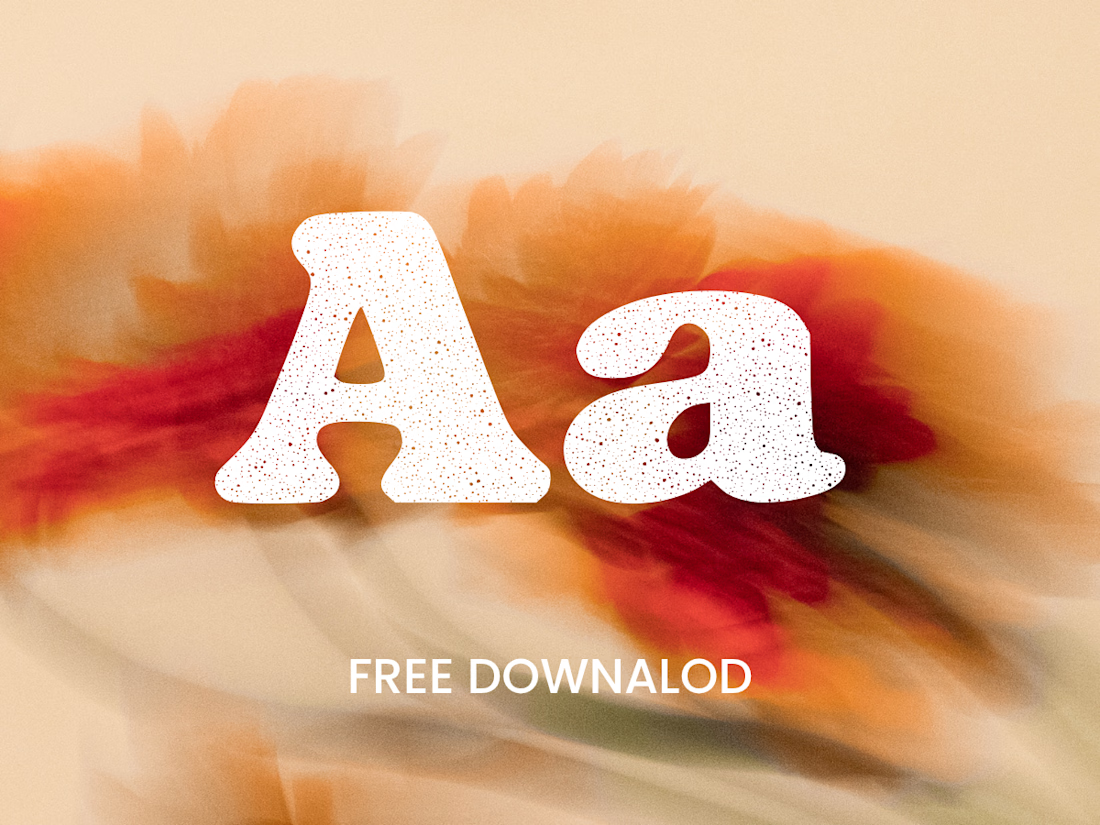
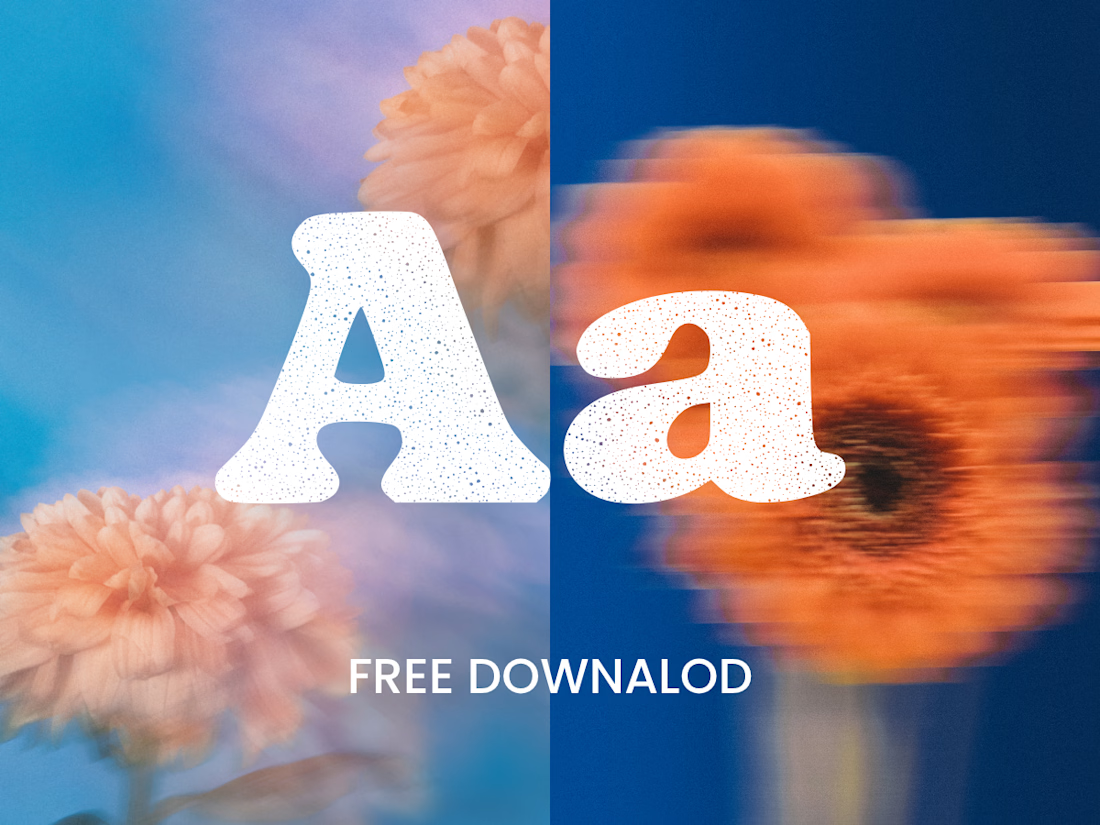
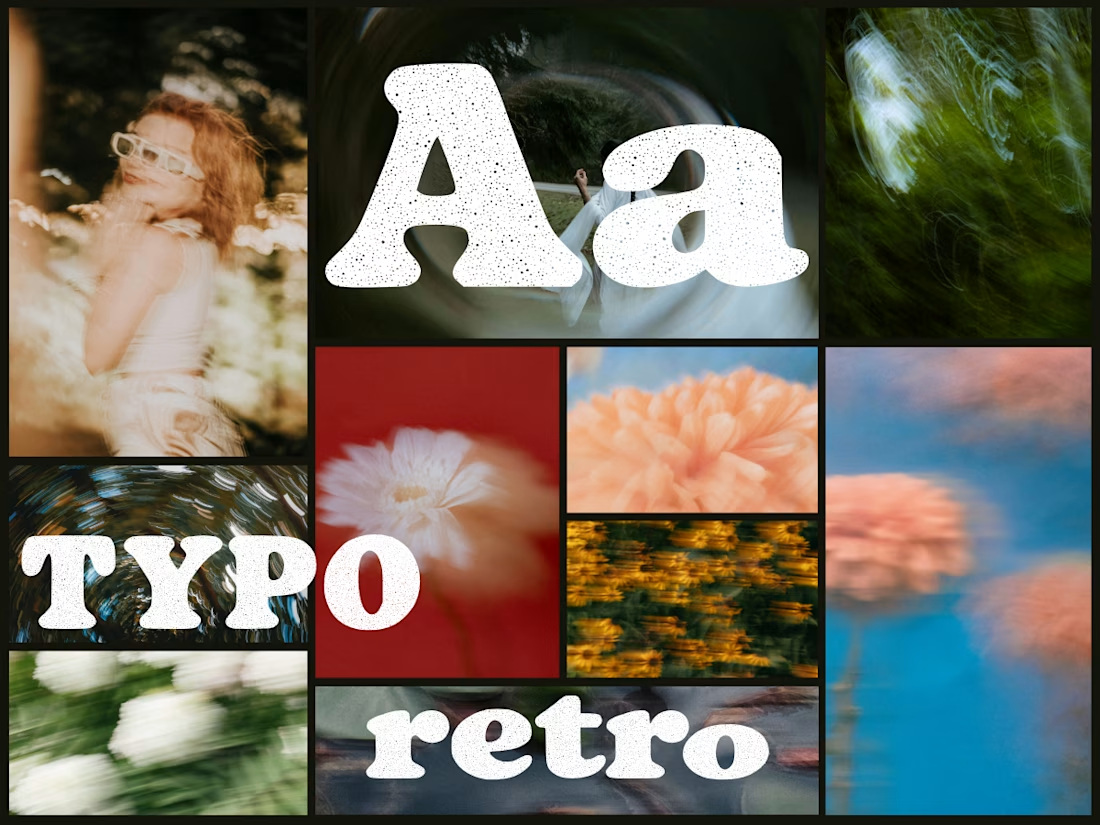
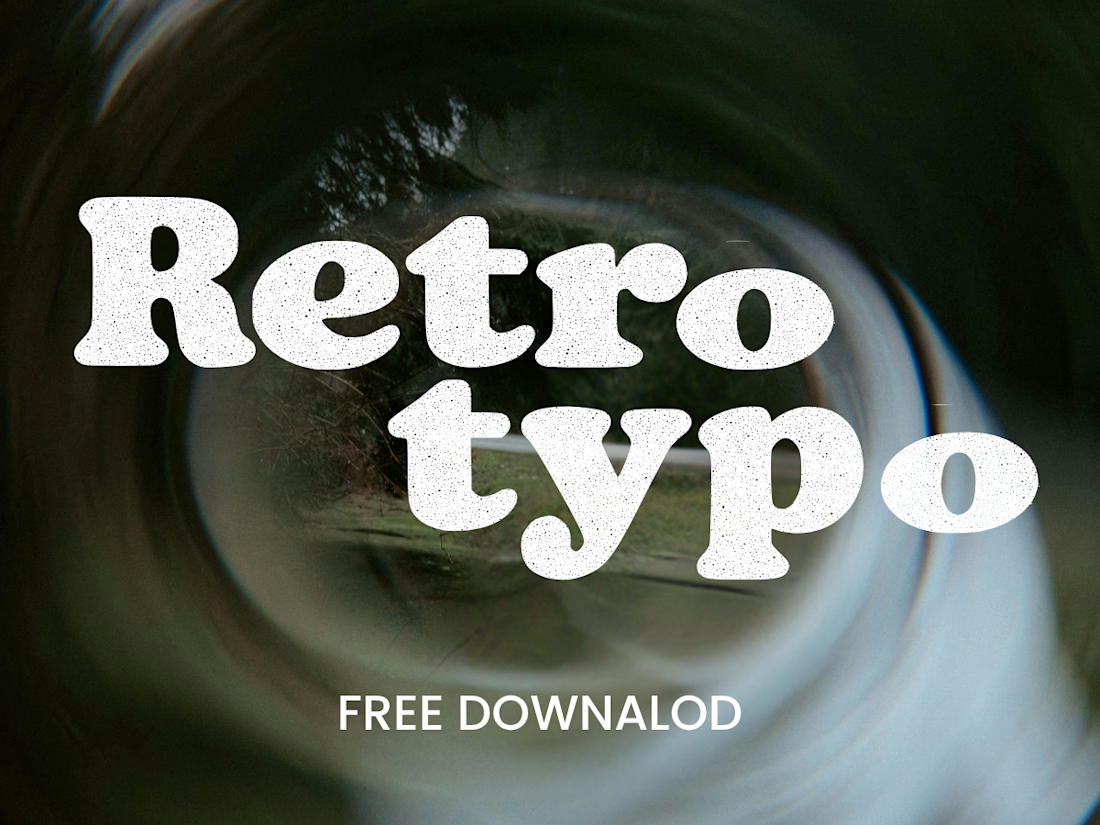
Anima is a self-initiated type design project inspired by vintage print, worn ink and analog photography.
The collection includes two experimental serif typefaces: Anima Editorial, with elegant proportions and contrasting strokes, and Anima Retro, with softer, bolder shapes. Both feature grain built into the letterforms.
I developed the creative direction, custom fonts and promotional artwork, combining AI-assisted exploration with font development. The campaign pairs textured typography with motion-blurred photography to capture a warm, nostalgic mood. FREE DOWNLOAD AT https://twaperdigital.com/anima-retro


Great job Denisa the font style background and it's effects are great 🎉🎉🎉🎉
keep going Denisa🔥🔥🔥🔥