The network for creativity
Join 1.25M professional creatives like you
Connect with clients, get discovered, and run your business 100% commission-free
Creatives on Contra have earned over $150M and we are just getting started
Back to feedPost

Why site-to-site IPsec VPN tunnels flap: Complex IKE state machines, dead peer detection timeouts, and stateful connection tracking.
For decades, IPsec (Internet Protocol Security) was the default choice for connecting distributed datacenters, branch offices, and cloud VPCs. Yet almost every network architect has suffered the dreaded 3 AM page: an IPsec tunnel mysteriously dropped, traffic is black-holed, and only a manual daemon restart clears the stale security association.
Beyond aging cryptographic handshakes, legacy IPsec has inherent architectural pain points:
1. Complex IKEv2 State Negotiations: Phase 1 and Phase 2 negotiations negotiate hundreds of cryptographic proposals (Diffie-Hellman groups, encryption ciphers, hashing algorithms). A single configuration mismatch or transient packet drop during re-keying resets the entire tunnel. 2. NAT & Stateful Firewall Dropping: Stateful border firewalls maintain NAT session tables. When tunnel traffic is idle, stateful firewalls silently purge UDP port 500/4500 session entries, causing subsequent ESP packets to drop without notification. 3. Cryptographic CPU Overhead: Traditional user-space IPsec daemons (strongSwan, Libreswan) context-switch packets across user-space and kernel boundaries, capping throughput on 10GbE inter-datacenter links.
The modern standard is **Kernel-Native WireGuard**, engineered for ultra-fast, stateless site-to-site encrypted meshes: • Stateless Cryptokey Routing: WireGuard eliminates complex multi-phase negotiations. Peers authenticate via static Curve25519 public keys mapped directly to internal IP addresses—similar to SSH authorized_keys. • Zero-Noise Silent Operation: When no traffic is transmitted, WireGuard goes completely silent. It sends zero unauthenticated keepalive noise, resisting network port scanners and automated reconnaissance. • Built-in Persistent Keepalives: A simple ``PersistentKeepalive = 25`` directive maintains NAT firewall pinholes automatically, eliminating stale session timeouts across stateful middleboxes. • In-Kernel Performance: Running inside the native Linux kernel network stack, WireGuard delivers 4x the throughput of OpenVPN and 2x the throughput of IPsec, saturating 10GbE interconnects with minimal CPU load.
Transform your fragile site-to-site connections into an immutable, high-throughput encrypted mesh.
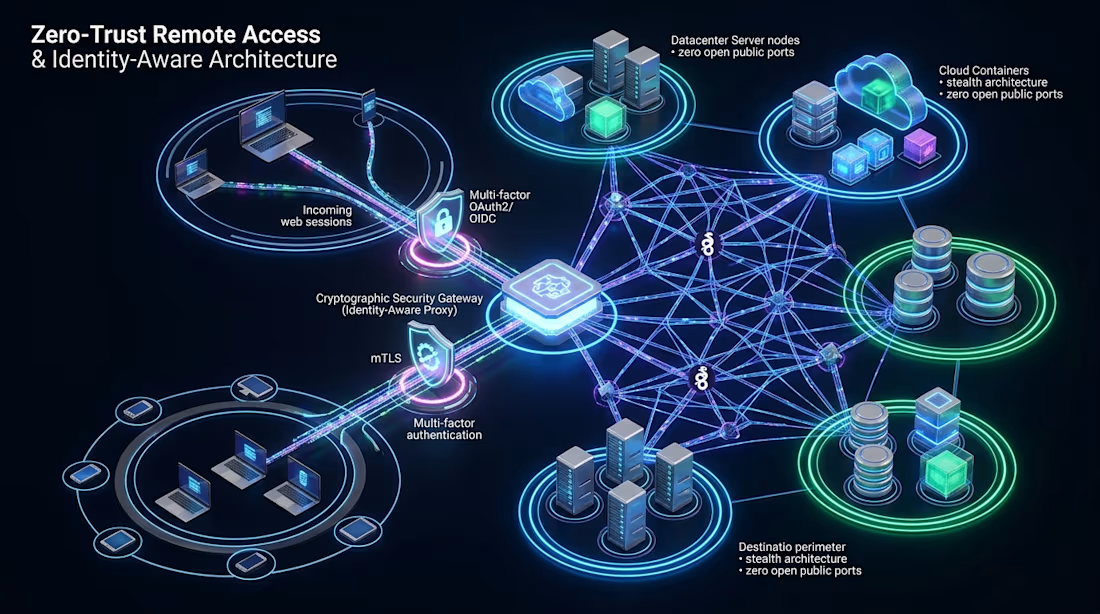
Deploy a zero-trust encrypted network with our 2-week Zero-Trust Remote Access Architecture Sprint on Contra: https://contra.com/s/QocPNgeg-zero-trust-remote-access-and-identity-aware-architecture
#CyberSecurity #Networking #Linux #Infrastructure #DevOps #SRE #Security #Architecture

The network for creativity
Join 1.25M professional creatives like you
Connect with clients, get discovered, and run your business 100% commission-free
Creatives on Contra have earned over $150M and we are just getting started







Related posts


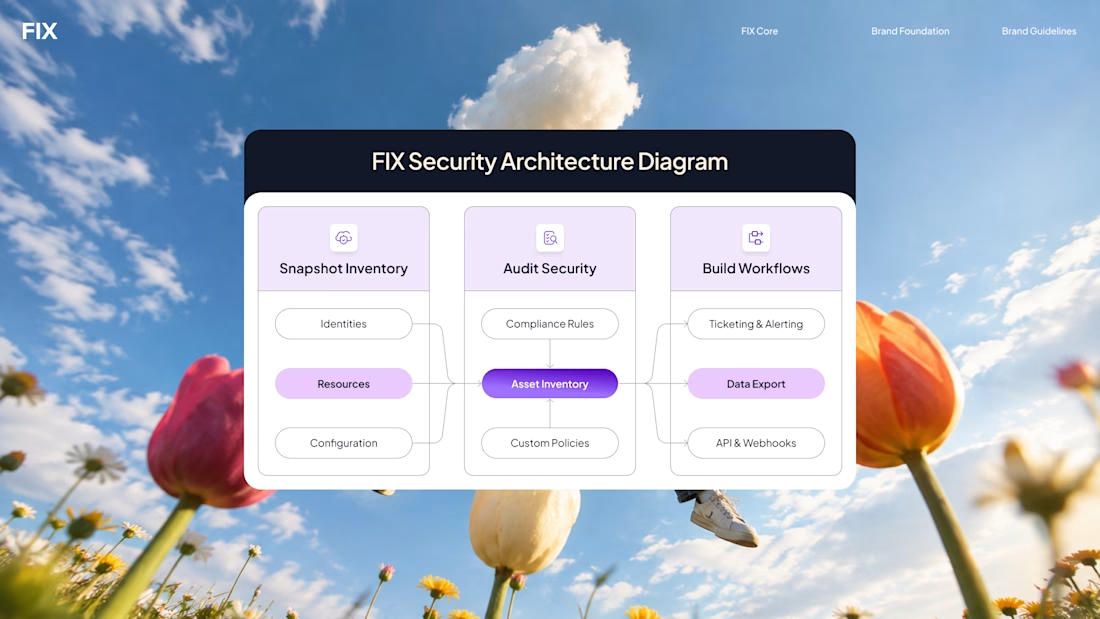

CREARA is a Spain-based architectural firm with a unique selling point: creating spaces that align with the lifestyles desired by young families.
With a premium, minimalist aesthetic, the firm stands out by avoiding cookie-cutter designs, instead creating bespoke solutions tailored to each client's specific needs.
Focusing primarily on young families, the visual identity is soft, modern, and sustainable.



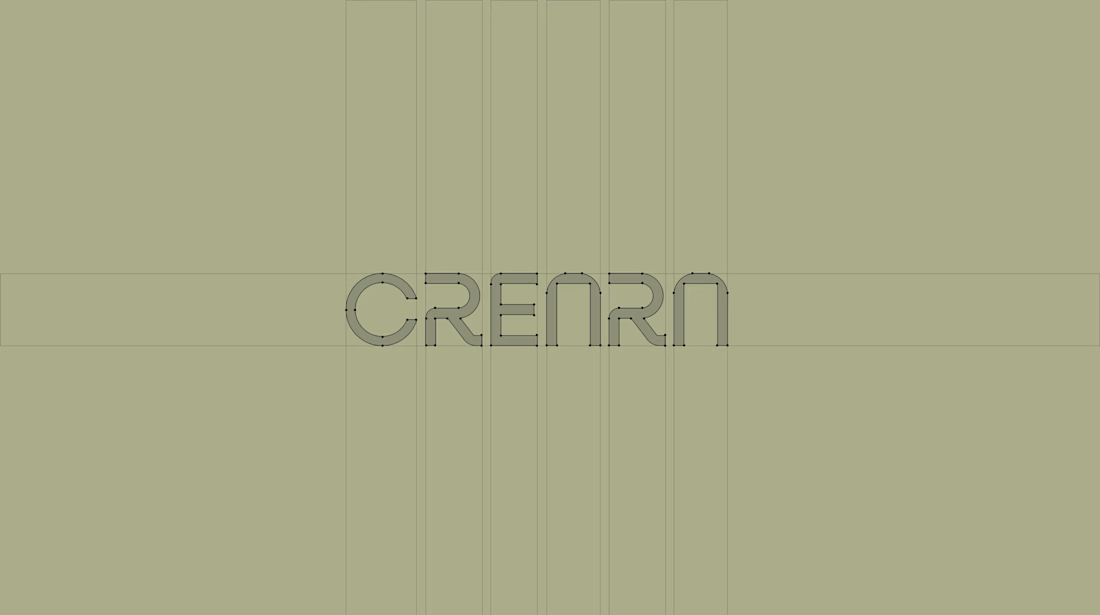
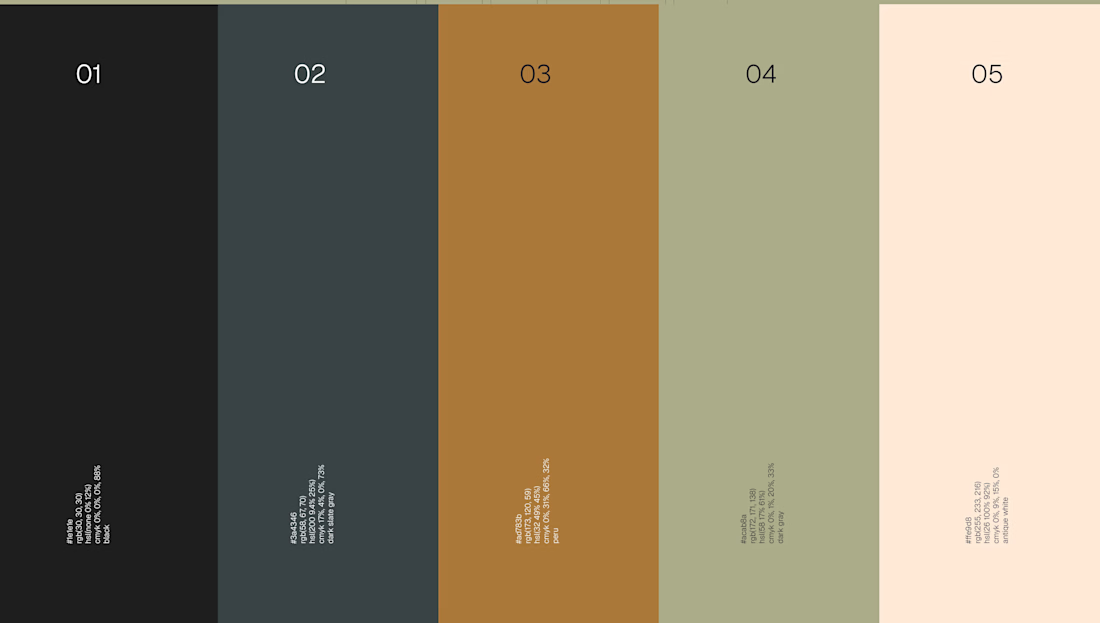


The young-families angle is the tricky constraint here, since premium minimal usually gets read as slightly untouchable and families are the audience least inclined to want that. The softened wordmark and the warmer half of the palette look like where that gets absorbed. Was the...

AetherOS is a web desktop for AI agents. The entire project sits inside a single HTML file. It starts with a boot screen. Then it opens into a dark workspace. The background has black animated particles. Everything runs on plain CSS and vanilla JavaScript. The site loads zero external dependencies and zero sound files.
The bottom dock holds seven apps. These tools manage four AI agents: Atlas, Sage, Bolt, and Vega. The Agents app shows them chatting and passing tasks. Files lets you browse a drive. Memory shows a live graph of what the system knows. Users can also modify a history timeline. Studio lets you test prompts. Flows builds node pipelines, and Cost tracks token usage.
Every window can be moved, resized, minimized, or maximized. The top menu bar has a model switcher. It routes tasks to Claude Opus 4.7, GPT-5.2, Gemini 3 Pro, DeepSeek V4, or Llama 4. The OS also has Spotlight search, sound toggles, and local API key inputs. The interface uses dark glass panels with blue highlights.
Building the node graphs in one single HTML5 file was tough. At first, the physics nodes pushed apart too hard. They floated right off the screen. Dragging extra lines while getting zoomed in also threw off the precise positions. I fixed the center gravity math. Then I divided mouse positions by the zoom factor. That stopped the unnecessary movement and kept the OS stable.😊


