The network for creativity
Join 1.25M professional creatives like you
Connect with clients, get discovered, and run your business 100% commission-free
Creatives on Contra have earned over $150M and we are just getting started
Back to feedPost

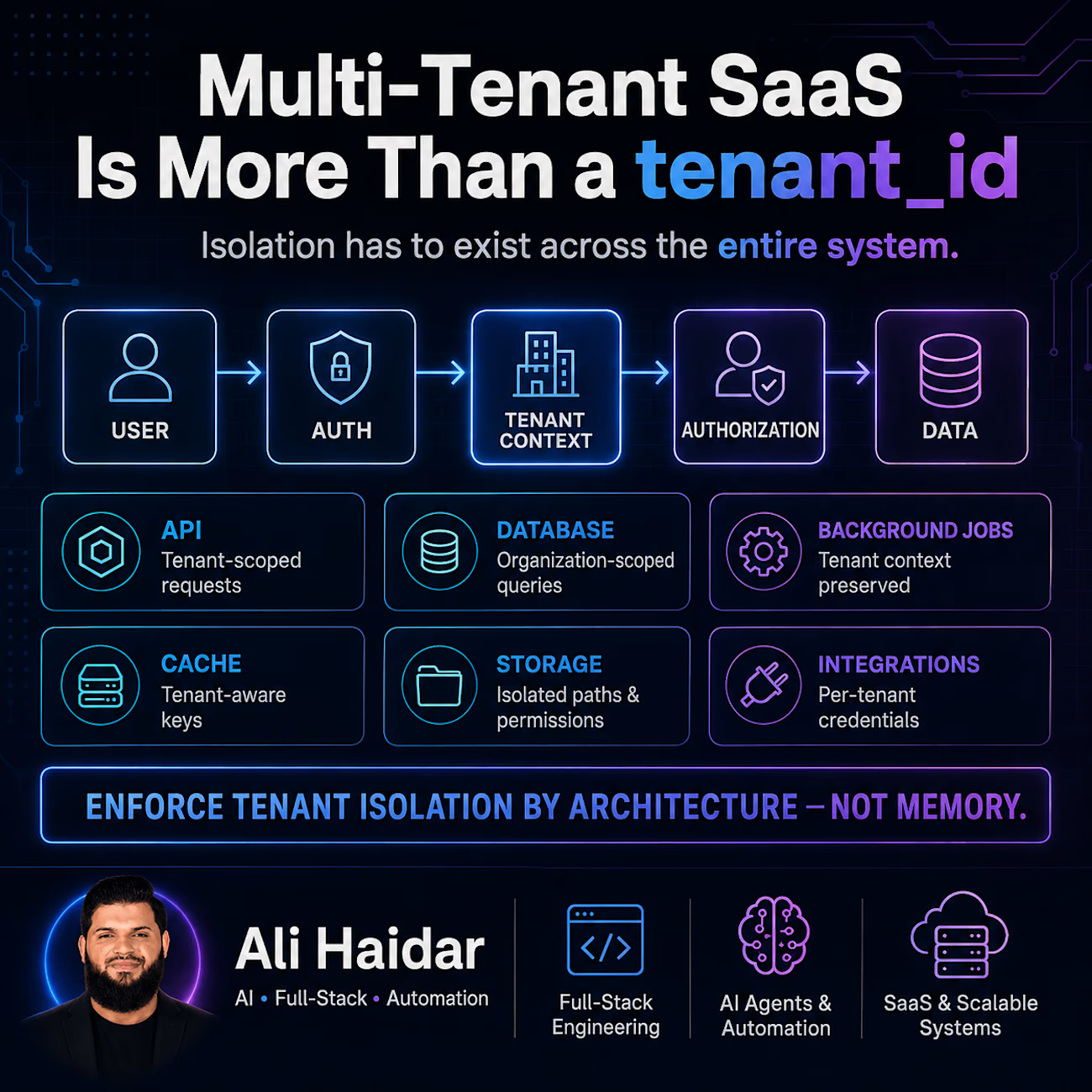
A multi-tenant SaaS platform needs more than a tenant_id.
Reliable tenant isolation has to work across APIs, database queries, background jobs, caching, storage, integrations, and authorization.
I like designing systems where tenant boundaries are enforced by the architecture itself, so developers don’t have to rely on remembering to scope every operation manually.
If your SaaS product is growing and multi-tenancy, permissions, or data separation are becoming harder to manage, that’s exactly the kind of architecture problem I enjoy solving.
#SaaS #BackendEngineering #SystemDesign #FullStack #Architecture
The network for creativity
Join 1.25M professional creatives like you
Connect with clients, get discovered, and run your business 100% commission-free
Creatives on Contra have earned over $150M and we are just getting started

Challenges
View all


Related posts

The 404 was treated as a proper page rather than a fallback state.
The number is constructed as an architectural drawing. The 4 and the 0 are formed from walls at true thickness, with furniture laid out inside the resulting rooms and dimension strings running along both edges. It sits inside the same drafting system as the rest of the site rather than borrowing a display typeface.
The error message then repeats. Instead of a single dialog, identical windows cascade back across the canvas, each one carrying the same 404 notice. It reads as a system throwing an unresolved warning over and over, which is the exact behaviour Heron is built to prevent inside a model.
Error pages are never in the brief. They're a good measure of whether a team understood the product or just styled it.


Treating a 404 as an actual page instead of a dead end is such a good instinct, where did the architectural drawing idea come from, personal interest bleeding into the work?

SaaS Explainer Video — AI-Native Software Engineering.
A cinematic SaaS explainer created to communicate a simple business message: AI can build an app, but building software that works reliably for a real business takes much more.
The video combines an AI presenter, product interface visuals, technical environments, and cinematic storytelling to explain the difference between a quick AI prototype and production-ready software.
The goal was to make a technical SaaS product feel clear, modern, credible, and easy to understand while keeping the story engaging from beginning to end.
Tools & techniques: AI video generation, AI visuals, product visualization, cinematic storytelling, motion design
AI ArtAI Content CreationGoogle FlowGoogle LabsRunwayaivideoproductionaiartistaivideoproducerAI Video Production


the saas shot is clean.

Some designers are obsessed with making onboarding feel effortless.
But when you're building a platform for secure access, clarity and trust come first.
For NukiePass, we designed an onboarding experience that introduces the product with purpose.
From the first screen to the final swipe, every detail helps users understand what NukiePass stands for: secure, reliable, and seamless access.
Built for schools, estates, staffs, residents and more.
Because onboarding shouldn't just show users where to go.
It should make them feel confident about getting there.

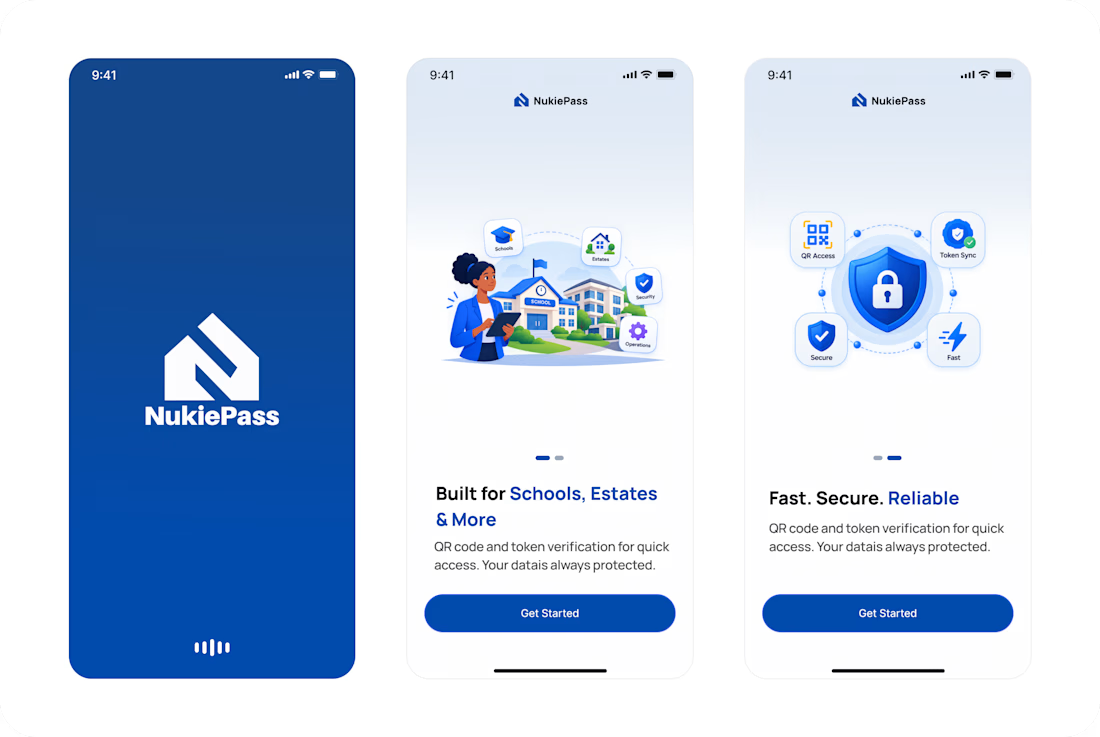

The use-case screen (schools, estates) comes before the security-feature screen, not after - you establish who this is for before you explain how it protects them.