The network for creativity
Join 1.25M professional creatives like you
Connect with clients, get discovered, and run your business 100% commission-free
Creatives on Contra have earned over $150M and we are just getting started
Back to feedPost

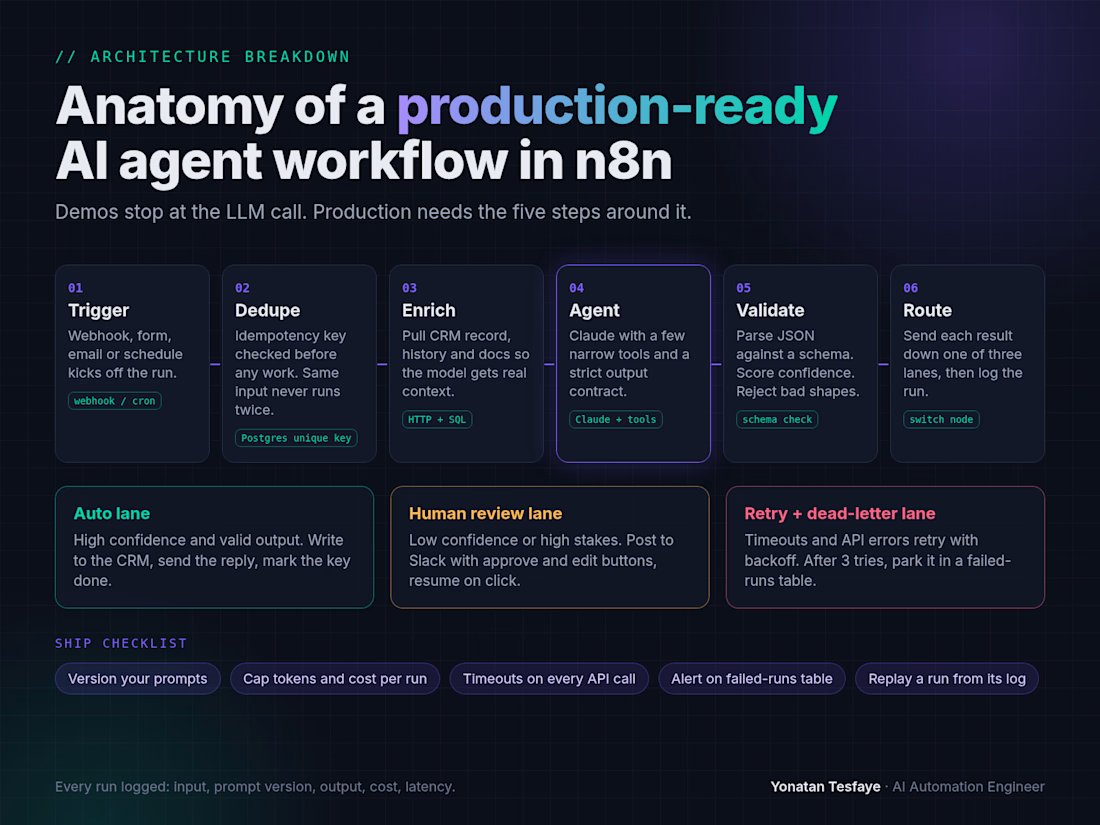
Over the past few days, I built an end-to-end AI agent on top of an existing system.
The interesting part was not connecting an LLM to a chatbot.
The real work was in the architecture:
- keeping business logic inside the application
- exposing system capabilities through an MCP server
- keeping the AI agent focused on understanding intent and orchestrating tools
- separating communication channels from the agent, so Telegram works today and WhatsApp or internal chat can be added later without changing the core logic
- preserving existing authorization and application rules instead of duplicating them in the AI layer
The current flow is:
User → Telegram → Channel Layer → AI Agent → Responses API → MCP → Application Services / Actions
The agent can now read application data, understand natural-language requests, execute real operations, maintain conversational context, and return the result through Telegram.
One lesson from this work: The hard part of Agentic AI is not the model itself.
It is designing clear boundaries between reasoning, tools, business rules, permissions, and channels. Once those boundaries are clear, the system becomes much easier to extend, test, and maintain.
The network for creativity
Join 1.25M professional creatives like you
Connect with clients, get discovered, and run your business 100% commission-free
Creatives on Contra have earned over $150M and we are just getting started



Related posts

A WhatsApp chatbot that automates tasks is NOT the same as a custom-built web application.
And honestly, I’ve noticed how much people love AI-powered WhatsApp bots lately.
As someone who develops AI workflows and custom websites, I personally believe that combining a well-built web application with AI puts you one step ahead.
Imagine having a custom interface, your own database, automated workflows, and an AI agent working together in one place.
That’s a completely different level of flexibility.
Don’t get me wrong: WhatsApp bots aren’t always the inferior option. They’re great for customer-facing interactions and quick communication.
But personally? I’d rather give customers a dedicated web experience whenever the project calls for it.
Are you Team WhatsApp Bot or Team Web Bot?


When the web app and the bot share one database, which side owns the conversation state: the n8n workflow or the app? That choice seems to decide whether a customer can switch between WhatsApp and the web view mid-request.

just shipped a new framer template for a customer AI agent support platform
get it here: https://www.framer.com/marketplace/templates/wrenai/

Congrats on shipping it! AI support tools all start to look the same, so a template with this much personality will stand out. How long did it take from idea to marketplace?