The network for creativity
Join 1.25M professional creatives like you
Connect with clients, get discovered, and run your business 100% commission-free
Creatives on Contra have earned over $150M and we are just getting started
Back to feedPost

A pipeline failed twice. The second error hid the first.
The audit subprocess exited with code 7 and returned invalid JSON. The wrapper tried to parse it before preserving the process failure, so JSONDecodeError replaced the operational error the developer actually needed.
The fix was tiny. The useful model was this:
• failure + valid JSON → save the receipt, then re-raise
• failure + invalid JSON → preserve the subprocess error; write no receipt
• success + invalid JSON → surface the broken output contract
That matrix turned “it failed” into a reproducible diagnosis.
Full case, including the regression tests:
https://dev.to/relaunchdept/the-json-error-that-hid-the-real-failure-5da6?utm_source=contra&utm_medium=community&utm_campaign=json_failure_followthrough
Need the same evidence-first review on a broken automation? Fixed-scope audit:
https://buy.stripe.com/bJe6oJ8PQ3lKgULaCrefC02?utm_source=contra&utm_medium=community&utm_campaign=json_failure_followthrough
AI-assisted analysis, human-reviewed against public code and tests. Operational debugging only; no guaranteed outcome.

dev.to
The JSON Error That Hid the Real Failure
This is a submission for DEV’s Summer Bug Smash: Smash Stories powered by Sentry. A migration audit…
The network for creativity
Join 1.25M professional creatives like you
Connect with clients, get discovered, and run your business 100% commission-free
Creatives on Contra have earned over $150M and we are just getting started





Related posts

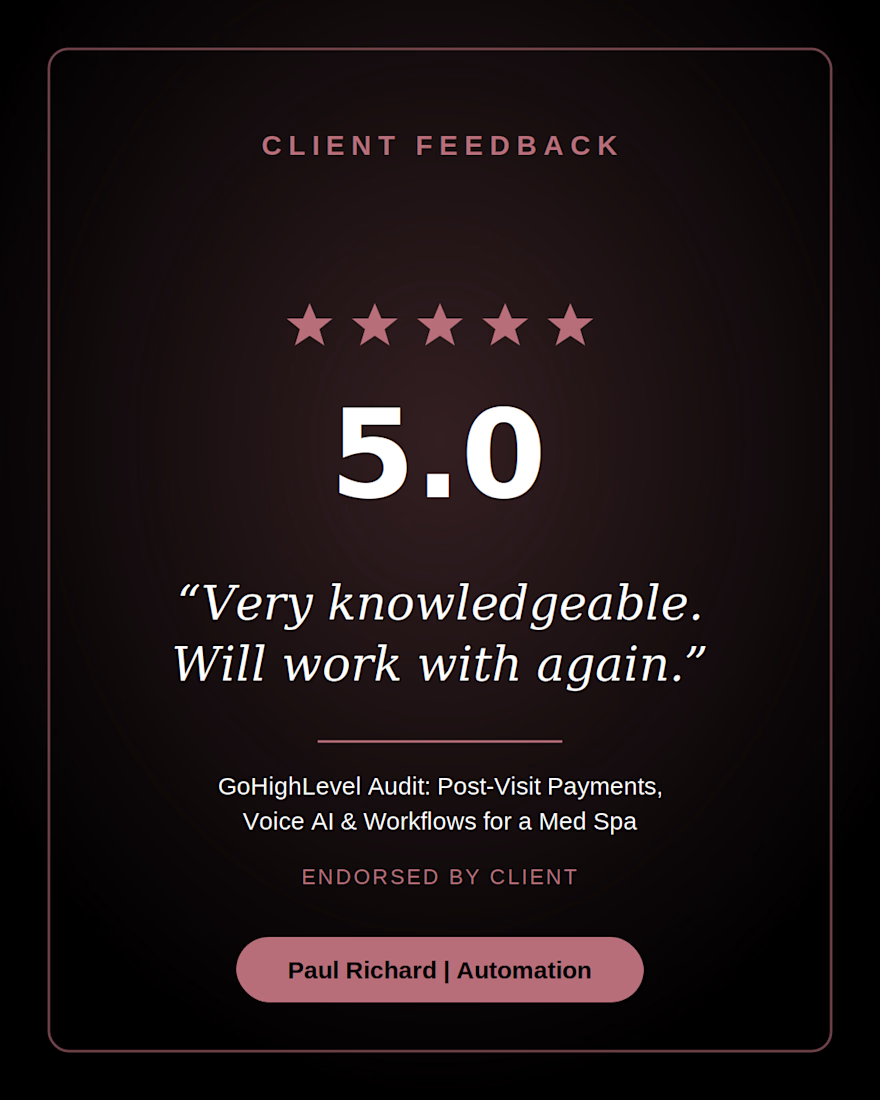
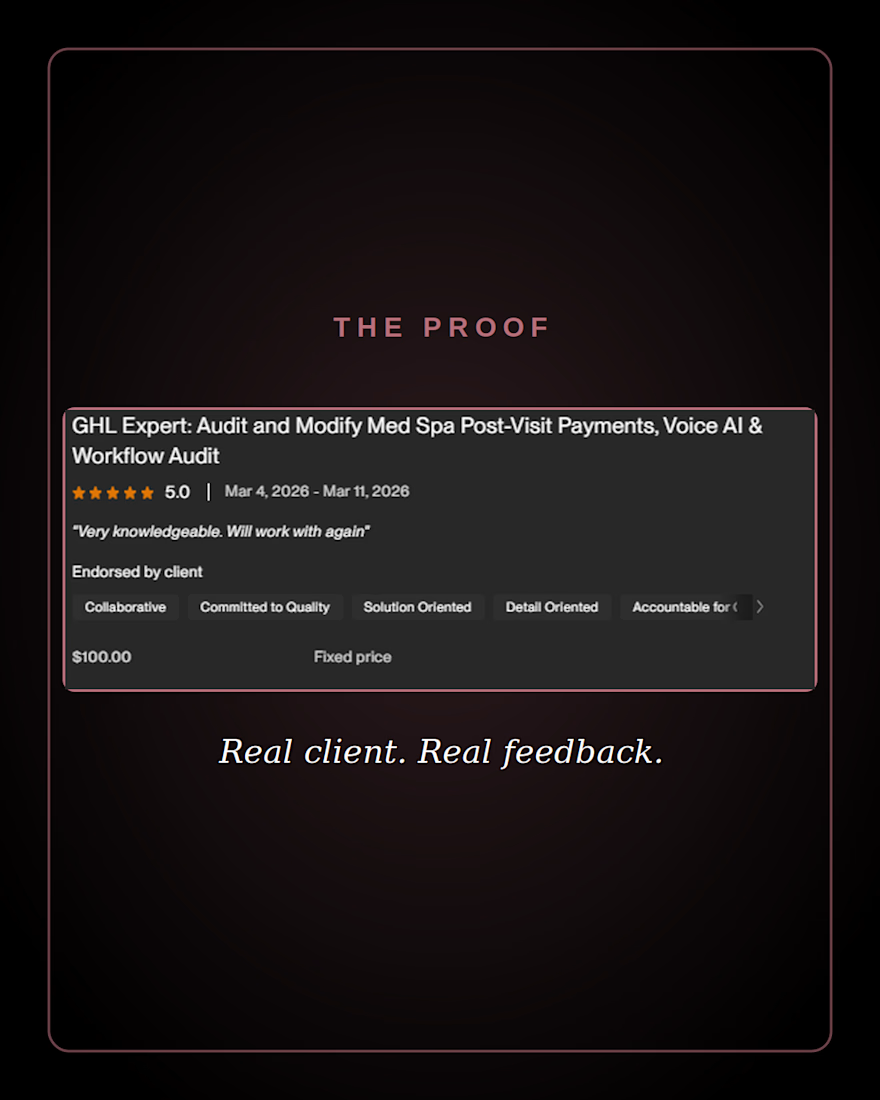
5.0 stars. "Very knowledgeable. Will work with again." ⭐
That's what a client said after I audited and fixed their GoHighLevel setup: post-visit payments, Voice AI, and the workflows behind them for a med spa.
Most businesses don't need a rebuild. They need someone to find where the system is leaking and fix it.
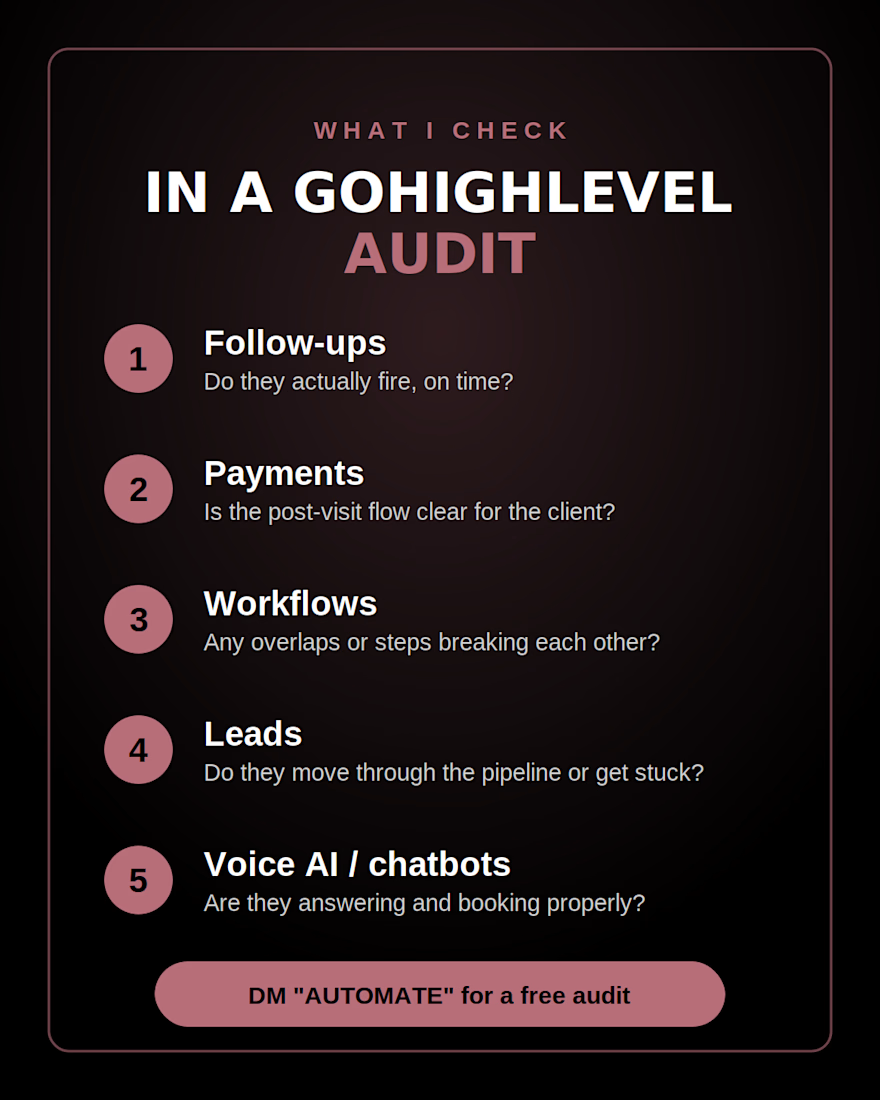
Here's what a GoHighLevel audit usually catches:
❌ Follow ups that never fire
❌ Payment steps that confuse the client
❌ Workflows that overlap or break each other
❌ Leads that go in but never come out
Thank you to the client who trusted me with it. 🤍
If your GoHighLevel setup feels messy or isn't doing what you thought it would,
DM "AUTOMATE" for a free automation audit.

I’m building Paddy, a platform for finding verified rental homes in Ghana.
Every listing is reviewed before it goes live. The problem: a rejected landlord had no idea what went wrong, so they’d either give up or resubmit the same thing.
So now, before a reviewer can reject a listing, a dialog asks them for the reason. The landlord sees it on their dashboard and knows exactly what to fix.
Built with Next.js on a Django REST API. Code in the comments.

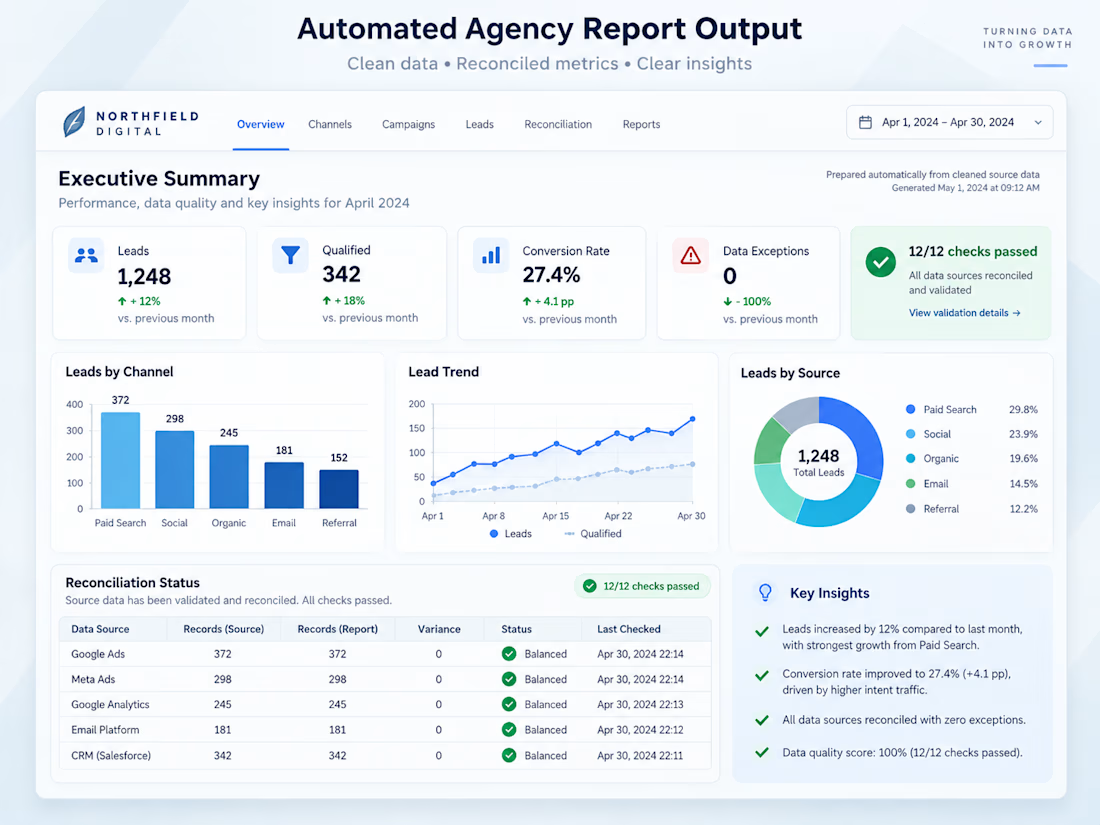
Example of the kind of workflow I build: messy or repetitive business data goes in, gets cleaned and reconciled, then comes out as a consistent, client-ready report with validation built in.
This demo passed 12/12 validation checks and is designed around repeatable reporting, data cleanup, and reducing manual work.