The network for creativity
Join 1.25M professional creatives like you
Connect with clients, get discovered, and run your business 100% commission-free
Creatives on Contra have earned over $150M and we are just getting started
Back to feedPost


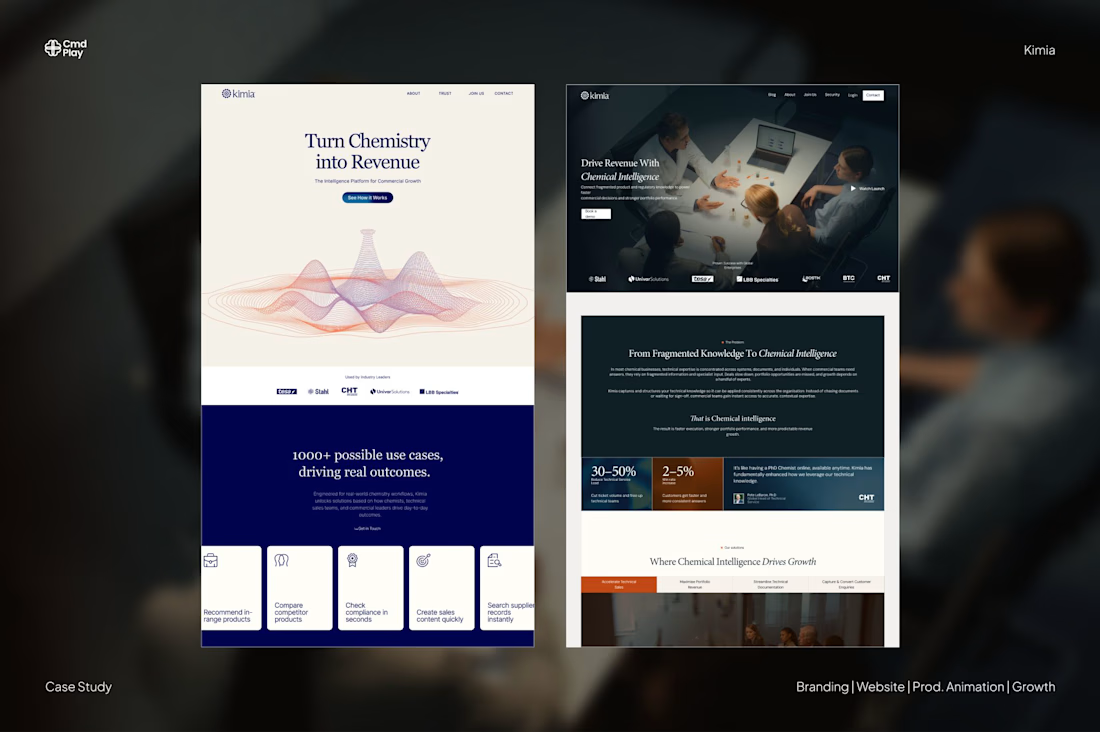
What does Chemical Intelligence look like beyond data, numbers, and chemical formulas? 🤔
That was the question I kept coming back to with Kimia
Chemical Intelligence is their term, a category they're defining. The pioneers.
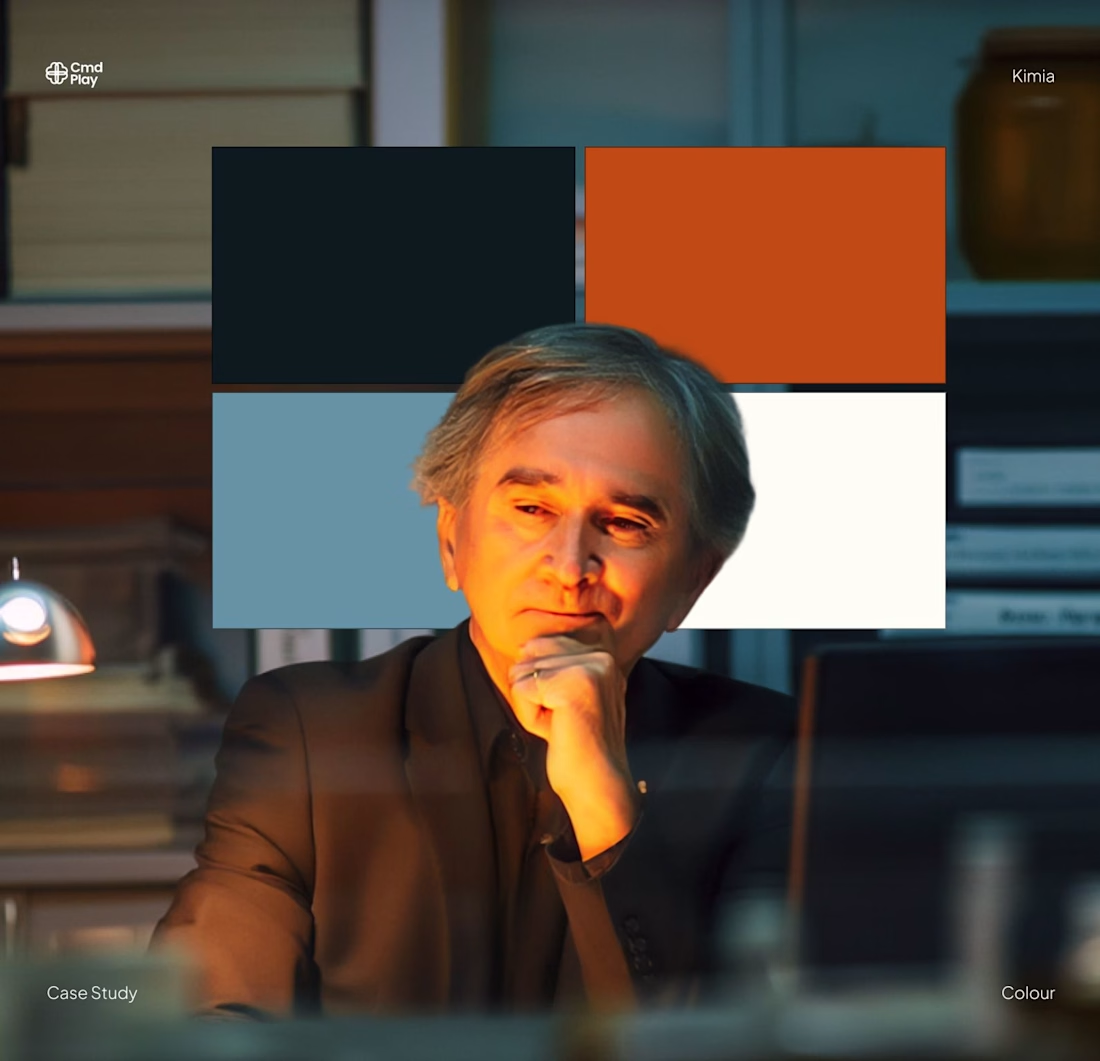
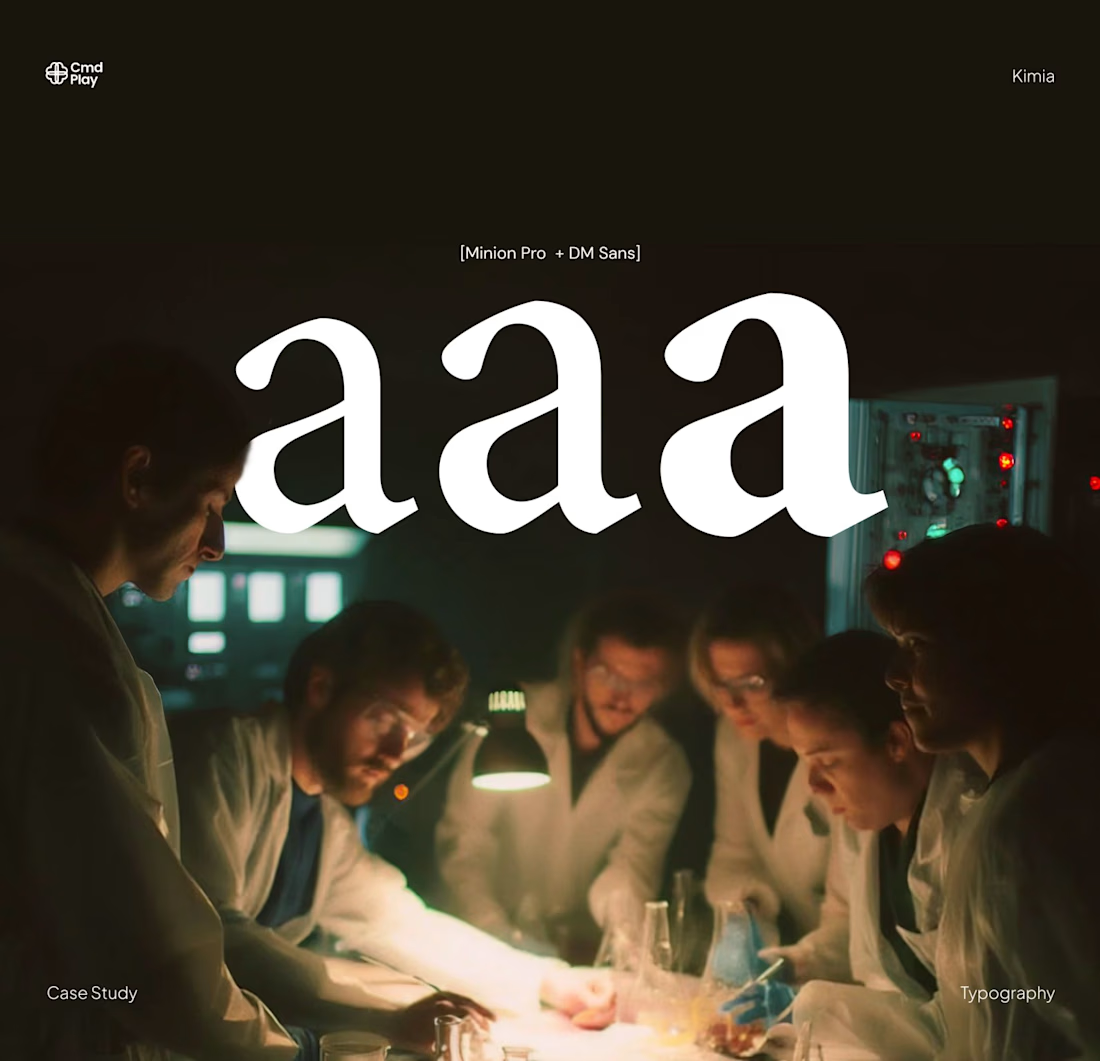
The design had to sit somewhere between heritage and tech relevance. The credibility of an intellectual professor with decades of passed down knowledge but delivered with the clarity and precision of something built for today 🔥
Built with love by the CMD Play team ♡
Check out the case study → https://commandplay.design/work/kimia
and the website → kimia.ai
The network for creativity
Join 1.25M professional creatives like you
Connect with clients, get discovered, and run your business 100% commission-free
Creatives on Contra have earned over $150M and we are just getting started







Related posts

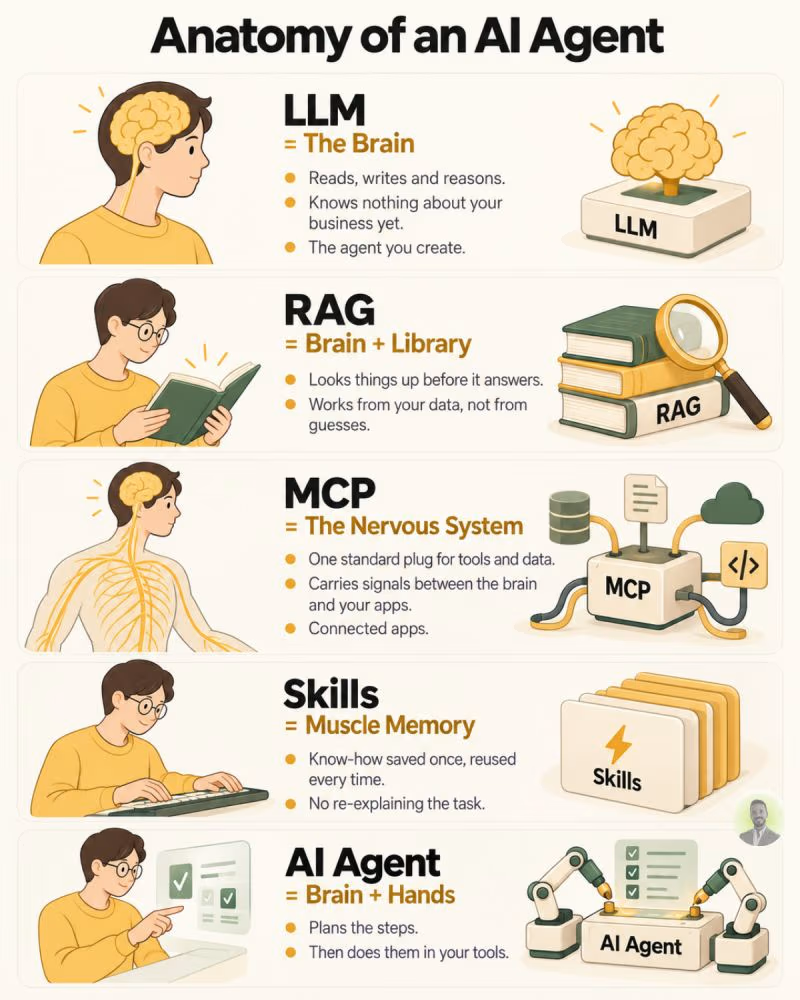
AI Agent vs Body
One AI agent is single-player.
Work is multiplayer.
Start with one agent. I explain it as a body.
The LLM is the brain.
It reads, writes, and reasons. It knows nothing about your business.
RAG is the brain with a library.
It looks things up in your documents before it answers.
MCP is the nervous system.
Model Context Protocol. One standard way to wire the brain to tools and data. Build the connection once, and any agent that speaks MCP can use it.
Skills are muscle memory.
Know-how saved once and loaded when a task calls for it.
The agent is the brain with hands.
It plans the steps, then carries them out in your tools.



What if creating felt more natural? 🌼
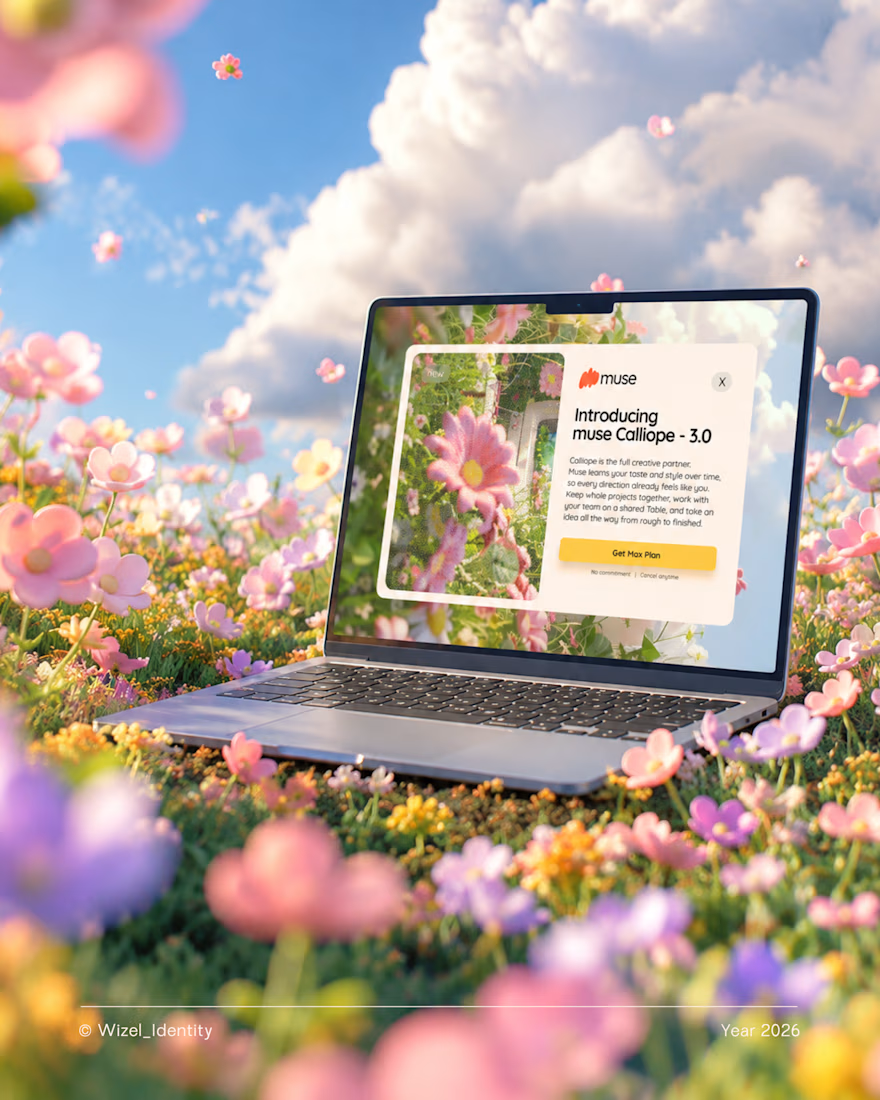
Meet Muse, an AI creative companion that helps turn rough ideas into clear concepts.
The thought you can't quite explain. The idea that's still taking shape. The concept you're trying to bring to life.
Muse meets you right there.
For this identity, I explored a visual direction that feels playful, expressive, and full of possibility, a reflection of what creativity can feel like when you have room to explore.
Brand identity design for Muse.
Designed by Wizel_Identity. © 2026
#BrandIdentity #VisualIdentity #BrandDesign #CreativeTechnology #AI



Built another AI-powered product experience focused on one thing: making AI actually useful inside real apps.
From AI agents and chatbots to LLM integrations, voice, vision, RAG, and automation, the goal is not to add AI for decoration. It is to make the product faster, smarter, and easier to use.
Currently building AI products with React Native, Node.js, Python, OpenAI, AWS, and Supabase.
#aigold #AI #AIAgents #LLM #ReactNative #SaaS