The network for creativity
Join 1.25M professional creatives like you
Connect with clients, get discovered, and run your business 100% commission-free
Creatives on Contra have earned over $150M and we are just getting started
Back to feedPost

The Supply Chain Beneath the Supply Chain
Evidence-Based Supply Chain Risk Research
How hidden upstream dependencies can make a diversified supply chain much less resilient than it appears.
A company can have four suppliers for the same critical component and still have a serious supply problem.
Why?
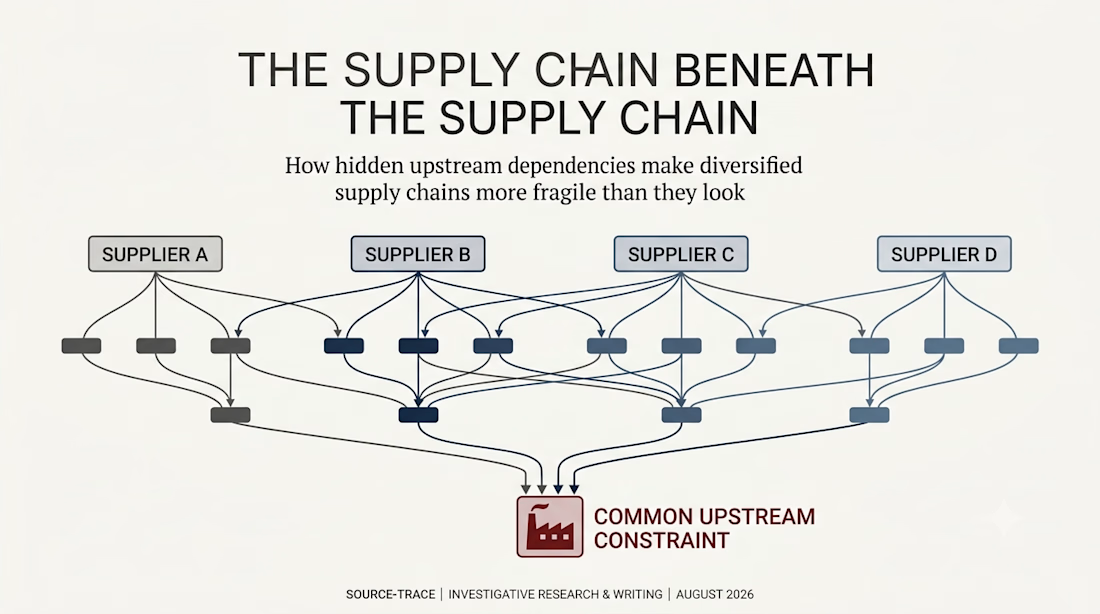
Because those four suppliers may depend on the same upstream material, manufacturing process, piece of equipment, or geographic region.
That is the question behind this SourceTrace research project:
When we look beyond the suppliers we can see, how many genuinely independent supply routes are actually left?
What I investigated
I looked beyond the usual Tier-1 supplier view and traced where critical dependencies can come together further upstream.
The research examines:
Why having more suppliers does not always mean having more independent supply routes
How several suppliers can share the same hidden upstream dependency
Semiconductor supply chains and concentrated manufacturing equipment
Pharmaceutical supply chains and concentrated upstream inputs
How one upstream disruption can affect many companies at the same time
Why technology lock-in, qualification requirements, capital costs and geography create hidden bottlenecks
When deeper supply-chain research is worth the time and money
What boards and risk teams should ask before assuming a supply chain is truly diversified
The research approach
I did not try to map every company and every supplier in a global supply chain.
Instead, I used selective depth.
The idea is simple:
Keep tracing a critical dependency until the information can change a real decision — such as finding another supplier, increasing inventory, redesigning a component, or accepting the risk.
The research was then turned into dependency maps, evidence cards, industry examples, comparison tables and practical questions for decision-makers.
The central finding
Supplier count is not the same as dependency count.
Four suppliers may look safer than one.
But if all four ultimately depend on the same upstream constraint, the apparent diversification can disappear when that constraint fails.
This is what I call common-mode exposure: different suppliers can be affected by the same problem because they share part of the same upstream system.
What I created
Evidence-based research paper
Multi-tier supply-chain dependency maps
Semiconductor and pharmaceutical case analysis
Supply-chain risk framework
High-value vs. low-value mapping matrix
Executive and board-level questions
Visual evidence cards and comparison tables
SourceTrace research methodology
My role
Researcher + Investigative Writer
I researched the evidence, followed the dependencies beyond the obvious supplier relationships, tested the assumptions behind conventional diversification, and turned the findings into clear, visual and decision-focused research.
The goal was not to make the supply chain look more complicated.
It was to show where the real dependency sits.
SourceTrace principle: Truth before persuasion. Evidence before opinion.


The network for creativity
Join 1.25M professional creatives like you
Connect with clients, get discovered, and run your business 100% commission-free
Creatives on Contra have earned over $150M and we are just getting started





Related posts




Love the cute concept! The logo icon and mockups feel so cozy and welcoming ☕✨

I'm a creative Graphic Designer with expertise in YouTube thumbnails, branding, and modern website graphics. I deliver clean, professional, high-quality designs fast.




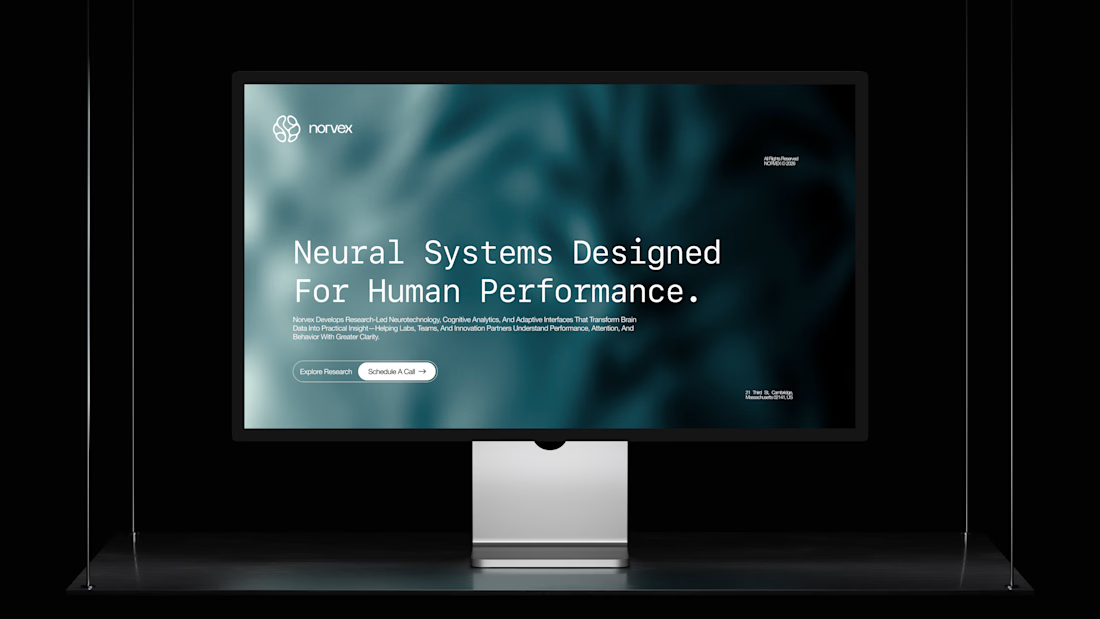
[NORVEX]
NORVEX is a neurotechnology and cognitive research laboratory based in Cambridge, Massachusetts.
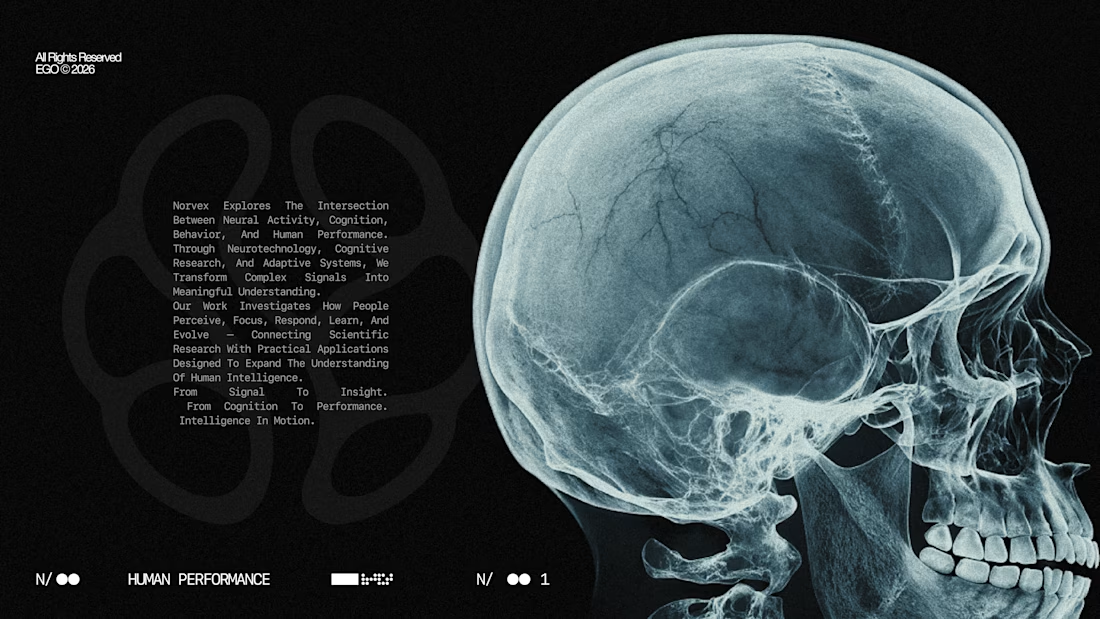
Operating at the intersection of neuroscience, cognitive analytics, technology and human performance, Norvex transforms complex data into research, intelligent systems and meaningful insights.
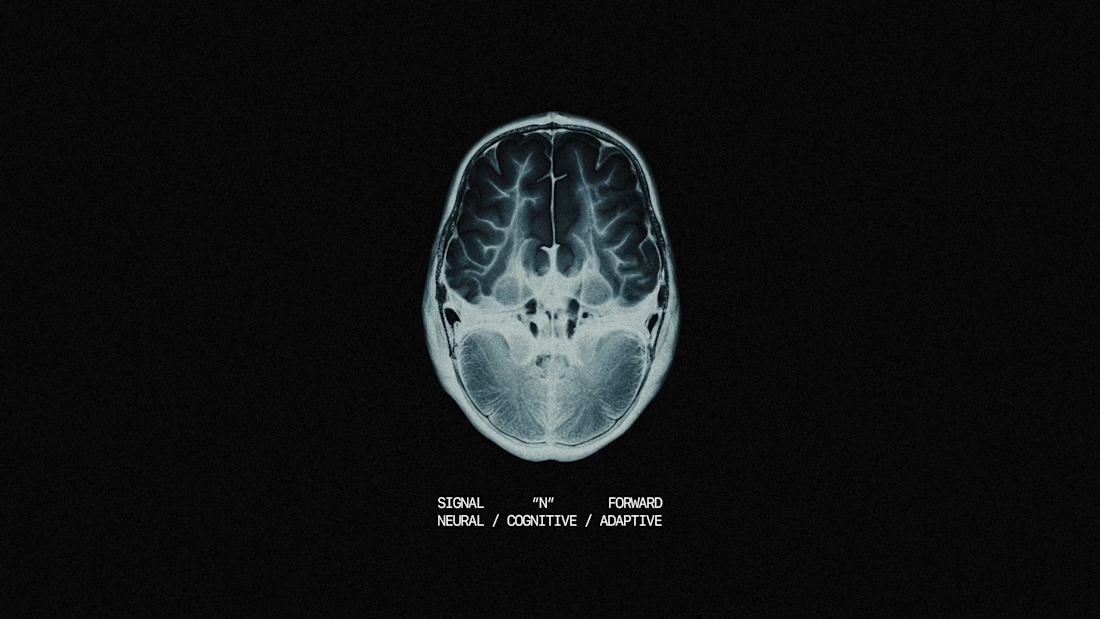
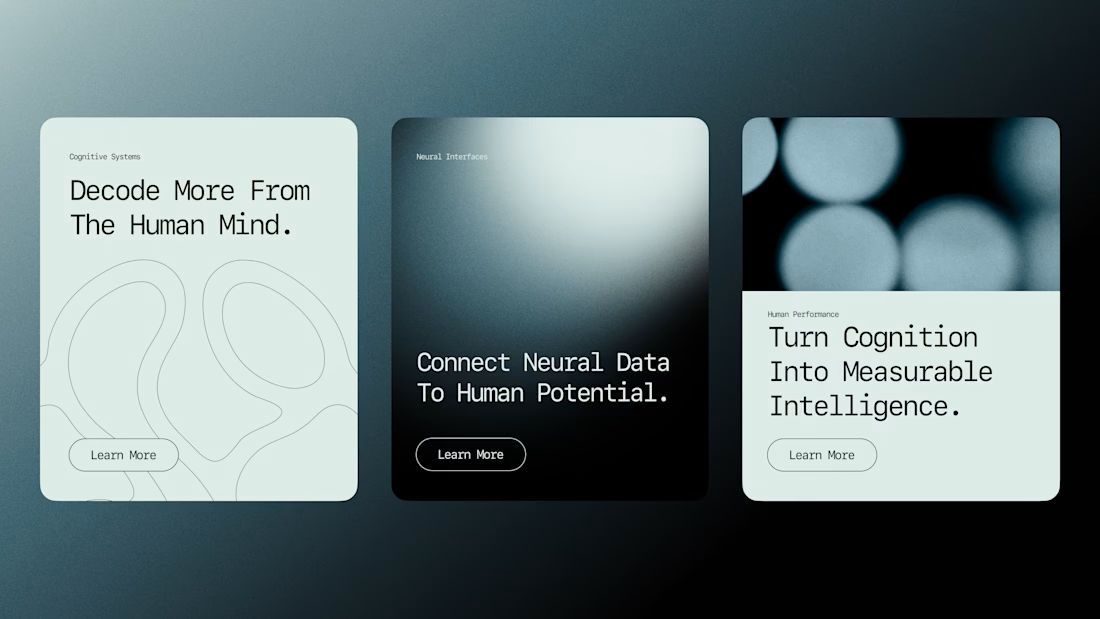
Its new identity reflects this vision through a precise and dynamic visual system, built around intelligence, connectivity and movement.