The network for creativity
Join 1.25M professional creatives like you
Connect with clients, get discovered, and run your business 100% commission-free
Creatives on Contra have earned over $150M and we are just getting started
Back to feedPost

Every business has a hidden tax it pays every month. It's not on any invoice.
It's the cost of manual work that should have been automated two years ago.
Someone on your team copies lead data from emails into a spreadsheet. Another person manually sends the same follow-up messages, one at a time. Someone else compiles the same report every Monday from three different tools.
None of these tasks are hard. None require special skills. But together they quietly eat 10–15 hours a week across your team.
That's a full workday lost to work that adds zero value.
The businesses pulling ahead right now aren't the ones working harder. They're the ones who looked at their repetitive tasks and asked one question:
"Does a human actually need to do this?"
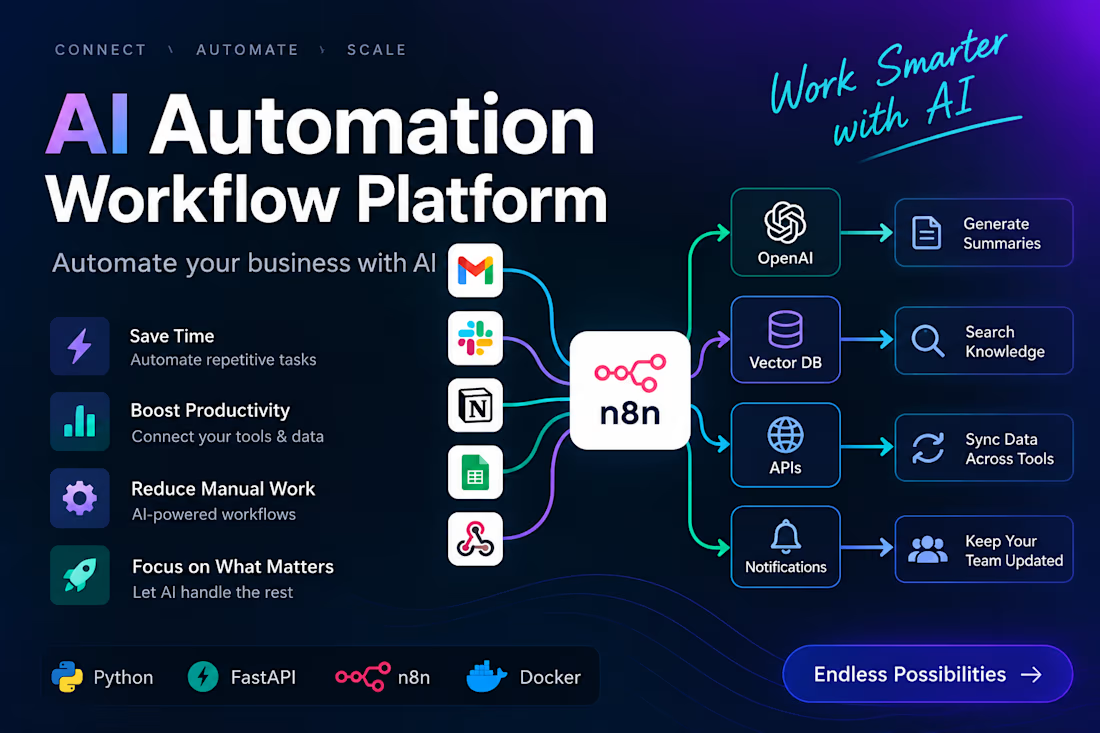
Often the answer is no. A simple automation can capture leads, send follow-ups, sync data between tools, and generate that Monday report without anyone touching it.
You don't need to automate everything. Start with one repetitive task that happens every week without fail. If a human is doing it the same way every time, it's a candidate.
What's one task your team does manually every week that a system could handle?
The network for creativity
Join 1.25M professional creatives like you
Connect with clients, get discovered, and run your business 100% commission-free
Creatives on Contra have earned over $150M and we are just getting started
Trending
retrofuturism
Share your favorite designs from the past exploring the distant future. Or your own take on the aesthetic 🚀
halftone
Dots. Texture. Grain. Let's see your designs using the halftone technique.

Midjourney
Creatives are showing off what they're making with Midjourney.
colorgrade
Video editors sound off: How do you enhance the mood of your video in color grading?
Related posts

AI-Powered Client Enquiry Automation
Project Overview:
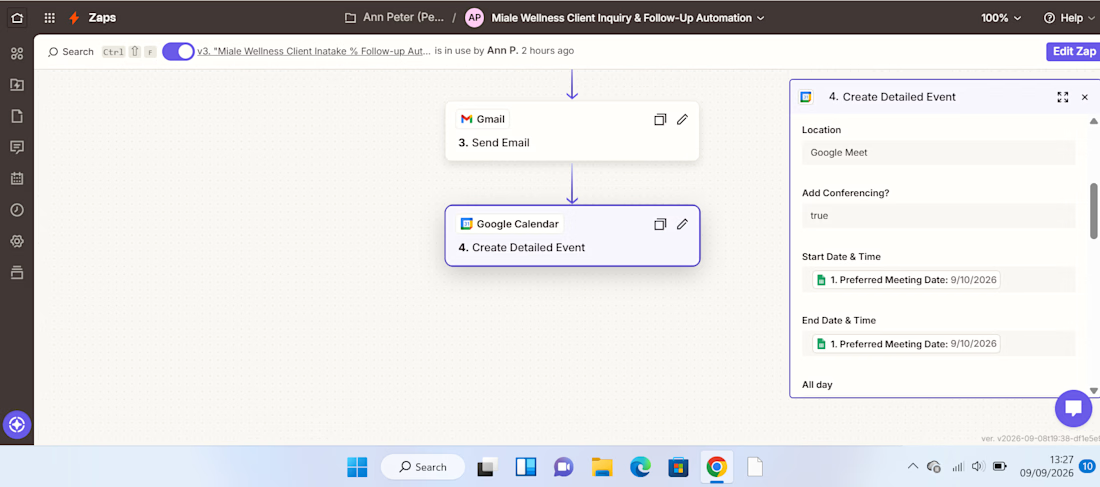
I built an AI-powered client enquiry automation workflow using Zapier, Google Forms, Google Sheets, AI by Zapier, Gmail, and Google Calendar.
The goal was to automate the initial handling of client enquiries from receiving the enquiry to understanding the client's needs, sending an acknowledgement, and creating a follow-up task.
The Problem:
Managing client enquiries manually can be repetitive and time-consuming. Each new enquiry needs to be reviewed, categorized, summarized, responded to, and followed up.
Without a structured process, it's easy for enquiries to be delayed or follow-ups to be missed.
The Solution:
I designed a workflow that automates these repetitive administrative tasks while using AI to analyze the information provided by the client.
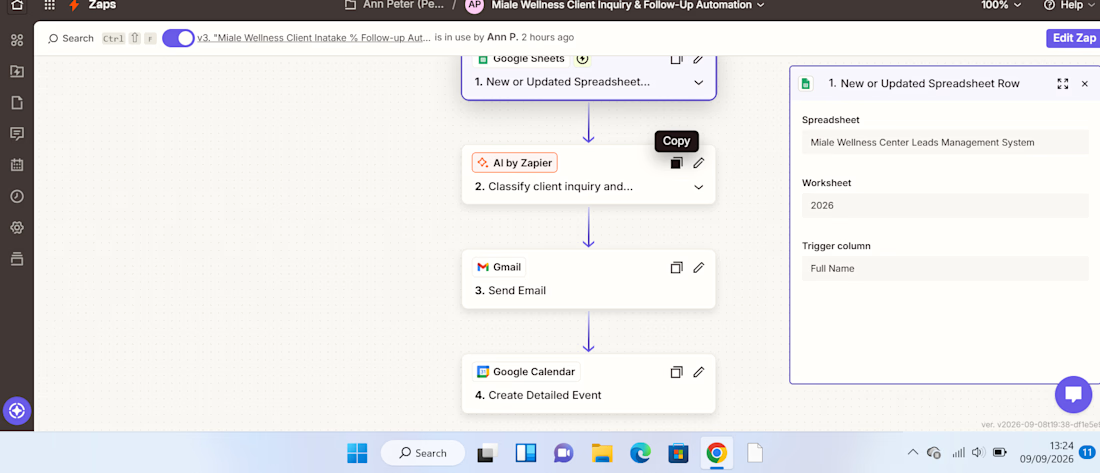
The automation follows this process:
Client submits enquiry
↓
Google Sheets captures the enquiry
↓
AI analyzes the enquiry
↓
Gmail sends an acknowledgement
↓
Google Calendar creates a follow-up
How It Works:
1. Enquiry Collection.
The client submits their details and enquiry through a Google Form. The information is automatically recorded in Google Sheets.
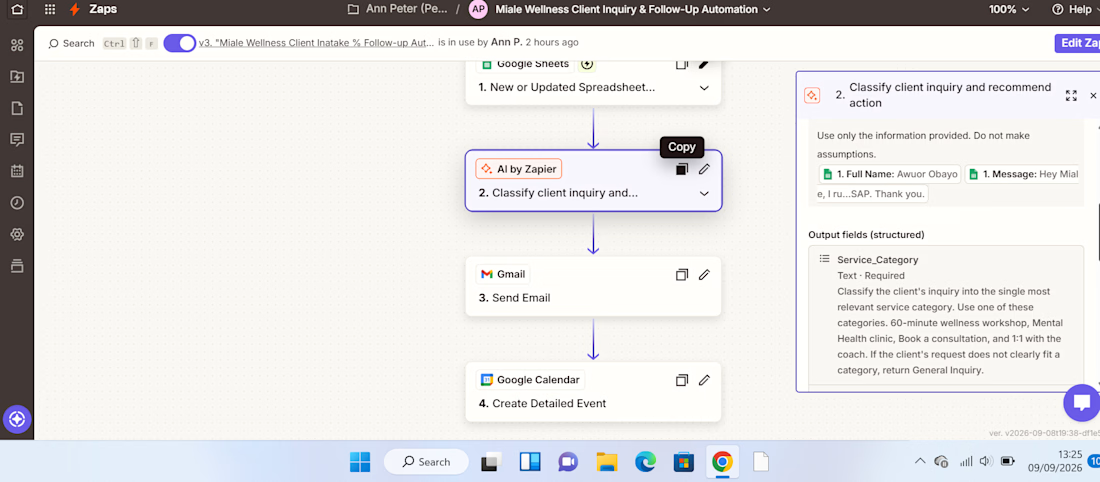
2. AI Analysis.
AI by Zapier reviews the enquiry and extracts key information such as the service category, priority, concise summary of the client's needs, and recommended next action.
This eliminates the need to manually review every enquiry just to determine what it is about and how it should be handled.
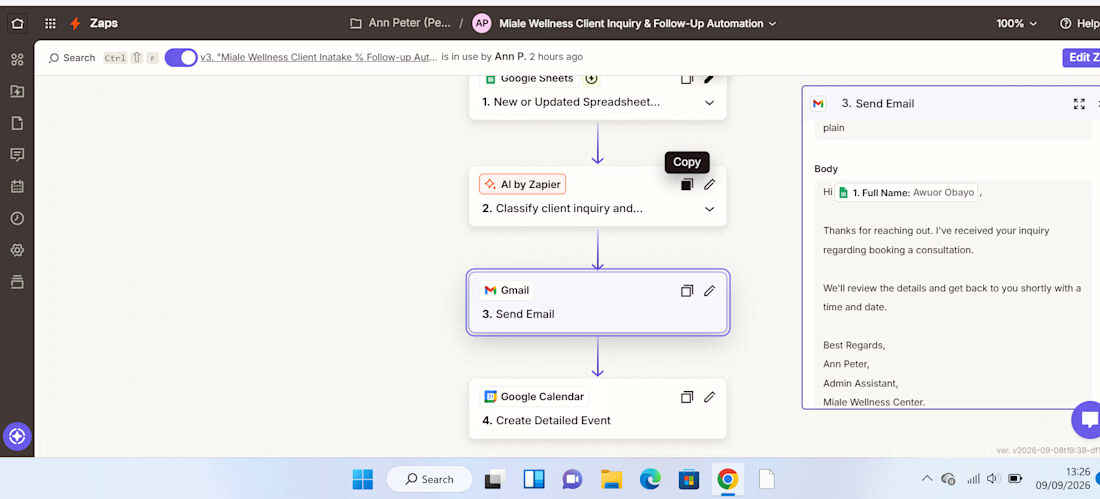
3. Automated Client Response.
After the enquiry is processed, Gmail automatically sends the client an acknowledgement, ensuring they receive a timely response.
4. Follow-Up Management.
The workflow creates a Google Calendar follow-up, helping ensure that the enquiry doesn't get lost after the initial response.
Result:
The completed workflow turns a manual enquiry process into a structured automated system:
Capture → Analyze → Respond → Follow Up
The key improvement is the use of AI as a decision-making layer, rather than simply moving information from one application to another.
This demonstrates how AI automation can reduce repetitive administrative work, improve response consistency, and help businesses stay organized with client enquiries.
Tools Used:
Zapier | AI by Zapier | Google Forms | Google Sheets | Gmail | Google Calendar
Skills Demonstrated:
AI Automation • Workflow Design • Administrative Automation • AI Prompting • Client Enquiry Management • Email Automation • Calendar Automation • Process Optimization



Really clean workflow, Ann. The Capture → Analyze → Respond → Follow Up structure makes the business value immediately clear. One useful next layer could be an exception route for urgent or low-confidence enquiries, so AI handles the routine cases while anything uncertain...

AI is becoming useful for a simple reason: it’s starting to finish the work, not just suggest what to do.
For a small business, the difference is clear.
“How should I follow up with this lead?” is advice.
Researching the lead, preparing a personalized message and updating the client list is execution.
The opportunity isn’t replacing your team. It’s removing the repetitive steps that keep people away from customers and creative work.
What’s one task you would happily stop doing every week?