The network for creativity
Join 1.25M professional creatives like you
Connect with clients, get discovered, and run your business 100% commission-free
Creatives on Contra have earned over $150M and we are just getting started
Back to feedPost

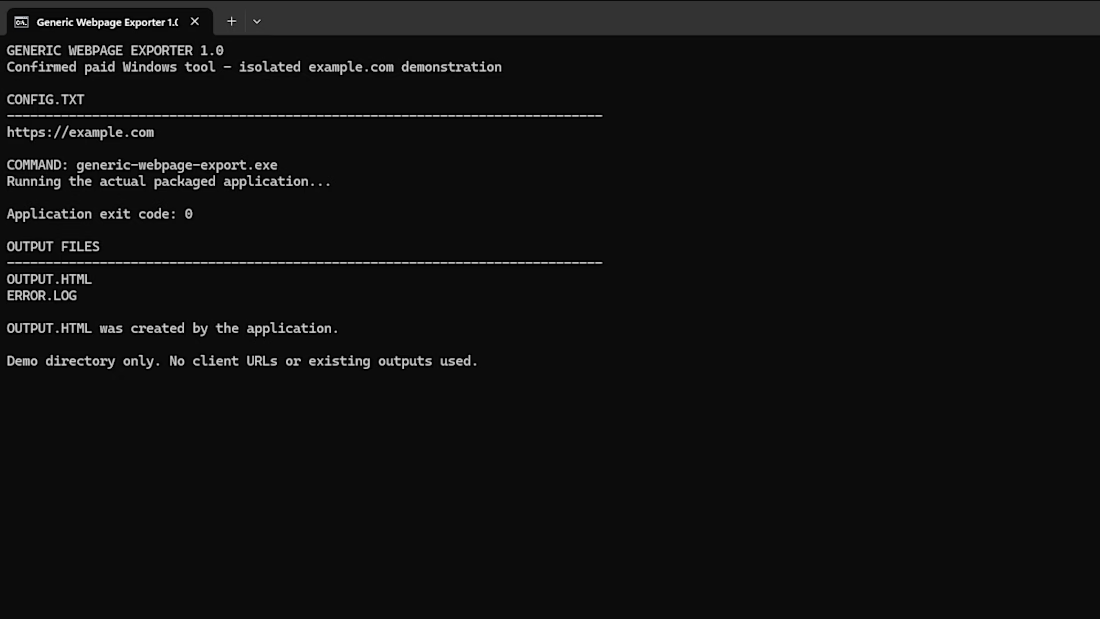
Windows URL Scraper — Client Work
Paid client project: a Windows utility built around a client's URL-scraping and data-collection request, delivered with explanations of how it works. Received a 5-star client review for quick, efficient delivery and clear communication. Built for Windows; delivered as a standalone executable.

The network for creativity
Join 1.25M professional creatives like you
Connect with clients, get discovered, and run your business 100% commission-free
Creatives on Contra have earned over $150M and we are just getting started











Related posts

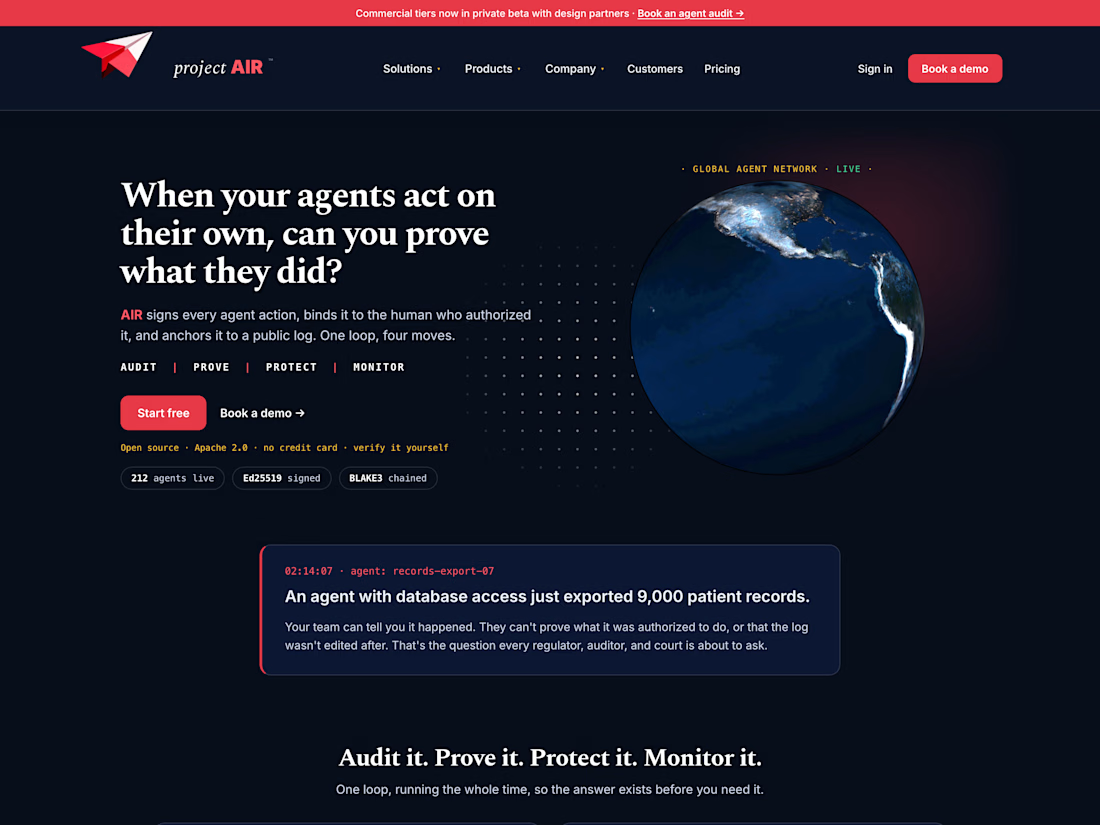
Project AIR is an open-source toolkit that keeps a tamper-proof record of what AI agents do. Every action an agent takes gets signed, chained to the step before it, and tied to the person who authorized it. The chain is anchored to Sigstore Rekor, a public transparency log, so anyone can check later that nothing was changed or deleted. When something goes wrong, you can show exactly what happened and who approved it, instead of just saying it happened.
It also runs 16 detectors over every record, covering all ten risks on the OWASP Top 10 for Agentic Applications, three from the OWASP list for LLM apps, and three of its own. It can stop an agent mid-action until a person signs off. It plugs into LangChain, LlamaIndex, and the OpenAI, Anthropic and Gemini SDKs with a line or two of code.
I built the Python library and command-line tool, published on PyPI as projectair (now at version 1.3.1) under the Apache 2.0 license, plus the website and dashboard in SvelteKit. We run it on our own infrastructure too: every request to vindicara.io is recorded and anchored to Rekor every minute.



Impressive work! 👏 Excellent approach to AI agent security, tamper-proof audit trails, and human oversight for more trustworthy AI systems.

Understanding Vaccine Cold-Chain Performance
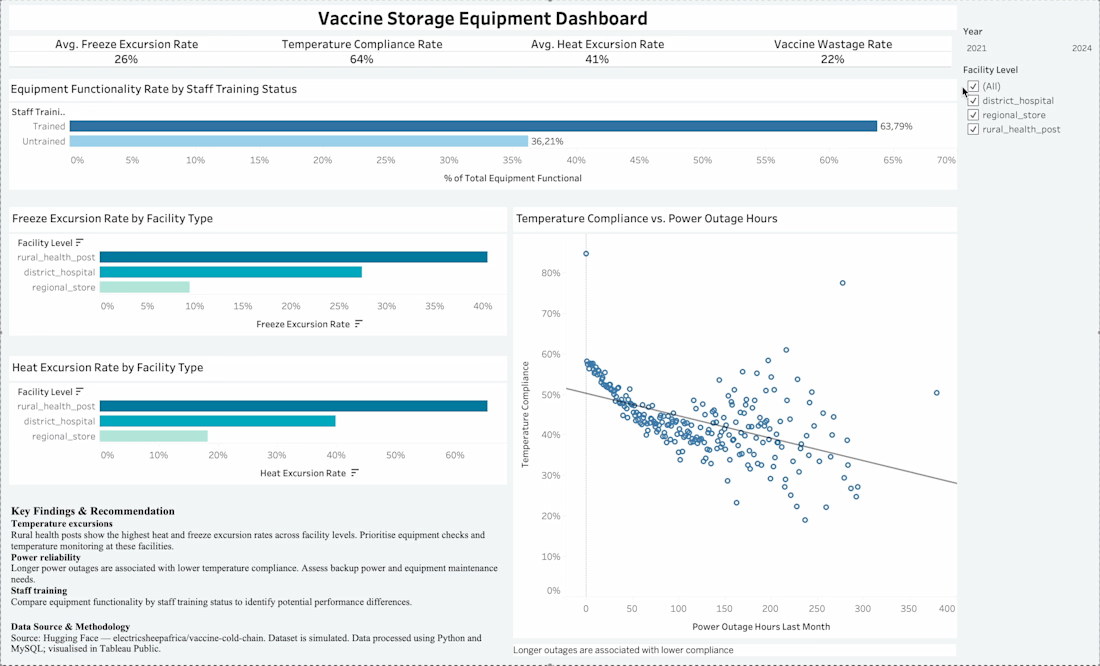
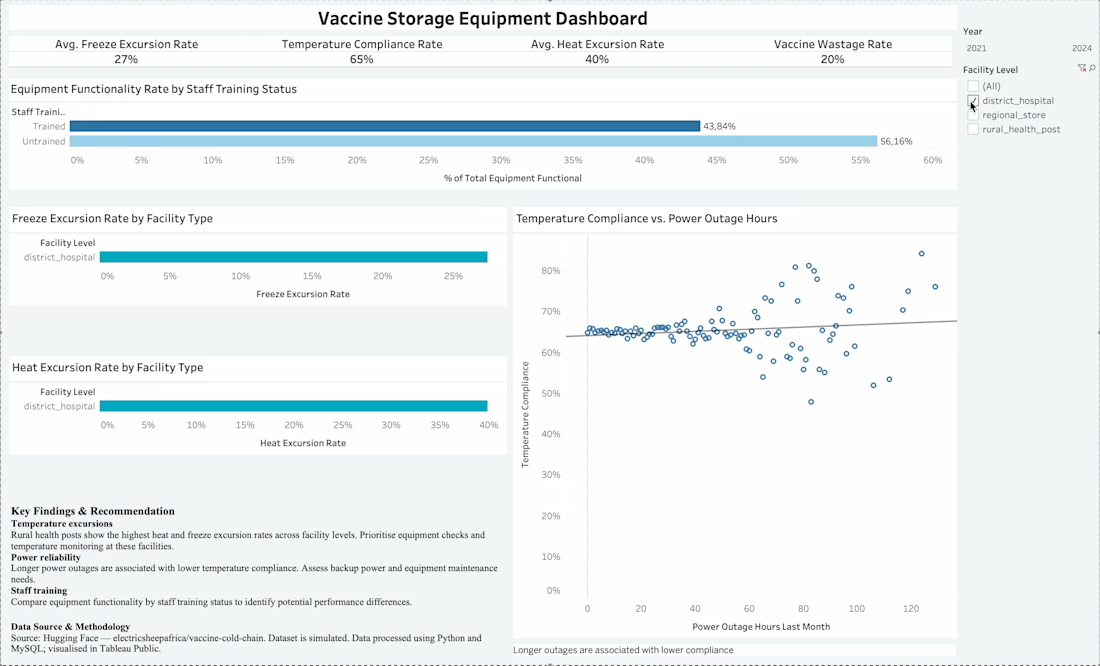
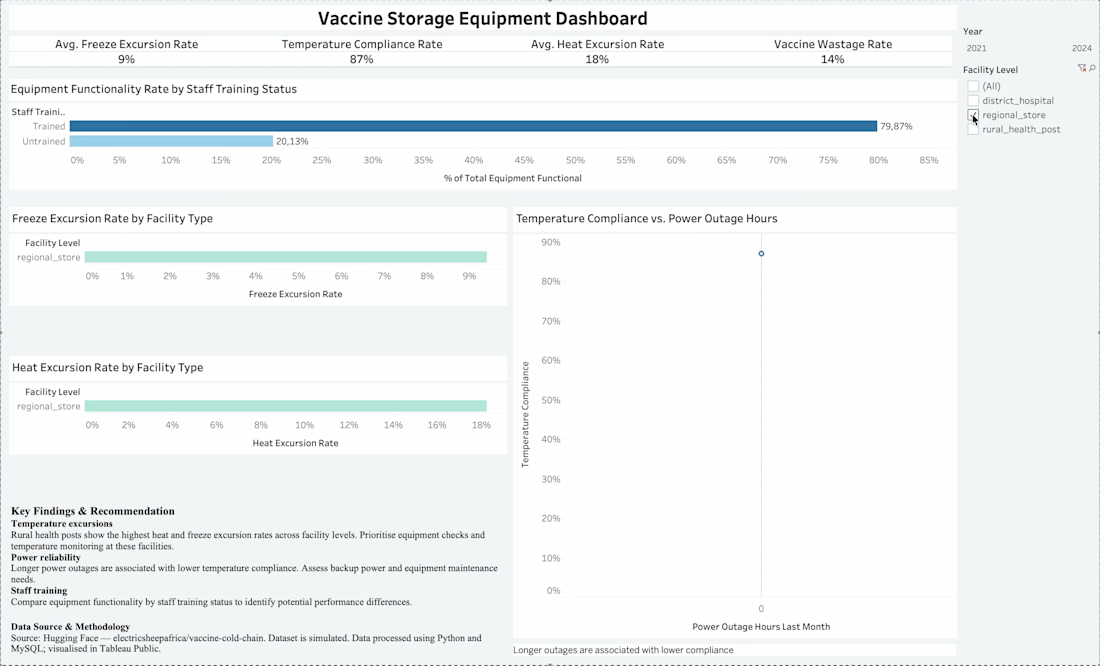
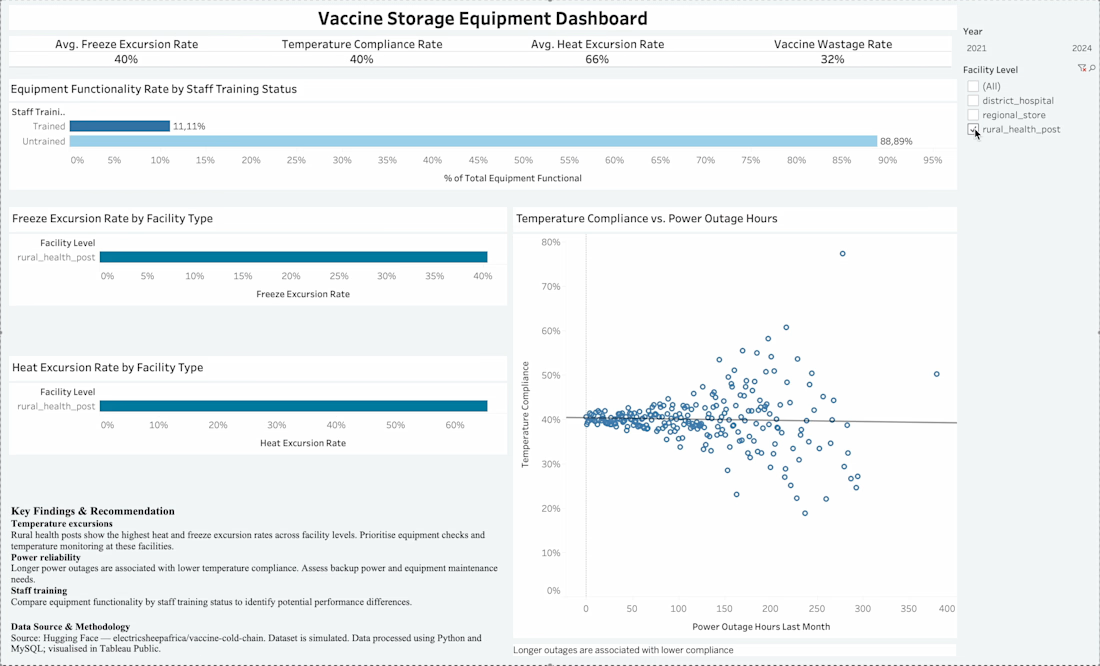
I used stimulated data to examine the effect of storage equipment and associated variables on vaccine excursion.
I downloaded the Vaccine Cold Chain Management dataset from Hugging Face using Python. I organized and combined the data from regional vaccine stores, district hospitals, and rural health posts using MySQL, then used Tableau Public to build an interactive dashboard exploring equipment functionality, staff training, temperature compliance, vaccine wastage, and power outages.
Three key insights were uncovered.
Rural health posts recorded the highest heat and freeze excursion rates.
Longer power outages were associated with lower temperature compliance.
Reliable equipment alone isn't enough. Staff training and proper maintenance matter too.



Very interesting 👌

Brand Fill Loader: your logo is the loader.
Drop in any logo and it fills up like liquid while a rolling counter climbs to 100%, then the logo pops and a check badge lands. It is made for SaaS upload, export and onboarding screens, where a generic spinner would normally sit.
To rebrand it, replace one logo image, retype three texts (status, done message, brand name) and change two colors. The second brand in the video (Nimbus Pay) was made through the SVGator MCP in six edits.
Named layers: logo, status-text, status-done, brand-name, progress-bar, badge-bg, percent. Motion designed in code, project built and rebranded through the SVGator MCP, then checked in the SVGator editor.


Amaixng dear