The network for creativity
Join 1.25M professional creatives like you
Connect with clients, get discovered, and run your business 100% commission-free
Creatives on Contra have earned over $150M and we are just getting started
Back to feedPost

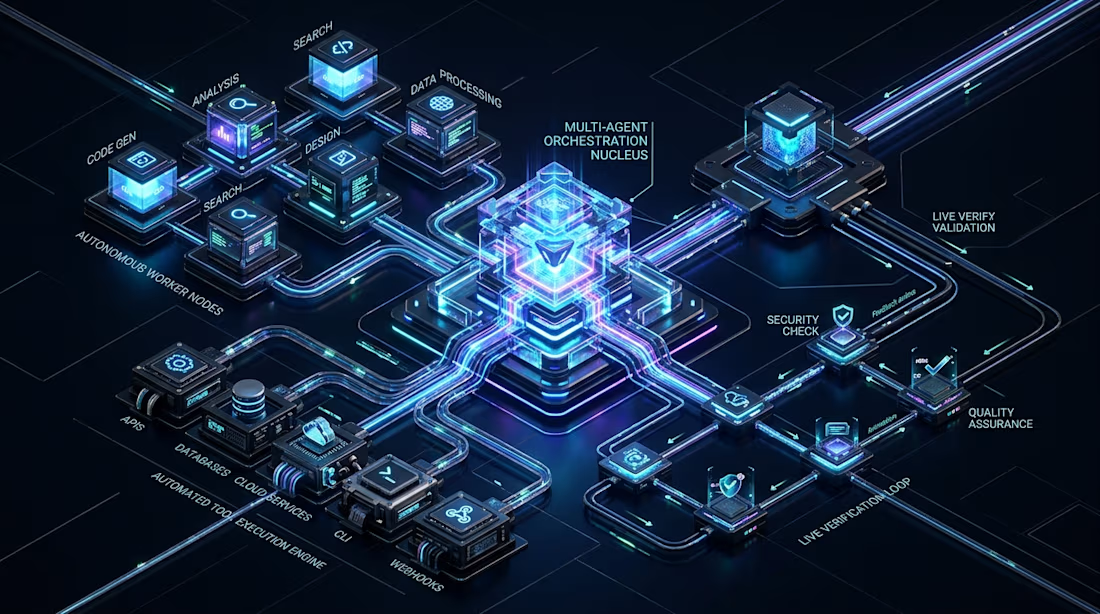
Beyond prompt engineering: Why brittle LLM string wrappers fail in production and how deterministic Model Context Protocol (MCP) harnesses guarantee reliable execution.
Over the past two years, enterprise engineering teams rushed to build "autonomous AI agents" to automate customer operations, infrastructure triage, code refactoring, and data analysis. Most implementations rely on popular high-level Python frameworks that wrap Large Language Models in conversational loops, parsing unstructured Markdown or loose JSON strings to trigger local shell scripts or API endpoints.
In real-world production environments, these naive probabilistic wrappers fail catastrophically: 1. The Hallucinated Tool Argument: When an LLM encounters complex tasks, it frequently invents non-existent parameters, passes string integers where floats are required, or truncates file paths. Unvalidated scripts crash with unhandled exceptions, stalling the workflow halfway through execution. 2. Unconfined Execution Blast Radius: Giving an LLM direct shell execution privileges without namespace sandboxing is an existential infrastructure liability. A minor hallucination in a file path (e.g., executing ``rm -rf ${TARGET_DIR}/*`` where the variable expands to empty) can wipe a server's root filesystem or leak production API secrets to public logs. 3. Lack of Deterministic State Machines: Conversational loops suffer from "agent amnesia" over long task trajectories. Lacking formal state machines, agents loop endlessly, repeating failed actions, burning through API token budgets, and corrupting shared databases.
Engineering enterprise-ready, mission-critical autonomous AI systems requires replacing probabilistic scripting with **deterministic harness engineering**: • Enforce Strictly Typed Tool Contracts with MCP: Implement the open Model Context Protocol (MCP) or strict JSON Schema validation. The model interacts exclusively through formally typed schemas with rigorous parameter validation. Tool calls containing invalid types or unauthorized arguments are rejected at the harness boundary before execution occurs. • Isolated Ephemeral Sandboxing: Never execute AI-generated commands directly on host runtimes. Run all tool executions inside disposable rootless Podman containers or lightweight KVM microVMs with restricted network egress, read-only root filesystems, and strict memory limits. • Deterministic Finite State Machines (FSM): Structure agent workflows as formal directed acyclic graphs (DAGs) or state machines. State transitions occur only when explicit, verifiable acceptance criteria (e.g., passing unit tests or linter checks) are met. • Role-Separated Multi-Agent Topologies: Eliminate single "god-agent" anti-patterns. Decompose complex problems into specialized, role-isolated agents (Architect, Implementer, Adversarial Reviewer, Forensic Auditor) with strict communication protocols and peer oversight.
Harness the power of generative AI with the reliability, auditability, and safety of mission-critical systems engineering.
Deploy deterministic, enterprise-grade autonomous AI agents with our 2-to-4 week Autonomous AI & Agent Workflow Integration Sprint on Contra: https://contra.com/s/POXsvYUQ-autonomous-ai-and-agent-workflow-integration
#AI #AIAgents #MCP #LLM #SoftwareEngineering #Architecture #DevOps #SRE
The network for creativity
Join 1.25M professional creatives like you
Connect with clients, get discovered, and run your business 100% commission-free
Creatives on Contra have earned over $150M and we are just getting started

Challenges
View all


Related posts

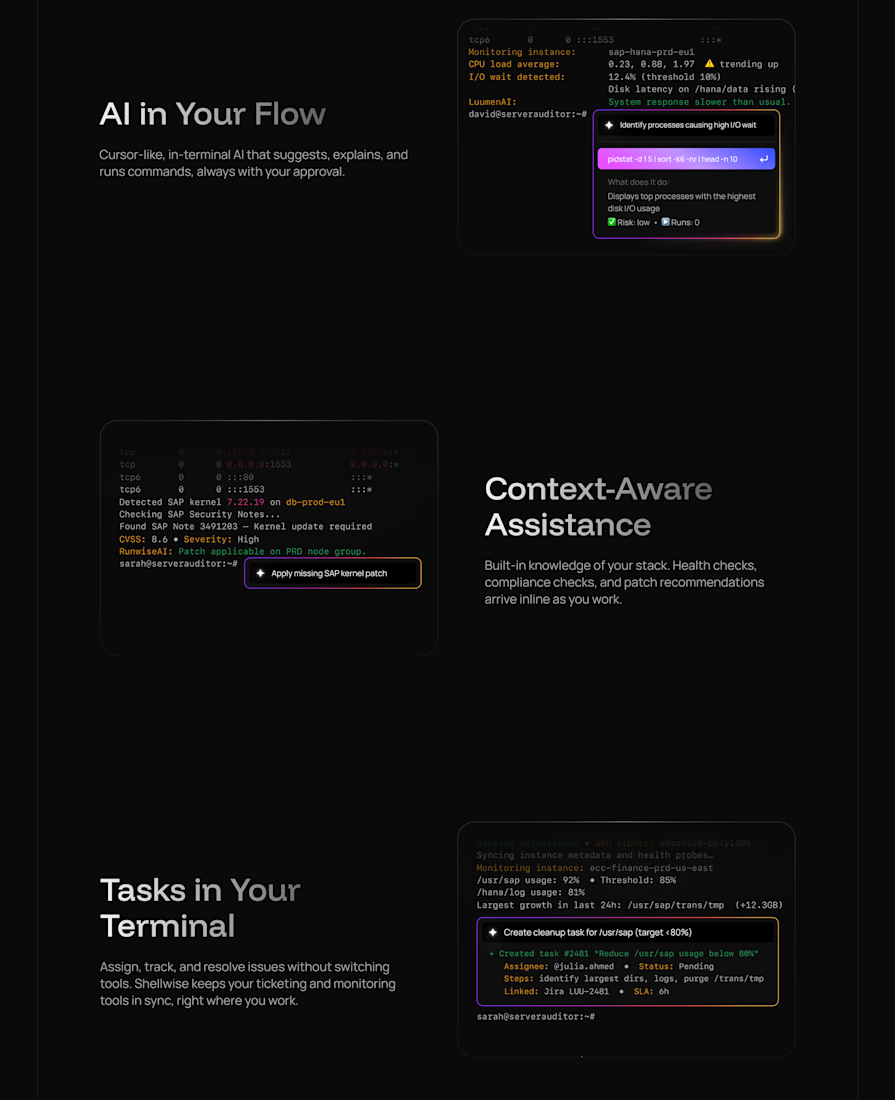
Landing page for an AI-native terminal platform


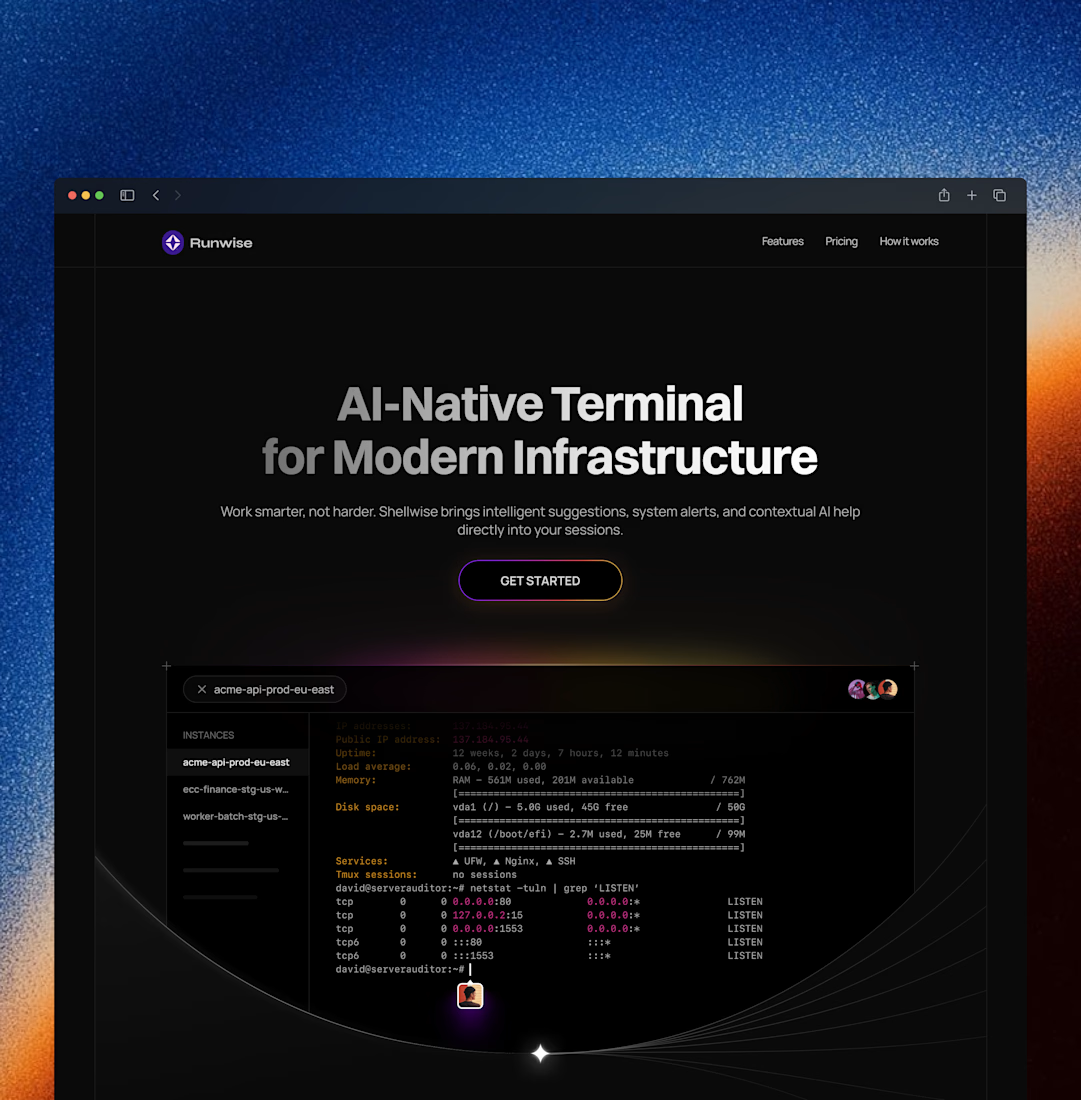
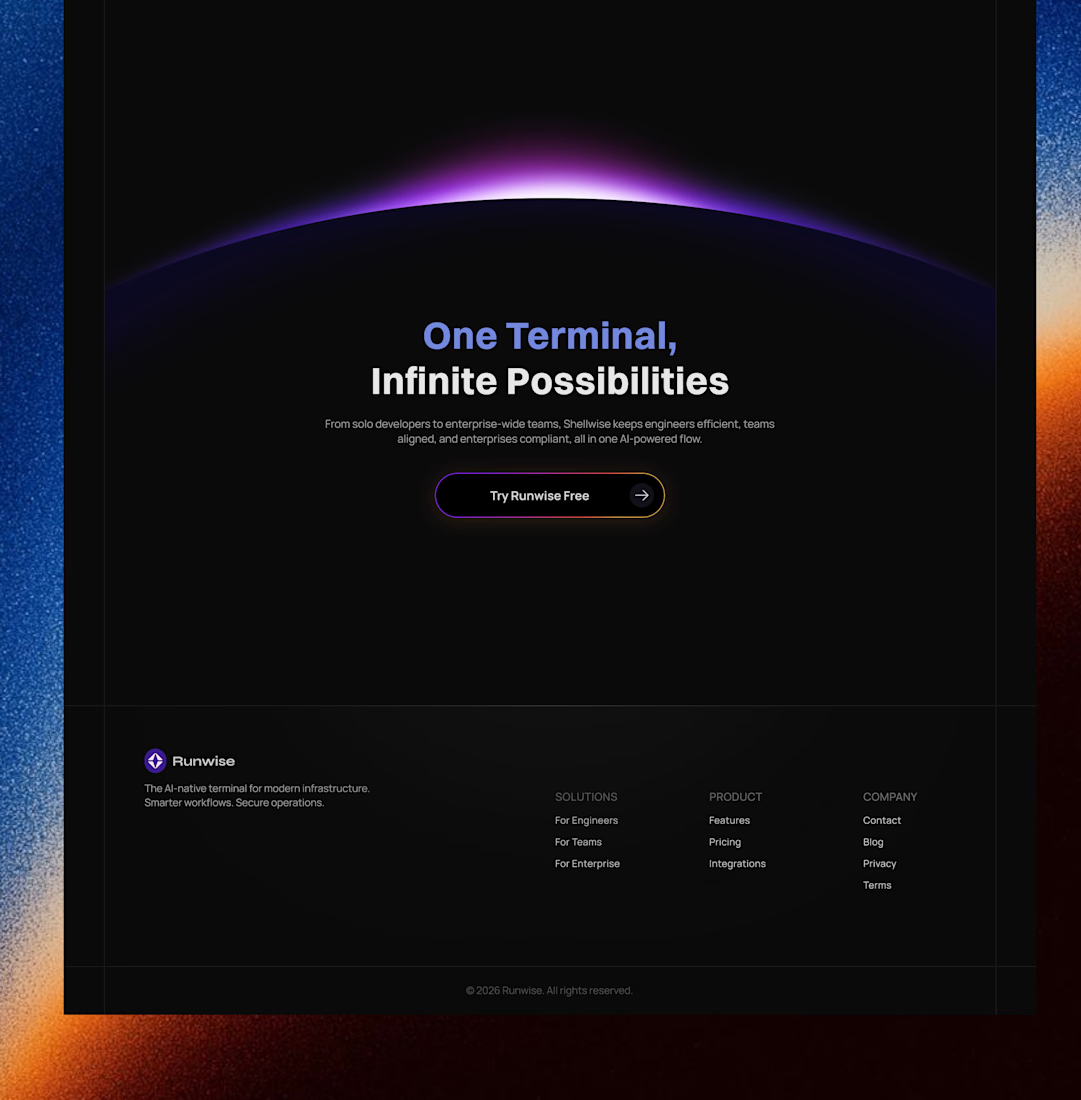
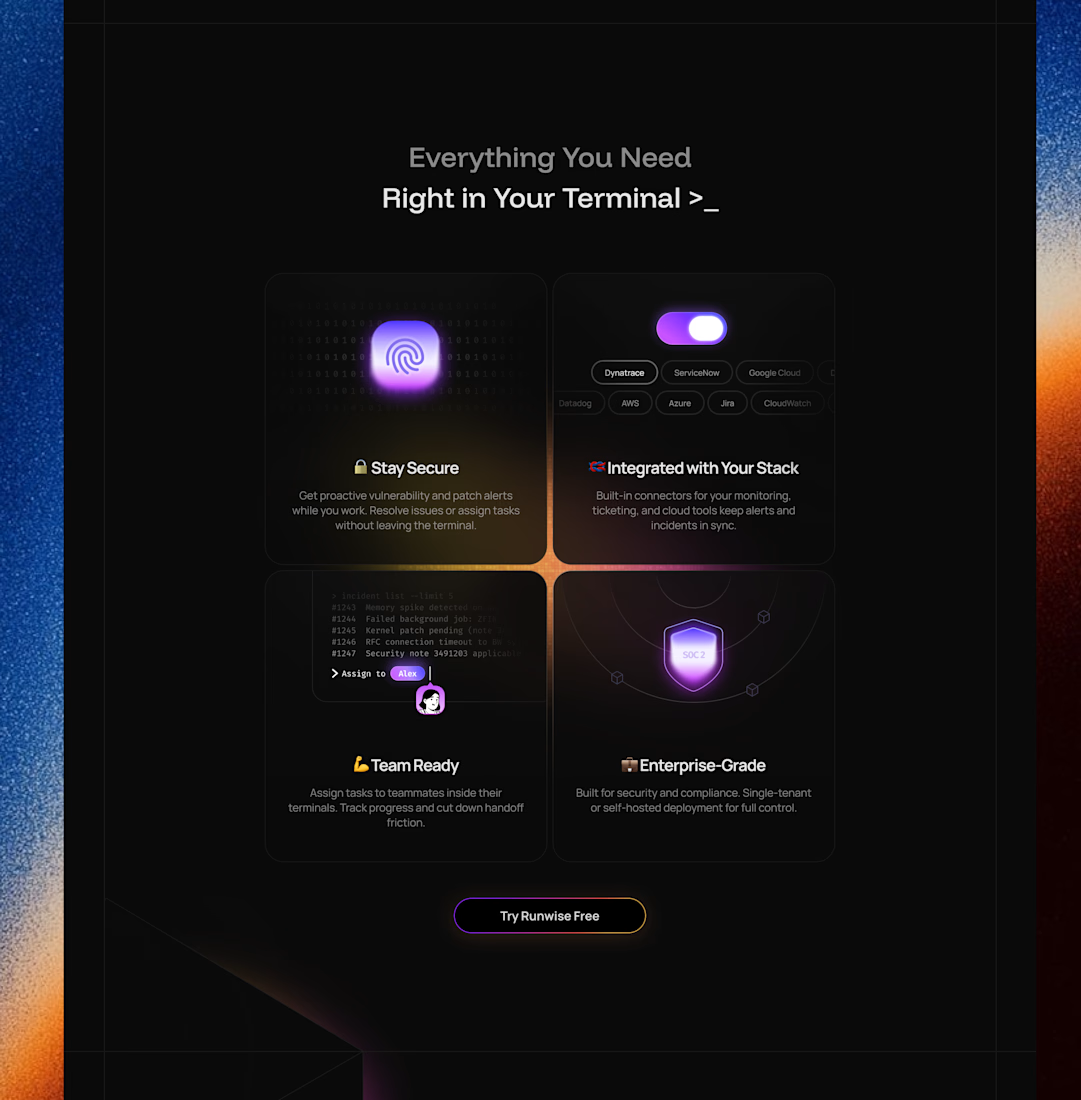


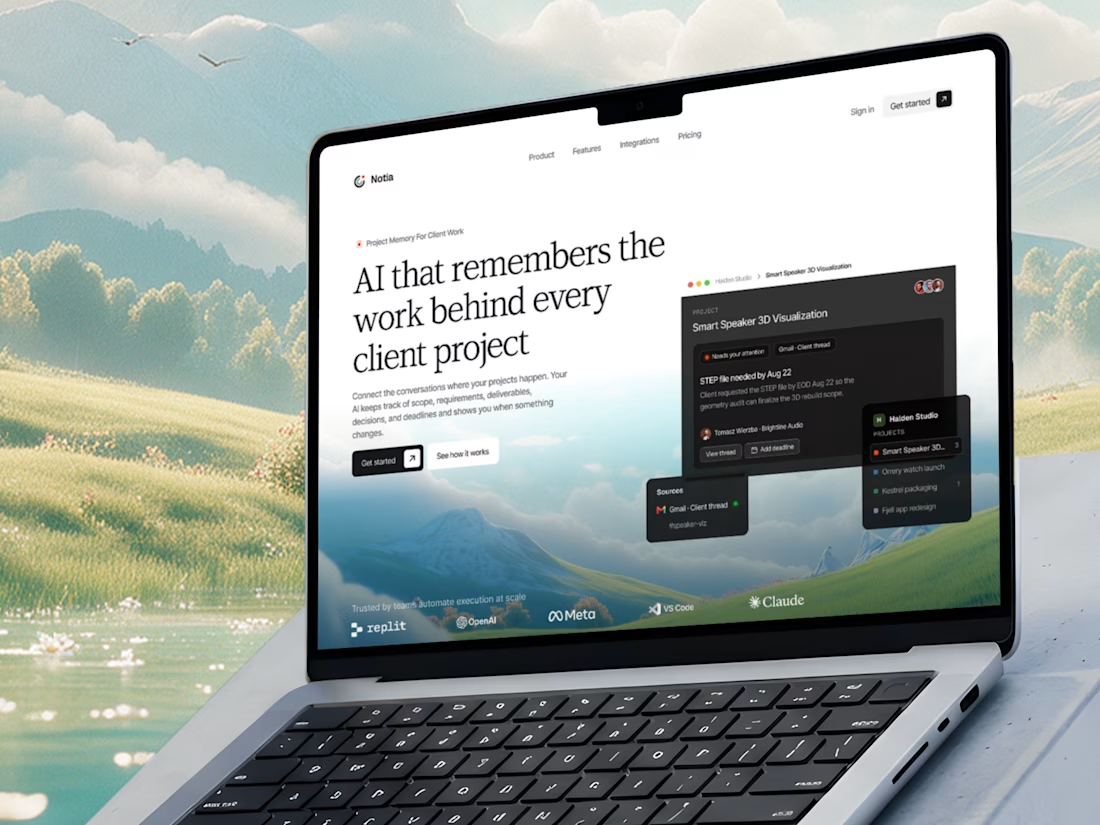
A few shots from our recent web design project for an AI Project Memory Platform.
Check it out
This project is a website and product experience for an AI-powered project memory platform built for freelancers, agencies, consultants, and client-service teams.




That's interesting project great job Fawaz🎉

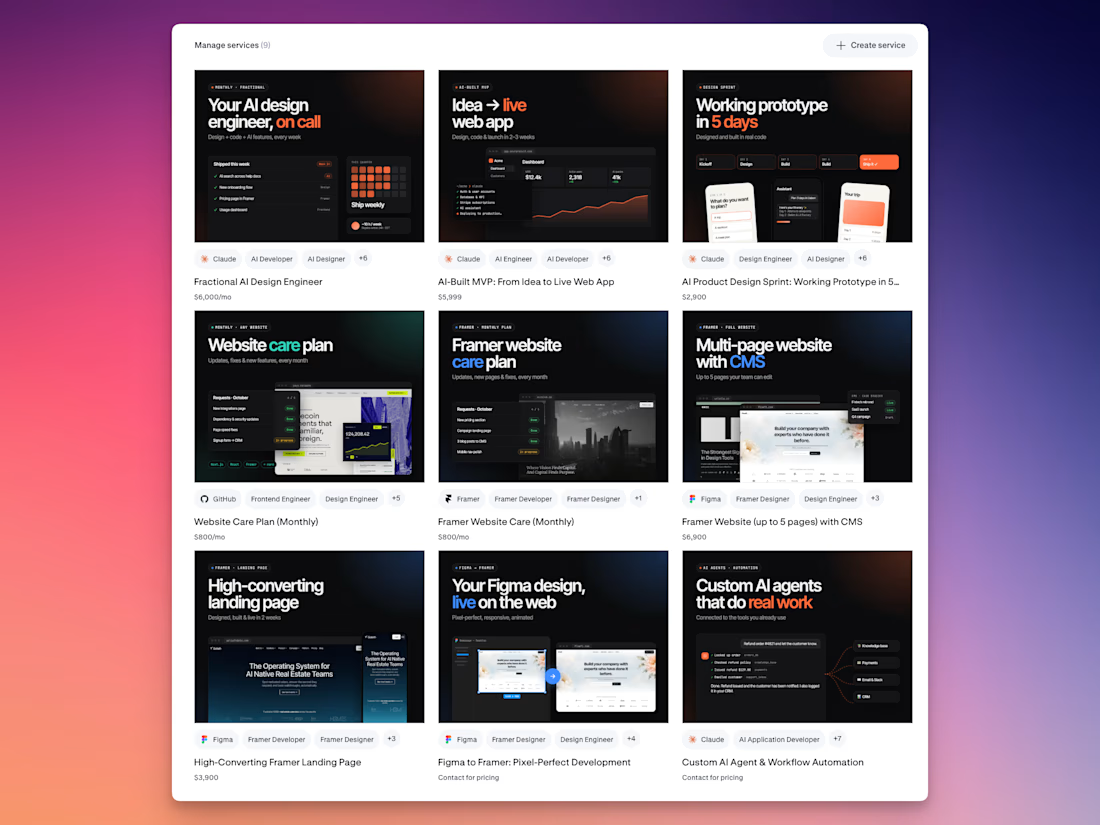
I updated my services to reflect what I offer today.
Check them out: https://contra.com/laurilllll/services?r=laurilllll


Great work 👏