The network for creativity
Join 1.25M professional creatives like you
Connect with clients, get discovered, and run your business 100% commission-free
Creatives on Contra have earned over $150M and we are just getting started
Back to feedPost

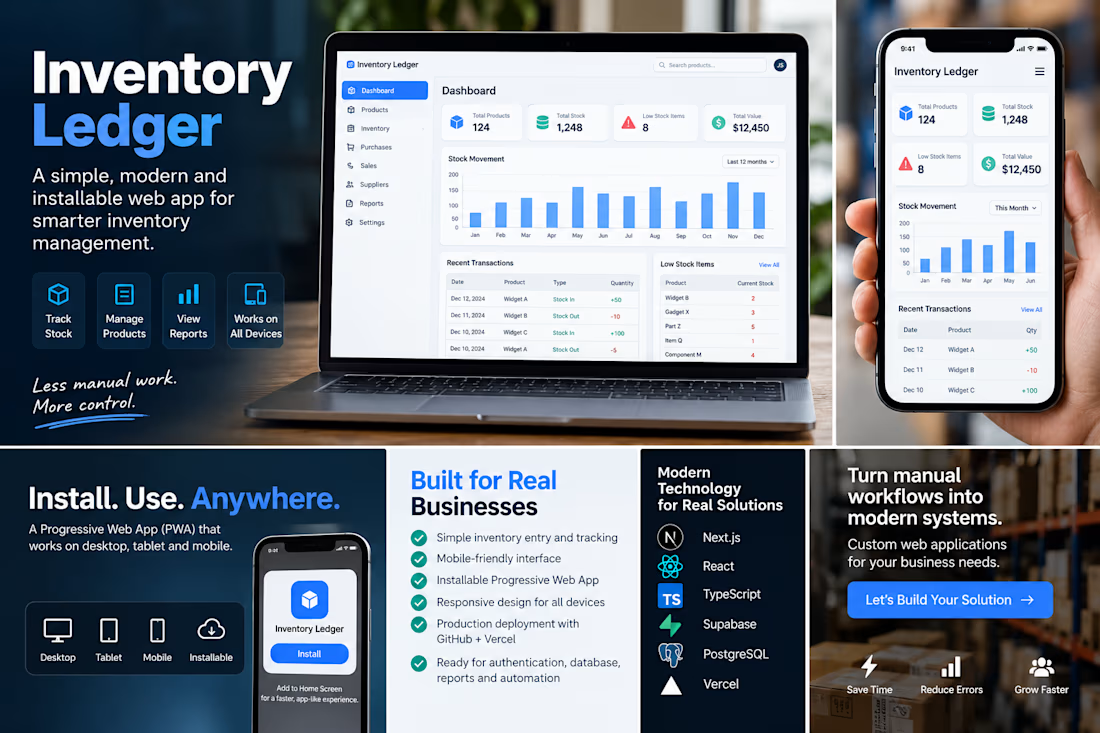
Built and deployed a lightweight Inventory Ledger PWA focused on making day-to-day stock management simpler for small businesses.
The project includes:
• Inventory and stock tracking
• Responsive desktop + mobile dashboard
• Low-stock visibility
• Installable Progressive Web App experience
• GitHub-based development workflow
• Production deployment on Vercel
• Architecture ready for authentication, database integration, reporting and automation
The main idea behind this project is simple:
Businesses do not always need large, expensive software platforms.
Sometimes they need a focused system built around the way they actually work.
That could be an inventory tool, order dashboard, admin panel, customer portal or another internal workflow.
Tech stack:
Next.js • React • TypeScript • Supabase • PostgreSQL • Vercel
I build practical business websites, e-commerce systems, dashboards and custom web applications designed to reduce manual work and improve operational control.
If your business is still managing important processes through spreadsheets, WhatsApp or repetitive manual tasks, I can help turn that workflow into a structured web application.
#Nextjs #React #PWA #InventoryManagement #BusinessAutomation #Supabase #WebDevelopment


The network for creativity
Join 1.25M professional creatives like you
Connect with clients, get discovered, and run your business 100% commission-free
Creatives on Contra have earned over $150M and we are just getting started



Related posts

Noise Reveal, a premium reveal component for Framer
I built a component that gives Framer sites cinematic reveals for images, video and live layouts. It has a soft, film-like edge with glow and grain, and can play on load, on view, from a variant or scrubbed by scroll.
It’s built for production: the reveal is prepared before it scrolls in, it’s accessible with reduced-motion support, it falls back when WebGL isn’t available, and pages stay plain HTML when nothing is moving.
Launched on the Framer Marketplace. Open to custom Framer and interaction work.


The WebGL fallback and reduced-motion support are the parts most reveal effects skip, so it's great to see them called out. Does the fallback keep some of the grain edge with CSS, or does it drop to a simple fade?

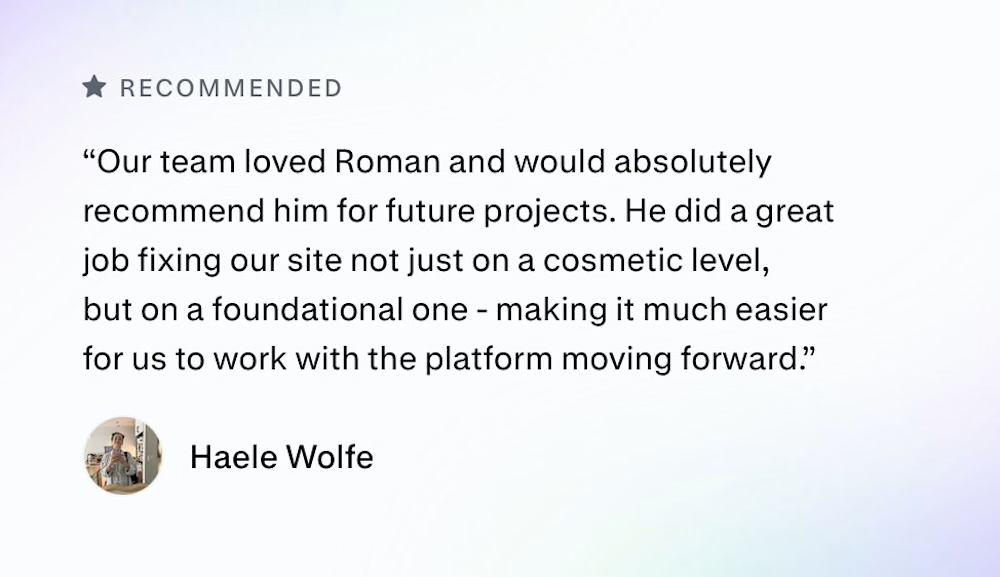
Zencastr came to us with a complex mix: they hosted their homepage on a custom server, blog on a separate platform and the rest of the pages on Webflow.
They had 3 days before the launch to tie it all together. This is their review:

Three platforms behind one domain in three days is a real test. I'd guess the reverse proxy and keeping the nav and footer identical across all three took more care than any of the page building. Did you match the shared header in Webflow or pull it from one source?

I shouldn't have been able to make this from my desk. 👁️🗨️
Game is entirely rewritten. How are you leveraging next-gen tools in your freelance stack?


Cinematic!