The network for creativity
Join 1.25M professional creatives like you
Connect with clients, get discovered, and run your business 100% commission-free
Creatives on Contra have earned over $150M and we are just getting started
Back to feedPost

After 10+ years in guest posting, I’ve learned that more backlinks don’t always mean better SEO.
The biggest problem?
Businesses often choose websites by DR or DA alone.
A site can have strong metrics but still be irrelevant to your niche, audience, or goals.
The solution?
Look beyond the numbers.
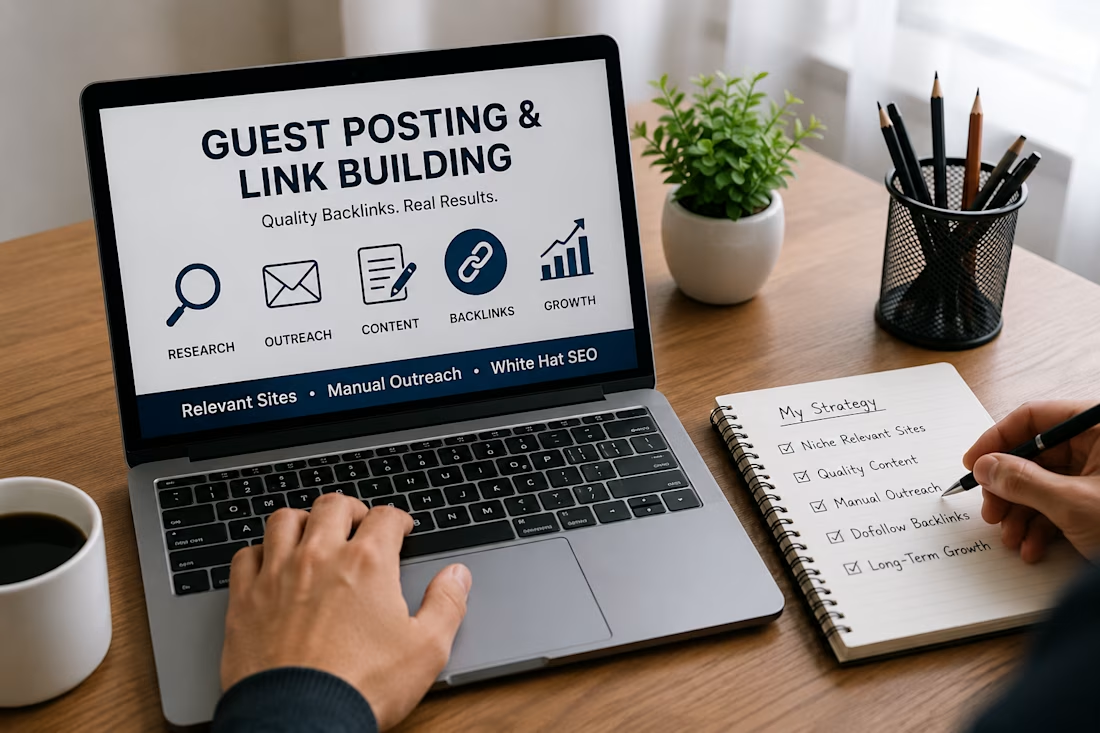
I evaluate guest post opportunities based on:
✅ Niche relevance
✅ Real organic traffic
✅ Audience quality
✅ Website & content quality
✅ Link profile
Then I focus on manual outreach, relevant placements, and white-hat link building that support long-term SEO growth.
Because 10 relevant backlinks can be more valuable than 100 random ones.
#GuestPosting #BloggerOutreach #LinkBuilding #OffPageSEO #SEO #Backlinks #WhiteHatSEO #DigitalMarketing #Contra
The network for creativity
Join 1.25M professional creatives like you
Connect with clients, get discovered, and run your business 100% commission-free
Creatives on Contra have earned over $150M and we are just getting started



Related posts

How many times have we explained the difference between SEO backlinks and PR backlinks to clients, only for the same question to come up again and again? 😅
You'd think it's pretty straightforward. We've even published an article about it on our website. But let's be honest: not everyone wants to read a long article. So here's a quick breakdown.
🔗 SEO backlinks help improve Google rankings.
They're placed on relevant websites with strong metrics, using specific anchor text and pointing to targeted pages. The goal is to build your website's authority in the eyes of search engines and help it rank higher.
👉 The result: better rankings and increased organic traffic.
📣 PR backlinks help build brand awareness.
These are mentions and publications in well-known media outlets, news websites, and industry publications. What matters most is who writes about your brand and how many people see it, rather than the anchor text or the link's authority.
👉 The result: greater reach, audience trust, and a stronger reputation.
To put it simply:
SEO backlinks are for search engines.
PR backlinks are for people.
They don't replace each other; they complement each other. A PR publication can also have an SEO impact, but that's a bonus, not its primary purpose.
And if you'd like to dive deeper, here's the full article 👉 https://seoza.com.ua/blog/link-building/

Hiring a more expensive SEO expert doesn't automatically mean you're making a better decision.
I worked with a client for almost 3 years. Things were going well, and we had built strong organic rankings and traffic together.
But then AI changed the SEO landscape.
I started recommending several changes to the website, content strategy, technical SEO, and overall approach because I could see that the industry was evolving.
Perhaps the client wasn't comfortable with so many recommendations.
Eventually, they decided to hire an in-house SEO professional at almost 4X what they were paying me.
That's business. Every client has the right to make their own decisions.
But what happened next was disappointing.
The rankings and organic traffic we had spent years building started declining.
Here's what I want businesses to understand:
SEO is not just about maintaining what is already working.
A good SEO expert should tell you when something needs to change.
Recommendations aren't criticism of previous work; they're preparation for what comes next.
AI is changing search, and strategies that worked yesterday may not be enough tomorrow.
One more thing:
I'm based in India, which allows me to offer SEO services at a more affordable price than many SEO professionals in the USA.
But a lower price doesn't mean lower commitment, experience, or expertise.
Sometimes, the person suggesting changes is the person trying hardest to protect the growth you've already achieved.
Don't confuse a comfortable SEO strategy with a future-proof SEO strategy.
What's your take? Should an SEO expert focus on keeping things as they are or challenge the existing strategy when the industry changes?
#SEO #FreelanceSEO #DigitalMarketing #AIandSEO #OrganicTraffic #SEOStrategy #SmallBusiness



Thousands of searches. Almost no clients.
That's where Richard Reid's website was when we started working together. Richard is a psychology-led leadership coach for founders, CEOs and senior leaders, and his site was ranking. Just not for the right people.
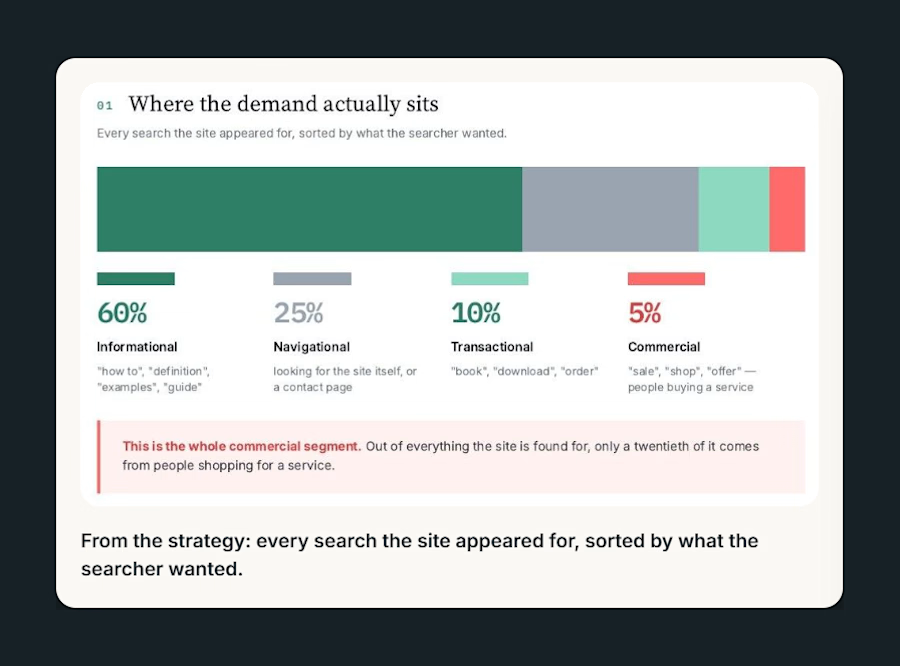
When I sorted every search the site appeared for by intent, 60% were people researching psychology topics. Only 5% were people actually shopping for a coach.
So instead of chasing more traffic, I rebuilt the strategy around that 5%:
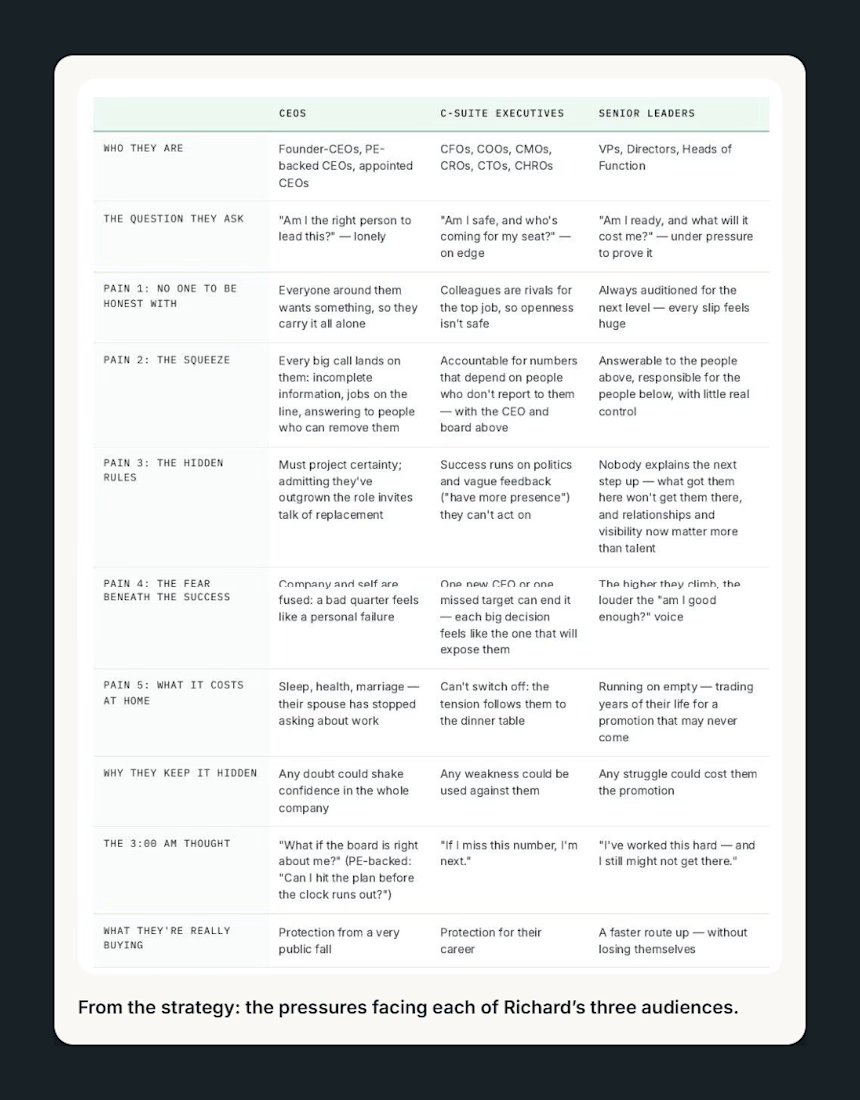
Mapped the private pressures each of his three audiences carries, from the 3am thought to what they're really buying
Separated his two sites so they stopped competing for the same searches
Restructured the service hubs
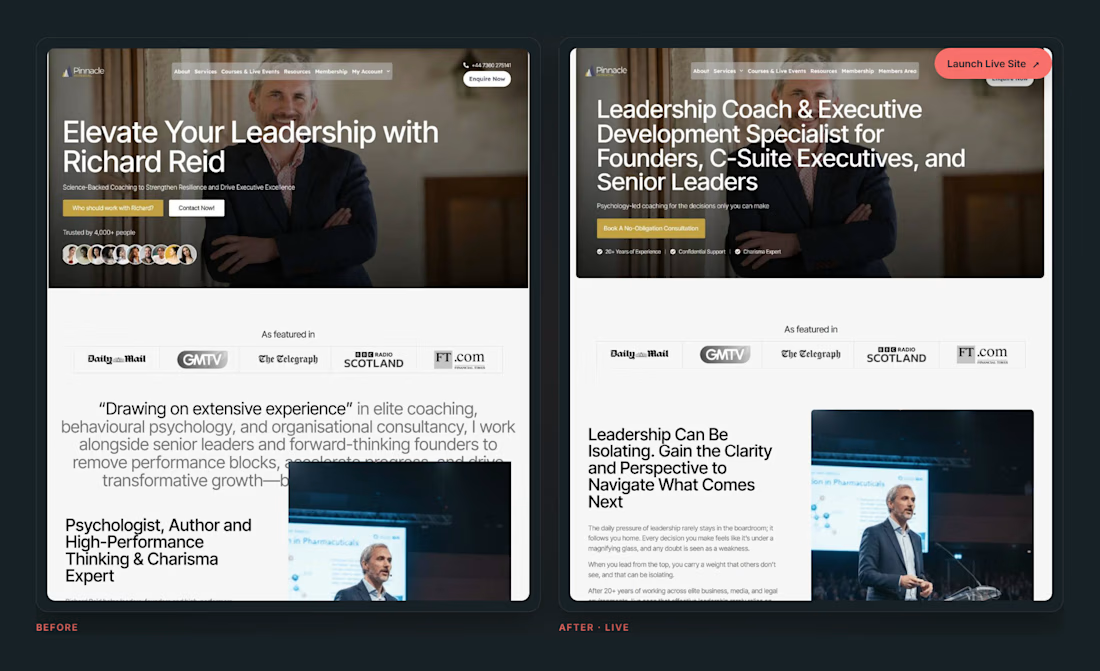
Rewrote the homepage and about page to lead with who he helps and what he solves, with one clear route to a consultation
The old homepage said "Elevate Your Leadership with Richard Reid". The new one tells a founder or C-suite leader, in the first line, that this is for them.
Both pages are live. Full case study on my profile.
If your site gets traffic but not enquiries, the fix usually isn't more traffic. It's knowing which visitors matter and writing for them.

So cool! It’s a great reminder that more traffic doesn’t always mean better results. Understanding search intent and speaking directly to the right audience really can make all the difference. I especially like how the strategy focused on turning the existing traffic into...