The network for creativity
Join 1.25M professional creatives like you
Connect with clients, get discovered, and run your business 100% commission-free
Creatives on Contra have earned over $150M and we are just getting started
Back to feedPost

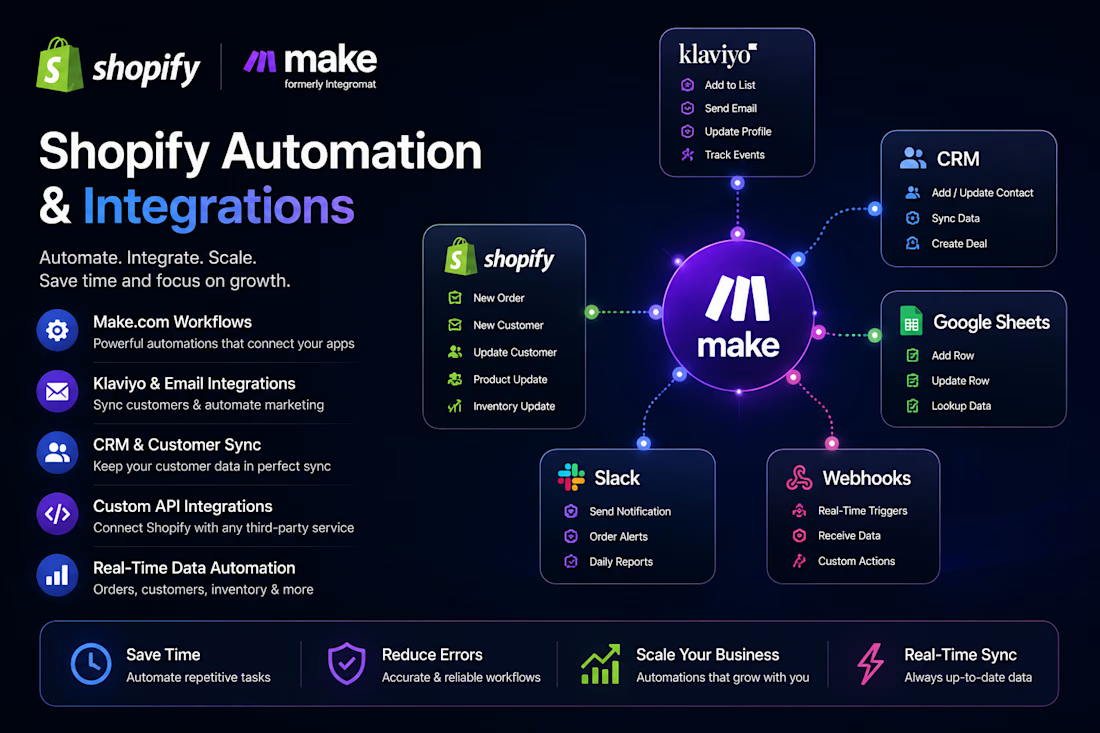
Shopify Atomation & Integrations
AI AutomationBusiness DevelopmentOnline Business ManagementAutomation AnywhereFacebook Business ManagerShopify


The network for creativity
Join 1.25M professional creatives like you
Connect with clients, get discovered, and run your business 100% commission-free
Creatives on Contra have earned over $150M and we are just getting started





Related posts

Hi, I'm Habibur Rahman--Shopify Landing page Expert with 3+ years of experience.
I specialize in highk-converting shopify landing pages, product pages, Figma-to-Shopify, and CRO-focused eCommerce design using Replo, Gempages & PageFly.
Have a Shopify project? Let's connect.
Shopify, Replo, Landing Page Expert, GemPages, PageFly - AI Page Builder & CRO for Shopify, Shopify Landing page Design and Developor for DTC brand, Shopify Expert




Great niche. Combining landing page design with CRO is a strong way to improve the Shopify experience.

👋 I'm new to Contra and I did my first post without realizing I hadn't even introduced myself!
Hey I'm Katya, I'm an AI Systems Architect, marketer and yoga teacher.
I build AI systems that bring in business and handle the work behind it. A voice agent that calls new leads back within seconds and books the appointment. A pipeline that traced 16,900+ leads to the ads that brought them. Listing videos made from the photos a real estate agent already has.
The marketing side came first. I built the multi-channel campaign for Jay Shetty's launch (22 million followers). After that I discovered the tech world and when AI came along, I realized I'm a builder at heart and never looked back! Building is so much fun 🤍
Here's what I've shared:
My first post: on building a fully AI-made YouTube video, end to end, because I'm camera shy 🙈 https://contra.com/community/MP9mFRuT-im-building-my-first-fully-ai-made
Last thing, if you're building with AI video or automation, I'd like to see what you're working on
And if you're hiring: I may be new to Contra but definitely not new to this work. Reach out for AI agent builds, apps, websites or anything in between.
P.s The video below is my AI avatar. My profile video is the real me :)


Nice Portrait....Has everything from a great pose, great composition and lighting and perfect environment setting.


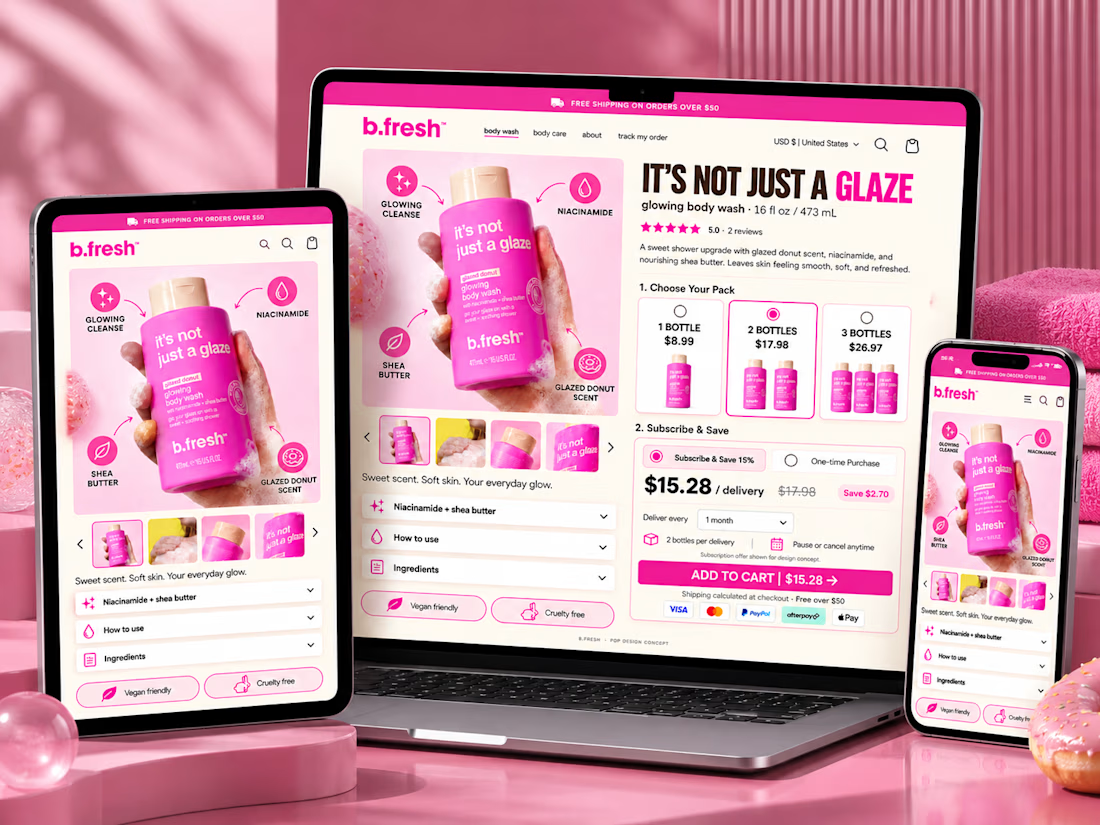
A product page shouldn’t make customers work to buy.
For this eCommerce PDP concept, I focused on removing the small points of friction that can quietly hurt conversions.
The experience brings the most important buying decisions together above the fold:
→ Clear product value proposition
→ Benefit-focused product visuals
→ Reviews and social proof
→ Pack/bundle selection to increase AOV
→ Subscribe & Save option for retention
→ Clear savings and pricing
→ Strong Add to Cart CTA
→ Payment trust signals
→ Shipping clarity
→ Ingredients & usage information
→ Mobile-friendly buying hierarchy
The goal wasn't simply to make the page look good.
It was to answer the questions a shopper has before buying:
What is this? Why do I need it? Can I trust it? Which option should I choose? What will it cost me?
Good eCommerce design reduces the distance between interest and purchase.
#eCommerce #Shopify #CRO #ProductDesign #UIUX #ShopifyDesign #ConversionRateOptimization

This is a really polished presentation. Nicely done!