The network for creativity
Join 1.25M professional creatives like you
Connect with clients, get discovered, and run your business 100% commission-free
Creatives on Contra have earned over $150M and we are just getting started
Back to feedPost

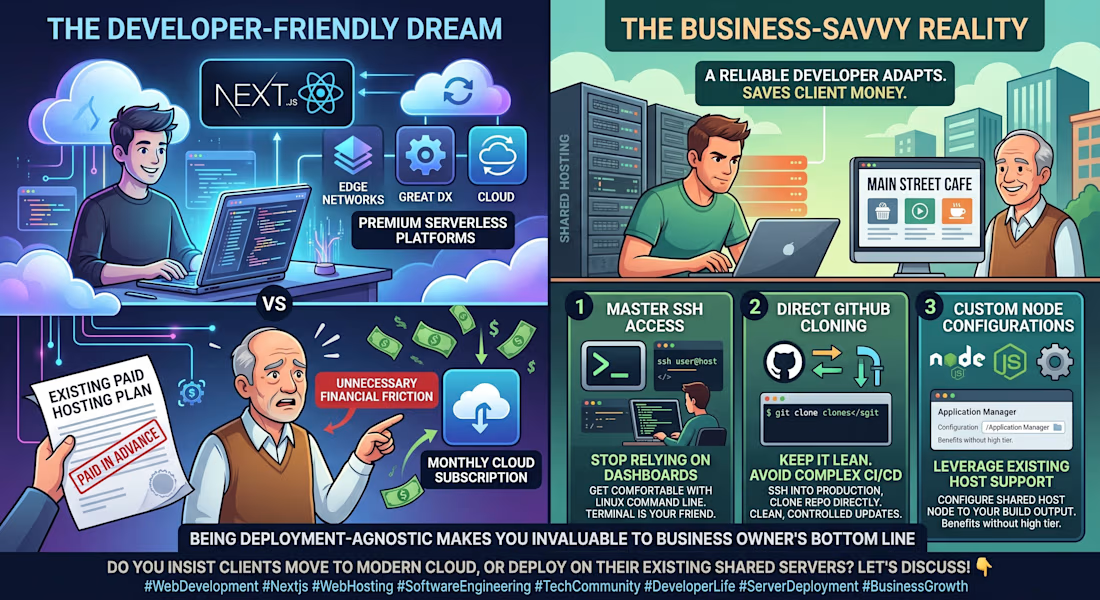
The web development industry has convinced us that every modern application needs to be hosted on a premium serverless platform.
The Problem:
Platforms built for Next.js and React are incredible for the developer experience. The automated deployments and edge networks are fantastic. But here is the reality of working with actual business owners: they usually already have a traditional shared hosting plan that they’ve paid for years in advance.
When you tell a local business client they need to purchase a new monthly cloud subscription just to host your code, you create immediate financial friction.
The Solution:
A reliable developer doesn't force a client to change their infrastructure just because it’s easier for the developer. You adapt to it. You can absolutely deploy modern, dynamic applications on standard shared hosting if you know what you are doing.
Here is the 3-step approach to deploying modern web apps on traditional, budget-friendly servers:
Master SSH Access:
Stop relying exclusively on drag-and-drop deployment dashboards. Get comfortable with the Linux command line. Request SSH access to the client’s existing hosting environment. The terminal is your best friend when navigating server limitations.
Direct GitHub Cloning:
Instead of setting up overly complex CI/CD pipelines for a standard local business website, keep it lean. SSH into the server and clone your GitHub repository directly into the production directory. It’s a clean, fast, and highly controlled way to pull updates.
Custom Node Configurations:
Most modern shared hosts now support Node.js environments. Configure the server's application manager to point directly to your build output. You get the benefits of a modern framework without the premium monthly hosting tier.
Being framework-agnostic is a great skill. Being deployment-agnostic makes you invaluable to a business owner's bottom line.
Do you insist clients move to a modern cloud provider, or do you deploy on their existing shared servers? Let's discuss in the comments! 👇

The network for creativity
Join 1.25M professional creatives like you
Connect with clients, get discovered, and run your business 100% commission-free
Creatives on Contra have earned over $150M and we are just getting started





Related posts

From tattoo enquiry to confirmed appointment.
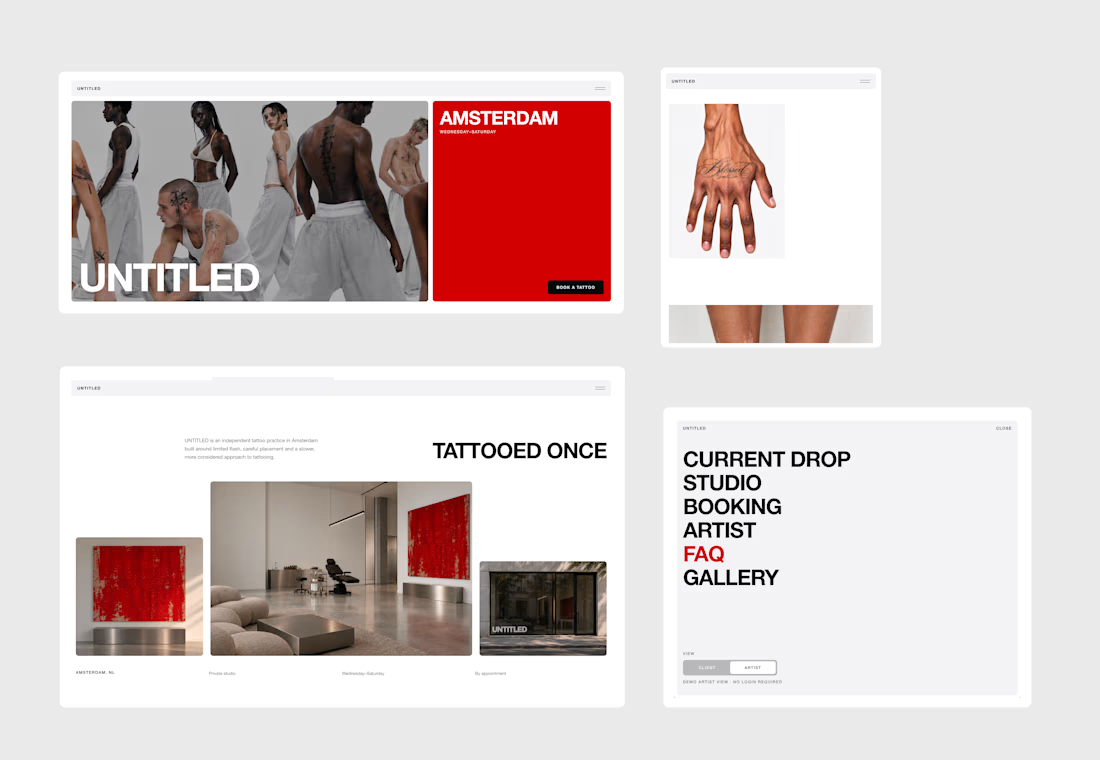
UNTITLED is a fictional independent tattoo studio in Amsterdam, built around a very real problem: tattoo bookings often live in DMs.
Clients ask about prices, availability, placement, references and custom ideas, while artists spend time managing the same back-and-forth manually.
UNTITLED brings that entire process into one connected experience.
The product has two sides:
CLIENT VIEW
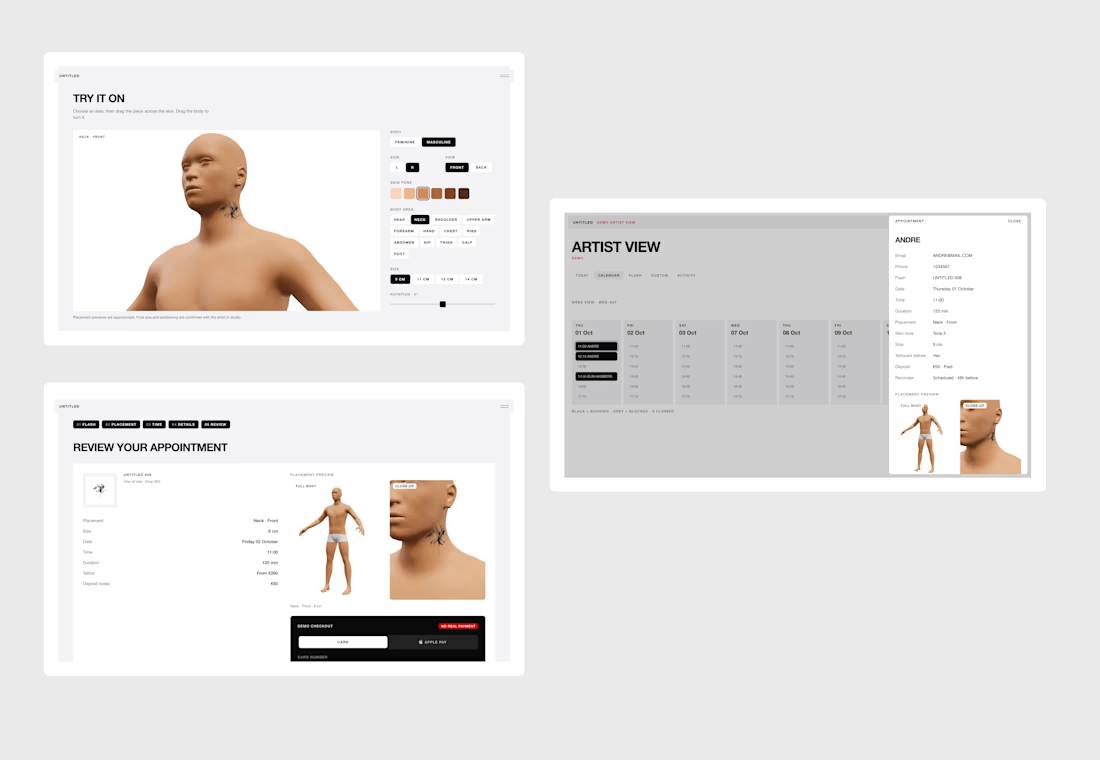
Clients can browse available flash, place tattoos on a 3D body model, choose a date and time, complete a demo checkout, or submit a custom tattoo request with references, placement, size, budget and preferred availability.
ARTIST VIEW
The artist dashboard brings together bookings, payments, calendar availability, flash management, custom enquiries, quotes and activity in one place.
Both views are connected, creating a fully working end-to-end demo.
A flash booking updates the artist calendar and design availability, while a custom request appears in the dashboard for the artist to review, quote and turn into a confirmed appointment.
3D PLACEMENT
The booking flow includes an interactive 3D tattoo placement system, allowing clients to choose body type, skin tone and body area, then position, scale and rotate the selected tattoo before booking.
This replaces part of the placement conversation that would normally happen through messages.
CUSTOM REQUESTS
Not every tattoo starts from an existing design.
Clients can switch from FLASH to CUSTOM and send a structured enquiry with reference images and project details.
The artist can then review the request, create a quote and propose an appointment directly from the dashboard.
Custom request → quote → approval → booking.
FULLY RESPONSIVE
The complete experience is responsive across desktop, tablet and mobile, including the website, booking flow, 3D placement interface and artist dashboard.
DEMO
UNTITLED is a functional demo built for the Lovable Challenge.
Payments are simulated and the data is session-based so the full experience can be tested repeatedly, but the core product logic is fully interactive across both Client and Artist views.
BUILT WITH LOVABLE
I built UNTITLED entirely in Lovable, from the client-facing website to the booking logic, 3D placement experience and artist dashboard.
I also applied to the Lovable Partner Program during the challenge and I’m now officially a Lovable Partner!
Live website: https://untitledamsterdam.lovable.app/
X Post
Walkthrough video (for product and process) below.


Looks amazing, pretty clean, but a product menu in a tattoo studio feels kind of odd. But it looks nice..

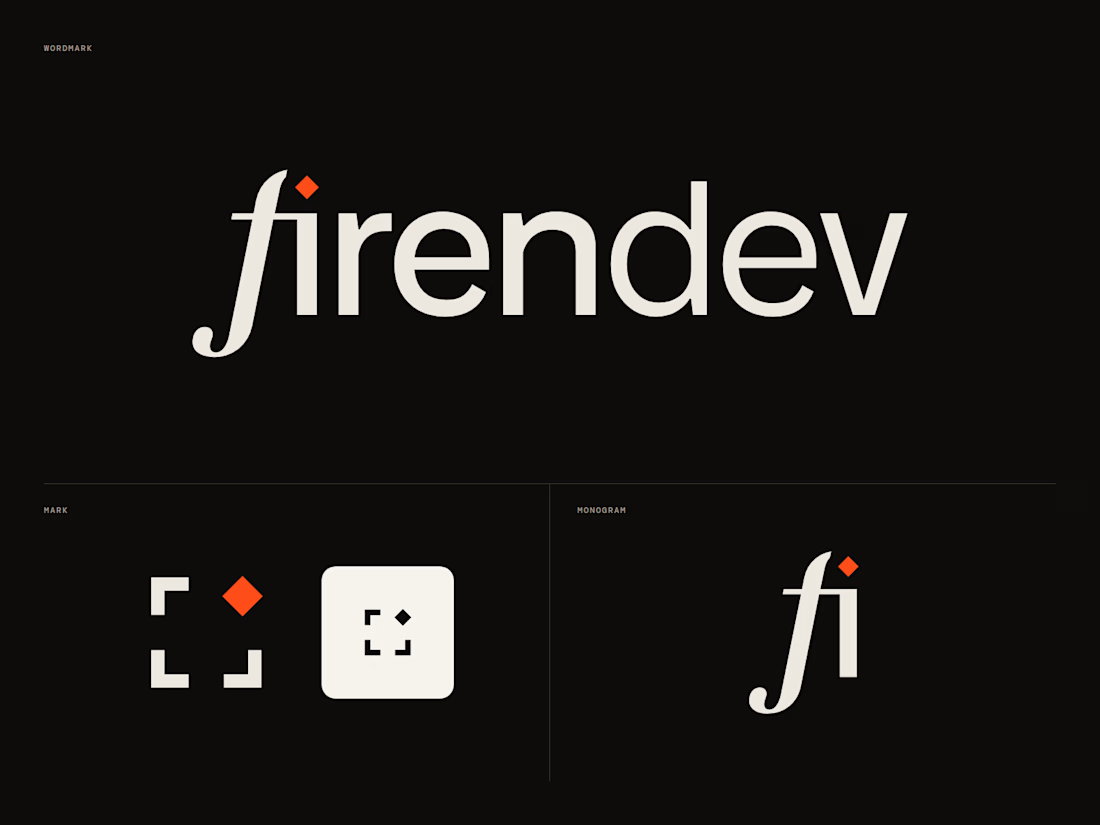
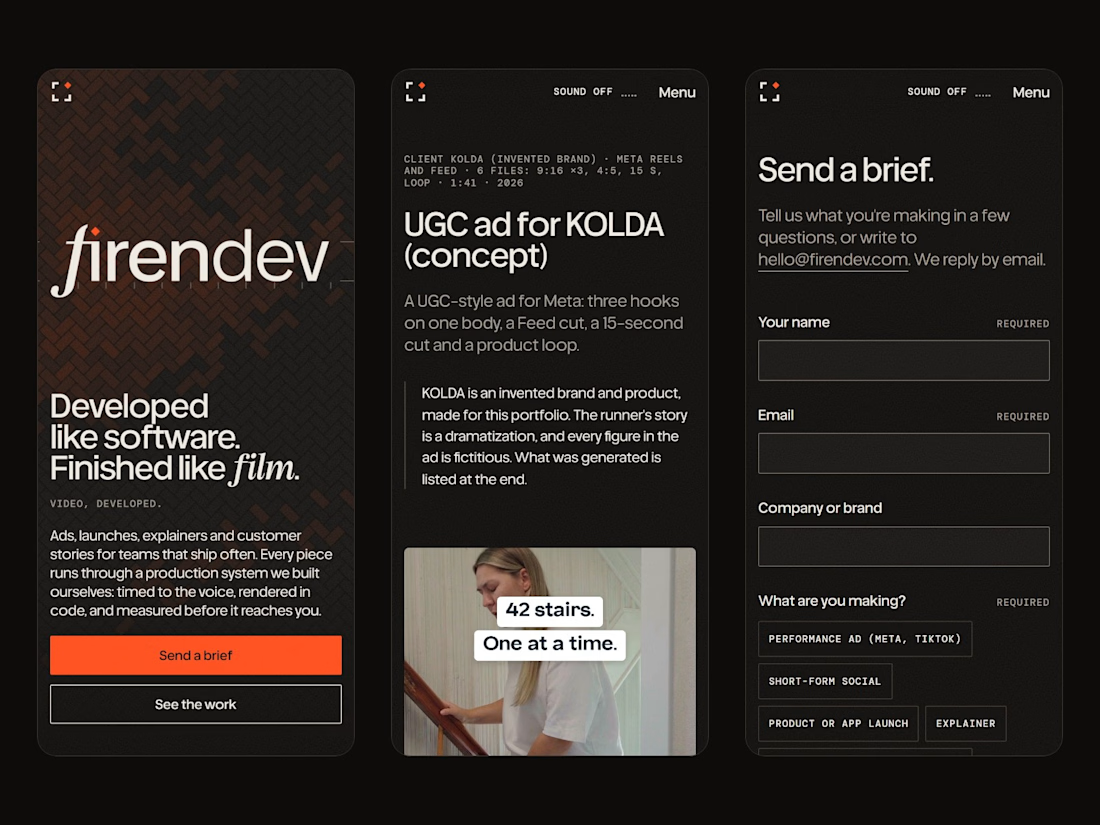
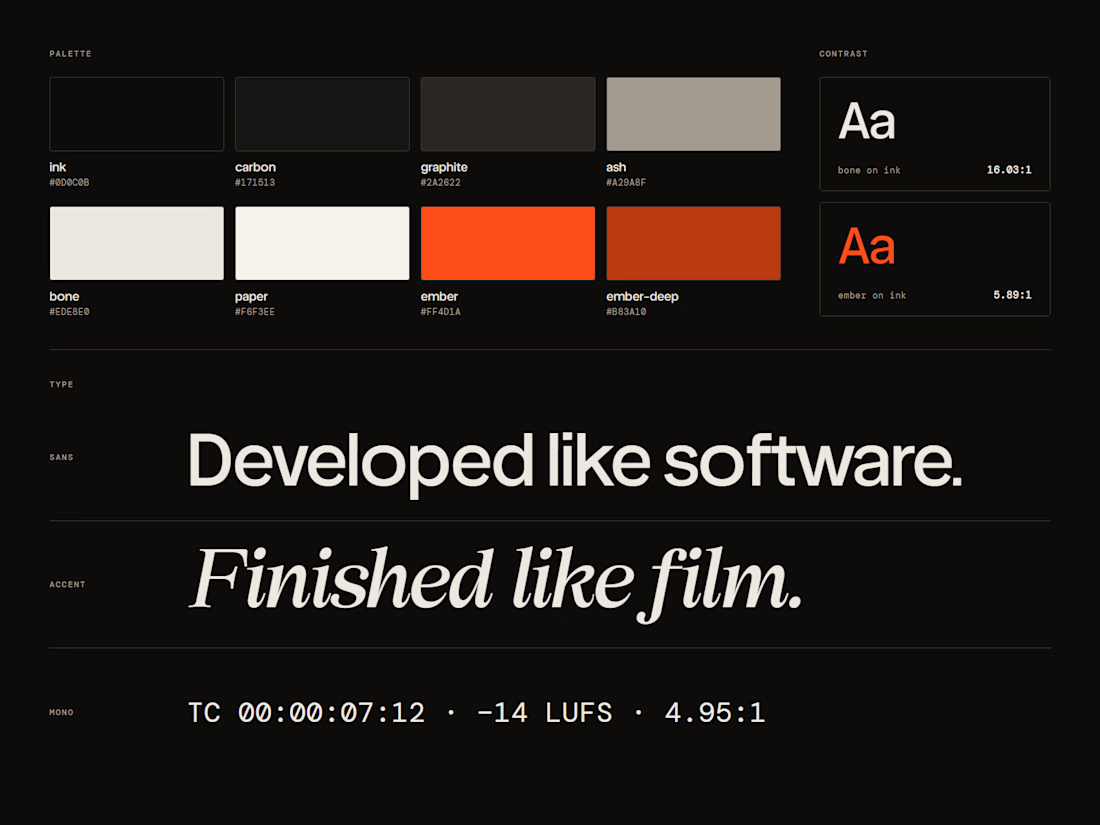
firendev: brand identity and website.
firendev is a video studio, and the name carries the whole brand. Fire, for the spark that starts every piece. Firenze, for a craft measured with proportion and geometry. Develop, in its two senses: developing film and developing software. One line holds it together: developed like software, finished like film.
Everything else grows from that. The spark is the dot of the i. The floor is the herringbone brick of Florence's Duomo. The mark is a camera frame waiting for its spark.
I'd love your honest take on the mark and the hero.
Full case study: https://contra.com/p/bWEMrvZW-firendev-brand-identity-and-website




It's a great design 🔥
I liked the animation in Hero; I'm curious which library you used.

My first time ever using Loveable and actually really loved the experience! Here is my submission:
Bent Brim Co. - Booking a hat shaping takes a dozen DMs a day; this turns it into a confirmed appointment in 7 steps, with no account needed.
Sol runs a one-person hat bar on South Congress in Austin. Every booking used to start with "can you fix my hat?" and then turn into a long back-and-forth. What's wrong with it? Felt or straw? What size? What crease? Can it be done by Saturday? Then there's the deposit, the reminder, and the no-shows. Things get way to complicated especially starting off as a mom and pop shop. With Tecova's right next store, this place has to stand out and be able to meet the demand!
Before: inquiries came in through texts, DMs and phone calls, and Sol pieced each booking together by hand.
After: the customer picks a service, shapes the crown with a drag handle or picks one of five classic creases, sets the brim and any branding, picks a time, enters a name and mobile number, and pays a $15 deposit. A Claim Ticket fills in live the whole way through, so they can see exactly what they're booking.
The shop's own rules do the scheduling. Felt needs a full day to dry, so any time that can't be ready by the customer's deadline never shows up. The $25 rush fee only appears when drying time actually allows it. Each booking lands on Sol's bench with a ticket number and pickup code. The customer gets a confirmation text, a calendar invite, and the option to reschedule or cancel without calling.
It works end to end on mobile and desktop, and it's built entirely in Lovable.

