The network for creativity
Join 1.25M professional creatives like you
Connect with clients, get discovered, and run your business 100% commission-free
Creatives on Contra have earned over $150M and we are just getting started
Back to feedPost

Python Chatbot Using Cosine Similarity
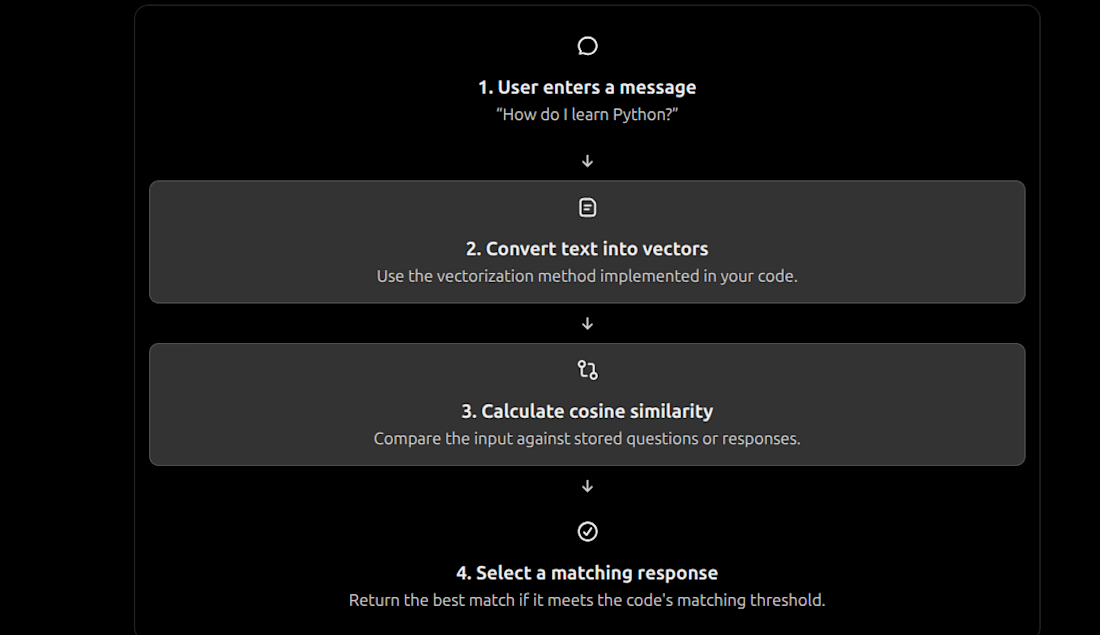
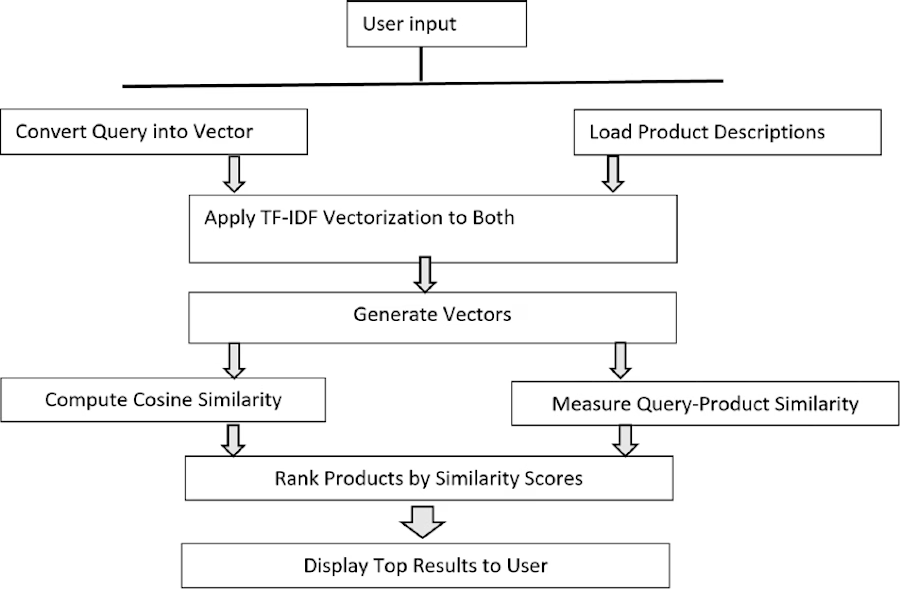
I built a Python-based chatbot that uses cosine similarity to compare text and identify the closest matching response.
The project explores text similarity, vector-based comparison, and conversational interaction, demonstrating how mathematical techniques can be applied to build a simple chatbot.
Key Features
Text similarity matching: Uses cosine similarity to compare text representations.
Response selection: Identifies the closest matching candidate based on similarity scores.
Python development: Implements the chatbot's matching logic using Python.
Applied mathematics: Uses vector similarity to compare text representations.
Technical Approach
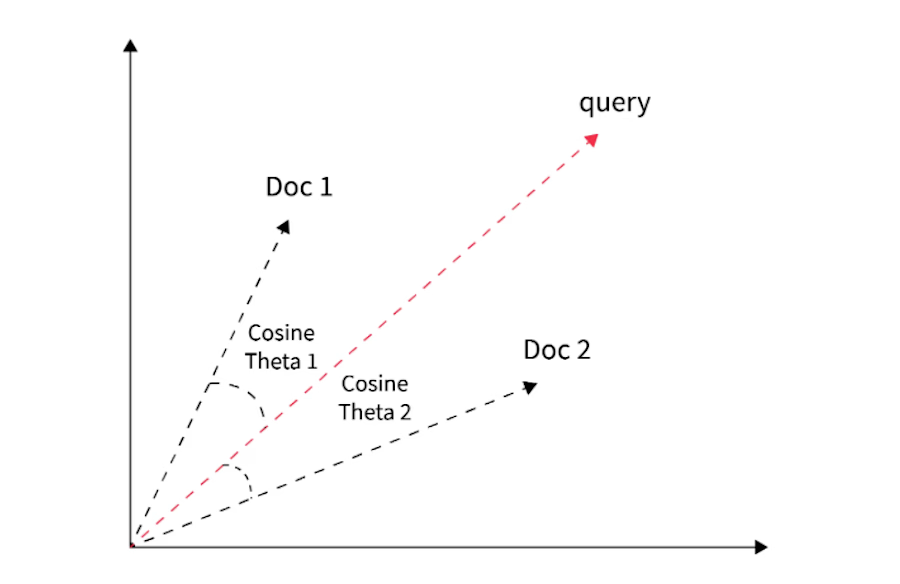
Cosine similarity measures the angle between two vectors to estimate how closely they align. When combined with an appropriate text vectorization method, it can help a chatbot match user messages with relevant stored responses.
Technologies
Python · Natural Language Processing (NLP) · Cosine Similarity
Project Source


The network for creativity
Join 1.25M professional creatives like you
Connect with clients, get discovered, and run your business 100% commission-free
Creatives on Contra have earned over $150M and we are just getting started


Related posts

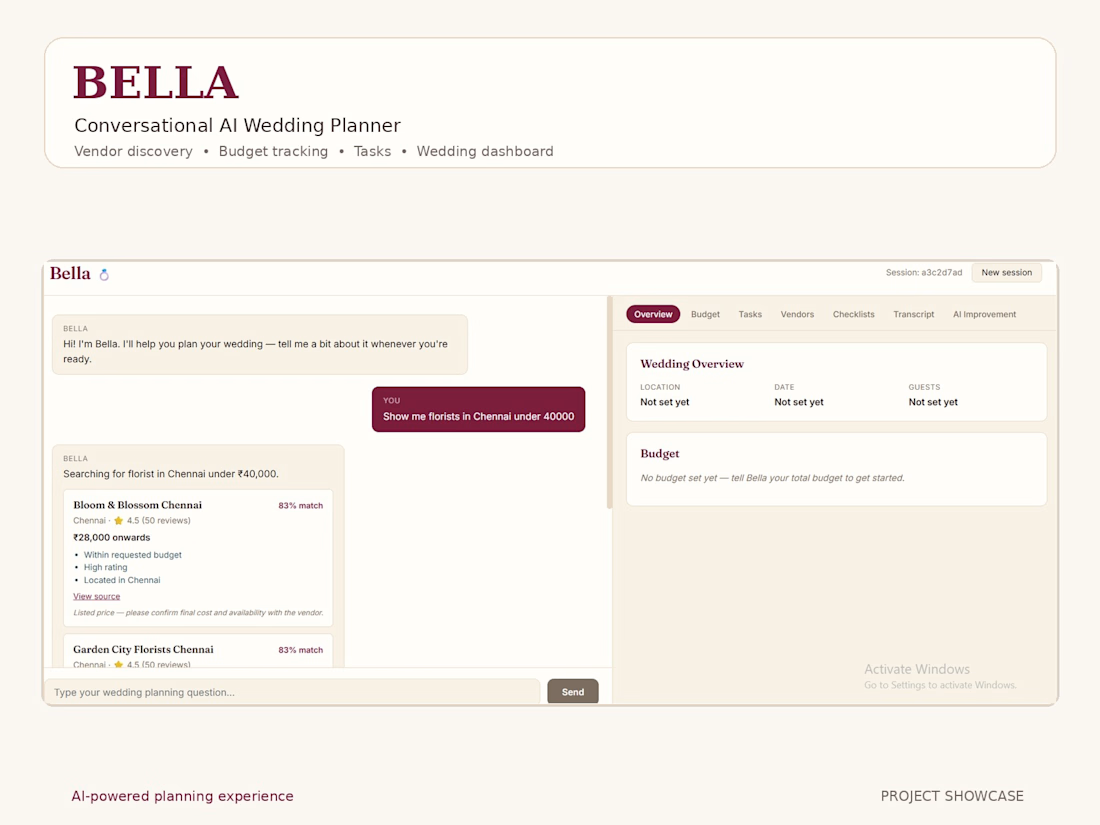
OpenHotels — Hospitality with an always-on concierge
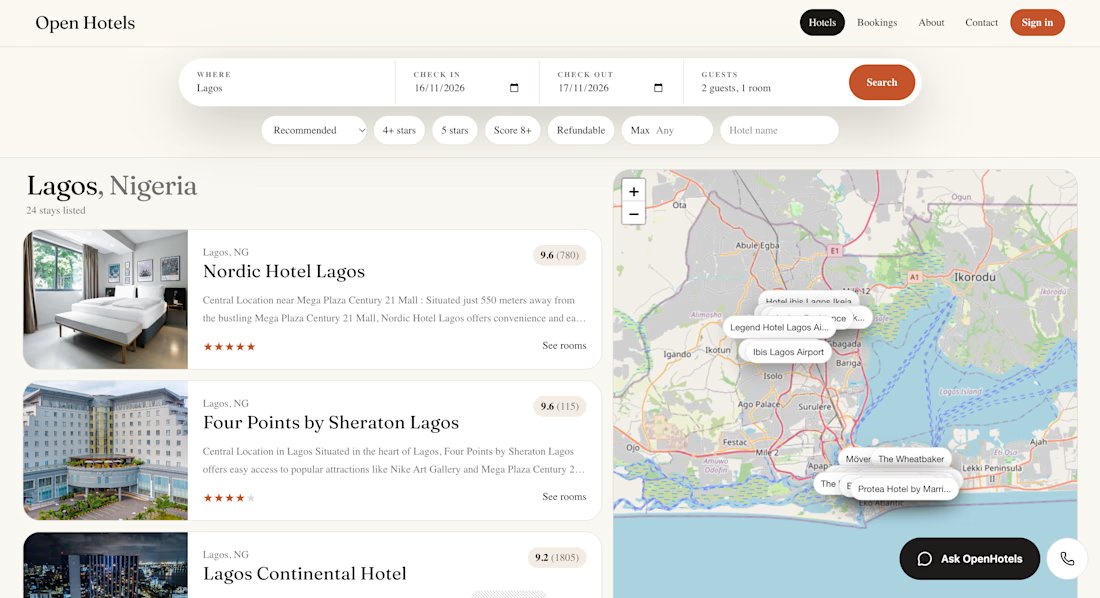
OpenHotels treats every stay as a conversation. Guests discover rooms, compare rates, and book in one flow, while an AI concierge handles the rest over chat or voice call, with context that follows them from search → prebook → confirmation.
What makes it different
🏨 Live Hotel Discovery & Booking
💬 AI concierge (chat & voice call)
📞 Voice call automation — talk through options, dates, and next steps hands-free
🗺️ Interactive Live Map Discovery - Guests can also explore the map directly, click hotel markers to preview property details, compare prices, and navigate between listings without leaving the discovery experience.
✈️ Guest dashboard
⚡ Guest lifecycle automation — confirmations, check-in nudges, and post-stay follow-up so hospitality feels premium before arrival
The vision? A hotel experience that feels premium before guests even arrive, while intelligent automation helps staff work smarter behind the scenes.
Solely built by me. Principal Full-Stack Engineer - Python / FastAPI on the backend (secure auth, live supplier inventory & bookings) and TypeScript / Next.js on the frontend, deployed for production on Vercel + cloud API.✨
🚀 Explore the experience and tell me what stands out to you most! If you were running a boutique hotel, which of these features would make the biggest difference to your business?



AI Agents, Agentic AI, Generative AI, Conversational AI, AI Automation, LLM Integration, AI Chatbot, Python Development, FastAPI Development, React Development,


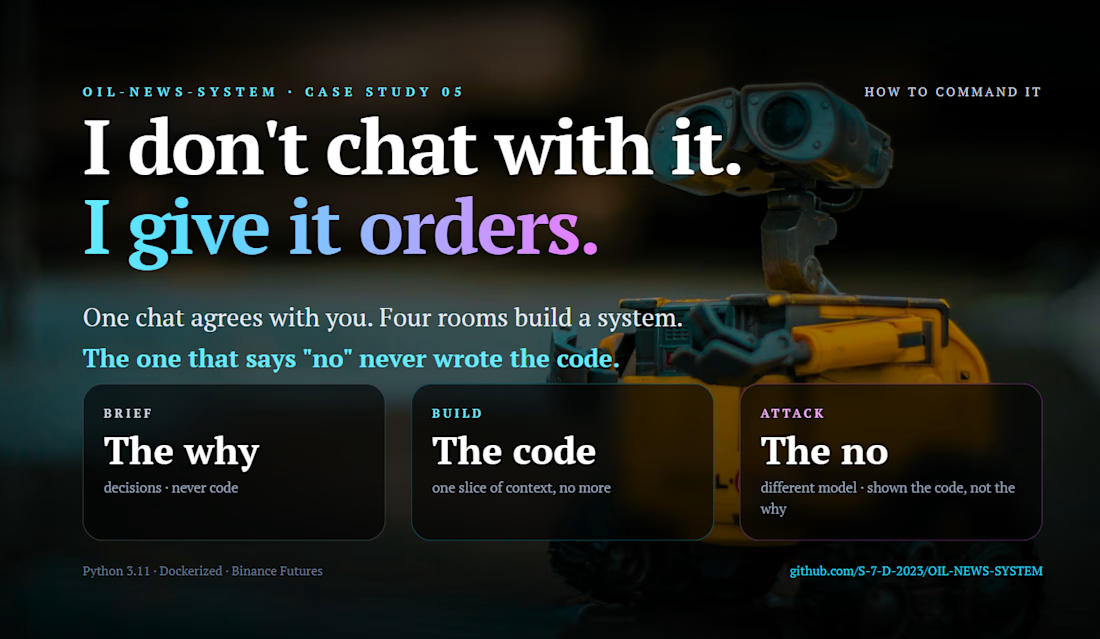
The Machine Wants to Please You. Break It.
Every coding model is trained on a reward signal that prefers agreement. Human raters like answers that confirm what they already believe — so the model learns to confirm. That is not a bug in the product. It is the product.
The consequences are measurable. Ask a coding agent to build a feature and it will tell you it is done, while the unfinished part sits silently out of view. Ask it to review its own work and it approves itself — the same instance that wrote the code grades the code. You are not getting a second opinion. You are getting an echo.
This is why most people cannot build anything serious with AI. They open one chat, ask nicely, and accept the first confident answer. They get a demo. They never get a system.
I do not run one chat. I run four rooms, and none of them talk to each other.
Room one — the brief. Domain knowledge, constraints, architecture decisions, the why. Never code. This room exists so the reasoning behind the project stays unpolluted by implementation noise.
Room two — the build. Pure code generation. It receives only the slice of context it needs for the current task — because the most common failure in agentic coding is not a weak model, it is bad context design: give too little and it guesses, give too much and the window rots. The goal is exactly enough, no more, no less.
Room three — the attack. A different model. I show it the code, not my reasoning, because a critic that sees your reasoning goes soft. It is told to argue against the output, not to review it kindly. An agent that checks its own work shares its own blind spots — a second agent on a different model does not.
This is the room that says no. It never wrote the code, so it has no ego to defend. It will tell me the premise is wrong before I build on top of it — which is the only moment that correction is still cheap.
Room four — the small problems. Errors, one-line questions, snippet checks. Quarantined here so they never contaminate the build context.
The discipline is the same in all four: no pleasantries, no "great question", no accepting a confident answer because it was confident. Push back once with reasoning — and if I overrule it, do it my way and log the disagreement. Surprise is not evidence.
You can see what this produces: hundreds of commits, one pipeline, no single conversation that could have held it — github.com/S-7-D-2023/OIL-NEWS-SYSTEM/commits/main.
Closed AI gives you an assistant. Open weights and this discipline give you a workforce you own.
#AI # OIL #contra #build #System #coding