
Aashutosh Kuikel
AI/ML developer specializing in Python, machine learning,



Python Chatbot Using Cosine Similarity
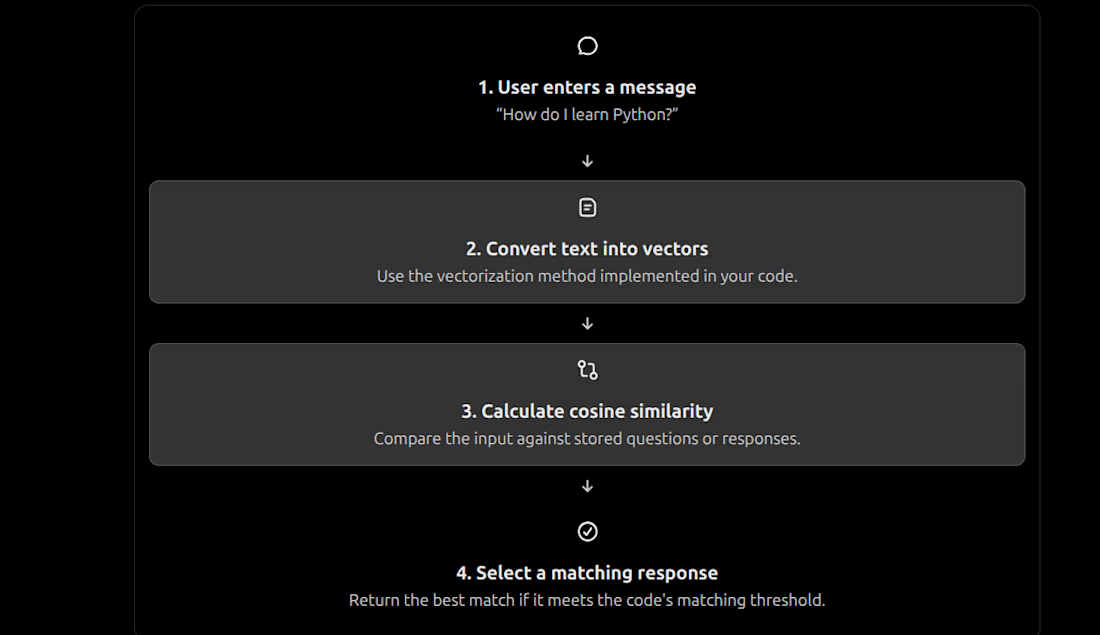
I built a Python-based chatbot that uses cosine similarity to compare text and identify the closest matching response.
The project explores text similarity, vector-based comparison, and conversational interaction, demonstrating how mathematical techniques can be applied to build a simple chatbot.
Key Features
Text similarity matching: Uses cosine similarity to compare text representations.
Response selection: Identifies the closest matching candidate based on similarity scores.
Python development: Implements the chatbot's matching logic using Python.
Applied mathematics: Uses vector similarity to compare text representations.
Technical Approach
Cosine similarity measures the angle between two vectors to estimate how closely they align. When combined with an appropriate text vectorization method, it can help a chatbot match user messages with relevant stored responses.
Technologies
Python · Natural Language Processing (NLP) · Cosine Similarity
Project Source
View the project on GitHub (https://github.com/ak-Machine-Learning/Chatbot)
0
42
Sentiment Analysis Using Machine Learning and Deep Learning
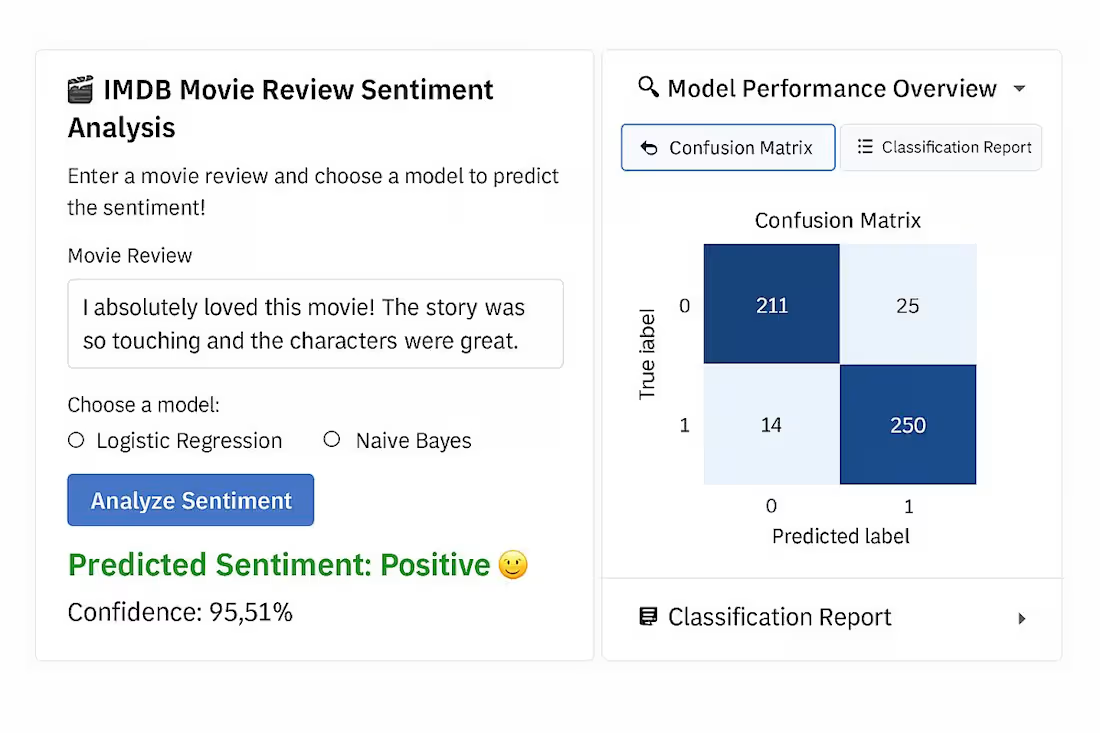
I developed a text-classification project to compare traditional machine learning algorithms with a deep learning model for sentiment analysis.
The project covers text preprocessing, feature extraction, model training, performance evaluation, and saving trained models for reuse.
What I Built
Text preprocessing: Prepared review text for model training.
Feature extraction: Used TF-IDF for traditional machine learning models and tokenized sequences for the GRU model.
Model comparison: Evaluated Logistic Regression, Multinomial Naive Bayes, Linear SVM, Random Forest, and GRU.
Performance evaluation: Generated classification reports and visualizations to compare model results.
Model persistence: Saved trained models and preprocessing components for reuse.
Tech Stack
Python · Pandas · NumPy · Scikit-learn · TensorFlow/Keras · NLP · TF-IDF · Matplotlib · Joblib
What This Project Demonstrates
This project gave me practical experience building and evaluating NLP pipelines, comparing different modelling approaches, and examining how model choice affects text-classification performance.
Source Code
View the project on GitHub (https://github.com/ak-Machine-Learning/Sentiment-Analysis-Model-Comparison)
2
98
Python,AI/ML and full stack .
Please visit my github for detailed overview :https://github.com/aKmsdfhjb
0
66
Doodle Recognition — 5-Class CNN
An interactive computer vision project that classifies hand-drawn sketches into five categories using a Convolutional Neural Network (CNN) trained on Google's Quick, Draw! dataset.
Overview
The project explores how deep learning can recognize simple drawings from their visual patterns. A CNN learns features such as edges, curves, and shapes to distinguish between five classes:
Apple
Cookie
Dog
Eye
Face
The goal is to connect model training with an interactive drawing experience, allowing users to submit sketches and receive a predicted class.
Technical Approach
Data preparation: Process the drawing data into model-ready arrays and corresponding class labels.
Model development: Train a CNN using TensorFlow/Keras for five-class image classification.
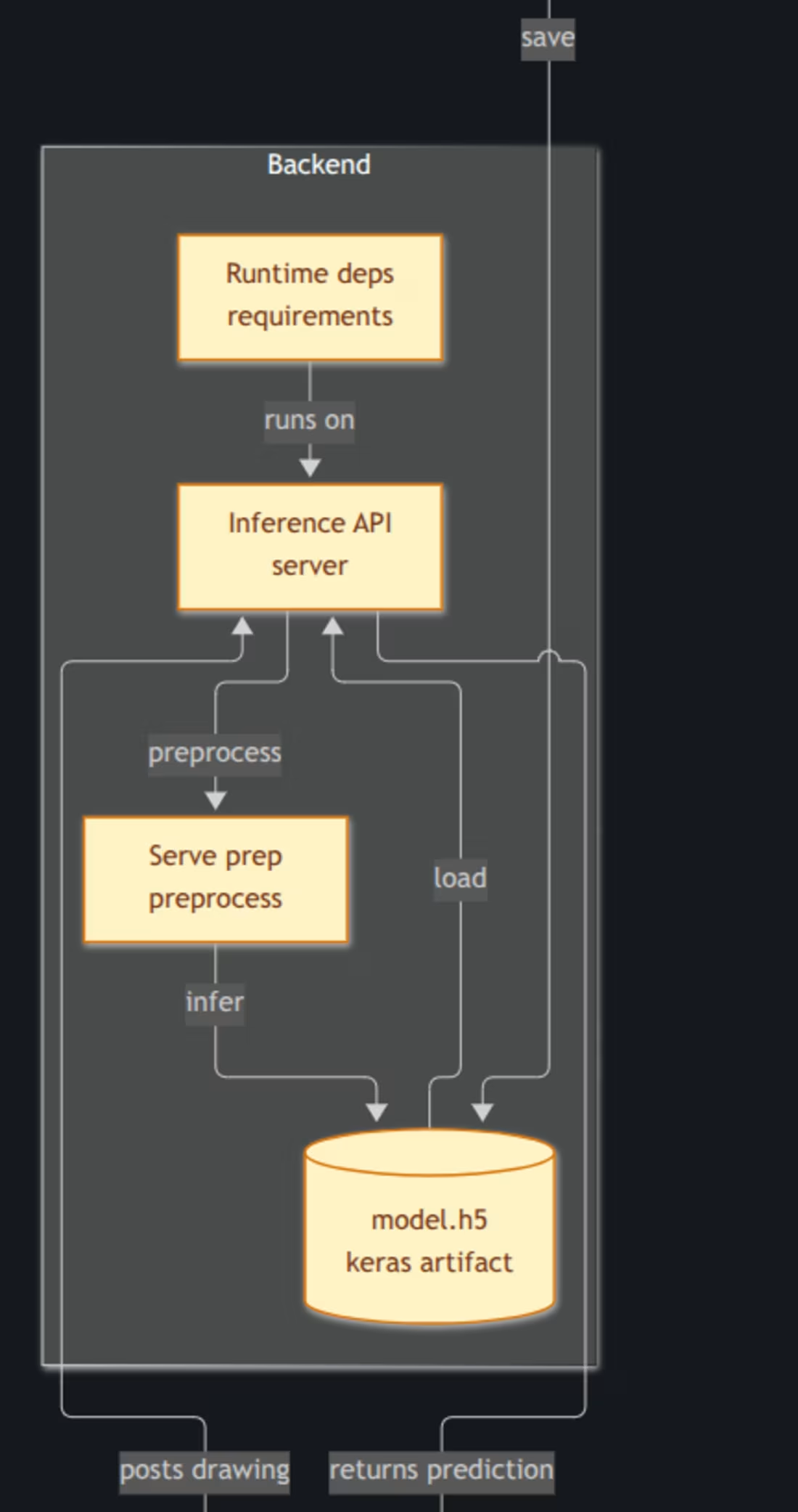
Inference: Preprocess user drawings consistently with the training data before passing them to the trained model.
User interface: Provide a drawing canvas and display the model's predicted class.
Tech Stack
Python
TensorFlow / Keras
NumPy
Google Quick, Draw! dataset
What This Project Demonstrates
CNN-based image classification
Image preprocessing and labelled dataset preparation
Multi-class prediction
Integration of a trained model into an interactive application
Separation of model training, inference, and user-interface components
Source Code
GitHub repository (https://github.com/aKmsdfhjb/Doodle)
0
43