The network for creativity
Join 1.25M professional creatives like you
Connect with clients, get discovered, and run your business 100% commission-free
Creatives on Contra have earned over $150M and we are just getting started
Back to feedPost

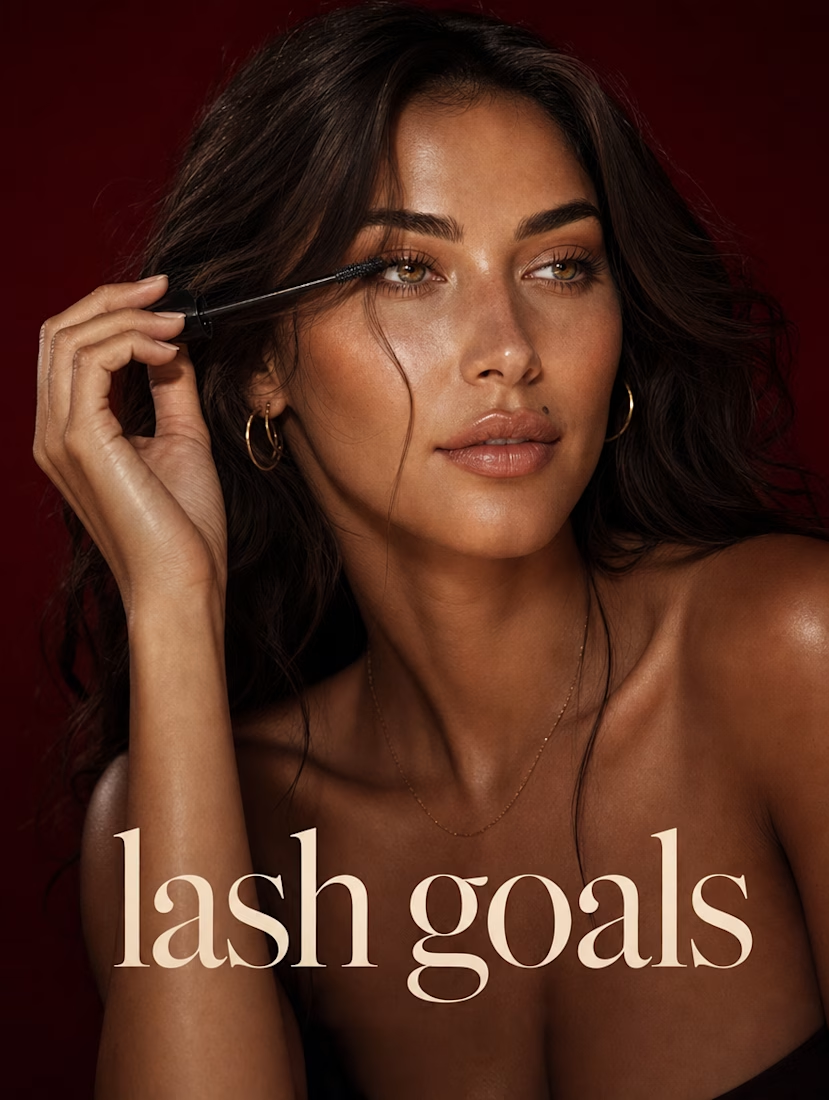
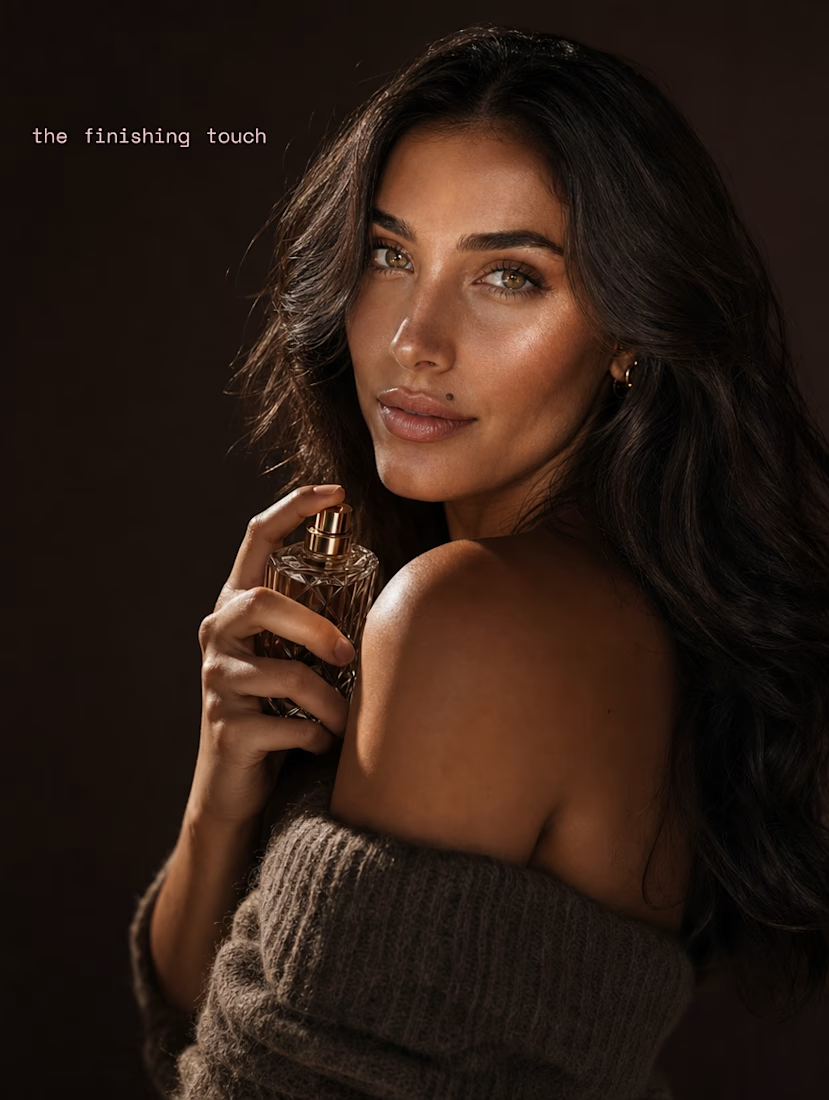
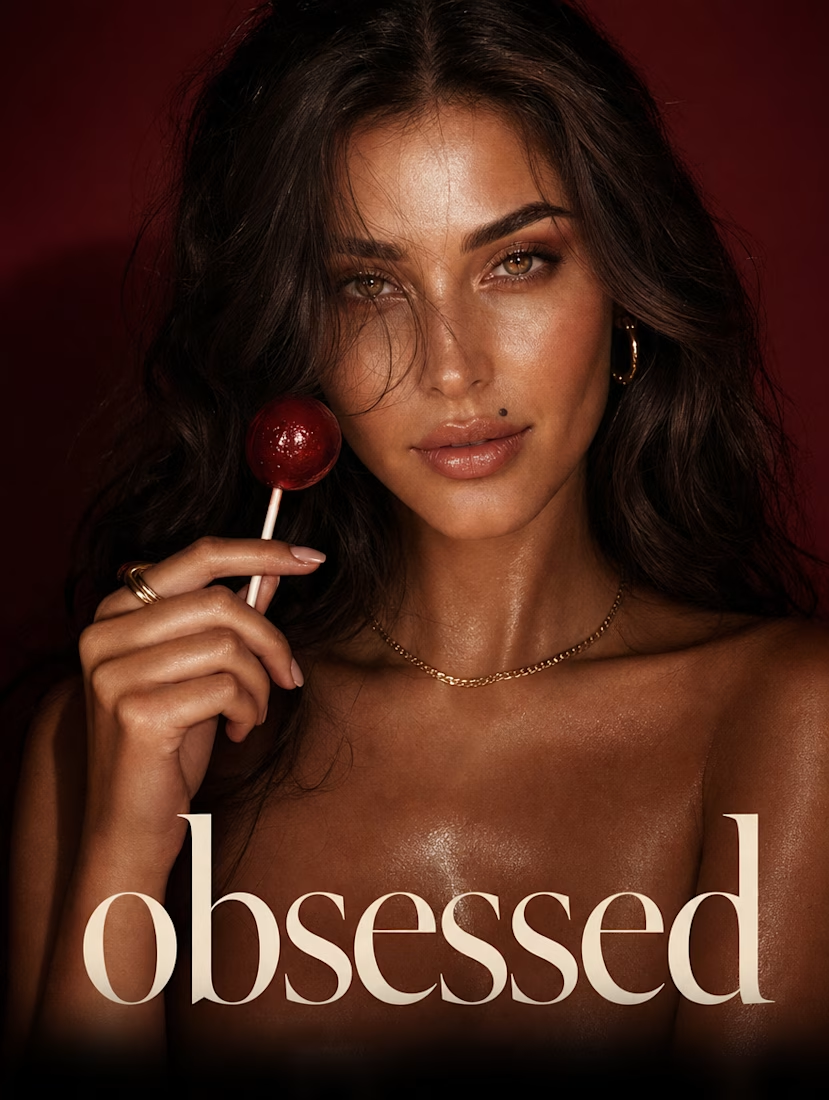
Three frames from an ongoing beauty campaign concept, built entirely with AI and finished by hand to look like a real editorial shoot.
The brief I set myself was simple: make AI beauty content that reads as a campaign, not a render. Every frame sits on a single saturated seamless — oxblood, deep red, warm espresso — with the product's red echoed in the backdrop, so the whole set feels like one deliberate world instead of three separate images.
Lighting carries the mood. The mascara frame uses a hard beauty-dish key with deep negative fill, so the light falls off into shadow and the eye lands on the face first, then the product. The perfume frame switches to low-key Rembrandt lighting with a warm rim that lifts the hair off a near-black background. None of it is accidental.
What sets this apart from most AI beauty imagery is texture. The skin stays dewy and human: real pores, fine flyaway hairs, true catchlights in the eyes, a restrained retouch. No plastic over-smoothing, no over-sharpened "AI look." The grade is warm and filmic.
The face is intentional too. She's a recurring character I created and use across my videos and stills as my signature — the same identity and energy in every frame. For a brand, that's a face you can actually own: consistent campaigns with no studio, no model day-rate, and full creative control.
Typography is built into the composition, not dropped on top — a high-contrast display serif paired with mono, sitting in space that was framed for it.
And the red is a choice, not a default. It's the fastest color the brain registers and the one most tied to appetite and desire — exactly the cue a craving-led product wants.


The network for creativity
Join 1.25M professional creatives like you
Connect with clients, get discovered, and run your business 100% commission-free
Creatives on Contra have earned over $150M and we are just getting started

Challenges
View all


Related posts

I am gathering cool references for my own work as a Motion Designer, and this one caught my eye this week.
Day 3 of 60-days-collecting-awesome-motion-design-references
I love the way this is designed, based on abstract shapes and concepts with a coding visual language that we are all already familiar with. This is a great reference in this modern era where we deal more and more with products and services that live on the internet, not on a physical product.
This animation was created by Odd Fellows in collaboration with Figma.


60 days of references is a serious commitment. Curious, are you mostly drawn to the same visual language each time, or does it shift a lot depending on the day?

From a simple skincare concept to a complete AI UGC ad!!
I wanted to see how far I could take a simple skincare UGC concept using AI.
I started with the character, making sure her face, skin tone, body shape, hair and overall appearance stayed consistent throughout the video.
Then came the fun part building the story scene by scene.
From the opening skincare hook, to walking into the bathroom, cleansing, rinsing, moisturizing, applying eye serum, and finally showing the finished look, every scene had to connect naturally to the next.
Once the visuals were ready, I edited everything together in CapCut, worked on the pacing, added a conversational voiceover, and turned the individual AI generated scenes into one complete UGC style video.
A lot goes into making AI UGC feel believable. It’s not just generating pretty images, it’s the consistency, storytelling, editing and little details that bring the video together.
AI Character Creation | AI UGC | Scene Generation | Storytelling | Video Editing


Very nice

A short motion spec ad for Muji (personal project).
Design, animation and sound design by me :)
Inspired by: Kinisi, Sebastien Camden
Motion DesignmotiongraphicsAnimationAdobe After EffectsAdobe IllustratorAdobe Premiere ProIllustration


the stool tucking into the muji logo at the end got me. how long did the sound design take?