The network for creativity
Join 1.25M professional creatives like you
Connect with clients, get discovered, and run your business 100% commission-free
Creatives on Contra have earned over $150M and we are just getting started
Back to feedPost

“AI agents are going to kill SaaS.”
That sounds dramatic. The reality is more interesting.
Today, a person might open a CRM, check a lead, update its status, write an email, create a task, and notify the team across several different tools.
Some teams are already using AI agents to simplify parts of workflows like these, and that capability is only getting broader.
An AI agent could increasingly handle that workflow across those systems for them.
That matters because people may need to spend less time manually working inside every software interface.
But the software itself doesn’t simply disappear.
The agent still needs the CRM data, permissions, APIs, payment systems, integrations, business rules, and infrastructure behind it.
And this is where the hype often gets ahead of reality.
An agent can misunderstand context.
It can work with incorrect data.
It may not have the right permissions.
An API can fail or change.
An integration can break.
A business may have an unusual case the agent wasn’t prepared for.
And when sensitive customer or financial data is involved, security becomes a much bigger question.
So yes, the shift is real.
Gartner estimates that up to $234B in enterprise application spending could be exposed to this change by 2030, roughly 20% of enterprise SaaS spending.
But Gartner also says current market expectations for AI agents exceed what they can reliably do today.
I don’t think the interesting question is whether SaaS “dies.”
It’s how the value of software changes.
Less value may sit in simply giving people another dashboard to operate.
More may sit in the data, workflows, integrations, knowledge, trust, and actual outcomes the product can deliver.
The technology is significant.
But as usual, the headline is moving faster than the reality.

This is one of the more level-headed takes I have read on this. The line about value moving from dashboards to data, workflows and trust is the part that sticks. The headline is moving faster than the reality is a good reality check too. When you work with product teams, do you...

"Less value in another dashboard, more in trust and actual outcomes" — that's the line. It's exactly what I'm building toward with Ubunex: the interface matters less than whether the system can coordinate people and lead to verified skills and real work done. Do you think buyers...

Agree. Agents don't replace the CRM, they just stop people clicking through it. The data and permissions still live there.
The network for creativity
Join 1.25M professional creatives like you
Connect with clients, get discovered, and run your business 100% commission-free
Creatives on Contra have earned over $150M and we are just getting started











Related posts

Working on a SaaS dashboard concept in Figma. 🚀
The goal is to make complex business data easier to scan and understand through clear visual hierarchy, structured analytics cards, and organized navigation.
Still refining the details and exploring ways to make the experience more intuitive.
What matters more to you in a dashboard: clean visuals or faster access to insightful?
#Ui designs #Ux design #Saas design #Figma
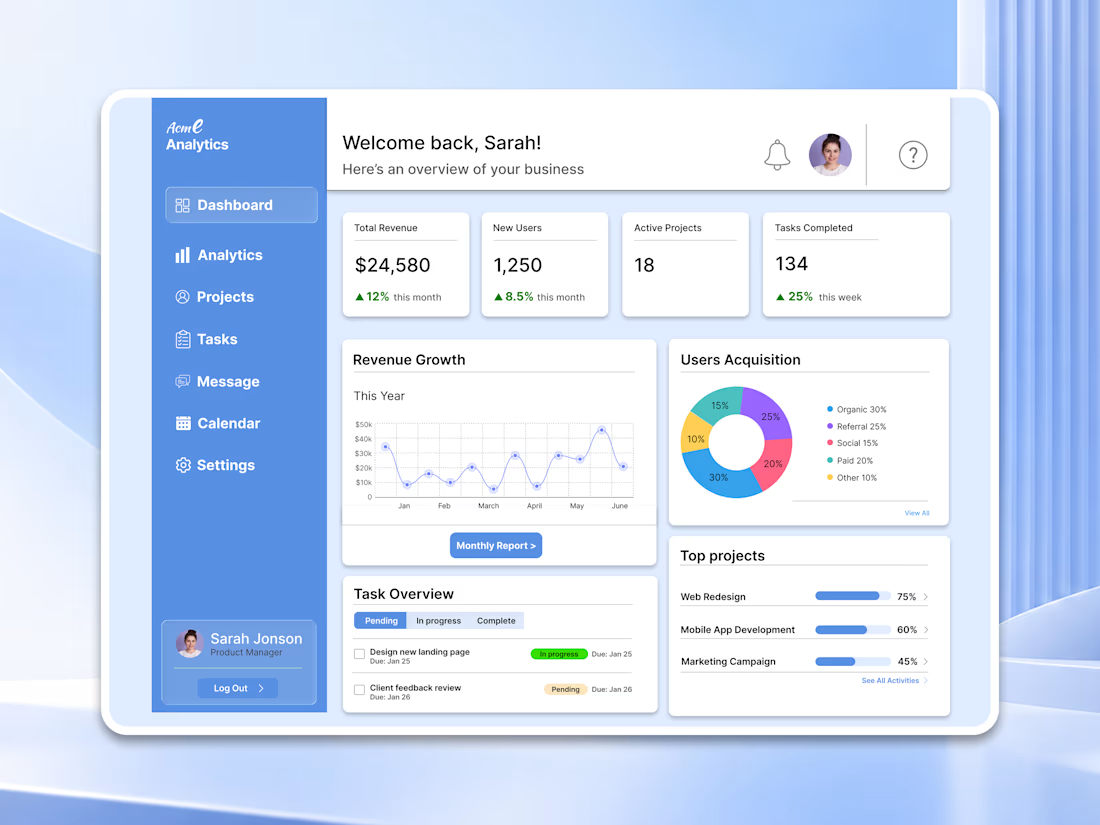

For a dashboard like this, I’d test whether the key action stays visible when the cards are filled with real, uneven data—not just placeholder numbers. What kind of business data are you designing the first view around?

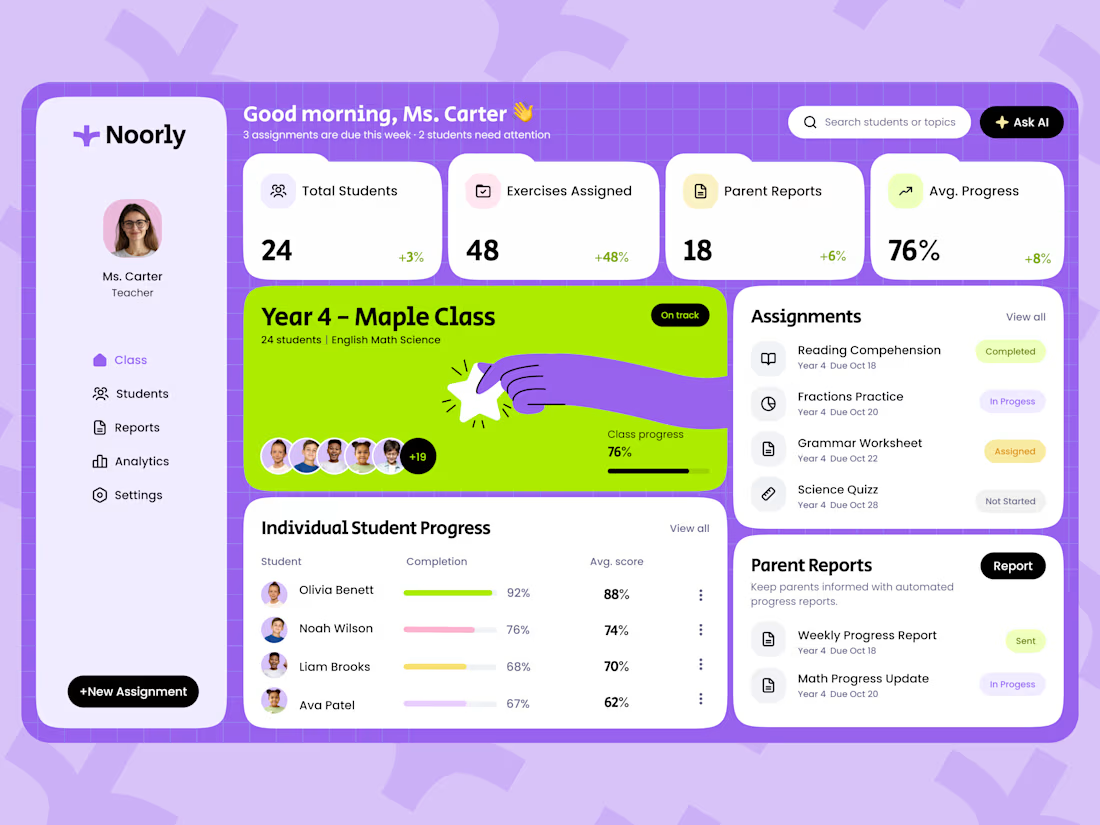
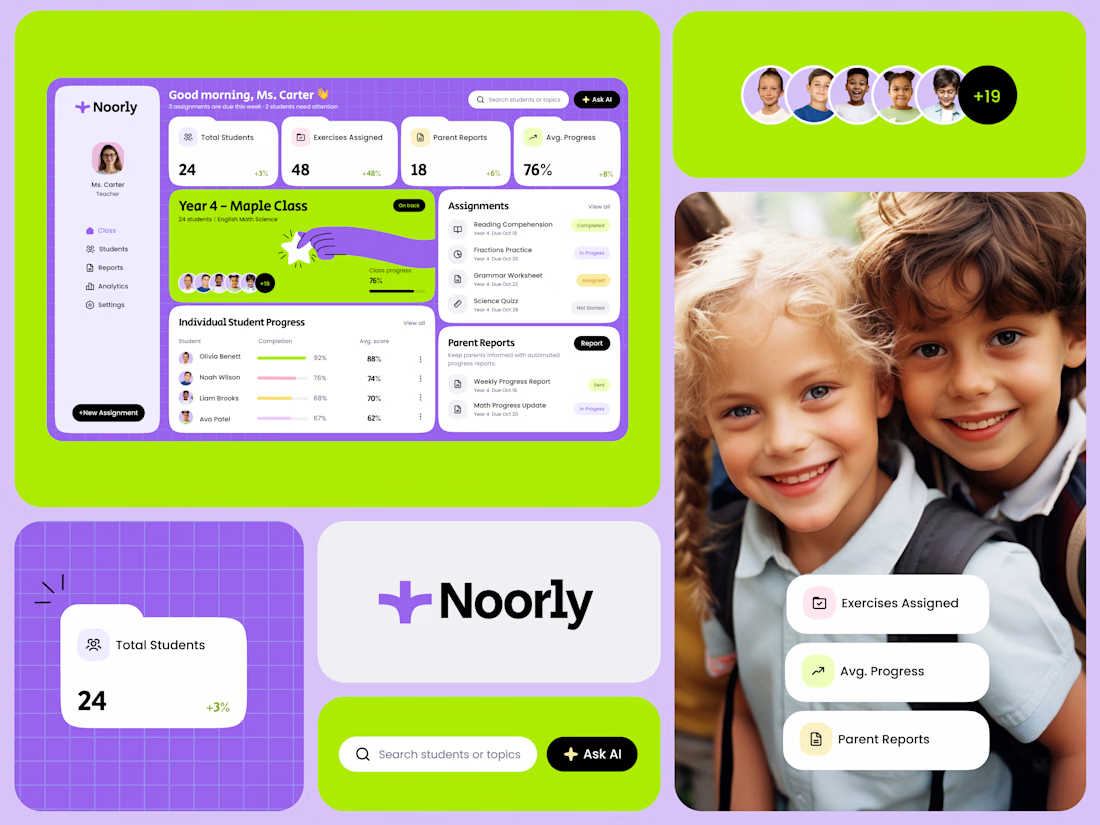
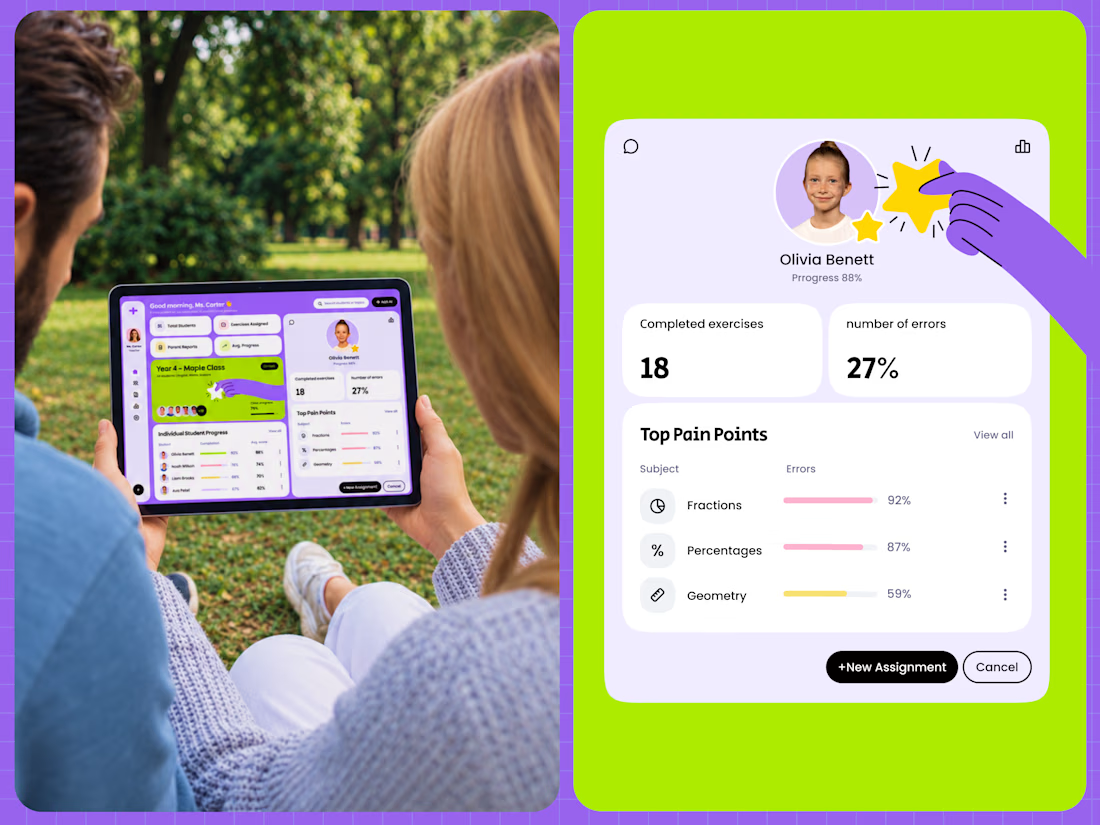
Noorly is a modern EdTech SaaS dashboard designed for teachers, students, and parents.
The platform brings classroom management, assignments, student analytics, performance reports, and parent communication into one cohesive experience. The design combines a playful purple and lime green color palette with soft pastel tones, rounded cards, and clear data visualizations.
The goal was to make complex educational information easier to navigate while helping teachers save time and make more informed decisions.
View the project:
https://dribbble.com/shots/27817401-Dashboard-Education-SaaS


Whenever I start a new software project, there's one thing I always try to imagine first. A real person actually using it.
Maybe they're struggling with a task that's taking forever. Then one click, and it's done in seconds.
If I just show that click in a video, it doesn't look like much. But once you understand the hour of work behind it, suddenly it's a pretty big deal.
And that's what I love about working with software products. Finding those little moments and figuring out how to make someone watching the video understand why they matter 🖤

Stunning and clean