The network for creativity
Join 1.25M professional creatives like you
Connect with clients, get discovered, and run your business 100% commission-free
Creatives on Contra have earned over $150M and we are just getting started
Back to feedPost

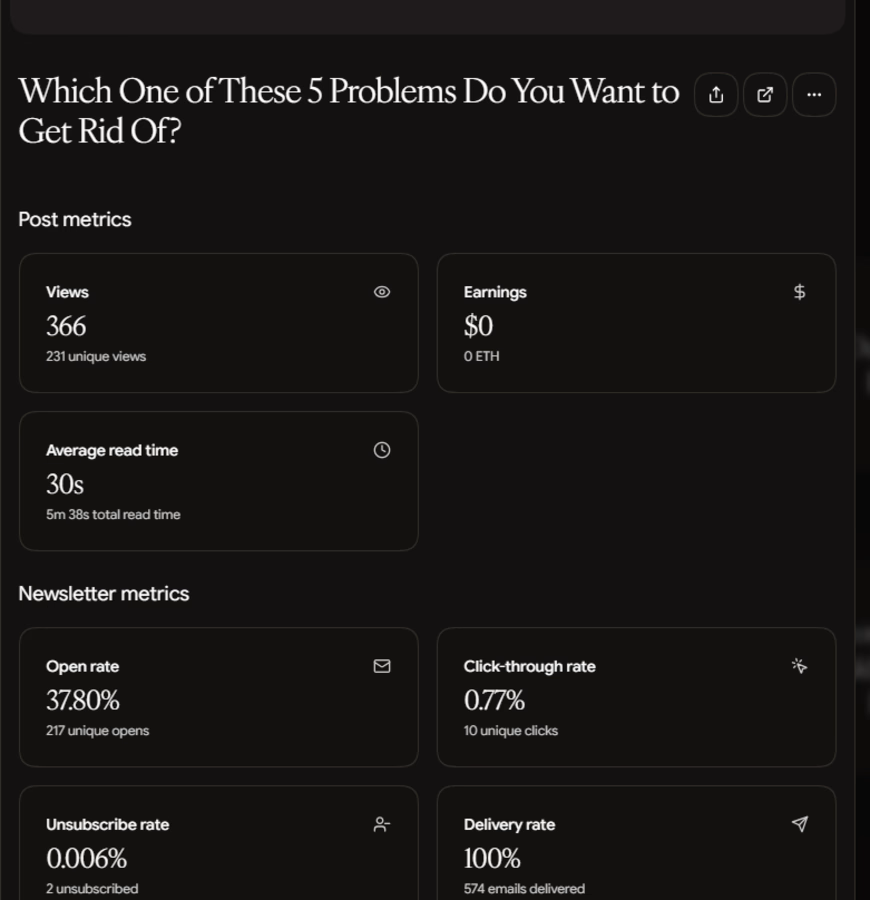
This subject line got a 38.80% open rate. Here's the psychology behind it.
"Which One of These 5 Problems Do You Want to Get Rid Of?"
It never asked if you had a problem.
It assumed you did.
"Which one" skips consent and lands inside the reader's reality before they realise it. That's presupposition. One of the most powerful moves in direct response writing.
Then it made you work before you even clicked.
Your brain quietly scanned all five options, looking for yours. That mental scan is engagement. You were already inside the email before you opened it.
"Get Rid Of" did something too.
Not solve. Not eliminate. Get rid of, the language of someone genuinely frustrated, not a brand performing empathy. That tiny word choice lowers the wall between copy and reader.
And the number 5 created quiet anxiety.
What if your problem is number 3 and you never check?
Write the hook that makes your reader think: that is exactly me.
#Copywriting #EmailMarketing #Web3 #DirectResponse #ContentStrategy
The network for creativity
Join 1.25M professional creatives like you
Connect with clients, get discovered, and run your business 100% commission-free
Creatives on Contra have earned over $150M and we are just getting started

Challenges
View all


Related posts


5 questions to answer before you build a feature
The team moves fast without deciding what the customer needs, ships, and finds users confused or not using the feature. Then it's back to the drawing board, building the same feature behind schedule and over budget.
Before development, frame ideation around one question: why would the user care?
These 5 questions answer it:
→ What problem does the customer have?
→ What can the feature not live without?
→ What action shows it worked?
→ Which requirements have no customer benefit?
→ Which option solves the problem most simply?
Ideation should be rough, but not aimless.
With these answered, the team builds one clear feature, and customers are more likely to finish what they came to do. The time you'd have spent rebuilding goes to what users need next.

Picky clients. Endless revisions. And a lot of second-guessing.
The ViaCarte fintech explainer was another project where getting everything just right took some serious back-and-forth.
One creative decision we wrestled with was how to present the product. We considered different approaches, but eventually decided to bring the mobile phone and laptop into 3D.
It added another layer to the visuals and helped us give the product a more tangible presence.
But here's the thing: knowing when to stand your ground and when to compromise isn't always easy.
How do you handle clients who are hard to please? Do you trust your instincts or let the client have the final say on every detail?


ViaCarte Fintech Explainer 3D Animation

🚀 Weekend challenge:
1. Go look at some templates and demos at no-code.supply
2. Tell me what looks like "ai slop" and why
One rule: don't say "looks generic"
The best argument gets the All-Access pass for free.

no-code.supply
no-code.supply — code templates for no-code builders
HTML and React templates built for no-code and low-code builders: two editions, AI-ready docs, no third-party requests.