The network for creativity
Join 1.25M professional creatives like you
Connect with clients, get discovered, and run your business 100% commission-free
Creatives on Contra have earned over $150M and we are just getting started
Back to feedPost

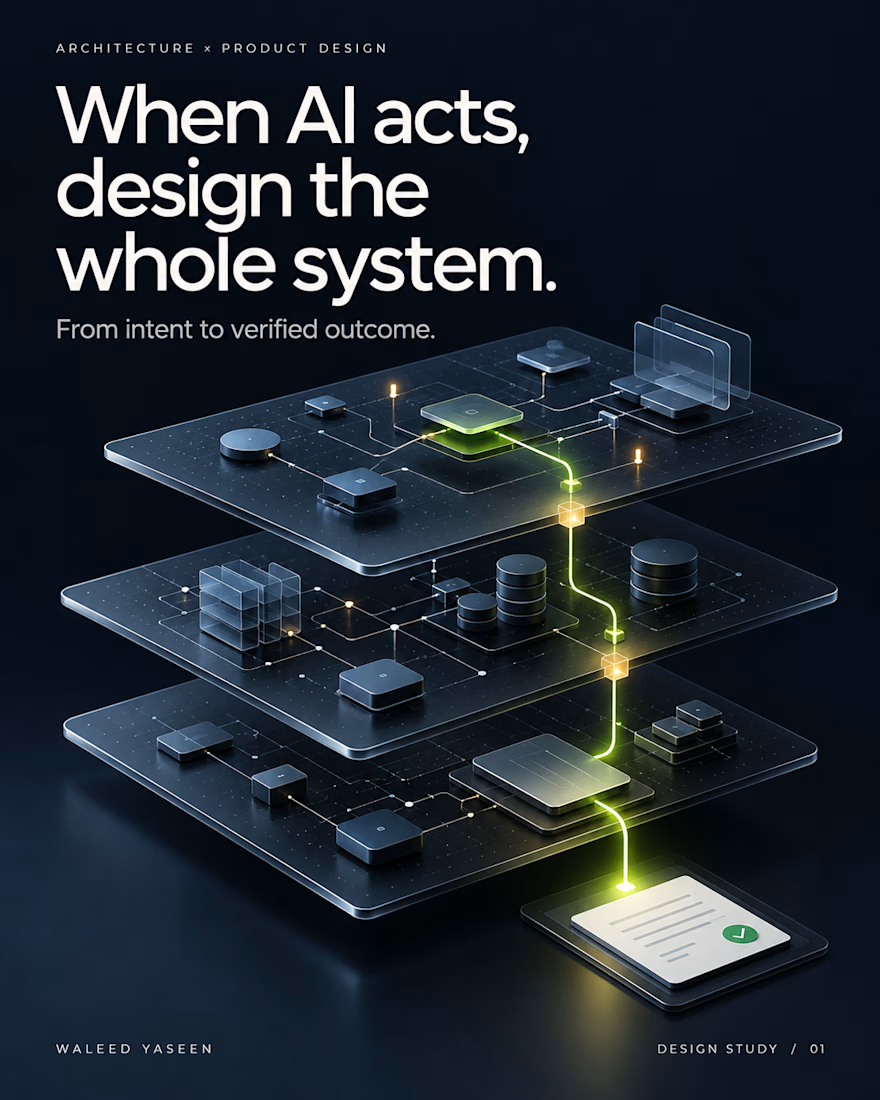
The moment AI can change business data, architecture becomes part of the user experience.
I put together this design study for an AI operations workspace: one workflow, from intent to a verified outcome, designed across the system and the interface.
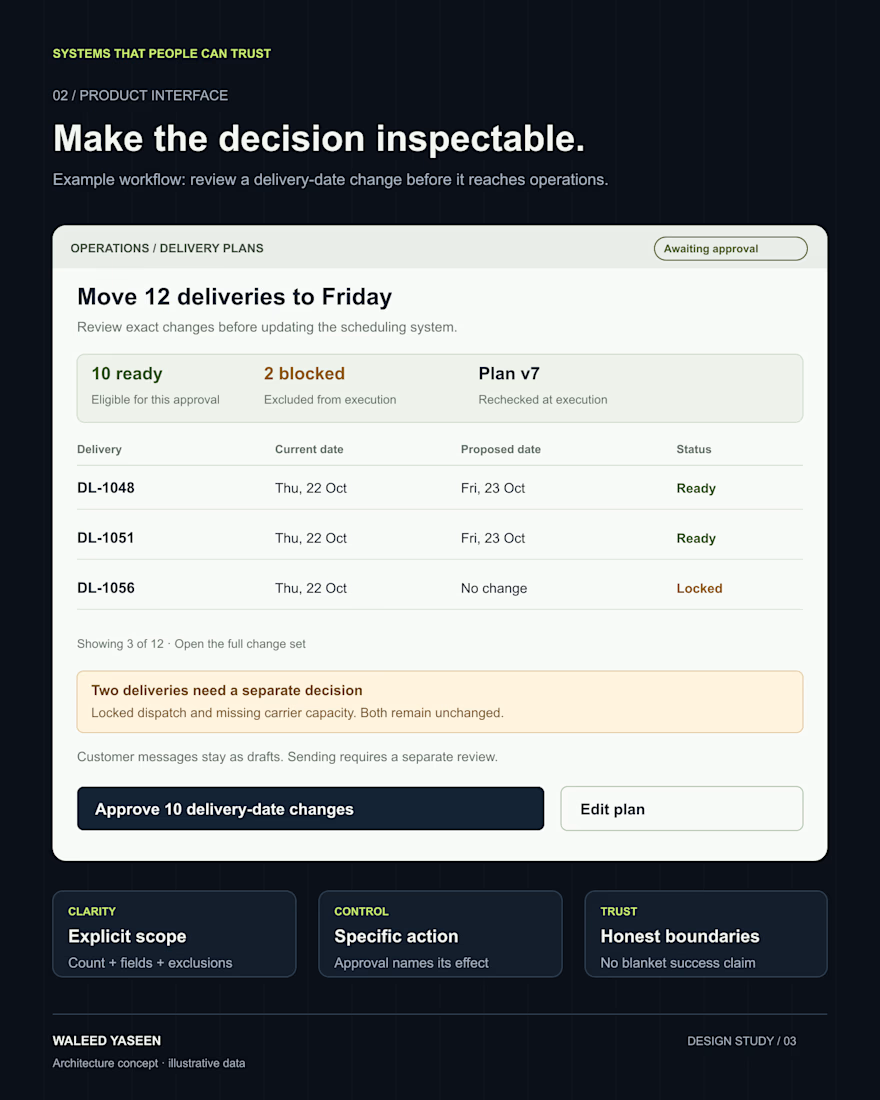
The request sounds simple: “Move these 12 deliveries to Friday.”
Ten are eligible. Two are blocked. One record might change while the operator is reviewing. A connection might drop after an update has already reached the scheduling system.
Those details shape the product.
Here are five decisions I would make before adding more autonomy:
Bound the authority.
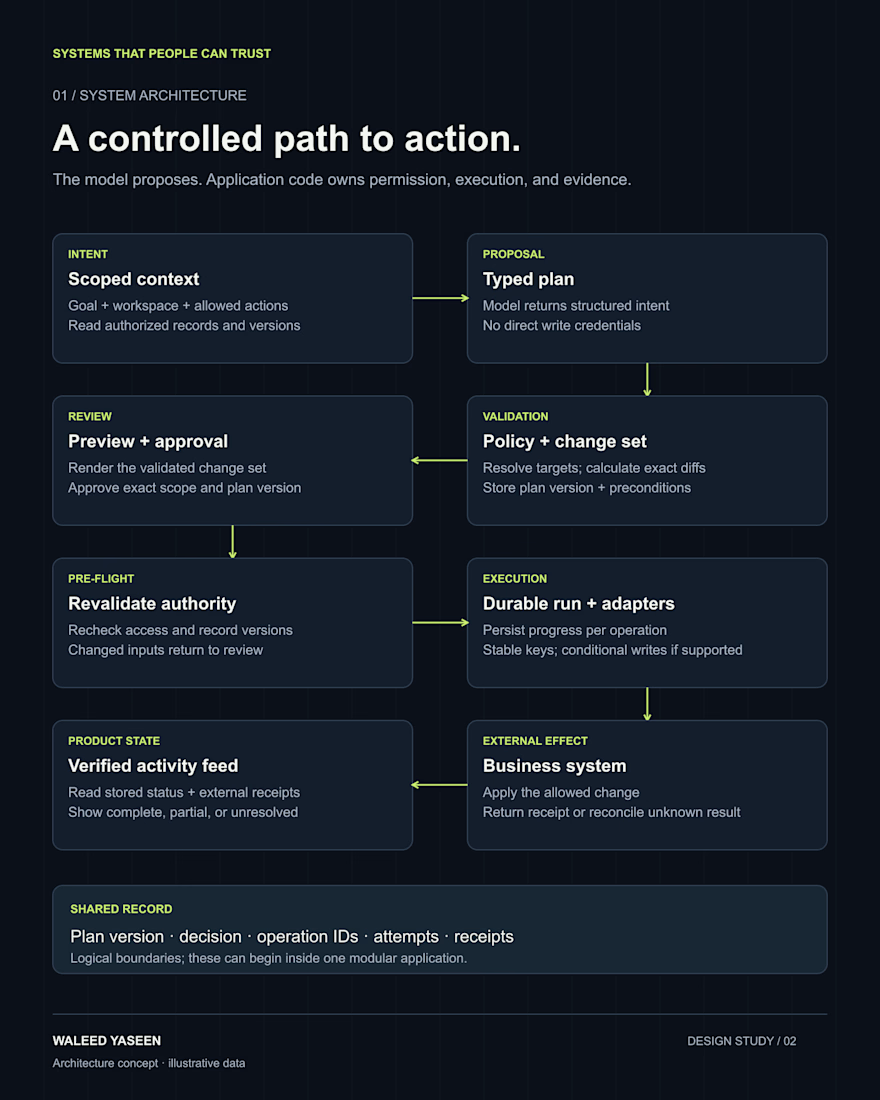
The model proposes a structured plan. Application code validates targets, permissions, and allowed changes. Write credentials stay behind controlled adapters.
Make the review concrete.
Show the actual before-and-after values, affected records, exclusions, and external effects. Build that preview from the validated change set. Label the action precisely: “Approve 10 delivery-date changes.”
Keep approval tied to what was reviewed.
Store the approved scope and plan version. Revalidate access and record preconditions at execution. If the relevant state changes, refresh the preview and request a new decision.
Make progress reflect evidence.
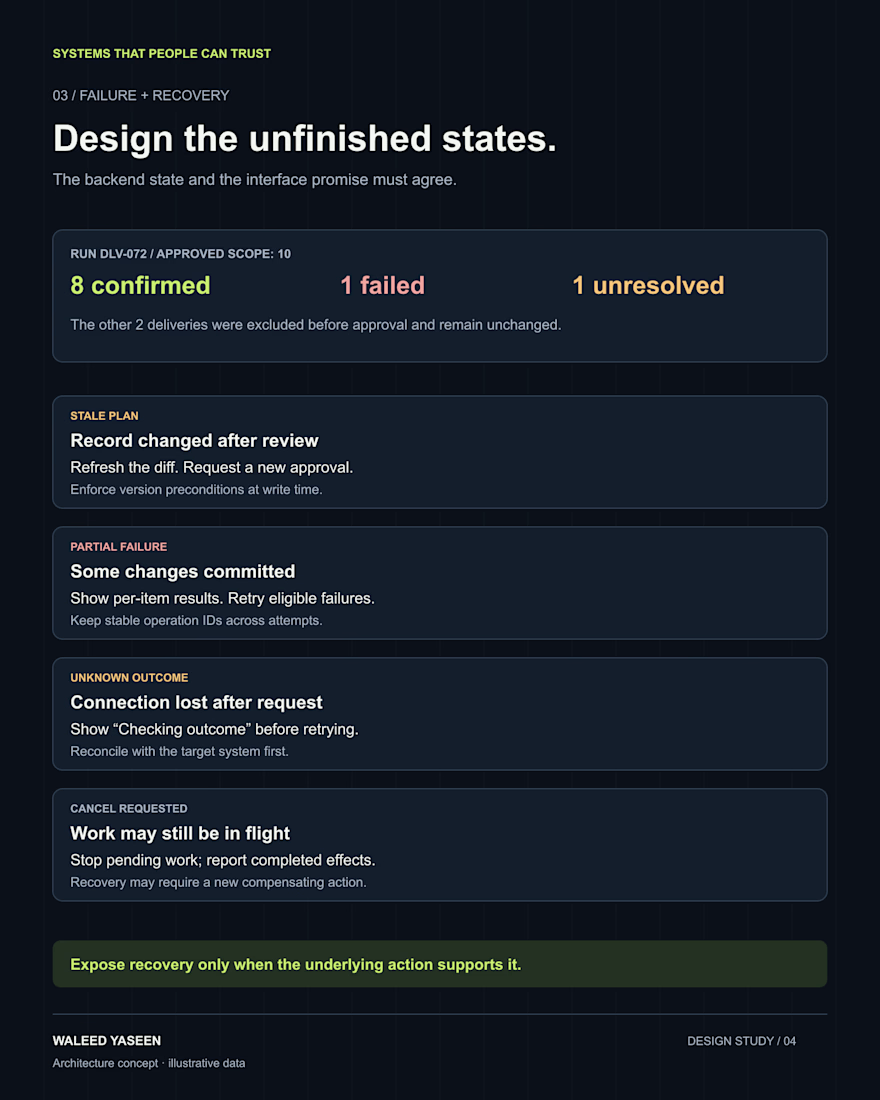
The interface reads persisted execution state and verified results. Eight confirmed updates, one failure, and one unresolved outcome should remain three distinct states. An ambiguous timeout needs reconciliation before a retry.
Design recovery as carefully as completion.
Keep stable operation IDs across retries. Use idempotent or conditional writes where the receiving system supports them. Explain what cancellation can stop and which completed effects require a separate recovery action.
The visual design carries those decisions: readable hierarchy, explicit status labels, focused review, and a clear next action. The architecture makes those interface promises possible.
These are logical responsibilities; they can start inside one modular application. Complexity should earn its place.
This is the intersection I enjoy working in: software architecture, product design, and implementation.
If you’re bringing an AI workflow into a SaaS product, I can help shape the system and the experience together.
#SoftwareArchitecture #ProductDesign #AIProducts
The network for creativity
Join 1.25M professional creatives like you
Connect with clients, get discovered, and run your business 100% commission-free
Creatives on Contra have earned over $150M and we are just getting started








Related posts

Every AI product apologizes for the wait. I designed the wait instead.
Latency: identity, interactive site and campaign built on Ma, the space that gives a thing its shape. The headline breathes in weight until the answer lands.
Design the pause.


Man, you’re superhuman; your consistency and quality are out of this world... congratulations on your work.

AI can build the UI in minutes.
Bringing it up to a good standard, still needs a designer. Agree or disagree?

I see some of your work and honestly your work is really premium 🎉🎉
Great job Alex🎉🎉🔥🔥


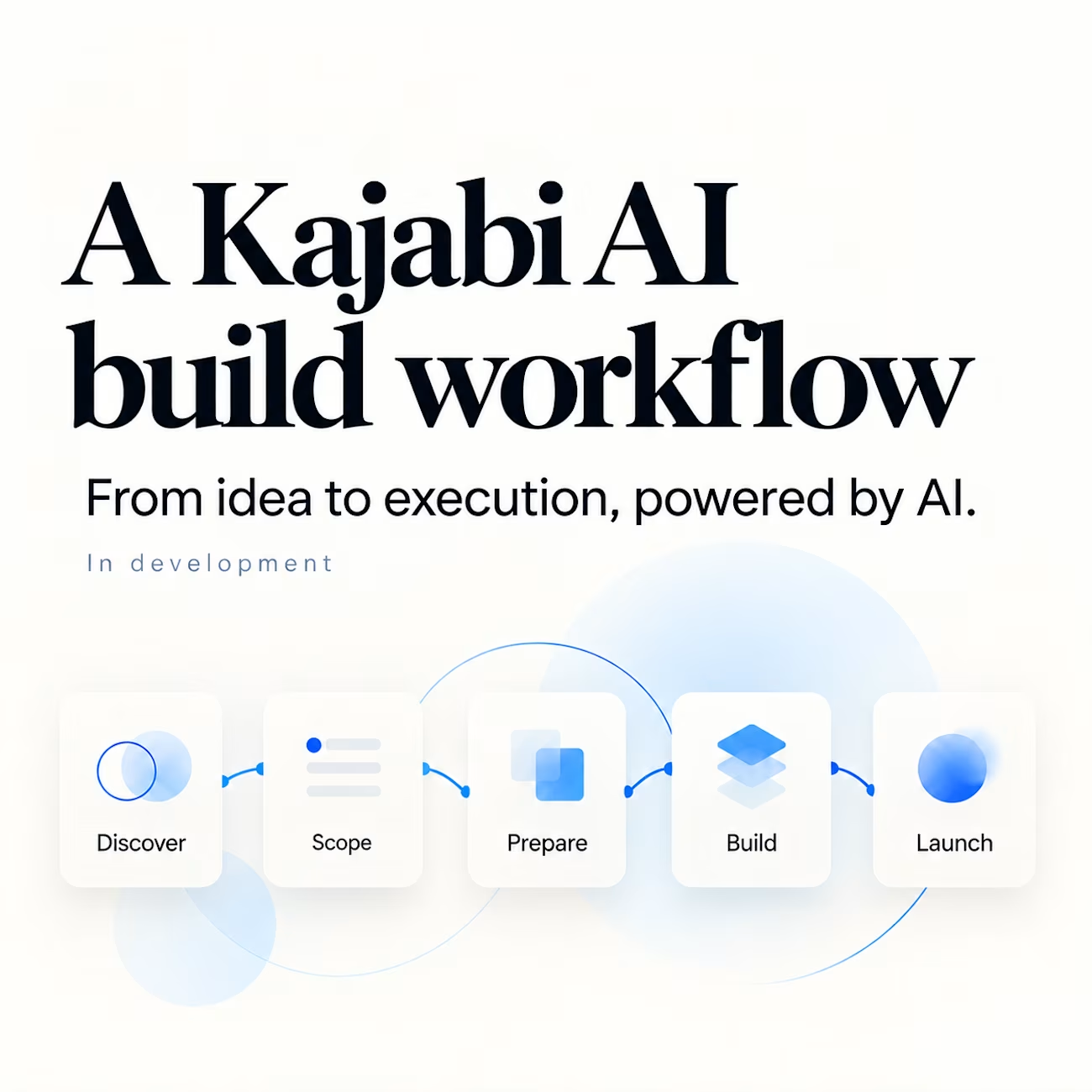
I’ve built an entire Kajabi business system, website and all, with AI in hours.
Now I’m turning that process into a workflow other people can use.
It brings together the steps, instructions, and checks that guide AI from your initial idea through the build and launch. You use your own AI tools, with a clear process to follow.
This is for anyone starting a business on Kajabi, improving an existing one, or building for clients.
I’ve already done the build. What I’m developing now is the way to put that process in your hands. I’ll be sharing more soon. Who wants first dibs on access?


Building a whole Kajabi system with AI in hours is impressive. Looking forward to seeing the workflow.