The network for creativity
Join 1.25M professional creatives like you
Connect with clients, get discovered, and run your business 100% commission-free
Creatives on Contra have earned over $150M and we are just getting started
Back to feedPost

Sample Revenue Cycle Training & Education Project
This sample project demonstrates my approach to developing practical, customized revenue-cycle education for healthcare teams based on identified operational needs, workflow challenges, and performance gaps.
The Revenue Cycle Training & Education project is designed to strengthen team understanding of the processes behind claims, denials, reimbursement, and revenue-cycle performance—helping staff understand not only what actions to take, but why those actions matter.
The training-development approach includes identifying learning needs, defining clear objectives, developing role-relevant educational content, incorporating practical examples and workflow guidance, and creating resources that support continued application after training.
Potential deliverables may include customized presentations, facilitator or learner materials, workflow guides, job aids, reference resources, knowledge checks, and recommendations for reinforcing training within day-to-day operations.
This project represents the type of focused, practical education I develop for healthcare organizations through Claim Clarity Consulting to help teams build stronger knowledge, apply skills more consistently, and take confident action within the revenue cycle.
Focus Areas: Revenue Cycle Education • Denial Management • Claims Training • Workflow Education • Staff Development • Process Reinforcement



The network for creativity
Join 1.25M professional creatives like you
Connect with clients, get discovered, and run your business 100% commission-free
Creatives on Contra have earned over $150M and we are just getting started
Related posts

Business owners, be honest: which money task do you dread most? 👀

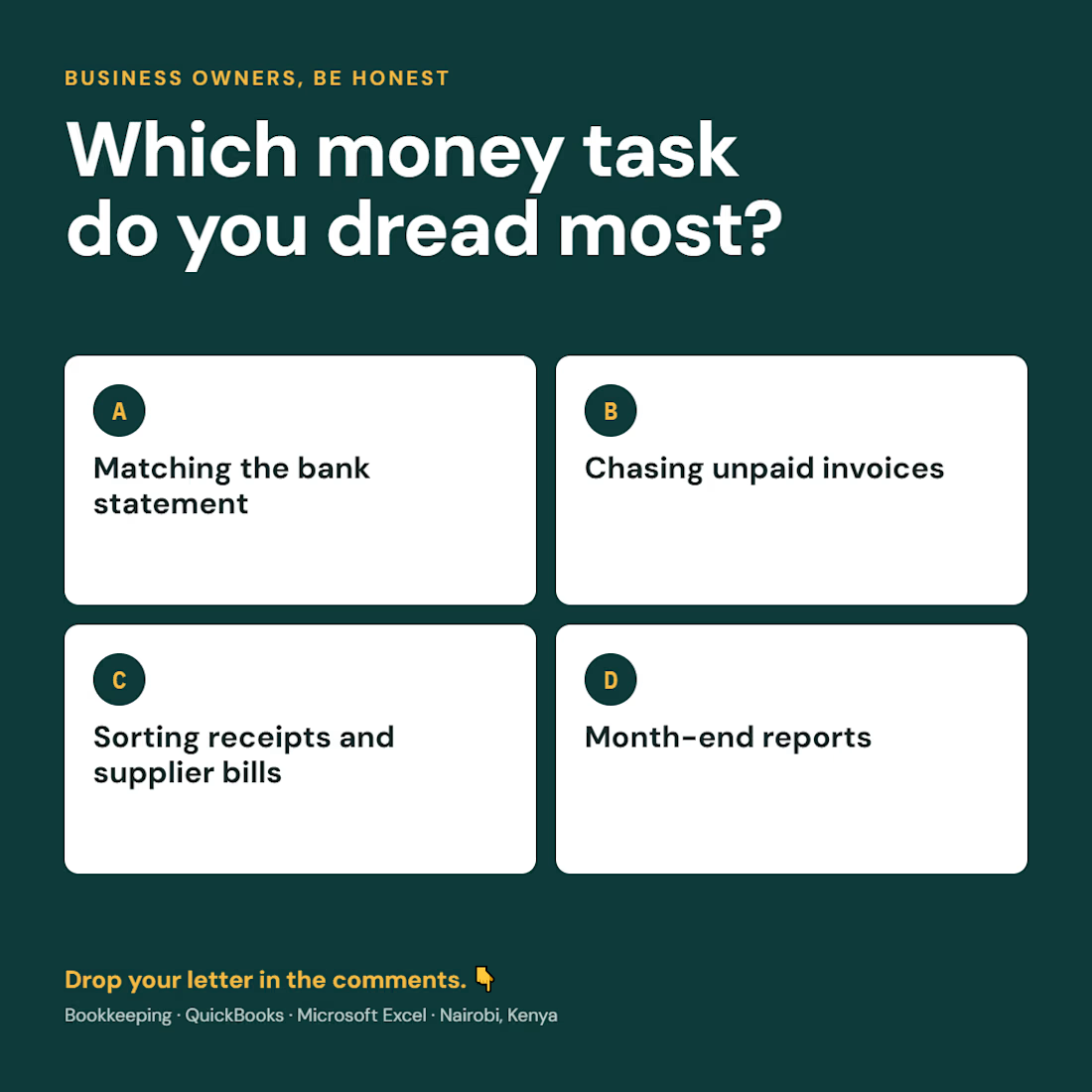

Chasing unpaid invoices 😟
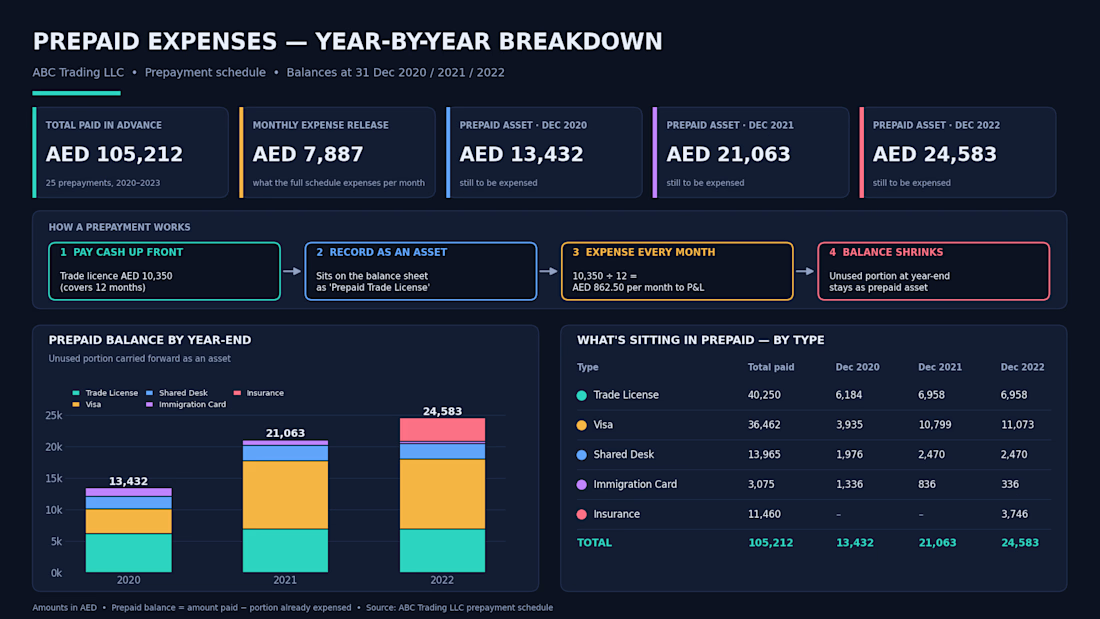
A client asked me last week: “Why is there still a balance sitting in prepaid? I already paid all of it.”
Fair question. Honestly, it’s one of the most common things business owners get confused about.
Here’s how I explained it. When you pay your trade licence for the year, that money has left your bank. But you haven’t used the whole year yet. So the unused part isn’t an expense yet. It’s something you’ve paid for and still own, like a credit waiting to be used.
Say you pay 10,350 for a 12 month licence. Each month, 862.50 moves into expenses. Whatever hasn’t been used by 31 December stays on the balance sheet as prepaid.
The client still wasn’t fully getting it from the schedule alone, so I broke it down year by year. 2020, 2021, 2022. Same prepayments, just showing how much was used and how much was still left at each year end.
That’s when it clicked for them.
The visa, shared desk, insurance and licence costs all work the same way. Pay now, use over time, expense a little each month.
If your accountant keeps saying “prepaid” and you nod along, ask them to show you a schedule like this. It’s your money, you should be able to see where it is.
This is part of my contra series, where I explain accounting without the jargon.
#accounting #prepaidexpenses #smallbusiness #UAE


Great explanation! Breaking prepayments down year by year makes it much easier for business owners to understand how their money is accounted for and why balances remain on the balance sheet.

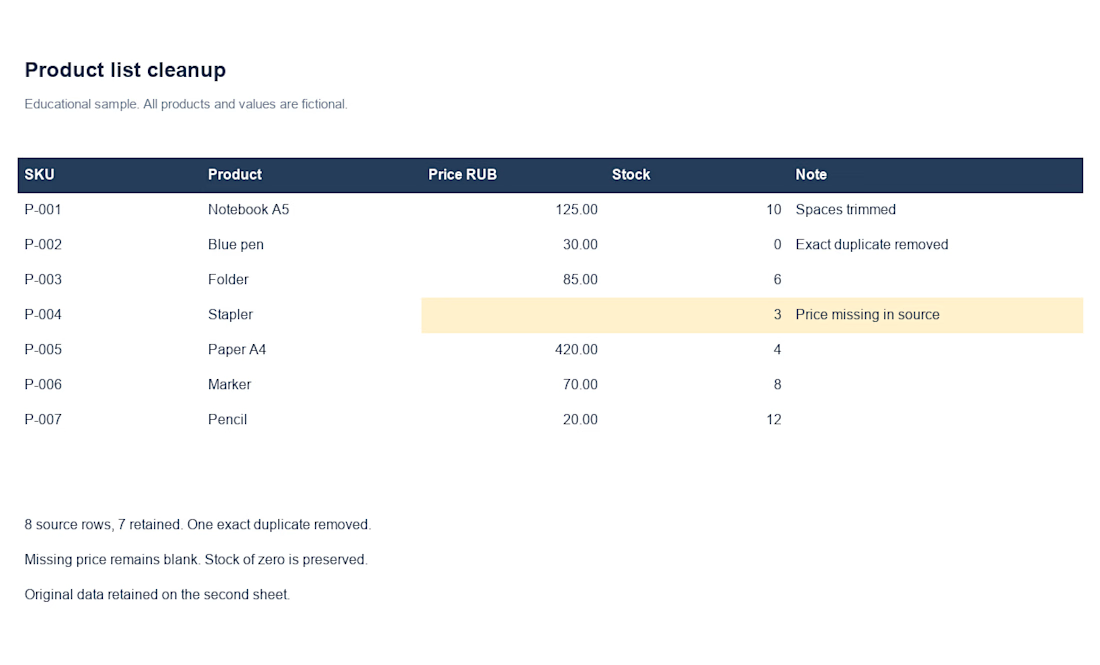
A personal Excel/CSV data-cleaning demo: 8 fictional input rows become 7 after removing one exact duplicate. Zero stock is preserved; a missing price stays blank and is flagged. The original data is retained for comparison. This is a self-initiated example, not client work.
I can help with Excel/CSV cleaning, reconciliation and clear reports. We agree scope, price and delivery after reviewing a sample. First project: 50% off the agreed regular quote, with no future-order commitment.
Great approach to data cleaning! Preserving the original data while flagging missing values and removing only exact duplicates helps maintain accuracy and transparency. These small checks can make a big difference in reliable reporting.