The network for creativity
Join 1.25M professional creatives like you
Connect with clients, get discovered, and run your business 100% commission-free
Creatives on Contra have earned over $150M and we are just getting started
Back to feedPost


The network for creativity
Join 1.25M professional creatives like you
Connect with clients, get discovered, and run your business 100% commission-free
Creatives on Contra have earned over $150M and we are just getting started
Related posts

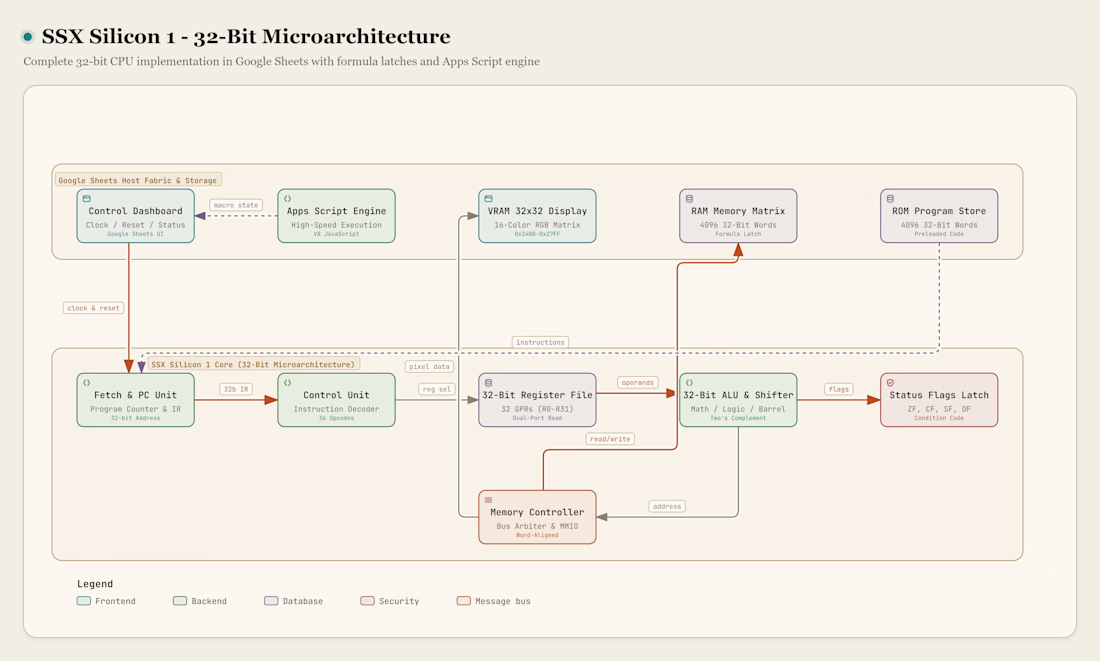
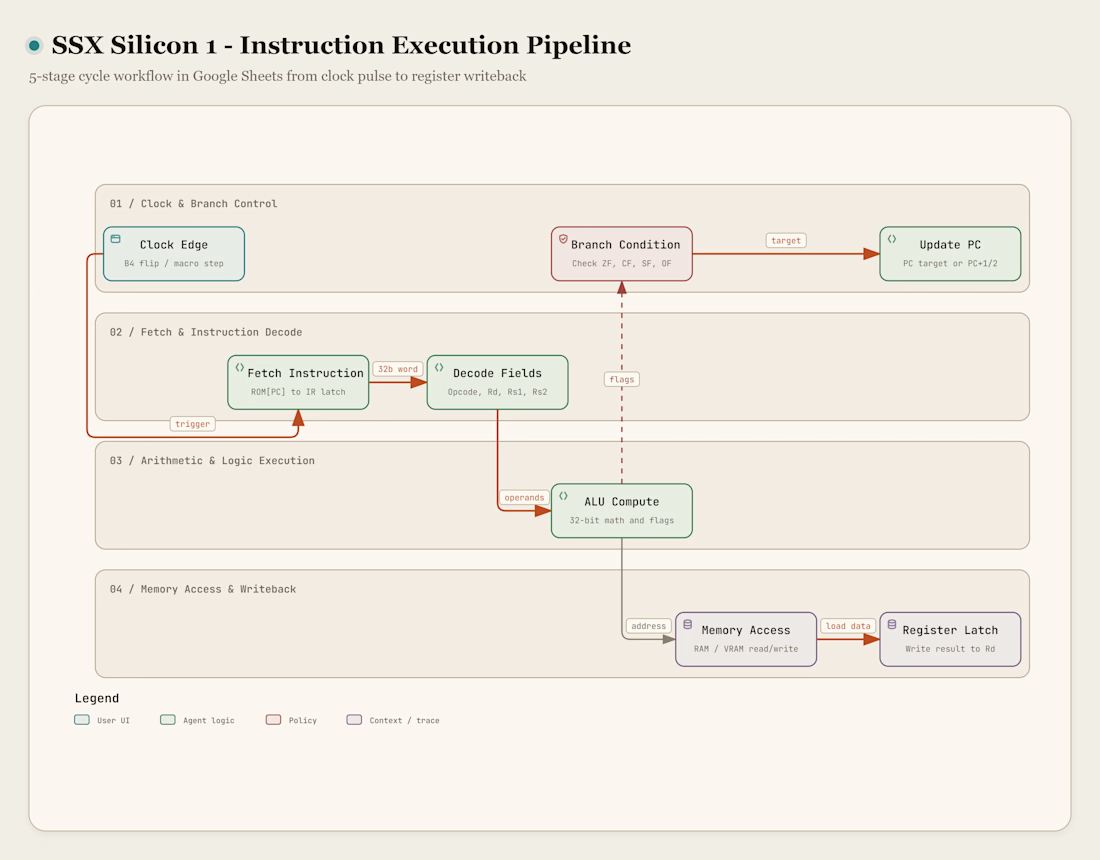
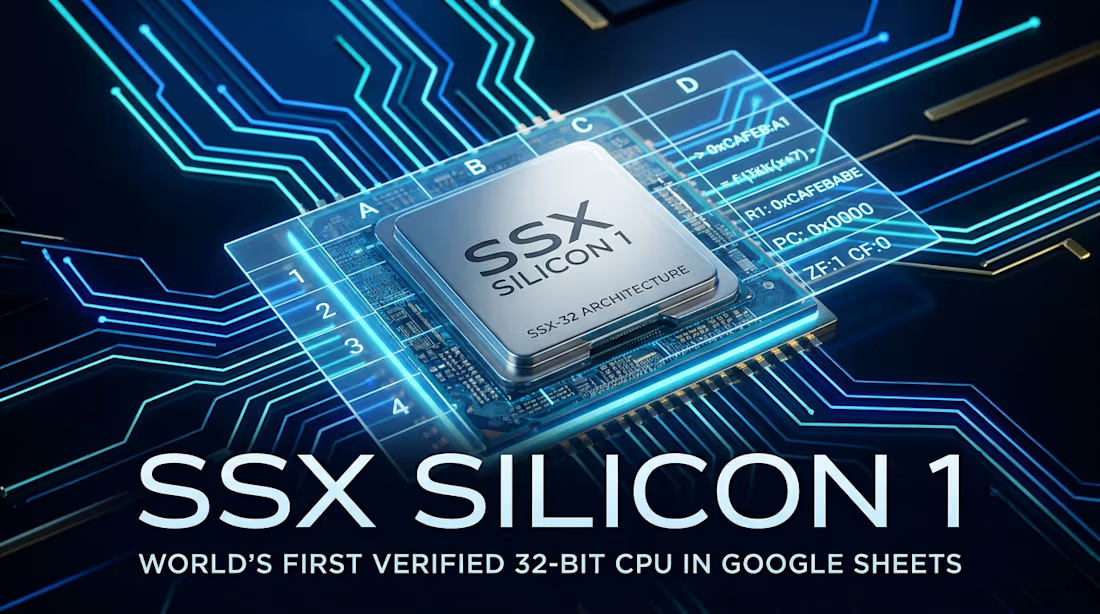
Most people open Google Sheets to handle monthly budgets, invoices, or attendance logs. I wanted to see if spreadsheet cells could work as an actual computer chip. That led to SSX Silicon 1, a working 32-bit computer processor built inside a single Google Sheets workbook. It runs with 32 registers, a 16-kilobyte memory space, 36 instructions, and a 32 by 32 pixel color display. The sheet does not use pre-recorded animations, placeholder numbers, or external file links. Every calculation runs through a five-stage pipeline: fetch, decode, execute, memory access, and writeback.
You can run the processor in two ways. With Google Sheets iterative calculation turned on, toggling a manual clock cell advances the machine cycle by cycle using native circular formulas. For continuous execution, an embedded Google Apps Script V8 engine powers interactive buttons and a custom top menu, running programs at hundreds of instructions per second. The 32-bit arithmetic logic unit handles numbers up to 4.29 billion across 36 instructions, covering arithmetic, division, bit shifting, logic gates, and subroutine branching. It also tracks four hardware status flags on every cycle: Zero, Carry, Sign, and Overflow.
The memory layout organizes a self-contained 16-kilobyte address space across dedicated sheets. This includes 4,096 words of program ROM, 4,096 words of read-and-write data RAM, system I/O registers, and a stack region starting at address 0x3FFF. Thirty-two registers handle active computation: R0 stays fixed at zero, R1 through R27 store math and variables, and R28 through R31 serve as pointers for the frame, stack, return address, and program counter. A dedicated video RAM block at 0x2400 maps directly to a 32 by 32 grid of 1,024 cells, using conditional formatting and a 16-color RGB palette to draw borders, crosshairs, and pixel graphics. I also wrote a Python two-pass assembler that turns human-readable .ssx assembly code into spreadsheet-ready CSV tables, along with interactive HTML architecture diagrams built with Archify.
To make sure the CPU calculates accurately, I tested every instruction against a Python reference emulator across five benchmark programs. The hardware self-test verifies all 32 arithmetic operations, memory reads, and stack frames in 77 cycles, leaving the golden signature 0xCAFEBABE in register R1. A 32-bit Fibonacci program generates 47 terms in RAM up to 1,836,311,903 without rounding or overflow. A prime number sieve finds all 25 primes under 100 using memory arrays, an integer matrix program calculates a 3x3 matrix product, and a graphics routine draws a multicolored geometric crest across 232 lit pixels. The project includes five PDF documents: an academic research paper, an instruction set manual, a microarchitecture specification, a verification report, and a beginner guide. Everything runs in a standard web browser.
For anyone who wants to open the processor in Google Sheets, check out the Python compiler, or read the manuals (including the step-by-step Beginner Guidebook and Research Paper), the full open-source release is available on my GitHub!
Inside the repo, you will find:
The ready-to-import Google Sheets CPU workbook (.xlsx)
The Python assembler & bit-exact reference emulator
Interactive HTML architecture & pipeline diagrams
All 5 PDF manuals and the 5 sample assembly programs




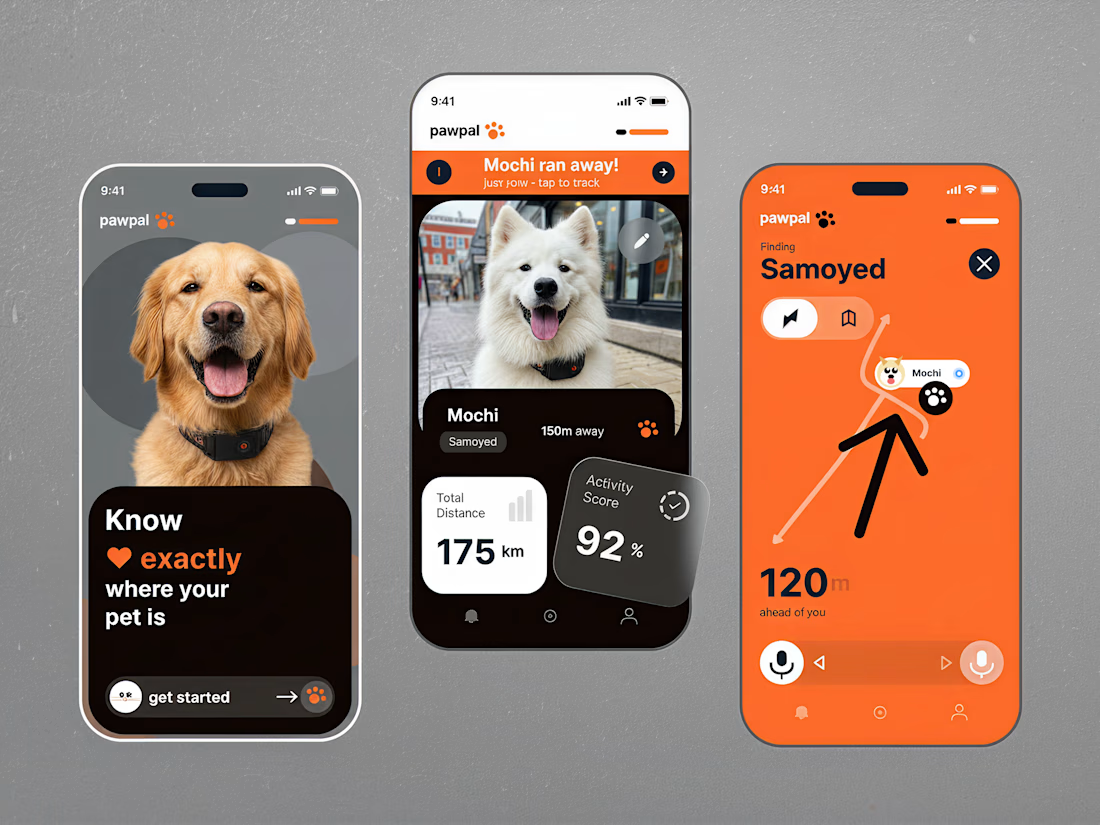
Pawpal - Pet GPS Tracker Mobile App UI Design 🐾
🐾 Pawpal - Keeping Your Best Friend Close
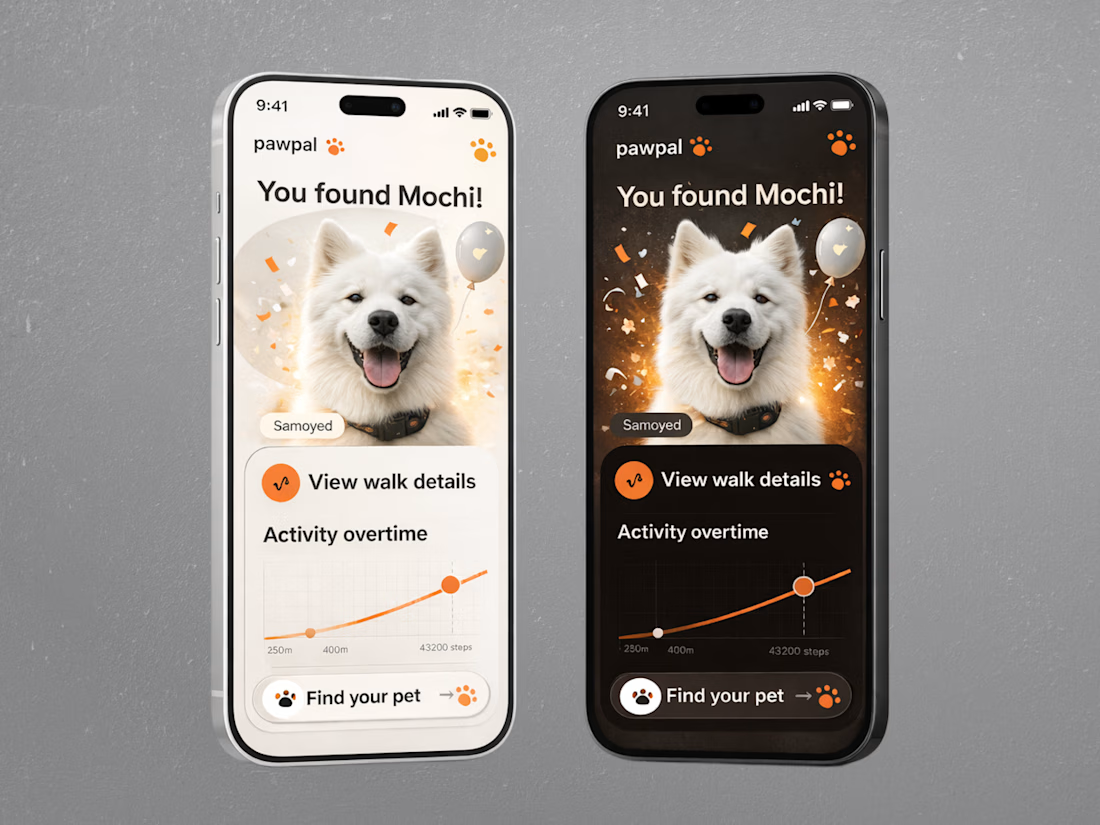
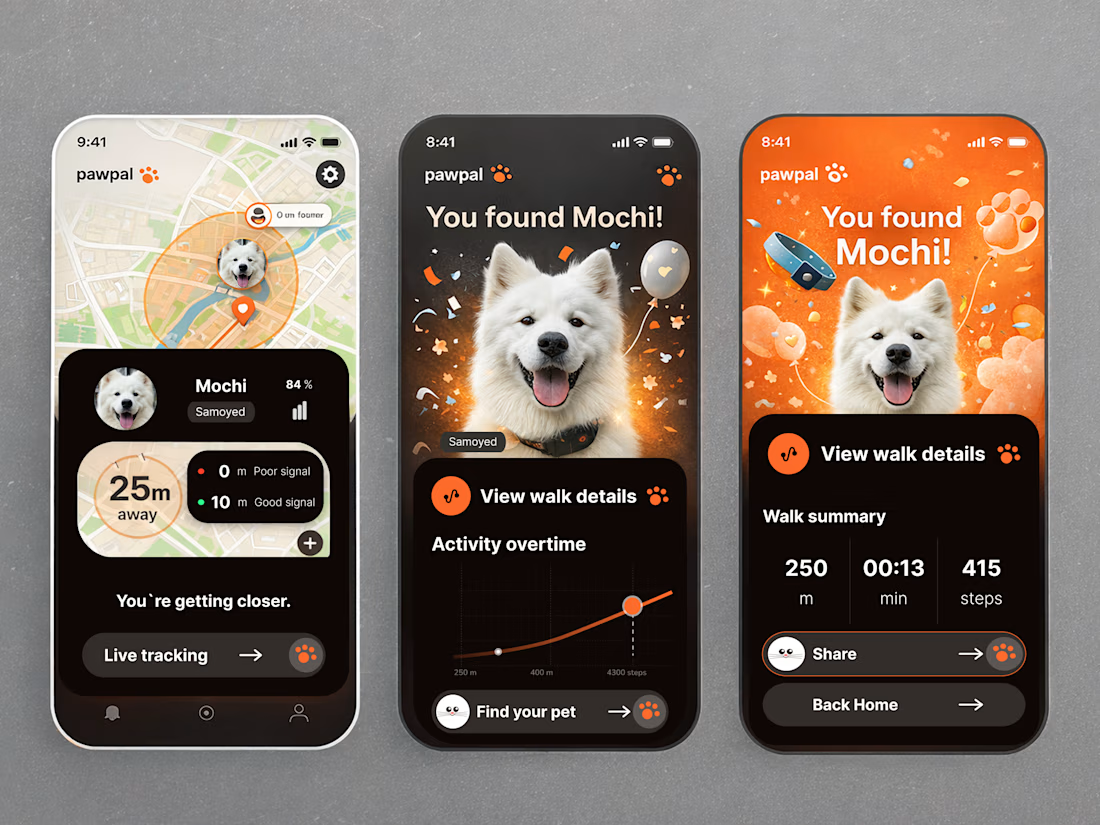
A playful yet practical mobile app concept designed to make pet tracking feel simple, reassuring, and engaging. Pawpal brings together real-time location tracking, activity insights, and a friendly visual experience built around the bond between pets and their owners.
Special attention was given to:
• Bold orange accents, rounded UI elements, and a warm, pet-friendly visual identity
• Intuitive GPS tracking screens with maps, distance indicators, and clear location updates
• Personalized pet profiles featuring large photography and essential activity information
• Light and dark interface variations with consistent visual hierarchy
• Engaging success screens, activity charts, and walk summaries that make everyday pet care more enjoyable
The result is a friendly, modern mobile experience that balances useful tracking features with a little personality. Every screen is designed to make important information easy to find while keeping pets at the heart of the experience.
Have an idea for a pet care or lifestyle app? Let's bring it to life together! 🧡




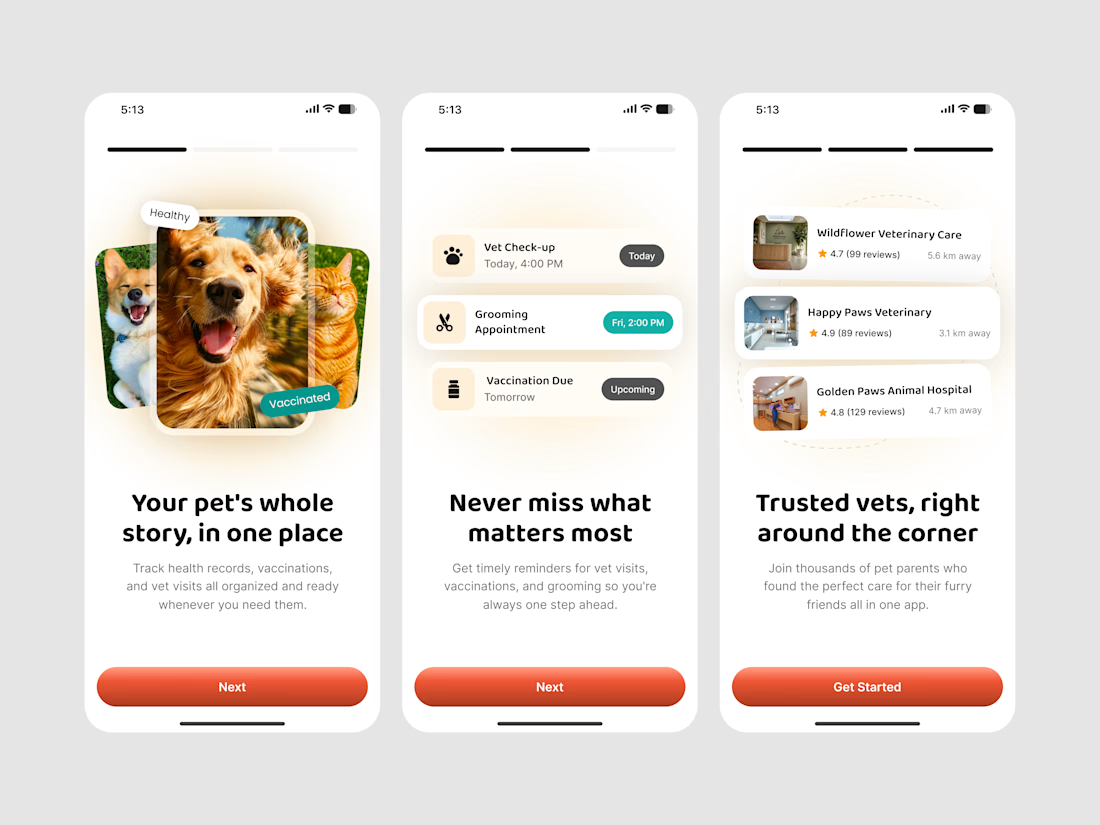
PawCare — Pet Health & Appointment Tracking UI/UX Design
A pet care mobile app designed to help pet parents manage health records, track appointments, and find nearby veterinarians. Featuring a clean, intuitive 3-screen onboarding UI/UX, the app makes pet care simple and helps users stay ahead of their pet's health needs.