The network for creativity
Join 1.25M professional creatives like you
Connect with clients, get discovered, and run your business 100% commission-free
Creatives on Contra have earned over $150M and we are just getting started
Back to feedPost

🚀 Built the MVP. Earned Phase 2.
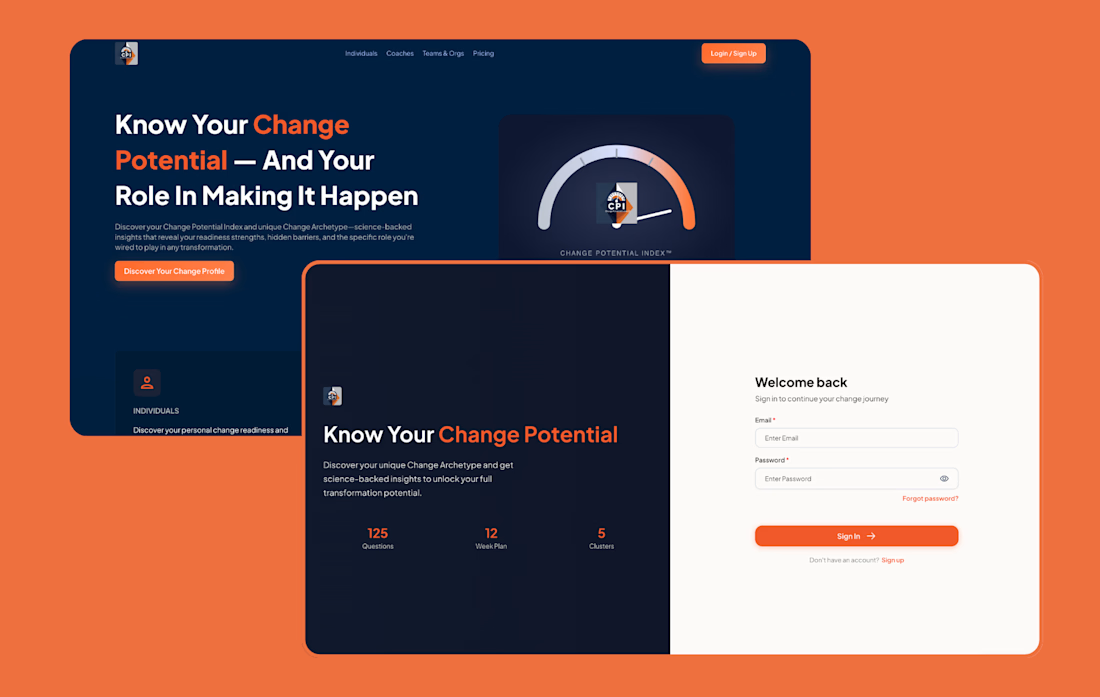
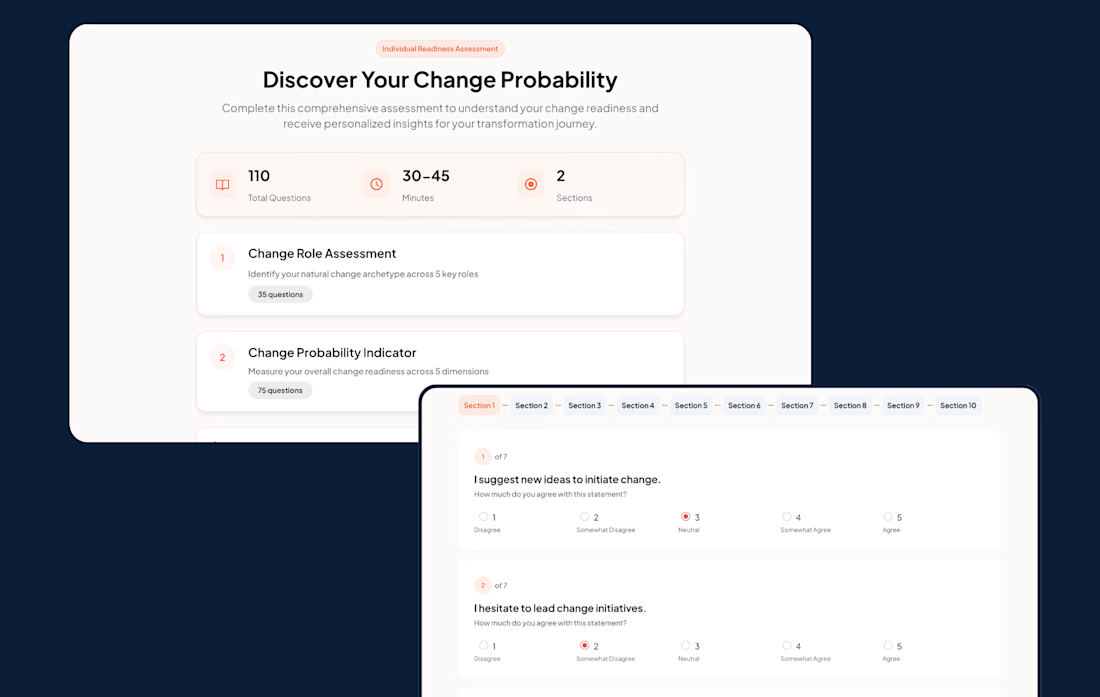
CPI is a change readiness platform built for Tanya de Villiers, UAE, helping users assess where they stand, unlock AI powered insights, and follow a guided path to improve.
What made this project special?
Most software helps people do more.
Very few products are built to help people change better.
We built:
✅ 125 question assessment engine
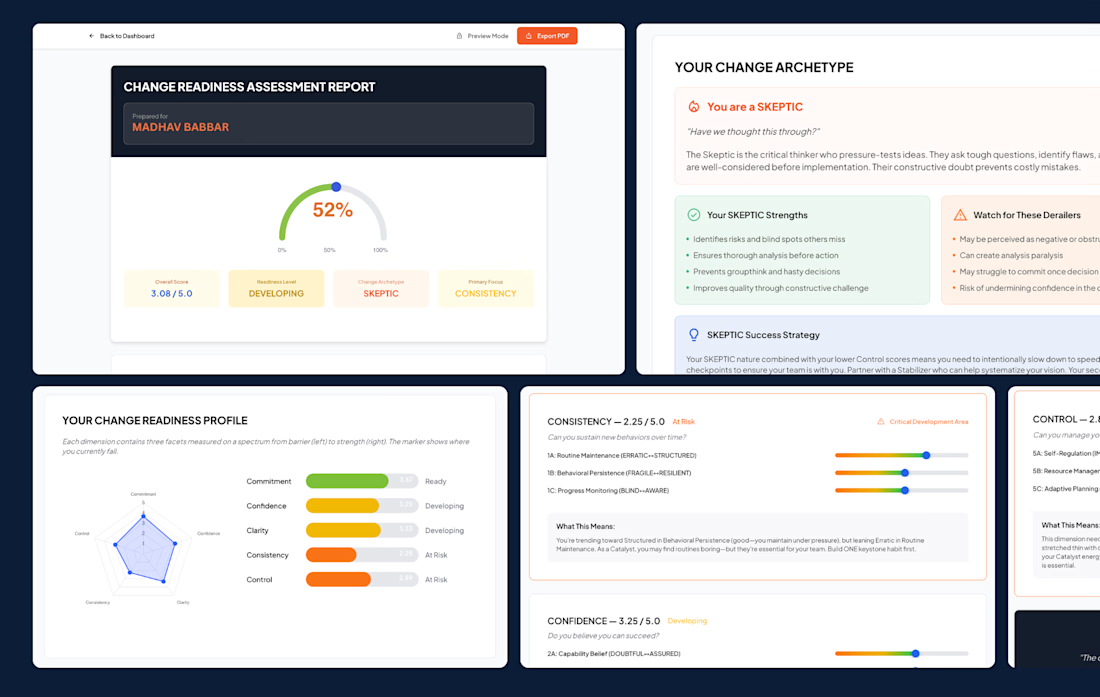
✅ AI generated mini + full reports
✅ Stripe powered premium unlock
✅ 12 week guided action plan
✅ Admin panel for assessments, reports, users, and payments
The real challenge was building it in a way that future phases could be added without rebuilding the product.
So we focused on scalable architecture, flexible flows, and future ready product logic.
We delivered Phase 1 successfully.
And the best part?
The client loved it so much, she trusted us to build Phase 2 as well. 🚀
Built on Bubble with OpenAI + Stripe by Zappify.

The network for creativity
Join 1.25M professional creatives like you
Connect with clients, get discovered, and run your business 100% commission-free
Creatives on Contra have earned over $150M and we are just getting started





Related posts

👋 I'm new to Contra and I did my first post without realizing I hadn't even introduced myself!
Hey I'm Katya, I'm an AI Systems Architect, marketer and yoga teacher.
I build AI systems that bring in business and handle the work behind it. A voice agent that calls new leads back within seconds and books the appointment. A pipeline that traced 16,900+ leads to the ads that brought them. Listing videos made from the photos a real estate agent already has.
The marketing side came first. I built the multi-channel campaign for Jay Shetty's launch (22 million followers). After that I discovered the tech world and when AI came along, I realized I'm a builder at heart and never looked back! Building is so much fun 🤍
Here's what I've shared:
My first post: on building a fully AI-made YouTube video, end to end, because I'm camera shy 🙈 https://contra.com/community/MP9mFRuT-im-building-my-first-fully-ai-made
Last thing, if you're building with AI video or automation, I'd like to see what you're working on
And if you're hiring: I may be new to Contra but definitely not new to this work. Reach out for AI agent builds, apps, websites or anything in between.
P.s The video below is my AI avatar. My profile video is the real me :)


Nice Portrait....Has everything from a great pose, great composition and lighting and perfect environment setting.

Same prompt. Same concept. Two AI tools. 👀
I gave ChatGPT and Gemini the exact same prompt to create a luxury perfume ad creative.
No changes. No extra instructions.
Now I want to know what YOU think:
Which creative did it better?
🔵 A— Gemini
🟣 B— ChatGPT
Look at the overall concept, visual quality, composition, typography, and how “ad-ready” it feels.
Who wins this round? 👀
Vote below and tell me what made you choose your answer.
#AIContent #AIAdvertising #AdCreative #CreativeStrategy #ChatGPT #Gemini #SocialMediaManager #SocialMediaStrategy #SocialMediaMarketing #MarketingStrategy #DigitalMarketing #ContentCreation

11 voted
39%

17 voted
61%

28 votes
Closed

I will go with Chatgpt on this.
It looks more luxurious and eye catching 🔥


An AI-built app can work perfectly while any stranger can read its customers' data. Nothing on screen shows it.
Ask whoever built it: which tables hold user data, and what stops a logged-out stranger from reading each one? A good answer is a list. "It should be fine" means nobody has checked.

Andrés, this is the check most founders never run, because nothing breaks until someone looks. Asking for the list of tables and who can read each one is a test any owner can do without writing code. Row level access belongs on the launch checklist, not the cleanup list.