The network for creativity
Join 1.25M professional creatives like you
Connect with clients, get discovered, and run your business 100% commission-free
Creatives on Contra have earned over $150M and we are just getting started
Back to feedPost

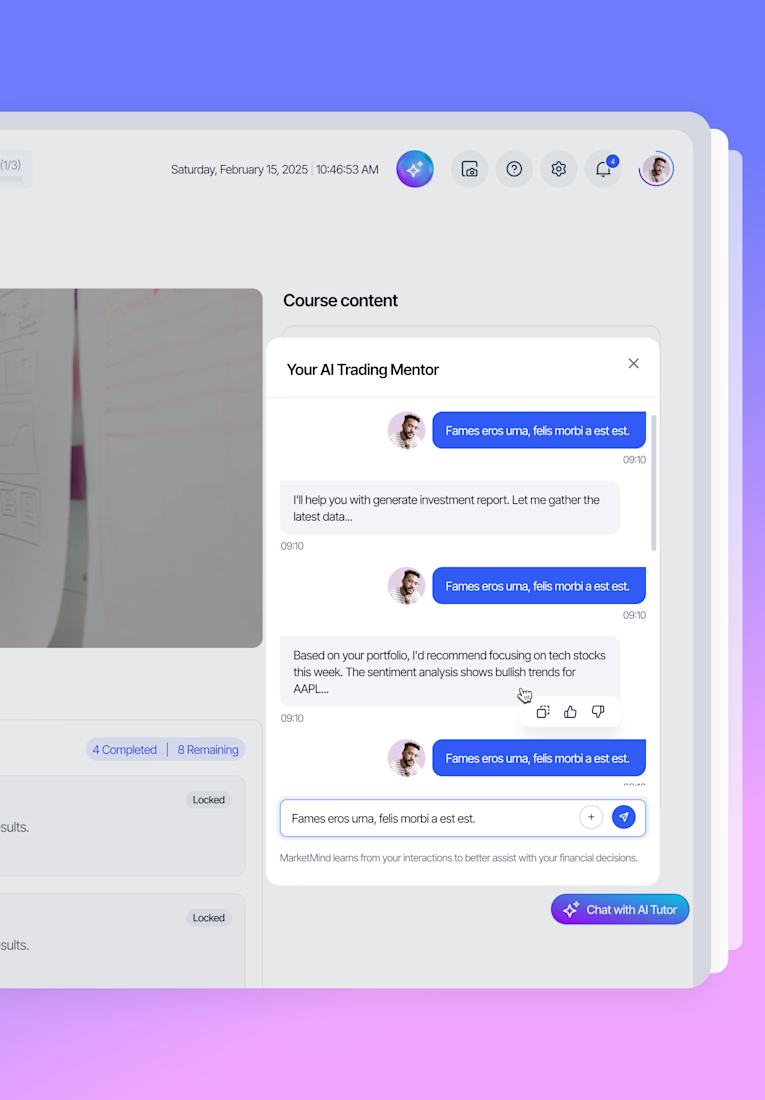
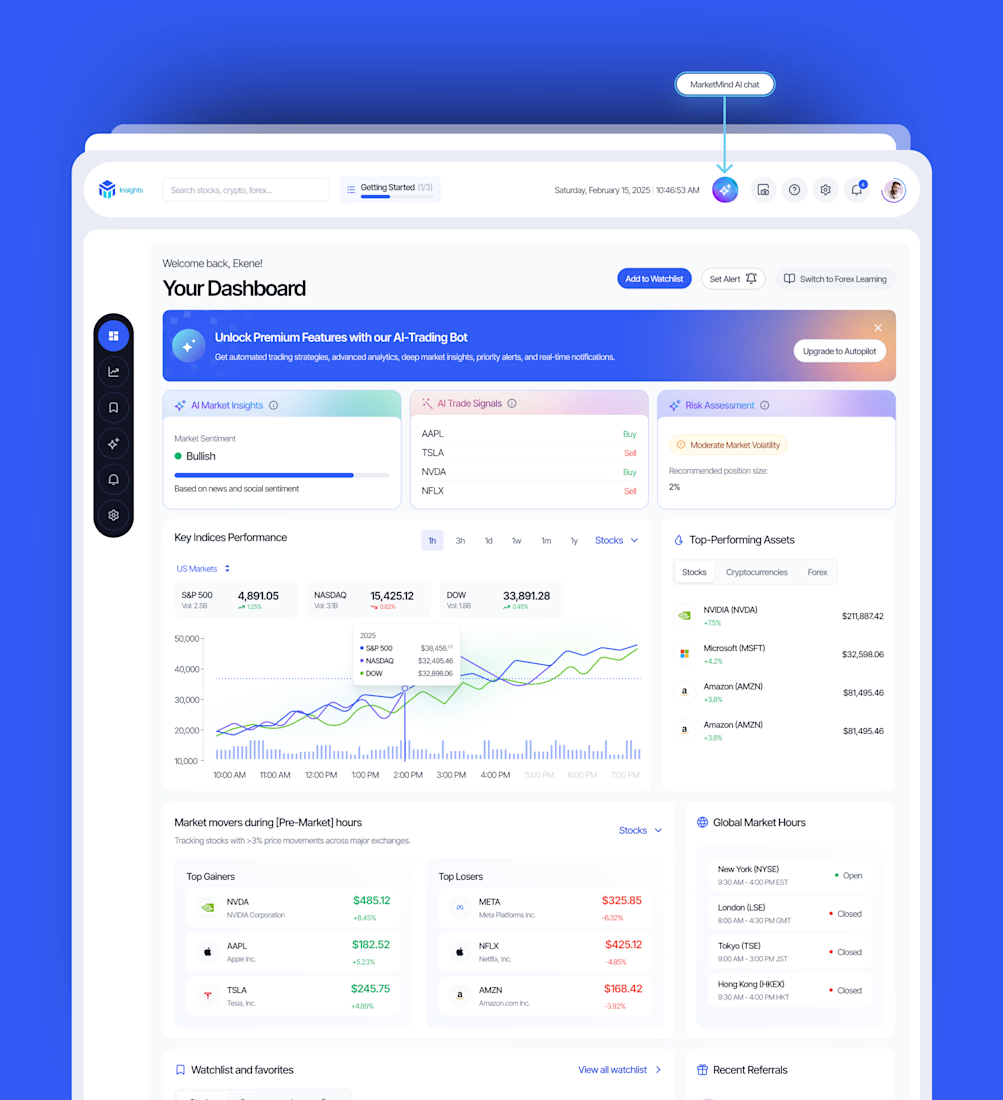
When designing the AI chat entry point for MarketMind, the question wasn't just "how do we add AI?"
It was: "how do we make learning feel natural when someone's mid-task?"
The user is either checking insights or going through educational content. They're already focused. Adding a chat feature could either support that focus or break it.
I positioned the chat as a companion, not an interruption.
"How can I help?" isn't aggressive. It's patient.
The quick prompts (Trading Education, Investments) give structure without forcing a flow.
The gradient background does visual work too — it separates the chat layer from the task layer. You know you've shifted modes, but it doesn't feel like leaving the app.
Good AI features don't announce themselves. They stay quiet until you need them.
The network for creativity
Join 1.25M professional creatives like you
Connect with clients, get discovered, and run your business 100% commission-free
Creatives on Contra have earned over $150M and we are just getting started







Related posts

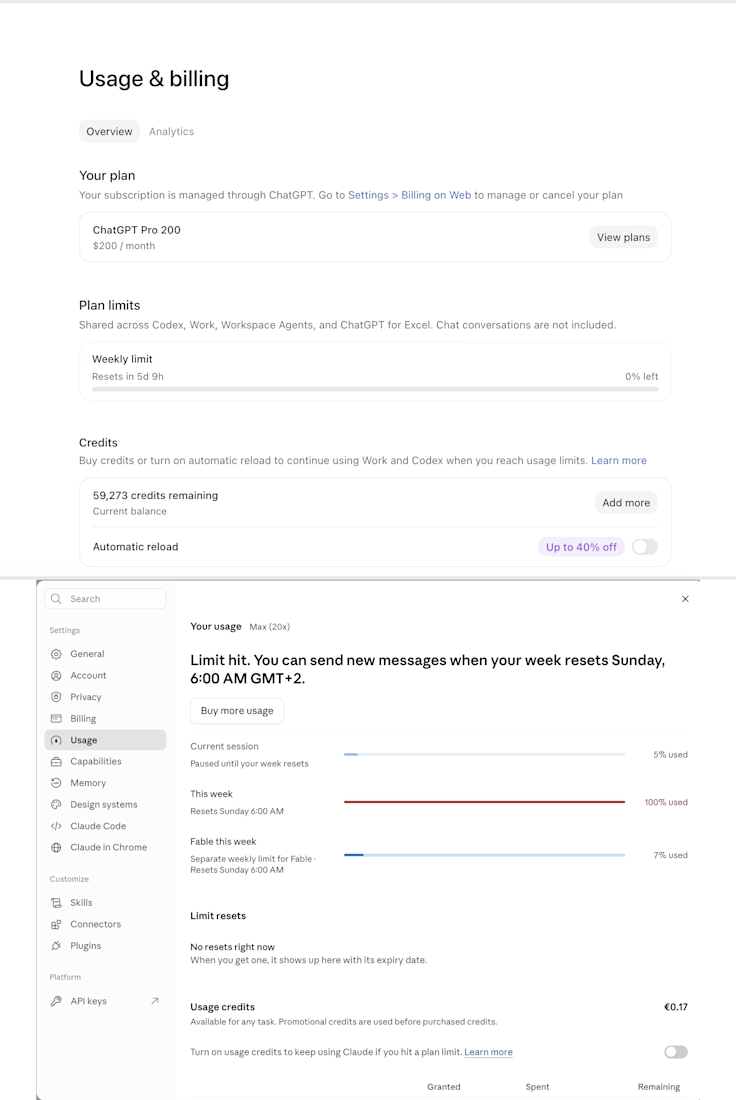
ChatGPT Pro: 0% left. Claude Max: 100% used.
Two $200 plans, and somehow I still need more AI. 😅
At this point, am I a developer or just an AI subscription collector? 💀

I Built Quvelis Chatbot 2.0 — An AI Assistant That Runs on Your Own Server. 🚀🤖
What if your AI assistant didn't depend on expensive cloud APIs, external AI subscriptions, or sending every conversation to a third-party service?
That's the idea behind QUVELIS — a self-hosted AI assistant designed for developers, students, and businesses.
Today, I'm sharing a look at Quvelis Chatbot 2.0, a project I'm building to make AI assistance more accessible, private, and customizable.
❌ The Problem with Many AI Applications
Businesses and developers often face:
Recurring API costs and unpredictable usage expenses.
Dependence on external AI providers.
Limited control over where their conversations are processed.
Disconnected tools for coding, document analysis, and knowledge management.
Difficulty customizing AI assistants for specific workflows.
Limited control over AI infrastructure and data.
My goal was to approach these problems differently.
⚡ Introducing Quvelis Chatbot 2.0
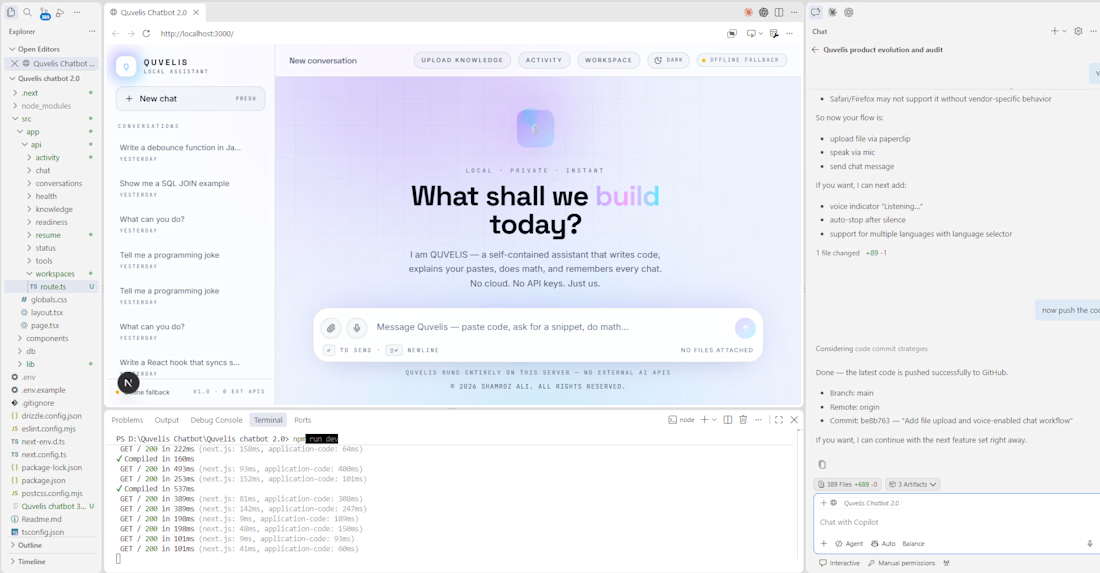
A modern, self-hosted AI assistant built with Next.js, featuring a ChatGPT-inspired interface and local-first architecture.
Here's what I've been building:
🧠 1. Local-First AI Assistance
Designed to operate on your own infrastructure without requiring external AI API keys.
💻 2. AI Coding Assistant
Ask programming questions, generate code snippets, understand technical concepts, and get help with development tasks.
📚 3. Knowledge Uploads
A dedicated knowledge interface for working with information and documents.
💬 4. Conversation History
Create new chats, revisit previous conversations, and organize your interactions.
🎙️ 5. Voice-Enabled Chat
Microphone input support for a more flexible way to interact with the assistant.
📎 6. File Attachments
An attachment interface for including files in your chat workflow.
🗂️ 7. Workspaces
Dedicated workspace functionality to support organized AI-assisted work.
🌙 8. Modern AI Chat Interface
A clean, responsive interface with dark-mode controls, activity access, and an integrated developer-friendly experience.
🔌 9. Local API Architecture
Built around a self-hosted approach, giving developers more control over how the application is deployed and extended.
🛠️ Built with Modern Web Technologies
The development stack includes:
Next.js and React
TypeScript
Tailwind CSS
Local API routes
Self-hosted application architecture
Git and GitHub for version control
💡 Why Am I Building Quvelis?
Because I believe AI tools should be more customizable and accessible.
Not every developer wants to depend on multiple external services.
Not every business wants to send sensitive information to third-party AI platforms.
And not every useful AI application needs to start with an expensive subscription.
Quvelis is my attempt to explore a different approach.
🚀 What's Next?
I'm continuing to develop Quvelis with a focus on stronger knowledge workflows, improved AI capabilities, reliable file handling, better voice interactions, and a smoother developer experience.
The long-term vision is to create a flexible AI platform that can support developers, businesses, and custom automation use cases.
This isn't just another chatbot interface. It's a foundation for a more customizable AI workspace.
💬 Two Questions for Developers & Business Owners
🔹 If you could run your own AI assistant, what feature would you want first?
🔹 Would you prefer a self-hosted AI assistant or a cloud-based solution for your business?
I'd love to hear your thoughts as I continue building Quvelis.
Building products. Solving problems. Exploring what AI can do.
🔎 SEO Keywords & Hashtags
#Quvelis #QuvelisChatbot #AIChatbot #AIChatbotDevelopment #AIAssistant #LocalAI #SelfHostedAI #PrivateAI #PrivacyFirstAI #OfflineAI #AIApplication #AIWebApp #AIPlatform #AIWorkspace #AIForDevelopers #CodingAssistant #AICoding #VibeCoding #AIEngineering #AIDevelopment #Nextjs #NextjsDevelopment #ReactJS #TypeScript #TailwindCSS #FullStackDevelopment #WebDevelopment #SaaSDevelopment #SaaSPlatform #ChatGPTAlternative #OpenSourceAI #LocalLLM #LLMDevelopment #GenerativeAI #MachineLearning #KnowledgeBase #DocumentAI #VoiceAI #ConversationalAI #AIProductDevelopment #AIStartup #BuildInPublic #IndieHacker #SoftwareEngineering #DeveloperTools #CustomAI #BusinessAI #DigitalTransformation #AutomationEngineer #AIInnovation #Contra



Self-hosting gives you control over where data lives, but uploads, temp files, logs and backups still define the privacy boundary. Are knowledge files kept on the same server as the model?

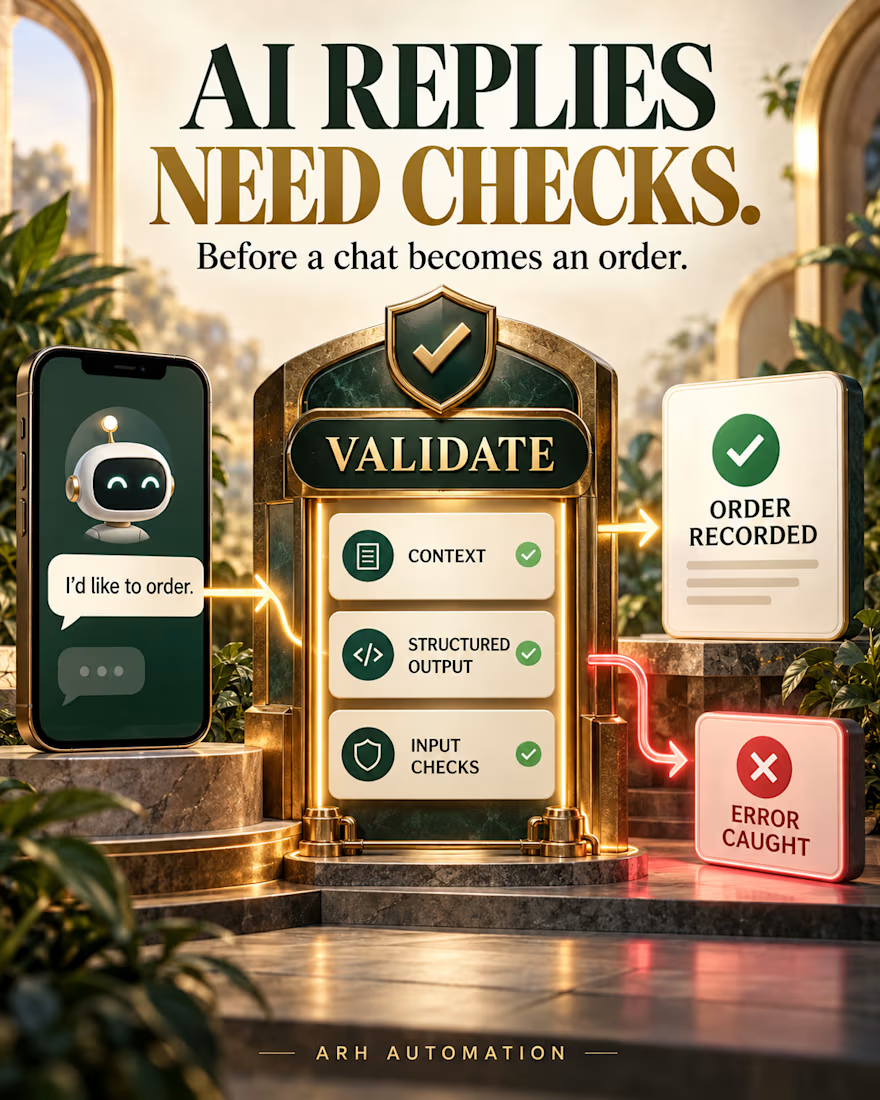
A chatbot can sound helpful and still create a messy order.
When a customer changes a quantity or delivery detail, the real test is whether the system keeps the context, checks the information, and records the right request for the team.
In an 80-hour WhatsApp automation project, I built the conversation flow with structured AI output, input validation, order recording, logging, and error handling. The client rated the completed work 5.0.
That’s the part I care about most: turning a chat into a record people can actually work from, with errors visible when something goes wrong.
If your team takes orders through WhatsApp, what happens between the AI’s reply and the order record?



Order changes mid chat are where most WhatsApp bots fall apart. Did you confirm the changed details back to the customer before recording, or validate silently?