The network for creativity
Join 1.25M professional creatives like you
Connect with clients, get discovered, and run your business 100% commission-free
Creatives on Contra have earned over $150M and we are just getting started
Back to feedPost

I spent the first couple of years treating inventory accuracy like a fire drill. Count everything the week before month-end, patch whatever didn't match, submit the report, forget about it until next month.
It worked, technically. Once. Then the small gaps started piling up faster than I could explain them.
What actually changed things wasn't a new tool or a new SOP. It was realizing IRA isn't something you report on — it's something you either protect every day or you don't. Every goods receipt, every issue, every transfer is a moment where the system and the actual shelf can quietly drift apart. Catch that drift the same day and it's a two-minute fix. Let it sit for three weeks and it turns into a full investigation, and usually nobody remembers what actually happened.
A few things I've genuinely stuck to since then:
Reconcile the same day, not at month-end. I know it sounds obvious written down, but most warehouses don't actually do this — batching corrections is just easier in the moment.
Let SAP flag mismatches early instead of waiting for someone to physically count and notice. The system usually knows before the floor does.
Ask what kind of discrepancy it is before writing it off — receiving error, system delay, handling mistake. They all look the same on a report and none of them are fixed the same way.
Whoever touched the transaction is the one who catches the error. Not an audit team three weeks later going through paperwork.
None of this is glamorous. It's mostly just refusing to let small things wait. But it's the reason we held 100% month-end IRA consistently, and it's also the reason the number actually meant something when auditors came through — not just a figure that looked clean on a slide.
If there's one thing 7 years taught me, it's that inventory accuracy was never really about the count. It was about how disciplined the process stayed on the days nobody was watching.
#InventoryManagement #SupplyChain #FMCG


The network for creativity
Join 1.25M professional creatives like you
Connect with clients, get discovered, and run your business 100% commission-free
Creatives on Contra have earned over $150M and we are just getting started







Related posts

Title: Data Formatting & Cleaning in Excel
Description: I turn messy spreadsheet exports into clean, consistent, analysis-ready data. I remove duplicates and extra spaces, standardize names, dates and currency, and flag missing values for review instead of guessing.
Tags: Data Cleaning, Excel, Data Formatting, Data Entry, Spreadsheets, Virtual Assistant


Thing I learned the hard way building lead lists: a company that used a tool two years ago isn't a company that uses it now. Check the date on the evidence before you count a row. Old signals look exactly like new ones in a spreadsheet.

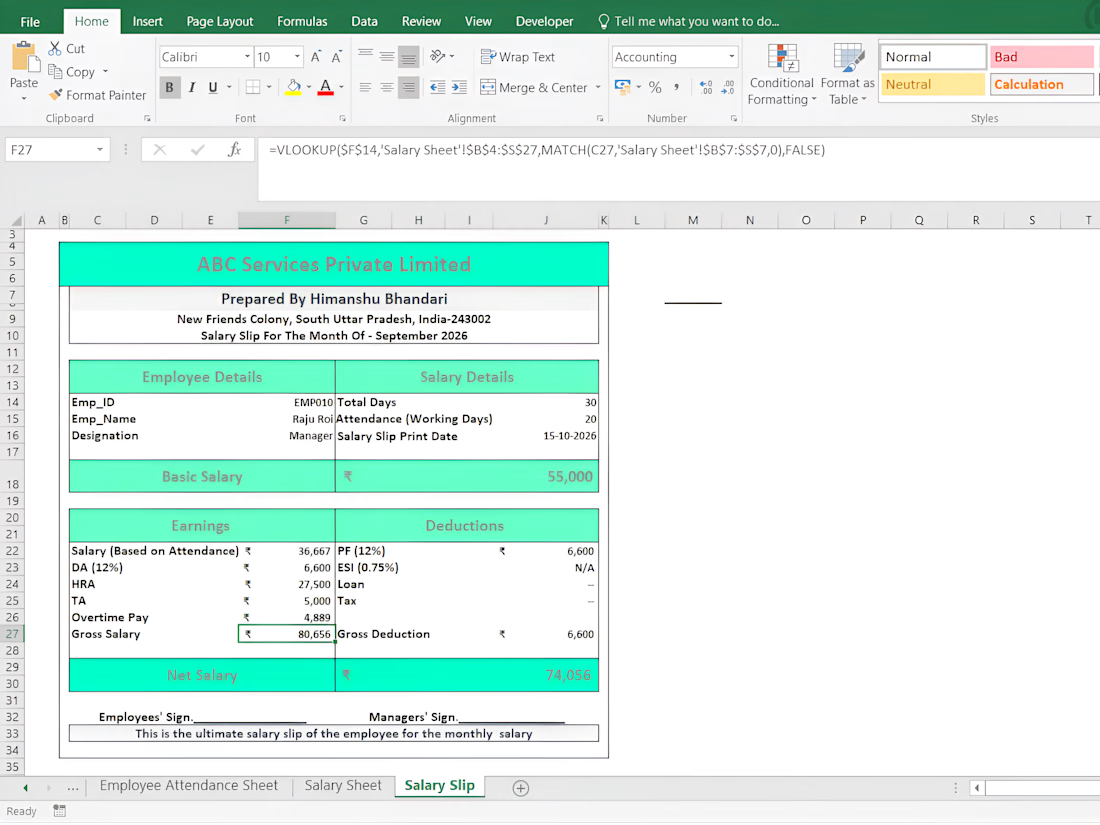
An automated, print-ready Employee Pay Slip Generator built in Excel using dynamic lookup formulas (VLOOKUP + MATCH). It seamlessly pulls live attendance and salary data to auto-populate detailed employee pay stubs—complete with earnings breakdown, statutory deductions (PF & ESI), overtime pay, and net salary summary.
Key Skills: Excel Automation, Dynamic Pay Slip Templates, Payroll Processing, Data Lookup & Linking, Print-Ready Financial Reporting.