The network for creativity
Join 1.25M professional creatives like you
Connect with clients, get discovered, and run your business 100% commission-free
Creatives on Contra have earned over $150M and we are just getting started
Back to feedPost

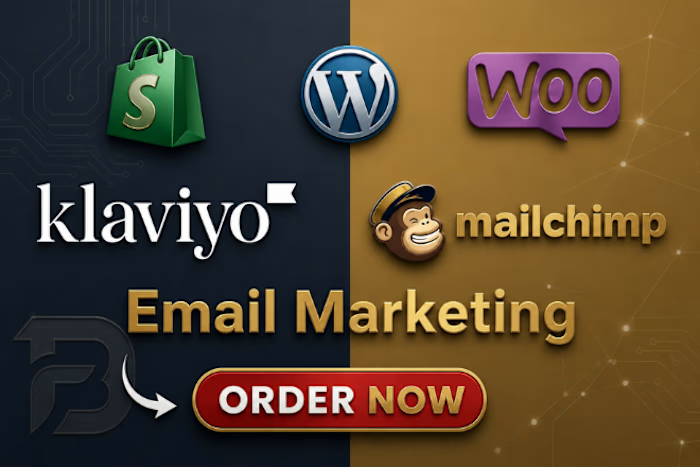
Leaving money on the table? 💸 Automate your E-commerce sales with powerful Email Marketing!
I will seamlessly integrate your #Shopify, #WordPress, or #WooCommerce store with #Klaviyo or #Mailchimp to trigger automated sales flows. 📈
🛒 Abandoned Carts
👋 Welcome Series
💰 Upsells
Let's scale your revenue. DM to Order Now! 🚀
#EmailMarketing #EcommerceTips #Freelance
The network for creativity
Join 1.25M professional creatives like you
Connect with clients, get discovered, and run your business 100% commission-free
Creatives on Contra have earned over $150M and we are just getting started





Related posts

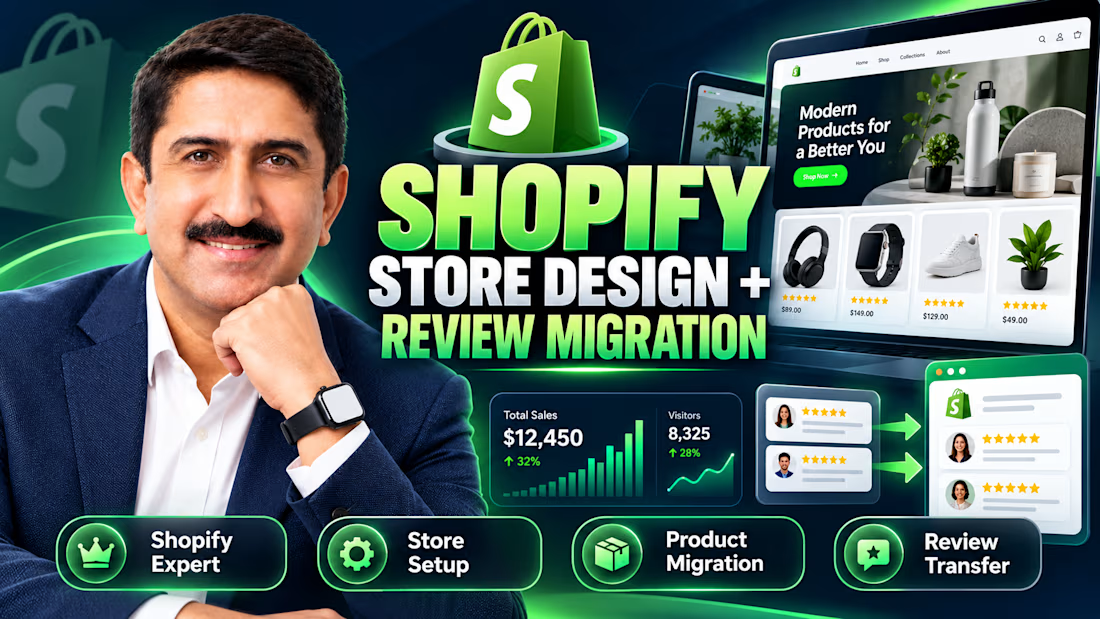
🚀 Transforming E-commerce Stores with Better Design amp; Seamless Review Migration
A successful online store is not just about adding products — it’s about creating a trusted shopping experience that converts visitors into customers.
I help businesses build and improve Shopify stores with:
✅ Modern Shopify Store Design
✅ Conversion-focused layouts
✅ Product Setup amp; Migration
✅ Customer Review Transfer
✅ Clean UI/UX Optimization
✅ Better shopping experiences
Whether you are launching a new store or moving from another platform, a well-designed Shopify store can make a huge difference in brand trust and sales performance.
💡 My goal: Create Shopify experiences that look professional, feel trustworthy, and help businesses grow.
Looking forward to collaborating with brands that want to take their e-commerce presence to the next level.
#Shopify #Ecommerce #ShopifyExpert #EcommerceBusiness #OnlineStore #WebDesign #UXDesign #DigitalCommerce #Entrepreneurship #Dropshipping



Great combination of design and migration services. Building trust is just as important as creating a visually appealing store.

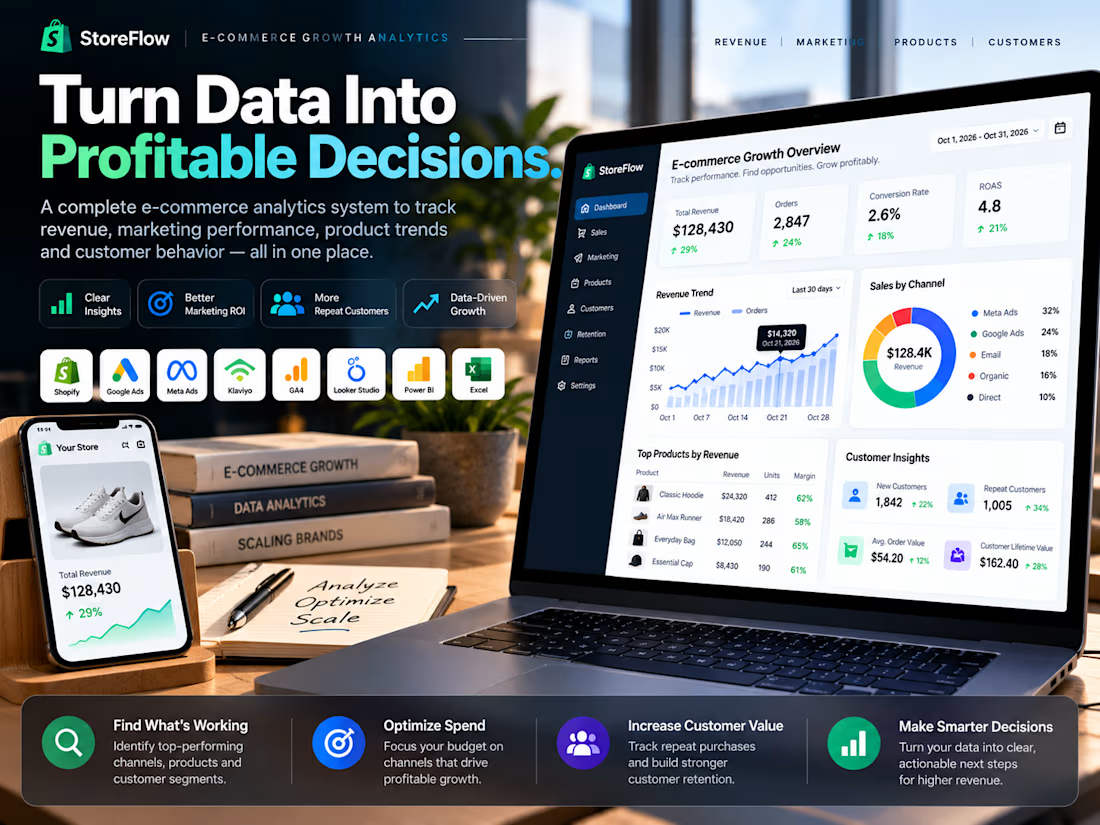
See exactly what’s driving revenue, where growth is leaking, and which products, channels, and customers deserve more investment.
I developed an e-commerce growth intelligence system around one question:
Where should the business invest next?
Most stores already have plenty of data. The harder problem is understanding what that data means for revenue, marketing spend, products, and customer growth.
So instead of building another dashboard full of charts, I’m structuring the system around decisions.
It brings together signals such as revenue, ROAS, CAC, conversion, product performance, repeat purchases, and retention to identify things like:
which channels deserve more budget, where acquisition is becoming inefficient, which products attract traffic but fail to convert, and where repeat customers are creating stronger value.
The goal isn’t just to answer:
“What happened?”
It’s to answer:
“What should we do next?”
Because the most useful analytics system isn’t the one with the most charts.
It’s the one that makes the next business decision clearer.
Tags: E-Commerce · Marketing Analytics · Data Analytics · Power BI · E-commerce Management
Marketing AnalyticsData AnalysisecommerceeCommerce ManagementMicrosoft ExcelMicrosoft Power BIShopify

Exactly. Analytics becomes much more valuable when it helps businesses make smarter decisions, not just track numbers.

EMAIL 1 — The problem
Subject: Your business might not have a visibility problem
You’re posting.
You’re showing up.
You’re talking about what you do.
But somehow, people still don’t seem to understand why they should choose you.
That can feel like a visibility problem.
Sometimes, it isn’t.
Sometimes, the real problem is that your message isn’t making the value of your business clear enough.
When someone lands on your website or sees your content, they should be able to quickly understand:
What do you help with?
Who is it for?
And why should they care?
If those answers aren’t clear, posting more won’t necessarily fix the problem.
The message comes first.
Tomorrow, I’ll show you one simple way to check whether your current messaging is doing its job.
[Brand Strategist]
EMAIL 2 — The insight
Subject: Try this before creating another post
Open your website.
Now imagine you’ve never heard of your business before.
Give yourself 10 seconds.
Can you answer these three questions?
What does this business help me do?
Is this actually for someone like me?
Why should I trust them?
If you have to search for the answers, your potential customer probably has to as well.
And when people have to work too hard to understand an offer, they often leave.
Your copy doesn’t need to say everything.
It needs to make the right things clear.
That’s where strong positioning and messaging can change the way people experience your business.
If your message feels harder to explain than your service should be, that’s worth looking at.
[Brand Strategist]
EMAIL 3 — The next step
Subject: Your offer shouldn’t need a decoder
You already know how good your service is.
The challenge is making a stranger understand that quickly.
If your website, content, or offer currently feels like it’s saying a lot without making the main value obvious, it may be time to simplify.
Not by making your business smaller.
By making the message clearer.
If you’d like help figuring out where your messaging is losing clarity, book a consultation here — [CTA]
No complicated pitch.
Just a conversation about what’s working, what’s unclear, and what could be stronger.
[Brand Strategist]
Project description
Brief:
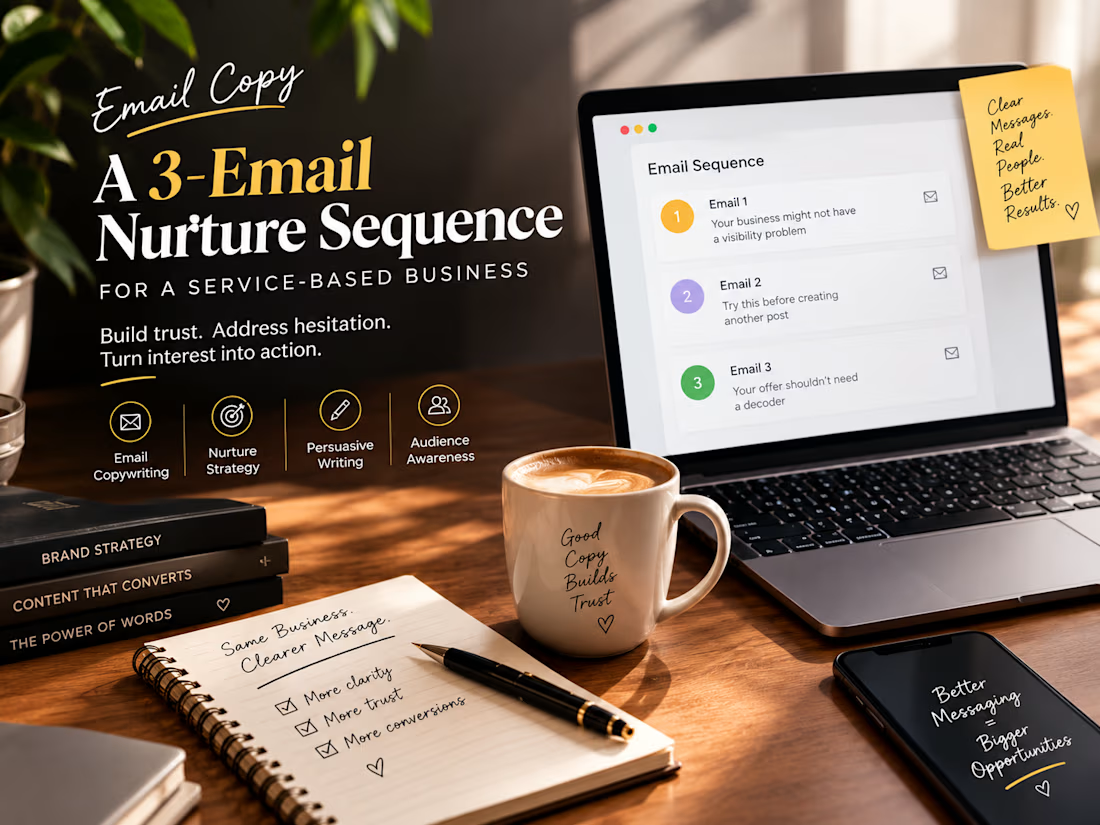
Create a 3 email nurture sequence for a fictional brand strategist whose prospects have shown interest but haven’t taken the next step.
Approach:
The sequence moves from identifying a messaging problem, to providing a useful insight, to presenting a low pressure next step. The copy focuses on clarity and relevance rather than aggressive selling.
Skills demonstrated:
Email copywriting, persuasive writing, audience awareness, nurture strategy, CTA writing.
Project note:
This is a speculative practice project created to demonstrate my email copywriting and strategic thinking. No client performance results are being claimed.


Great nurture sequence. Each email builds trust naturally and makes the next step feel easy.