The network for creativity
Join 1.25M professional creatives like you
Connect with clients, get discovered, and run your business 100% commission-free
Creatives on Contra have earned over $150M and we are just getting started
Back to feedPost
5 design books that changed the way I think 🧠✨
Not “pretty UI” books. Not “which font should I use?” books.
These are the books that made me look at design as a way to understand people, solve problems, and build products that actually make sense.
📞 1. The Design of Everyday Things - Don Norman
The book that explains why we push doors that should be pulled and why it’s usually not our fault, but bad design.
🧩 2. Don’t Make Me Think - Steve Krug
A classic reminder that users don’t want to “figure it out.” They want products that feel obvious from the first click.
⚡ 3. Sprint - Jake Knapp
For everyone who has ever spent weeks discussing an idea instead of testing it. This book shows how to move faster and smarter.
🌀 4. How to Make Sense of Any Mess - Abby Covert
Perfect if you work with chaotic projects, messy information, or unclear structures. It teaches how to turn confusion into clarity.
🔥 5. Design Is a Job - Mike Monteiro
Honest, bold, and a little brutal. A book about clients, value, responsibility, and why design is not just about visuals.
These books changed my mindset from:
“I need to make it look good” to “I need to make it work, feel clear, and create value.”
What design book changed your mindset?
Share yours in the comments 👇


Thank you for sharing!


Great list - especially Don’t Make Me Think and Design of Everyday Things.
But here’s a thought: a lot of people read these books…
and still end up designing things users don’t understand.
Not because the books are wrong -
but because clarity is harder than it sounds.
It’s not a...


Hey Denys, totally agree! theory reading is good, but practice, challenges and users' feedback are crucial
The network for creativity
Join 1.25M professional creatives like you
Connect with clients, get discovered, and run your business 100% commission-free
Creatives on Contra have earned over $150M and we are just getting started




Related posts

Remeber when references used to come from books?
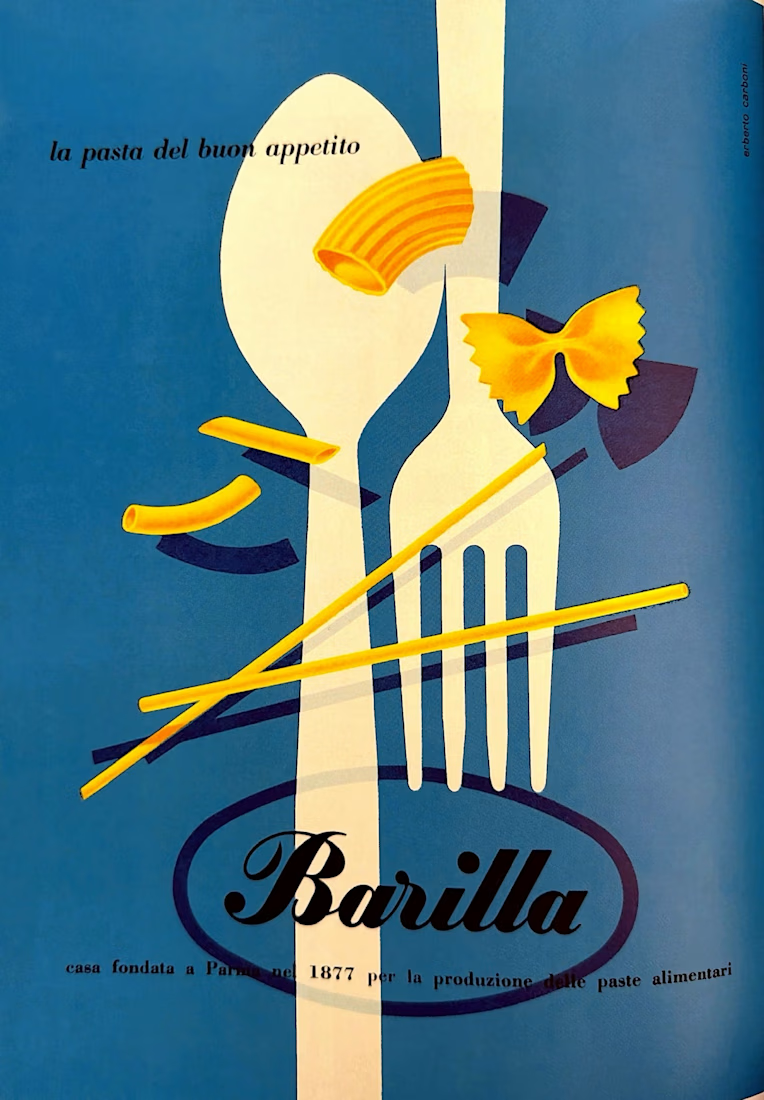
One of my favorite design references is The History of Design 1890–1959. I keep coming back to it whenever I want to get away from the same references that circulate online. A few pages I bookmarked:
1️⃣ Henry van de Velde — one of the founding figures of Art Nouveau, and a great example of how typography and ornament could become one visual language.
2️⃣ Edward Johnston, London Transport — a completely different approach, where typography becomes a functional system rather than decoration.
3️⃣ Schweppes, 1908 — an anonymous advertisement that shows how much personality early commercial graphics could have.
4️⃣ Erberto Carboni, Barilla, 1953 — a reminder that packaging and advertising can become part of a brand's visual identity long before we start calling it “branding.”
Now your turn: what’s one design book, archive, or weird reference source you’d recommend to another designer? Drop it below 👇
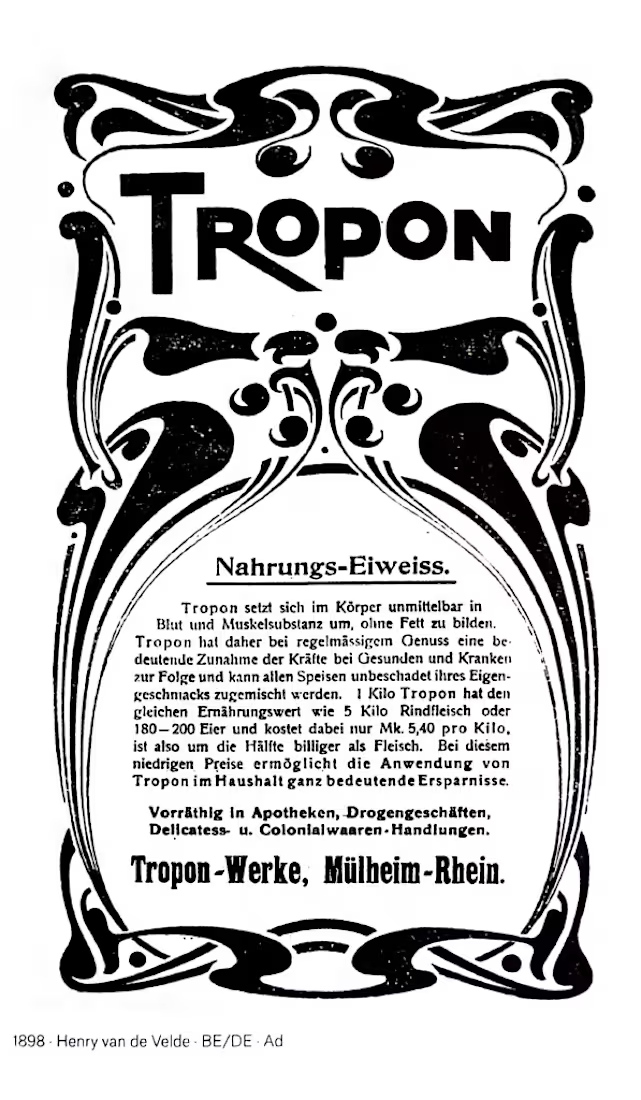
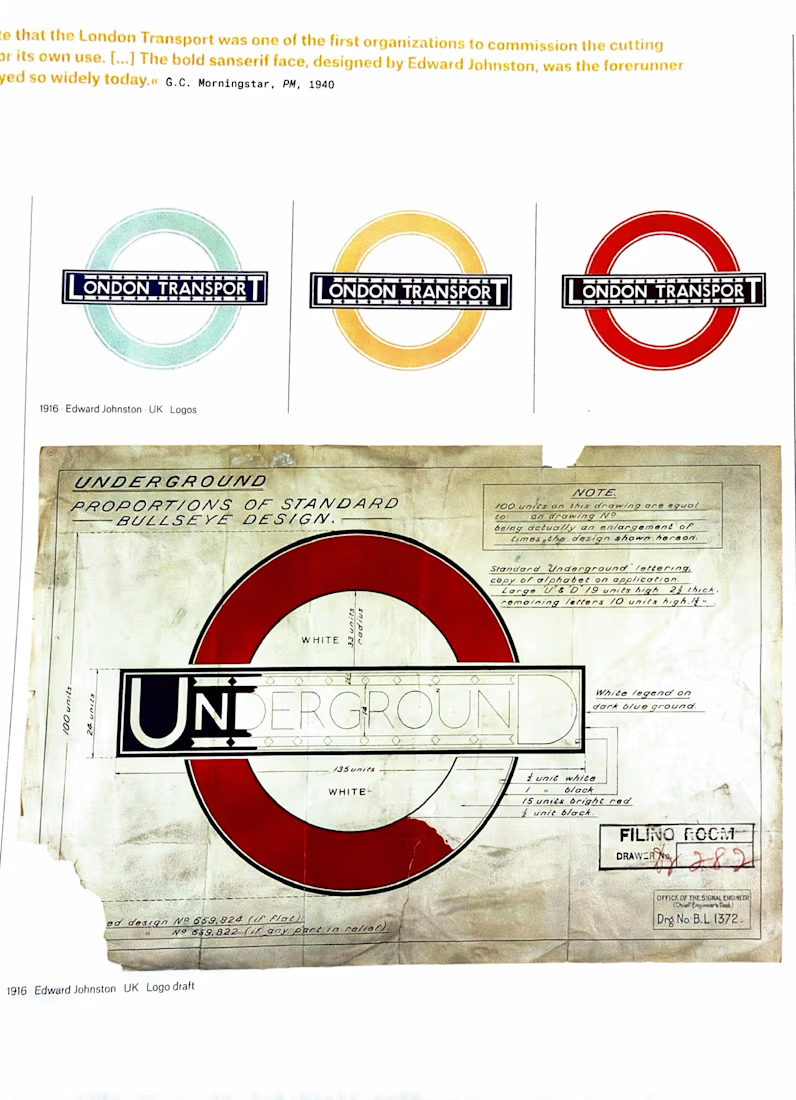
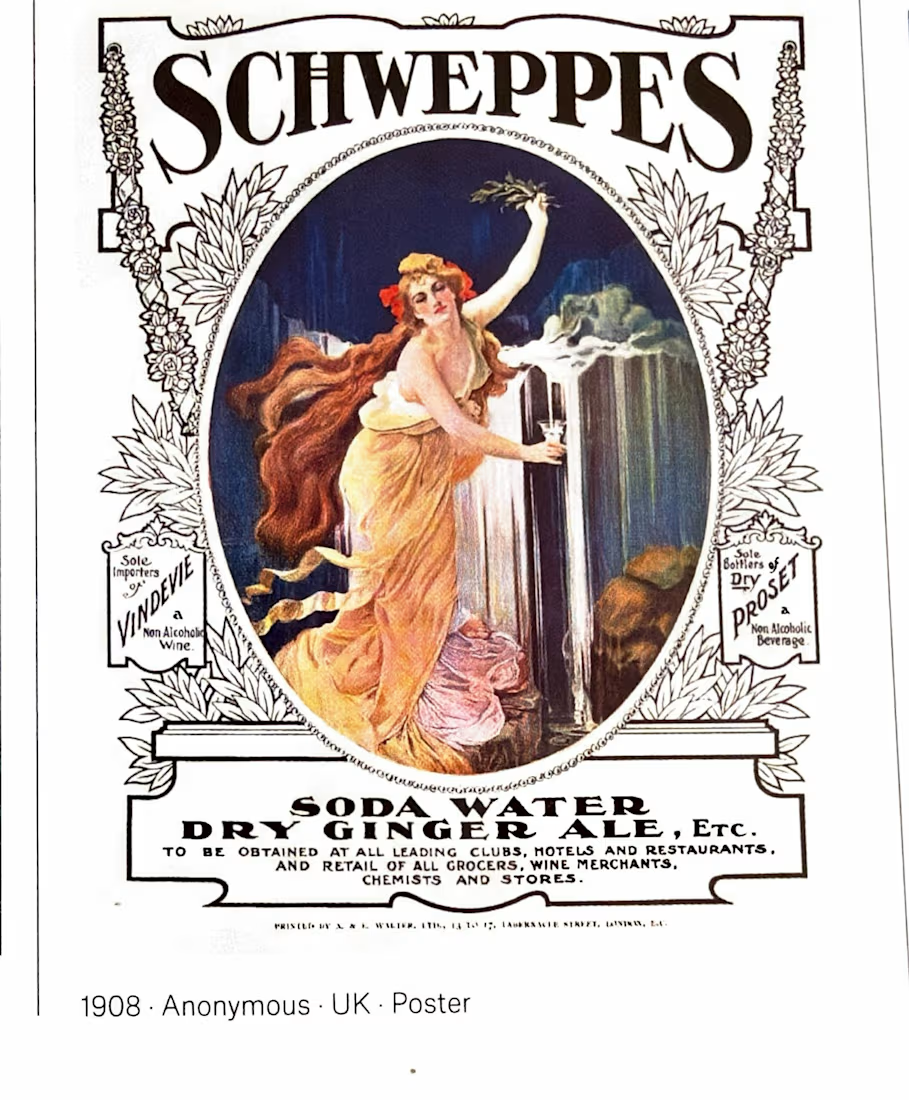

The Edward Johnston pick is such a good example of restraint actually being the design decision. For me it's old apothecary packaging, tiny type, zero color, and it still had to feel trustworthy. Do you keep a physical copy of the book or do you mostly reference the pages digitally?

From problem to polished product.
I started by identifying the UX problems, then refined the same product through better structure, hierarchy, spacinga navigation, and interactions making the experience clearersimpler, and easier to use.
0 votes
Ends in 1d

Your book deserves a cover that makes readers stop scrolling.
A great book cover does more than look beautiful, it communicates the story, genre, mood, and promise of the book before the reader even opens it.
I design professional, eye-catching book covers tailored to your story and target audience, whether it’s:
Romance & Contemporary Fiction
Mystery & Thriller
Fantasy & Sci-Fi
Nonfiction & Self-Help
Children’s Books
Business & Professional Books
My focus is on creating covers that feel intentional, polished, genre-appropriate, and ready for publishing platforms.
Have a manuscript ready but still need the right visual identity?
Let’s turn your story into a cover readers want to pick up.
#BookCoverDesign #BookDesign #Authors #IndieAuthor #SelfPublishing #BookPublishing #CoverDesigner #AuthorBranding #Contra