The network for creativity
Join 1.25M professional creatives like you
Connect with clients, get discovered, and run your business 100% commission-free
Creatives on Contra have earned over $150M and we are just getting started
Back to feedPost

You Changed the Prompt. What Else Did It Break?
Almost every team shipping AI features changes prompts on instinct. Almost none
of them could tell you what the last change made worse.
Here's how a prompt usually gets changed in production.
Someone on the support team flags a bad answer. An engineer opens the prompt,
reads the conversation, adds a sentence — "if the customer asks about refunds,
always mention the 14-day window." They try the question that went wrong. It
works now. They try two or three others to be safe. Those look fine too.
It ships.
That process feels responsible. It isn't a test. It's a guess, checked against
the handful of cases the person happened to think of, which are always the cases
closest to the problem they were fixing.
What actually happens when you change a prompt
A prompt isn't a list of independent rules. Every instruction you add shifts how
the model weighs everything else in there.
Tell it to always mention the refund window and it will — including for people
who asked about delivery times and now get a refund policy nobody wanted. Tell it
to be more concise and some answers that needed three steps quietly lose the
second one. Tell it to be warmer and it starts apologising for things that weren't
problems.
None of that shows up in the three questions you tried. It shows up a week later,
spread thinly across other conversations, where nobody connects it back to your
change.
The fix is embarrassingly familiar
I came to AI work from years of building CI/CD pipelines, and the answer here is
the one we already use for code: you don't find out what a change broke by looking
at it. You find out by running everything you already know should work, before
and after, and comparing.
For AI features that's an eval set.
Take a hundred or so real questions from the last month — not invented ones, real
ones, including the weird ones. Write down what a good answer looks like for each.
Every time the prompt changes, run all of them against the old version and the new
one.
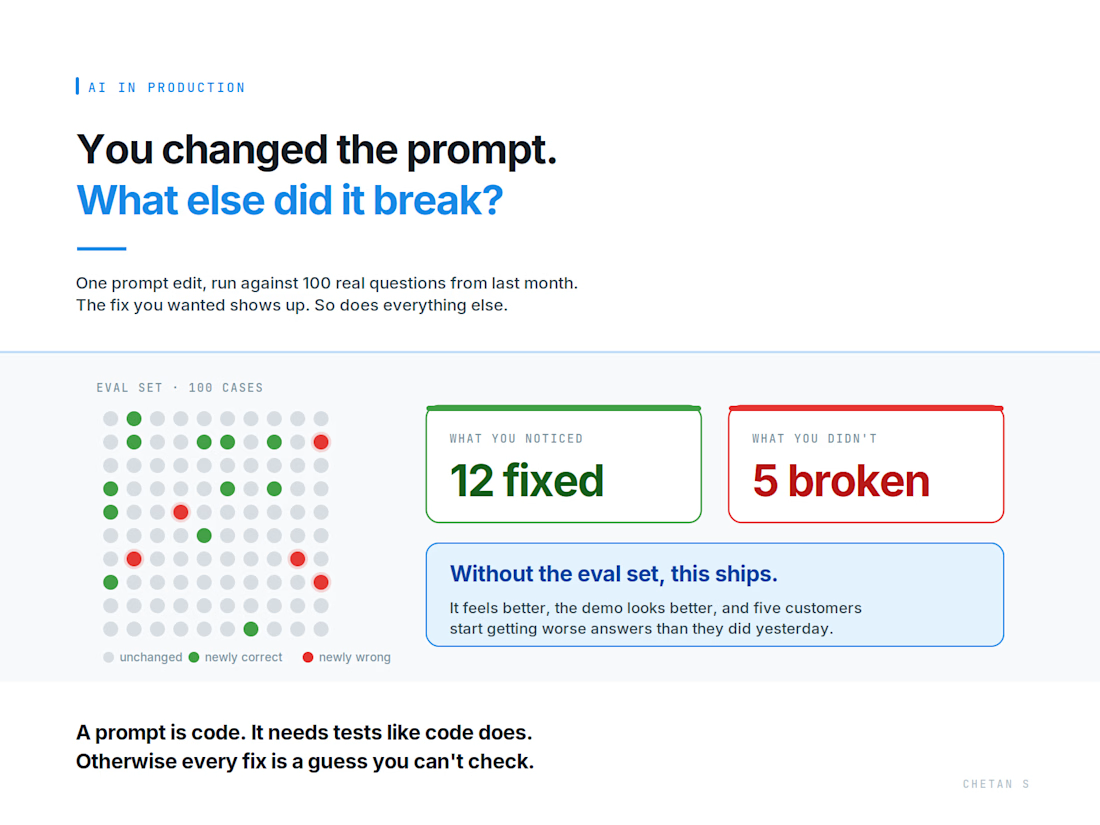
Then look at the difference. Not the average score — the difference, case by case.
Because the average lies. A change that fixes twelve answers and breaks five shows
up as an improvement. It is one, on balance. But those five customers are now
getting worse answers than they got yesterday, and a single number hides them.
Where the eval set comes from
The honest part is that building one is tedious, and that's why most teams don't.
There's a shortcut if you've built the assistant properly, though. If you log
every escalation — every question the bot wasn't confident enough to answer — you
already have a stream of real, hard, representative questions arriving every week.
Some of the best eval cases I've used came straight out of that log.
Your support team also knows exactly which questions matter. Ask them for the
twenty they'd be most embarrassed to see answered wrong. Those go in first.
It doesn't need to be large to be useful. A hundred well-chosen cases will catch
most regressions. Two hundred is plenty for a support assistant.
What changes once you have one
The obvious thing: you stop shipping regressions you can't see.
The less obvious thing is that it changes how you argue. Without evals, a prompt
discussion is opinions — "I think this version sounds better." With them, it's
evidence. Someone can propose a change, run it, and show you it fixed nine cases
and broke one, and you can decide together whether that trade is worth it.
It also makes switching models a normal decision instead of a frightening one.
When a cheaper or faster model comes out — which happens constantly now — you can
run your whole set against it in an afternoon and know whether it's good enough
for your use case, rather than whether it's good enough on someone else's
benchmark.
The part people push back on
"We don't have time to build a test suite for a chatbot."
I understand the instinct. But you're already paying the cost — you're just paying
it in customer conversations instead of in a spreadsheet. Every regression that
ships is a small, invisible hit to how much people trust the thing, and trust is
the only thing that decides whether an AI feature survives its first six months.
A prompt is code. It changes behavior, it has side effects, it can break things
that were working. We decided a long time ago that code doesn't ship without
tests.
There's no reason prompts should be the exception.
If you're running AI in production — do you have an eval set, or are prompt
changes still checked by trying a few questions? No judgement either way. I'm
genuinely curious how common this is.
The network for creativity
Join 1.25M professional creatives like you
Connect with clients, get discovered, and run your business 100% commission-free
Creatives on Contra have earned over $150M and we are just getting started

Challenges
View all


Related posts

Hi Contra, I'm Thiago, an AI engineer from Brasília, Brazil.
This is Galley Brain, the multi-agent system I run on my own VPS. Each agent owns an area (finance, schedule, operations) and takes real actions through MCP connectors, with Telegram and voice as the interface. It started as my personal assistant and is turning into a product for restaurant owners.
I build RAG systems, AI agents and n8n automations for real operations. If you're working on something similar, let's connect.
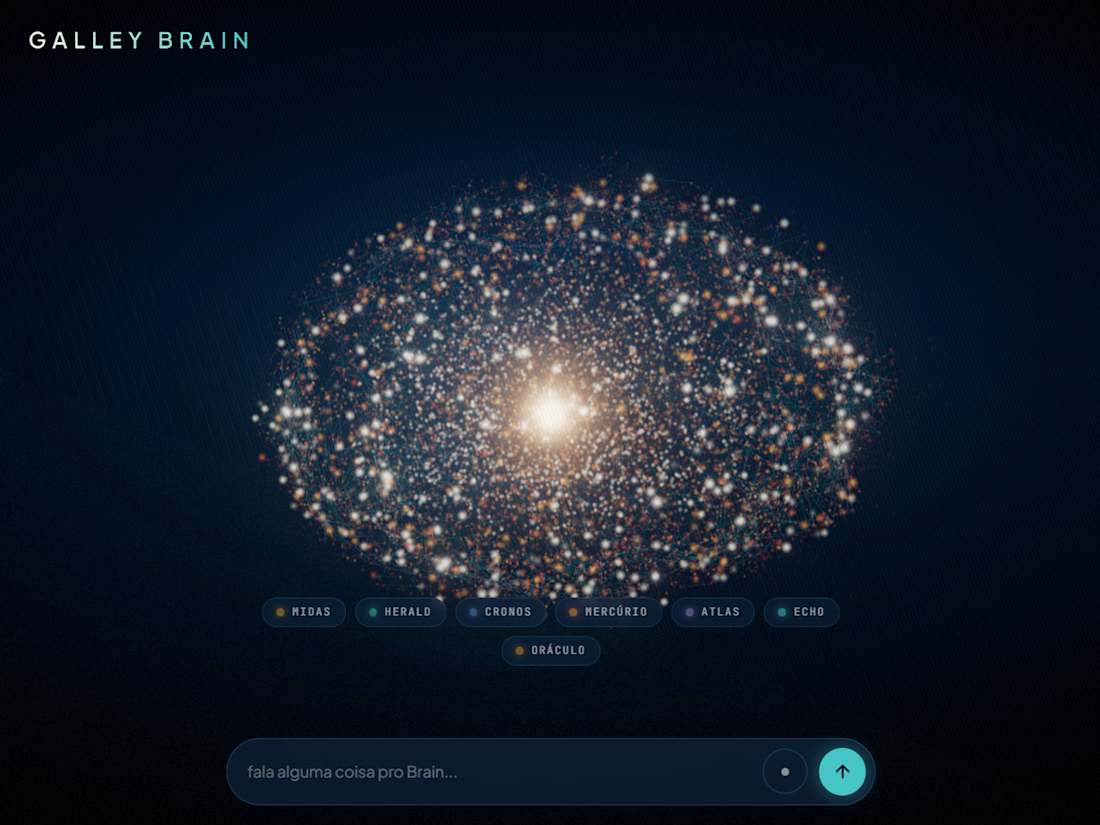

Giving each agent a clear area makes Galley Brain easier to follow as it starts taking real actions. I'd add one approval screen that shows what each agent plans before it can change money, schedules, or customer records.

AI can build a page quickly. Keeping it recognizably yours is the harder part.
Vercel is testing a simple idea: give AI clear design guidance before it starts—not just colors and fonts, but the decisions that make a brand feel consistent.
The bigger lesson applies to any business: AI works better when your taste is documented instead of trapped in someone’s head.
A clear creative guide turns “make something nice” into repeatable decisions—and makes faster work feel less generic.
If an AI had to represent your brand tomorrow, what rule would you teach it first?



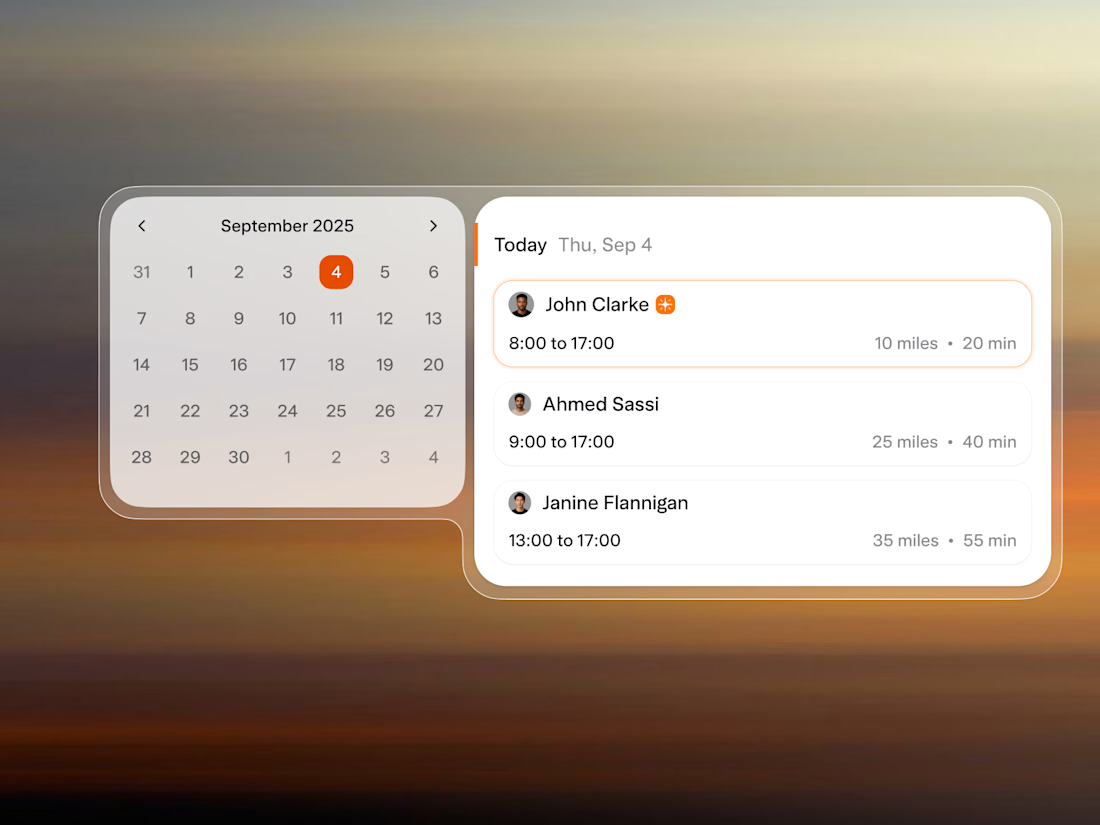
When a customer calls to book an appointment, the rep needs an answer immediately. Checking calendars, cross referencing routes, and manually figuring out which technician is available while someone is on the line creates delays and errors.
We designed a booking flow where the rep picks a date and the system filters to that day immediately, showing the AI recommendation for the best technician available. The rep does not have to leave the platform or put the customer on hold. The answer is already there. They confirm and move on.
The AI factors in the technician's schedule, working hours, and how much travel time the appointment adds to their route before surfacing a recommendation.