The network for creativity
Join 1.25M professional creatives like you
Connect with clients, get discovered, and run your business 100% commission-free
Creatives on Contra have earned over $150M and we are just getting started
Back to feedPost

Not every product should be a single-product store. It works best when:
- the product solves one clear problem
- the audience is specific
- the traffic intent is focused
When those align, simplicity becomes a strength.
I've built single-product stores (like a portable blender for gym-goers) and customization-based stores (streetwear with user uploads). Both work — but the approach has to match the product.
The network for creativity
Join 1.25M professional creatives like you
Connect with clients, get discovered, and run your business 100% commission-free
Creatives on Contra have earned over $150M and we are just getting started








Related posts

Juice & Beverage Shopping App UI/UX Design
A fresh and modern juice and beverage shopping app designed to deliver a smooth and engaging shopping experience. Featuring vibrant product visuals, intuitive navigation, interactive animations, and a clickable prototype, this design makes it easy for users to explore beverages and enjoy a seamless ordering journey.
The project combines clean UI, thoughtful UX, and engaging micro-interactions to create a visually appealing and user-friendly mobile shopping experience.


I've been working on Cervia, a @Framer website for a single product.
A good single-product site combines the landing page and the store in one page, so the call to action is the purchase itself. Visitors learn what the product is, see why it’s better, and add it to the cart without leaving the page.
The challenge is making one page do both jobs. It has to look like a landing page, with room to explain the product and show it well, and still work like a store product page, with the price, colors and Add to cart always close at hand.
Every extra step between arriving and paying loses some buyers, so I kept the steps to a minimum.


This is so well put Heron! 🔥 Single-product site logic is spot on - landing + store in one page removes friction, CTA is purchase itself. No wandering around. Visitors learn what it is, why it's better, add to cart without scrolling through 5 pages - that's conversion gold!...

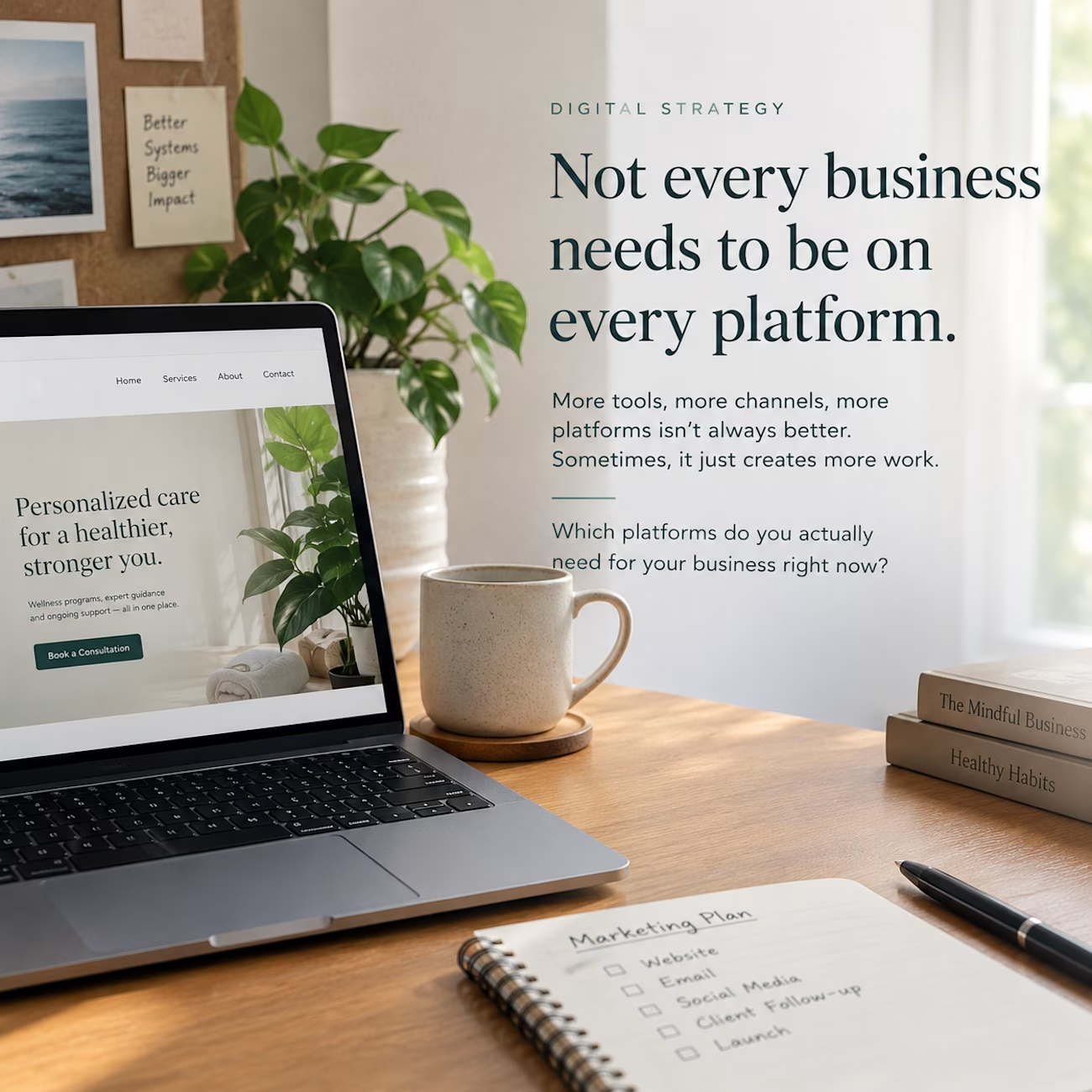
Not every business needs to be on every platform.
There's a lot of advice telling business owners to be everywhere.
Build a website.
Post on LinkedIn.
Grow on Instagram.
Start a newsletter.
Automate everything.
Add a CRM.
Before long, managing the platforms becomes another job in itself.
But more platforms don't automatically mean more clients.
A wellness coach with a strong referral network and a well-managed email list may not need to spend hours creating daily TikTok videos.
A healthcare practice may get more value from a useful website, a straightforward booking process, and consistent follow-ups than from trying to maintain five social media accounts.
The right setup depends on how your business attracts clients, how you serve them, and what you can realistically maintain.
I'd rather see a business use three tools well than seven tools inconsistently.
The goal isn't to do everything. It's to make the things you choose work together.
What do you think: are businesses spreading themselves too thin trying to keep up with every platform?
#DigitalStrategy #WellnessBusiness #BusinessGrowth #EmailMarketing #CRM #WebsiteDesign


agree, most small businesses would do better owning one platform properly than being average on five