The network for creativity
Join 1.25M professional creatives like you
Connect with clients, get discovered, and run your business 100% commission-free
Creatives on Contra have earned over $150M and we are just getting started
Back to feedPost

A client once told me: "We have 3 years of data sitting
in Excel. We just don't know what to do with it."
I hear this more than you'd think.
Data doesn't come with instructions. But buried inside —
there's usually a pattern, a signal, a prediction waiting to be found.
I help businesses turn raw data into working machine learning
models. Not just experiments — things that actually run in production
and integrate into your existing systems.
And because every problem is different, we don't jump straight
to a full build. We start with a POC: 2 weeks, real data, real numbers.
You see what's possible before committing to anything.
If you have data and a question you can't answer yet —
let's find out what your data already knows.

The network for creativity
Join 1.25M professional creatives like you
Connect with clients, get discovered, and run your business 100% commission-free
Creatives on Contra have earned over $150M and we are just getting started





Related posts

Building AI for healthcare leaves zero room for error.
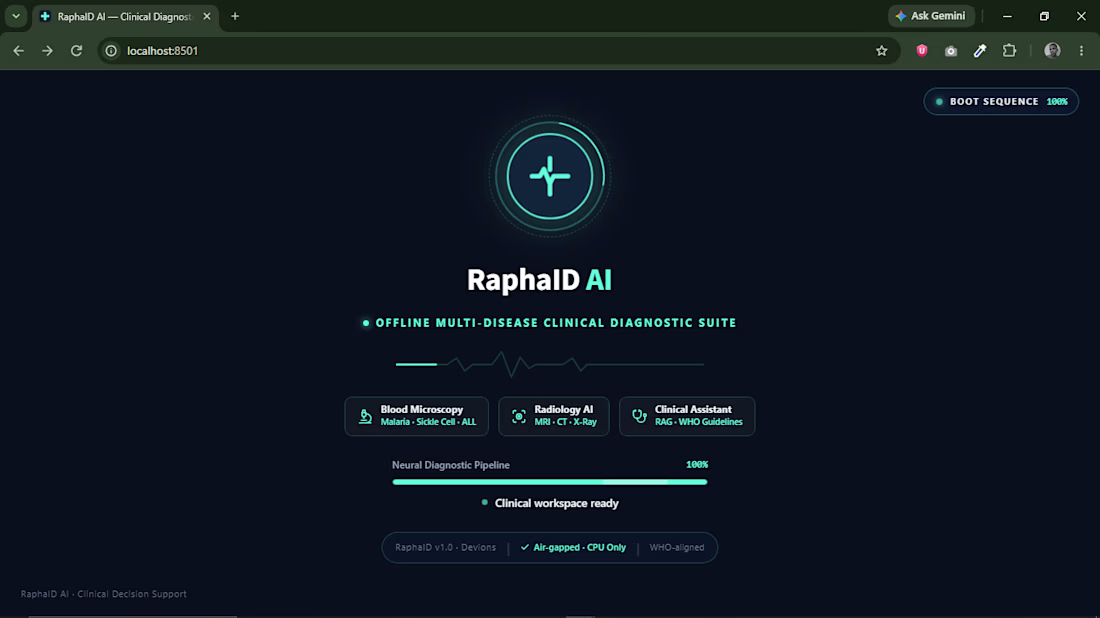
I’m currently collaborating with an incredible team on Raphald AI, a medical detection application. Building the systems for a project with stakes this high is a massive reminder that the underlying backend architecture matters just as much as the machine learning model itself.
When integrating diagnostic AI, your API endpoints cannot drop requests, and your database workflows demand absolute integrity. You aren't just passing JSON payloads; you are handling critical, real-time workflows where stability is non-negotiable.
Engineering these systems continues to shape my approach to building robust Python backends. If you are developing a product that requires reliable AI integration or rock-solid FastAPI infrastructure, check out the newly updated services on my profile. Let's build something that works when it counts.



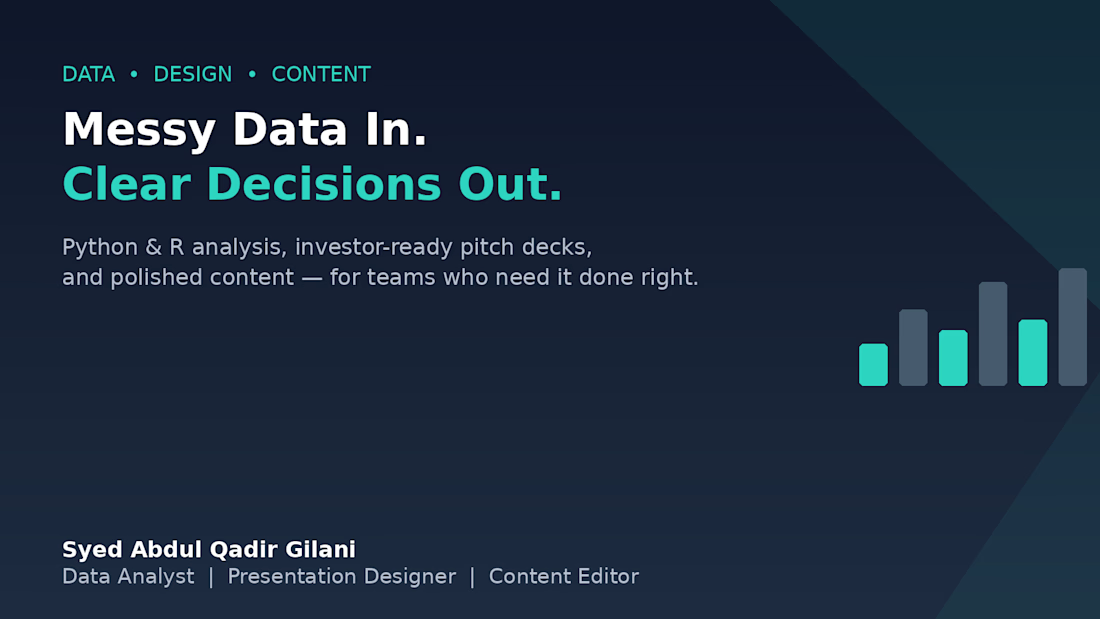
Messy Data In. Clearer Decisions Out. 📊
Over the past year, I've noticed most businesses don't struggle because they lack data — they struggle because that data never turns into a decision.
That's the gap I work in:
→ Cleaning and analyze data with Python & R
→ Turning findings into investor-ready pitch decks
→ Polishing the final write-up so nothing gets lost in translation
If your team has data sitting in spreadsheets with no story attached, or a pitch deck that needs to actually land — that's exactly where I can help.
Open to projects. Let's talk 👇


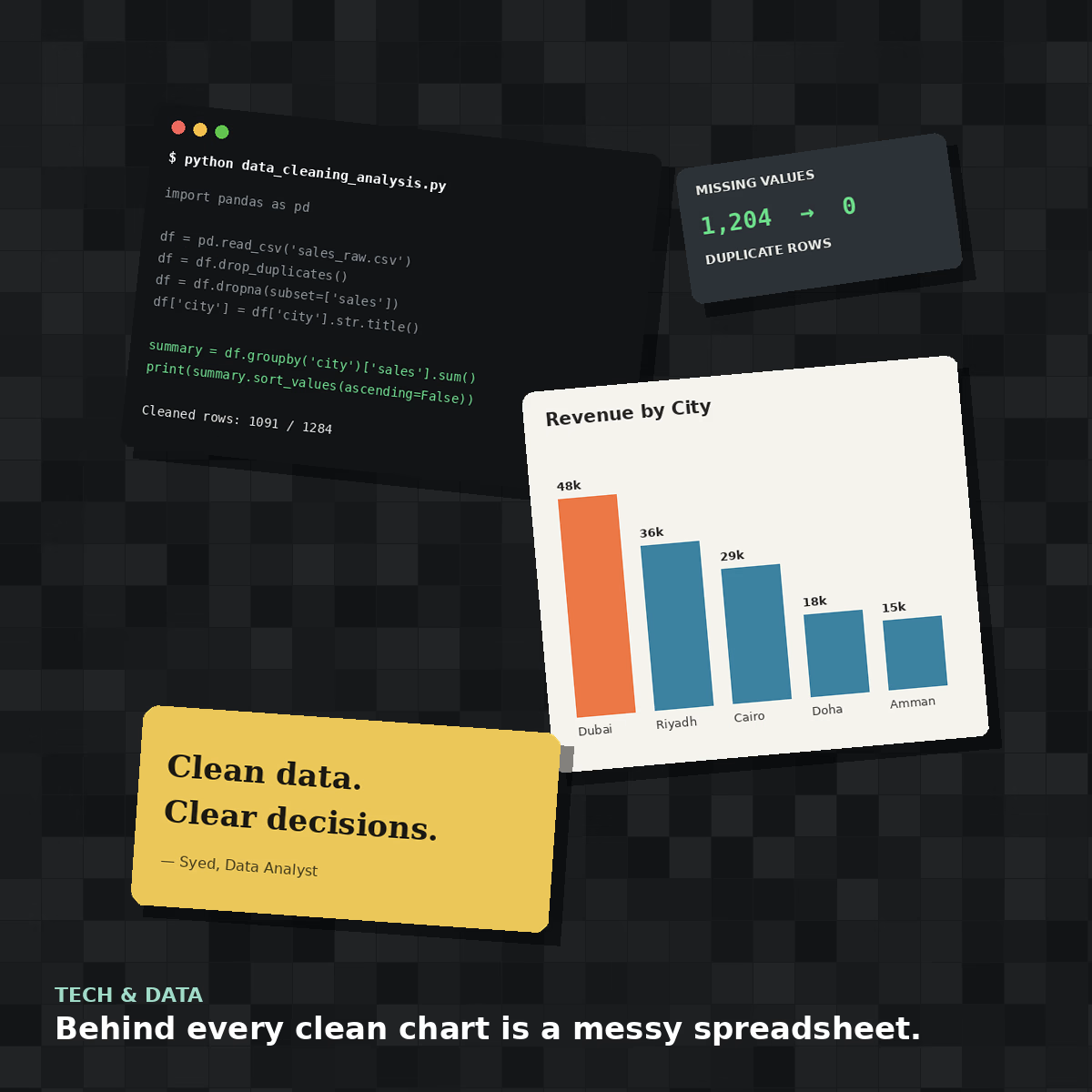
Behind every clean chart is a messy spreadsheet 🧹
This is what a real data cleaning job looks like before it becomes an elegant bar chart — duplicate rows, missing values, inconsistent formatting, all sorted out with Python and Pandas.
#collage attempt: a look inside the data analyst's actual desk, not just the pretty output.