The network for creativity
Join 1.25M professional creatives like you
Connect with clients, get discovered, and run your business 100% commission-free
Creatives on Contra have earned over $150M and we are just getting started
Back to feedPost

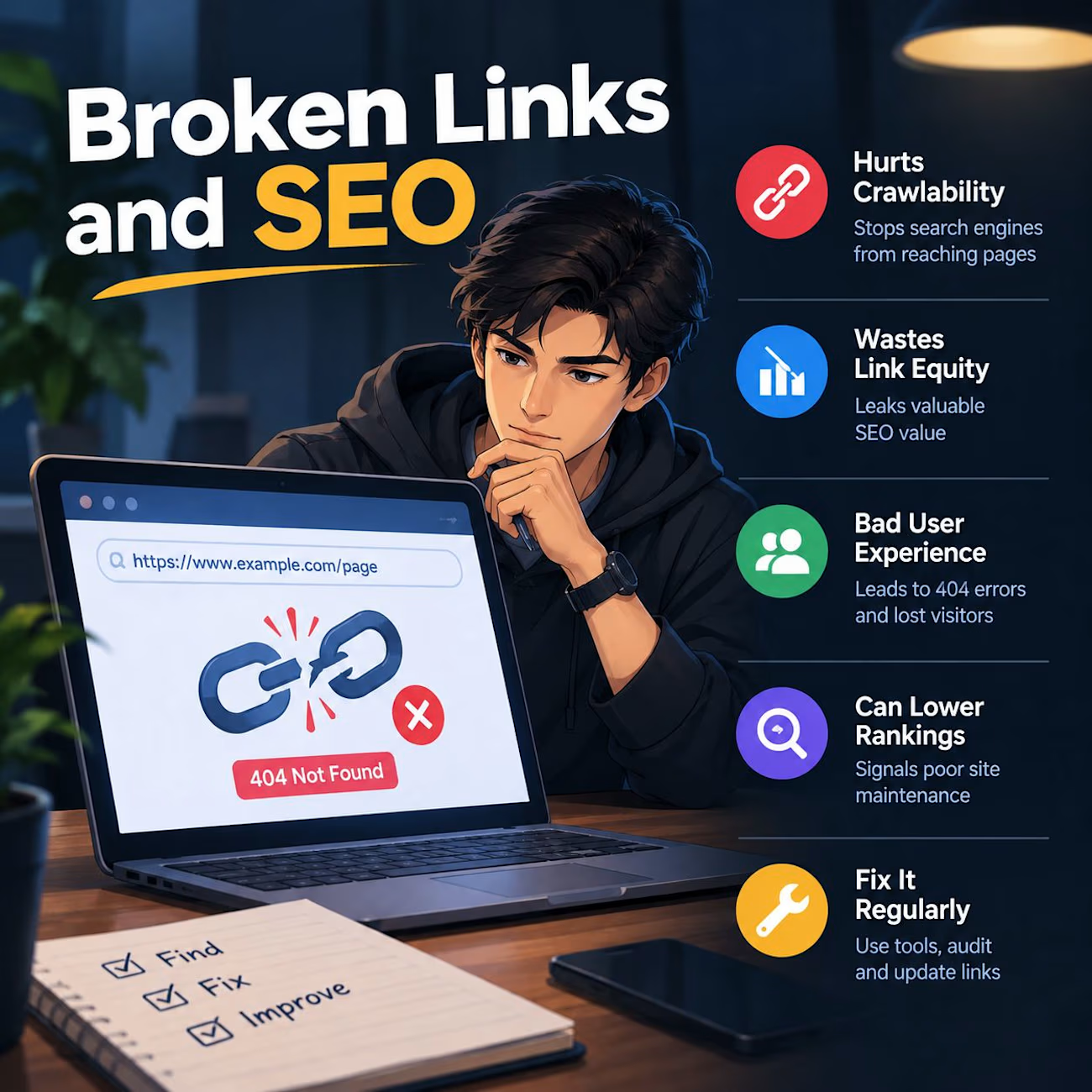
Broken Links and SEO: Why Fixing Them Matters
Broken links are links that lead users to pages that no longer exist or cannot be accessed, often resulting in a 404 Not Found error. They can negatively affect user experience, website navigation, and SEO performance if left unresolved.
As an SEO specialist, regularly identifying and fixing broken links is an essential part of maintaining a healthy website.
How Do Broken Links Affect SEO?
🔹 Poor User Experience: Visitors may leave your website when they encounter broken pages.
🔹 Crawlability Issues: Broken internal links can make it harder for search engines to discover and navigate important pages.
🔹 Lost Link Equity: Broken URLs may prevent valuable backlinks from passing their full SEO value to the intended page.
🔹 Wasted Traffic: Visitors clicking outdated links may fail to reach the information they need.
🔹 Website Maintenance: A website with unresolved broken links can appear outdated and poorly maintained.
How to Find and Fix Broken Links
1️⃣ Audit your website regularly using tools like Ahrefs, Screaming Frog, or Google Search Console.
2️⃣ Fix incorrect internal links by updating them to the correct URLs.
3️⃣ Use 301 redirects when a page has permanently moved and a relevant replacement exists.
4️⃣ Update or remove outdated external links where appropriate.
5️⃣ Review broken backlinks and recover their value by redirecting URLs to relevant replacement pages when suitable.
Pro SEO Tip: Not every 404 error is a problem. Focus on broken links that affect important pages, user journeys, valuable backlinks, and internal navigation. Don't redirect every missing URL to your homepage.
Remember: A technically healthy website creates a better experience for users and helps search engines discover your content more efficiently.
💬 Question for SEO professionals: How often do you audit your website for broken links—weekly, monthly, or quarterly?
Save this post for your next Technical SEO Audit!
#SEO #TechnicalSEO #BrokenLinks #SEOTips #SearchEngineOptimization #WebsiteAudit #OnPageSEO #DigitalMarketing #Ahrefs #ScreamingFrog
The network for creativity
Join 1.25M professional creatives like you
Connect with clients, get discovered, and run your business 100% commission-free
Creatives on Contra have earned over $150M and we are just getting started



Related posts

How many times have we explained the difference between SEO backlinks and PR backlinks to clients, only for the same question to come up again and again? 😅
You'd think it's pretty straightforward. We've even published an article about it on our website. But let's be honest: not everyone wants to read a long article. So here's a quick breakdown.
🔗 SEO backlinks help improve Google rankings.
They're placed on relevant websites with strong metrics, using specific anchor text and pointing to targeted pages. The goal is to build your website's authority in the eyes of search engines and help it rank higher.
👉 The result: better rankings and increased organic traffic.
📣 PR backlinks help build brand awareness.
These are mentions and publications in well-known media outlets, news websites, and industry publications. What matters most is who writes about your brand and how many people see it, rather than the anchor text or the link's authority.
👉 The result: greater reach, audience trust, and a stronger reputation.
To put it simply:
SEO backlinks are for search engines.
PR backlinks are for people.
They don't replace each other; they complement each other. A PR publication can also have an SEO impact, but that's a bonus, not its primary purpose.
And if you'd like to dive deeper, here's the full article 👉 https://seoza.com.ua/blog/link-building/

Hiring a more expensive SEO expert doesn't automatically mean you're making a better decision.
I worked with a client for almost 3 years. Things were going well, and we had built strong organic rankings and traffic together.
But then AI changed the SEO landscape.
I started recommending several changes to the website, content strategy, technical SEO, and overall approach because I could see that the industry was evolving.
Perhaps the client wasn't comfortable with so many recommendations.
Eventually, they decided to hire an in-house SEO professional at almost 4X what they were paying me.
That's business. Every client has the right to make their own decisions.
But what happened next was disappointing.
The rankings and organic traffic we had spent years building started declining.
Here's what I want businesses to understand:
SEO is not just about maintaining what is already working.
A good SEO expert should tell you when something needs to change.
Recommendations aren't criticism of previous work; they're preparation for what comes next.
AI is changing search, and strategies that worked yesterday may not be enough tomorrow.
One more thing:
I'm based in India, which allows me to offer SEO services at a more affordable price than many SEO professionals in the USA.
But a lower price doesn't mean lower commitment, experience, or expertise.
Sometimes, the person suggesting changes is the person trying hardest to protect the growth you've already achieved.
Don't confuse a comfortable SEO strategy with a future-proof SEO strategy.
What's your take? Should an SEO expert focus on keeping things as they are or challenge the existing strategy when the industry changes?
#SEO #FreelanceSEO #DigitalMarketing #AIandSEO #OrganicTraffic #SEOStrategy #SmallBusiness



𝗗𝗮𝘆 𝟮𝟵𝘁𝗵 𝗼𝗳 𝟯𝟬𝗱𝗮𝘆, 𝟭 𝗗𝗮𝘆𝘀 𝘁𝗼 𝗚𝗢
The 2026 WordPress Technical SEO Blueprint: Core Web Vitals & Schema Architecture
Dominating search engines in 2026 requires more than basic keywords. 𝗜𝗺𝗽𝗹𝗲𝗺𝗲𝗻𝘁 𝘁𝗵𝗶𝘀 𝟱-𝗽𝗼𝗶𝗻𝘁 𝘁𝗲𝗰𝗵𝗻𝗶𝗰𝗮𝗹 𝗦𝗘𝗢 𝗰𝗵𝗲𝗰𝗸𝗹𝗶𝘀𝘁:
1. 𝗡𝗮𝘁𝗶𝘃𝗲 𝗝𝗦𝗢𝗡-𝗟𝗗 𝘀𝘁𝗿𝘂𝗰𝘁𝘂𝗿𝗲𝗱 𝗱𝗮𝘁𝗮 𝗳𝗼𝗿 𝗔𝗜 𝗲𝗻𝗴𝗶𝗻𝗲𝘀.
2. 𝗔𝘂𝘁𝗼𝗺𝗮𝘁𝗲𝗱 𝗔𝗩𝗜𝗙 𝗶𝗺𝗮𝗴𝗲 𝗼𝗽𝘁𝗶𝗺𝗶𝘇𝗮𝘁𝗶𝗼𝗻.
3. 𝗦𝗽𝗲𝗰𝘂𝗹𝗮𝘁𝗶𝘃𝗲 𝗽𝗮𝗴𝗲 𝗽𝗿𝗲-𝗿𝗲𝗻𝗱𝗲𝗿𝗶𝗻𝗴.
4. 𝗖𝗹𝗲𝗮𝗻 𝘀𝗲𝗺𝗮𝗻𝘁𝗶𝗰 𝗵𝗲𝗮𝗱𝗶𝗻𝗴 𝗵𝗶𝗲𝗿𝗮𝗿𝗰𝗵𝘆.
5. 𝗘𝗹𝗶𝗺𝗶𝗻𝗮𝘁𝗶𝗻𝗴 𝘂𝗻𝘂𝘀𝗲𝗱 𝗖𝗦𝗦 𝗮𝗰𝗿𝗼𝘀𝘀 𝗯𝗹𝗼𝗰𝗸 𝘁𝗲𝗺𝗽𝗹𝗮𝘁𝗲𝘀.
𝗕𝗼𝗼𝗸𝗺𝗮𝗿𝗸 𝘁𝗵𝗶𝘀 𝘁𝗲𝗰𝗵𝗻𝗶𝗰𝗮𝗹 𝗦𝗘𝗢 𝗰𝗵𝗲𝗰𝗸𝗹𝗶𝘀𝘁 𝗯𝗲𝗳𝗼𝗿𝗲 𝘆𝗼𝘂𝗿 𝗻𝗲𝘅𝘁 𝘄𝗲𝗯𝘀𝗶𝘁𝗲 𝗹𝗮𝘂𝗻𝗰𝗵!, 𝗧𝗵𝗮𝗻𝗸𝘀 𝗳𝗼𝗿 𝗲𝗻𝗴𝗮𝗴𝗶𝗻𝗴
