The network for creativity
Join 1.25M professional creatives like you
Connect with clients, get discovered, and run your business 100% commission-free
Creatives on Contra have earned over $150M and we are just getting started
Back to feedPost

Fundory — Grant Intelligence for Nonprofits
Grant funding runs on a brutal arithmetic: most applications fail, and the ones that fail still cost weeks of a small team's time. Nonprofits with two or three staff are spending that time writing into opportunities they were never positioned to win.
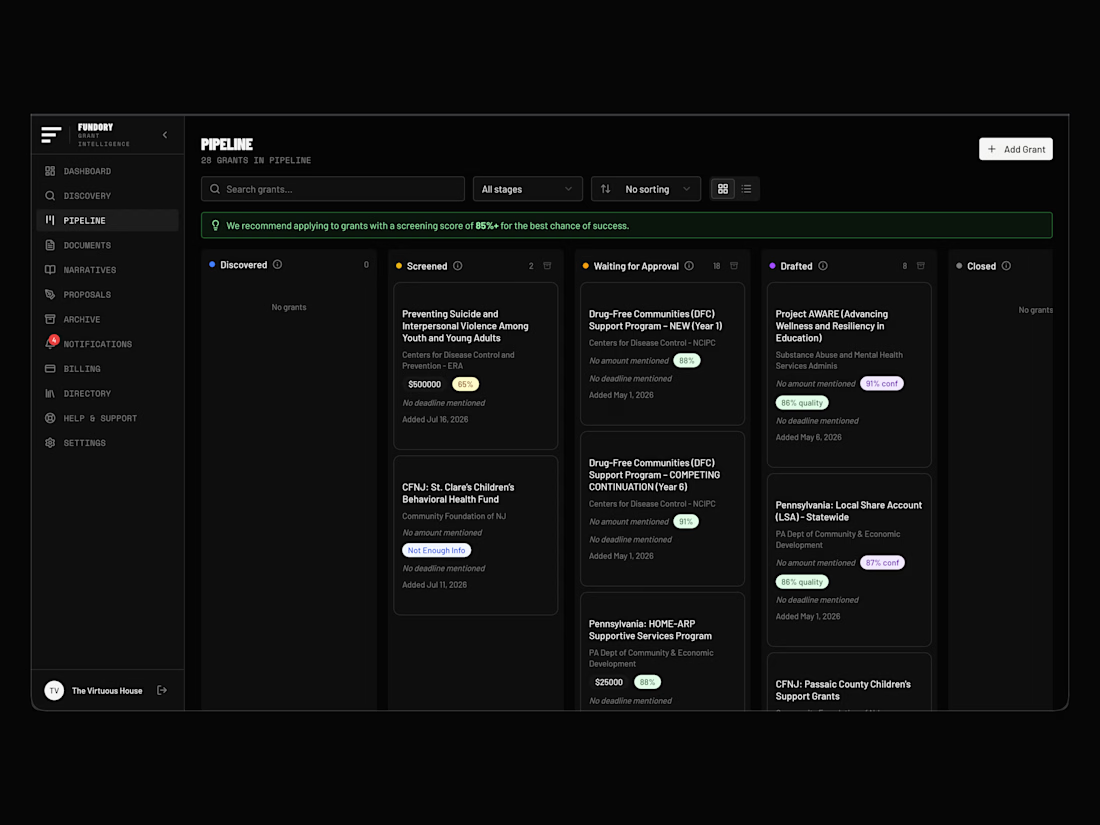
Fundory attacks the problem upstream. Instead of helping organizations write faster, it decides what's worth writing at all. Every discovered grant is screened against the organization's actual profile and returned with a fit score, so a 65% never consumes the effort a 91% deserves. The product states its threshold plainly: apply above 85%.
The pipeline runs Discovered → Screened → Waiting for Approval → Drafted → Closed, with AI moving work forward and humans holding the approval gate. Drafted proposals carry two separate scores — model confidence and draft quality — because those measure different risks and collapsing them would hide the one that matters.
I built the screening and scoring layer, the document and narrative system that grounds drafts in the organization's real history, and the pipeline that keeps 28 live opportunities legible to a team without a grants department.
Honest signal over generated volume.


The network for creativity
Join 1.25M professional creatives like you
Connect with clients, get discovered, and run your business 100% commission-free
Creatives on Contra have earned over $150M and we are just getting started











Related posts

Brand New project🍓🍎🍒🫐
A colorful protein cereal bar brand for active young women. I designed the naming, logo, color system, packaging for five flavors, brandbook, social media posts and AI-generated product photography and video. The packaging was used as a reference in every image so the product looks exactly as designed.


That's really great motion graphics color palettes and visuals great packaging design ❤️❤️
Nice job Melina🔥


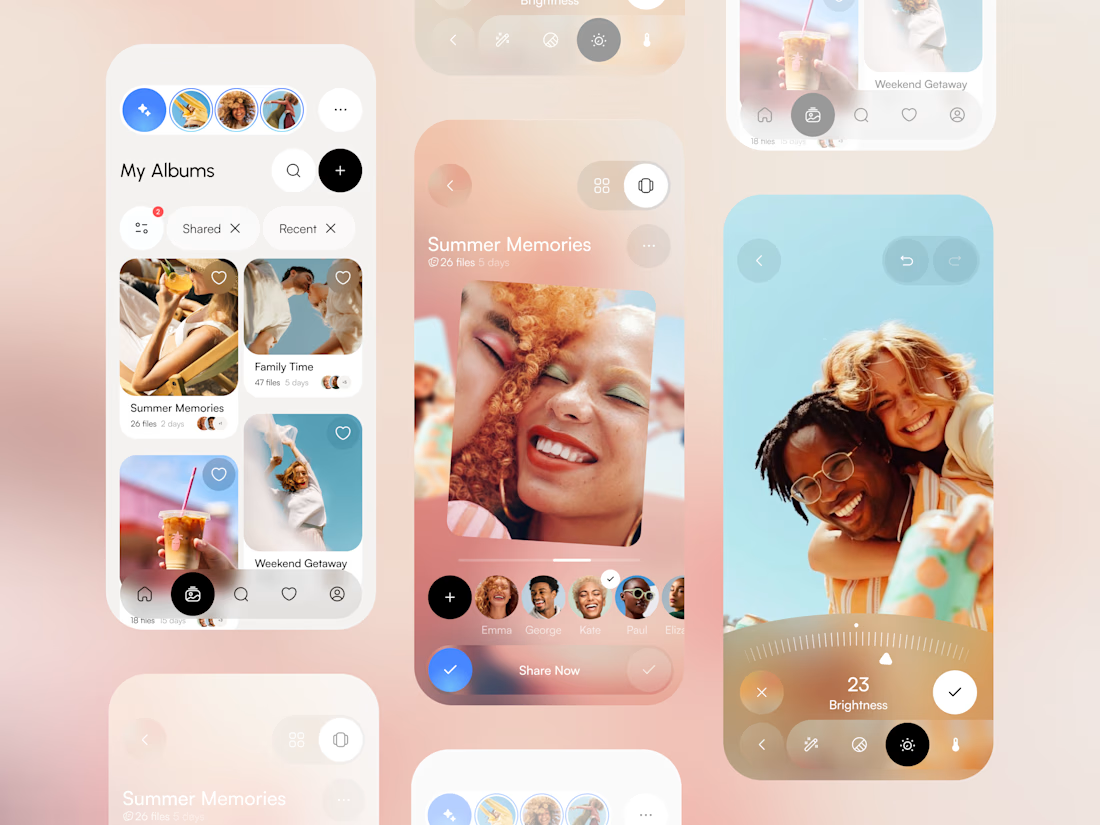
What do you think about this photo gallery mobile app concept? 🖼️ Share your feedback

Made this little interactive coming-soon page for Limez.
A playful merging game, some characters, and a glimpse of the visual direction Limez is taking.
Had fun experimenting with this one. Curious what you guys think!