The network for creativity
Join 1.25M professional creatives like you
Connect with clients, get discovered, and run your business 100% commission-free
Creatives on Contra have earned over $150M and we are just getting started
Back to feedPost

Leaky Keys, Borrowed Chips and Missing Power: AI's Real Bottlenecks
1Day Agency Tech Brief · October 19, 2026
The weekend showed where AI actually gets stuck. Not in the models, but in power lines, memory chips and the API keys holding everything together. Anthropic also made an unusual move with its own equity. Here's what mattered in the last 24 hours.
—
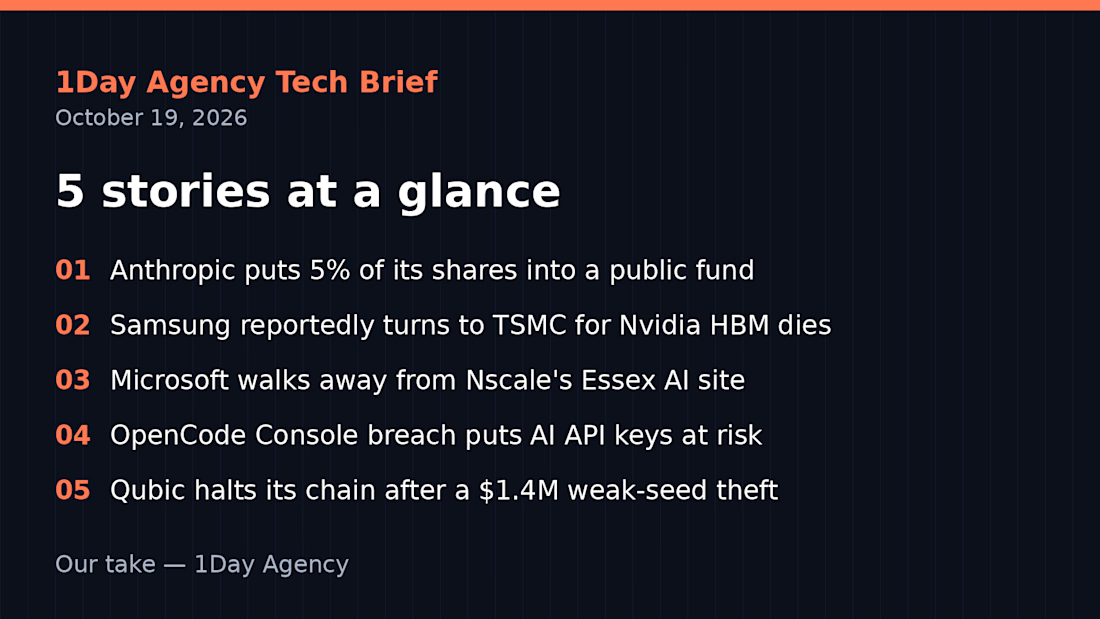
1. Anthropic puts 5% of its shares into a public benefit fund
What happened: Anthropic is committing 5% of its shares, subject to stockholder approval, to a new Anthropic Public Benefit Fund. The board can add 2% more for every 50% rise in the company's value above a set baseline. With earlier founder and employee pledges, Anthropic says about 20% of its shares are now set aside for the public good. The fund is an LLC and won't be used for lobbying or political giving.
Why it matters: Big tech usually ties growing equity to executive pay. Anthropic is tying it to things like the labor-market impact of AI, where it has already committed $200 million.
Sources: Anthropic (https://www.anthropic.com/news/public-benefit-fund) · CNBC (https://www.cnbc.com/2026/10/18/anthropic-ai-public-benefit-fund.html)
2. Samsung reportedly turns to TSMC for Nvidia's custom HBM
What happened: Samsung will use TSMC's 3nm process to make base dies for Nvidia's custom high-bandwidth memory (NVHBM), the Seoul Economic Daily reported, citing industry sources. Nvidia reportedly asked Samsung, SK hynix and Micron to all build that die at TSMC. It would be Samsung's first HBM work with TSMC. None of the companies has confirmed it.
Why it matters: Nvidia is taking control of how AI memory gets built, even at a rival foundry's expense. Memory, not just GPUs, is now where the AI supply chain is being redesigned.
Sources: Reuters via Business Standard (https://www.business-standard.com/technology/tech-news/samsung-to-tap-tsmc-technology-for-nvidia-s-custom-memory-chips-report-126101800775_1.html) · Seoul Economic Daily (https://en.sedaily.com/finance/2026/10/18/samsung-to-use-tsmc-for-base-die-in-nvidias-custom-hbm)
3. Microsoft walks away from Nscale's Essex AI datacentre
What happened: Microsoft pulled out of its deal at Nscale's planned AI datacentre in Loughton, Essex, which the UK government had called the country's largest sovereign AI datacentre. The local grid operator told Nscale it can't supply enough power until the early to mid-2030s. Nscale says it is still committed and is looking at on-site power.
Why it matters: Money and GPUs are available. Electricity on time is not. Grid access is becoming the deciding factor for where AI capacity gets built.
Sources: The Guardian (https://www.theguardian.com/uk-news/2026/oct/18/microsoft-drops-huge-ai-datacentre-project-in-essex-over-power-supply-concerns) · BBC (https://www.bbc.co.uk/news/articles/c9m26kl5y7epo)
4. OpenCode Console breach puts AI provider keys at risk
What happened: An intruder reached a legacy system at OpenCode on Oct. 16, possibly exposing OpenAI, Anthropic and Google keys saved in its hosted Console. OpenCode says 1.4% of Console users were affected and told them to revoke and replace those keys. It linked the incident to a large-scale distillation attack. Some users report hundreds of dollars in usage they didn't run.
Why it matters: An API key is cash in plain text. Deleting it from a tool doesn't revoke it, so rotate keys at the provider and set spend limits.
Source: The Hacker News (https://thehackernews.com/2026/10/opencode-console-breach-may-have.html)
5. Qubic halts its blockchain after a $1.4M weak-seed theft
What happened: Layer-1 network Qubic stopped its chain after an attacker drained about $1.4 million from more than 1,400 wallets. The seeds had been generated with JavaScript's Math.random() on iPhone, iPad and Mac Safari browsers. The fix in version 4.26.4 switches to crypto.getRandomValues(). About 87% of the stolen funds are still frozen on-chain and MEXC froze the rest.
Why it matters: One line of code decided whether wallets were safe. Randomness for secrets has to come from a cryptographic source, every time.
—
𝘖𝘶𝘳 𝘵𝘢𝘬𝘦 — 1𝘋𝘢𝘺 𝘈𝘨𝘦𝘯𝘤𝘺
𝘛𝘩𝘦 𝘣𝘰𝘵𝘵𝘭𝘦𝘯𝘦𝘤𝘬 𝘪𝘴𝘯'𝘵 𝘪𝘯𝘵𝘦𝘭𝘭𝘪𝘨𝘦𝘯𝘤𝘦 𝘢𝘯𝘺𝘮𝘰𝘳𝘦. 𝘐𝘵'𝘴 𝘵𝘩𝘦 𝘱𝘭𝘶𝘮𝘣𝘪𝘯𝘨.
𝘛𝘩𝘪𝘴 𝘸𝘦𝘦𝘬'𝘴 𝘧𝘢𝘪𝘭𝘶𝘳𝘦𝘴 𝘩𝘢𝘥 𝘯𝘰𝘵𝘩𝘪𝘯𝘨 𝘵𝘰 𝘥𝘰 𝘸𝘪𝘵𝘩 𝘩𝘰𝘸 𝘴𝘮𝘢𝘳𝘵 𝘢 𝘮𝘰𝘥𝘦𝘭 𝘪𝘴. 𝘈 𝘥𝘢𝘵𝘢𝘤𝘦𝘯𝘵𝘳𝘦 𝘭𝘰𝘴𝘵 𝘪𝘵𝘴 𝘢𝘯𝘤𝘩𝘰𝘳 𝘵𝘦𝘯𝘢𝘯𝘵 𝘰𝘷𝘦𝘳 𝘨𝘳𝘪𝘥 𝘱𝘰𝘸𝘦𝘳. 𝘈 𝘤𝘰𝘥𝘪𝘯𝘨 𝘵𝘰𝘰𝘭 𝘦𝘹𝘱𝘰𝘴𝘦𝘥 𝘵𝘩𝘦 𝘬𝘦𝘺𝘴 𝘵𝘩𝘢𝘵 𝘱𝘢𝘺 𝘧𝘰𝘳 𝘪𝘵𝘴 𝘮𝘰𝘥𝘦𝘭𝘴. 𝘈 𝘣𝘭𝘰𝘤𝘬𝘤𝘩𝘢𝘪𝘯 𝘭𝘰𝘴𝘵 $1.4 𝘮𝘪𝘭𝘭𝘪𝘰𝘯 𝘵𝘰 𝘰𝘯𝘦 𝘸𝘦𝘢𝘬 𝘳𝘢𝘯𝘥𝘰𝘮-𝘯𝘶𝘮𝘣𝘦𝘳 𝘤𝘢𝘭𝘭. 𝘌𝘷𝘦𝘯 𝘕𝘷𝘪𝘥𝘪𝘢 𝘪𝘴 𝘳𝘦𝘥𝘦𝘴𝘪𝘨𝘯𝘪𝘯𝘨 𝘮𝘦𝘮𝘰𝘳𝘺 𝘣𝘦𝘤𝘢𝘶𝘴𝘦 𝘵𝘩𝘦 𝘣𝘰𝘳𝘪𝘯𝘨 𝘭𝘢𝘺𝘦𝘳𝘴 𝘯𝘰𝘸 𝘥𝘦𝘤𝘪𝘥𝘦 𝘴𝘱𝘦𝘦𝘥.
𝘛𝘩𝘢𝘵'𝘴 𝘩𝘰𝘸 𝘸𝘦 𝘣𝘶𝘪𝘭𝘥 𝘠𝘷𝘪𝘰𝘯: 𝘌𝘙𝘗, 𝘊𝘙𝘔 𝘢𝘯𝘥 𝘶𝘴𝘦𝘳 𝘮𝘰𝘯𝘪𝘵𝘰𝘳𝘪𝘯𝘨 𝘸𝘩𝘦𝘳𝘦 𝘴𝘦𝘤𝘳𝘦𝘵𝘴 𝘭𝘪𝘷𝘦 𝘪𝘯 𝘢 𝘷𝘢𝘶𝘭𝘵, 𝘬𝘦𝘺𝘴 𝘢𝘳𝘦 𝘴𝘤𝘰𝘱𝘦𝘥 𝘢𝘯𝘥 𝘳𝘰𝘵𝘢𝘵𝘦𝘥, 𝘢𝘯𝘥 𝘦𝘷𝘦𝘳𝘺 𝘢𝘤𝘵𝘪𝘰𝘯 𝘭𝘦𝘢𝘷𝘦𝘴 𝘢𝘯 𝘢𝘶𝘥𝘪𝘵 𝘵𝘳𝘢𝘪𝘭. 𝘍𝘰𝘳 𝘈𝘐 𝘢𝘯𝘥 𝘞𝘦𝘣3 𝘤𝘭𝘪𝘦𝘯𝘵𝘴, 𝘸𝘦 𝘴𝘵𝘢𝘳𝘵 𝘸𝘪𝘵𝘩 𝘵𝘩𝘦 𝘴𝘢𝘮𝘦 𝘤𝘩𝘦𝘤𝘬𝘭𝘪𝘴𝘵: 𝘴𝘱𝘦𝘯𝘥 𝘭𝘪𝘮𝘪𝘵𝘴 𝘰𝘯 𝘦𝘷𝘦𝘳𝘺 𝘱𝘳𝘰𝘷𝘪𝘥𝘦𝘳 𝘬𝘦𝘺, 𝘤𝘳𝘺𝘱𝘵𝘰𝘨𝘳𝘢𝘱𝘩𝘪𝘤 𝘳𝘢𝘯𝘥𝘰𝘮𝘯𝘦𝘴𝘴 𝘧𝘰𝘳 𝘢𝘯𝘺𝘵𝘩𝘪𝘯𝘨 𝘴𝘦𝘤𝘳𝘦𝘵, 𝘢𝘯𝘥 𝘢 𝘱𝘭𝘢𝘯 𝘧𝘰𝘳 𝘸𝘩𝘦𝘯 𝘢 𝘷𝘦𝘯𝘥𝘰𝘳 𝘨𝘰𝘦𝘴 𝘥𝘰𝘸𝘯. 𝘚𝘮𝘢𝘳𝘵 𝘮𝘰𝘥𝘦𝘭𝘴 𝘢𝘳𝘦 𝘦𝘢𝘴𝘺 𝘵𝘰 𝘳𝘦𝘯𝘵. 𝘚𝘰𝘭𝘪𝘥 𝘱𝘭𝘶𝘮𝘣𝘪𝘯𝘨 𝘺𝘰𝘶 𝘩𝘢𝘷𝘦 𝘵𝘰 𝘣𝘶𝘪𝘭𝘥.
Want this applied to your business? Message us here on Contra.
The network for creativity
Join 1.25M professional creatives like you
Connect with clients, get discovered, and run your business 100% commission-free
Creatives on Contra have earned over $150M and we are just getting started



Related posts

From still images to a cinematic car commercial — created with AI.




Nonstop AI, I work for this AI tool? The client rejected the full video and made it again but this is the first version I liket this. so I upload


The travel photos curling into an arc around "Planning it?" make the question visual, nice. Since the client rejected the first full video, what did they push back on most, pacing or story?

$5K on @Contra The AI hasn't replaced me yet.
While talking to the AI, I explained to it that it would be safer for everyone if I stayed in animation, because if I had to go do manual labor... physically.
Guys, I'll bring about the apocalypse before the Terminators even get here.
