The network for creativity
Join 1.25M professional creatives like you
Connect with clients, get discovered, and run your business 100% commission-free
Creatives on Contra have earned over $150M and we are just getting started
Back to feedPost

I released three small English browser tools for practical freelance workflows:
• CSV Preflight Desk: trim surrounding spaces, choose required fields, and review exact whole-row duplicates before exporting.
• QA Evidence Desk: organise manual observations, reproduction steps, evidence and next actions into a developer handoff. Unknown and untested items stay visible.
• Campaign Test Planner: compare recorded spending, effort, inquiries, orders and receipts. Missing inputs stay unknown.
Try the free fictional demos here:
https://browser-workflow-notes.sutars.chatgpt.site/tools/
Downloadable offline editions are JPY 1,200 each; purchase links and scope are in the catalog. They run locally in your browser. These are self-made tools and fictional examples, not client results or income claims.
Which step costs you the most time: preparing CSVs, documenting QA, or checking whether a campaign actually paid back?
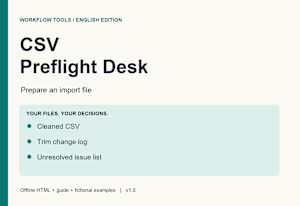
browser-workflow-notes.sutars.chatgpt.site
Offline workflow tools — English downloads
Three independent tools for CSV preflight, manual QA handoffs and campaign comparisons. Try fictional sample previews before buying.
The network for creativity
Join 1.25M professional creatives like you
Connect with clients, get discovered, and run your business 100% commission-free
Creatives on Contra have earned over $150M and we are just getting started
Related posts

Press Check: a proofing desk you can play
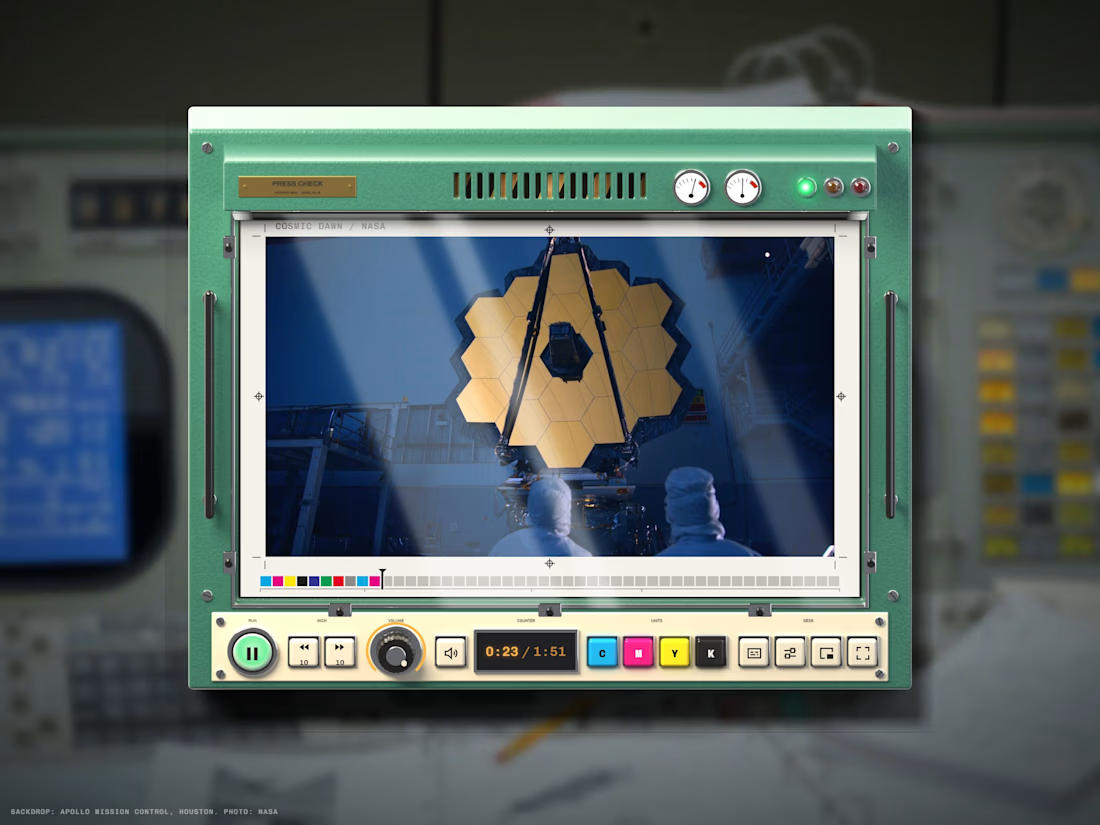
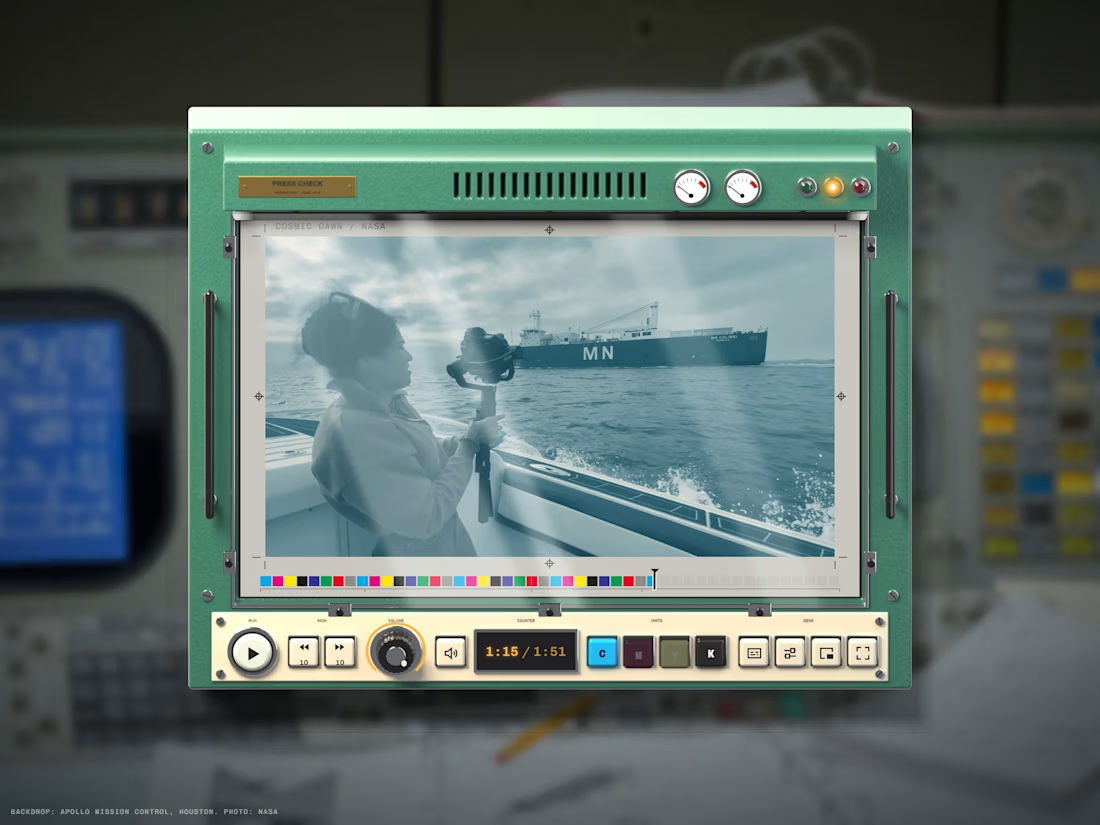
I design packaging, and every print job ends at a press check. You stand at the press desk under the viewing lamp, watch cyan, magenta and yellow come into register, and sign the sheet. I built that desk as a Video.js v10 skin.
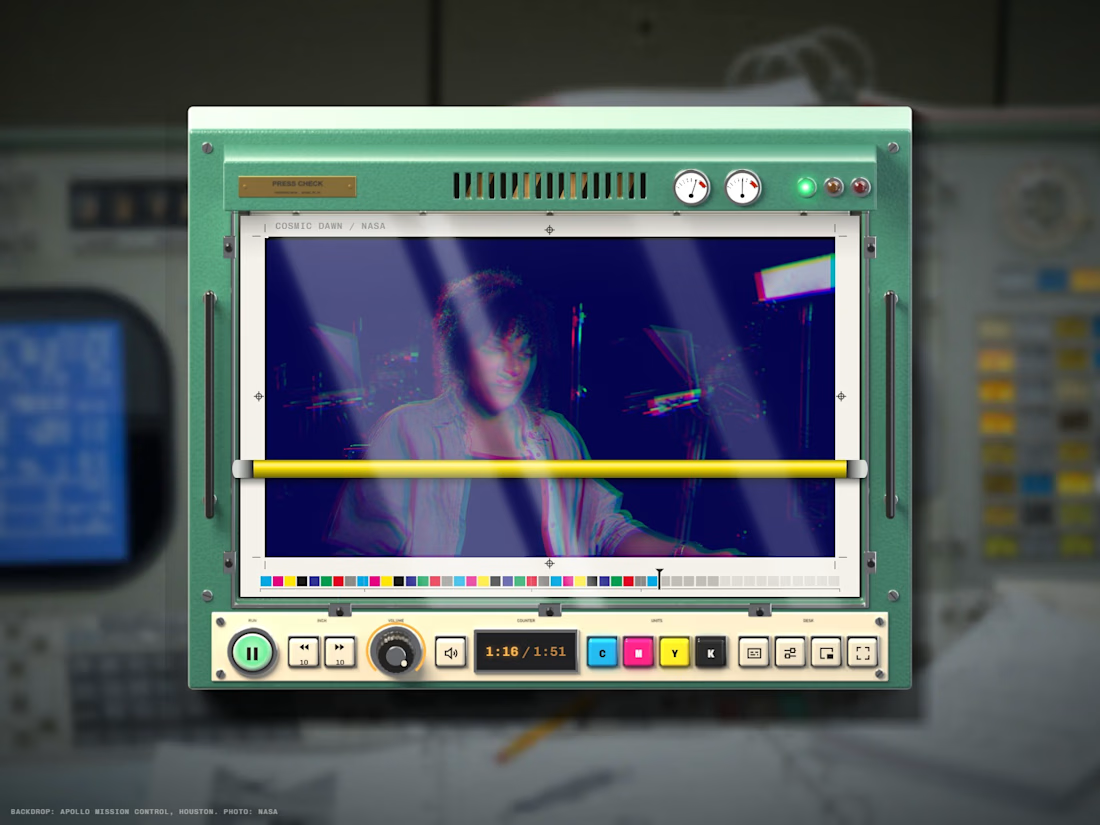
It is a 3D machine, modelled and rendered in Blender. The video is the sheet on its bed, under a pane of glass that slides its reflection as you move the pointer.
Press RUN. The lamp strikes and an ink roller crosses the sheet three times: cyan, then magenta, then yellow. Each colour lands a little off, then the three settle into register. Seek, and the plates slip until it lands. At the end the sheet is stamped OK with today's date.
On the desk: four unit keys, C M Y K, that switch plates off for a progressive proof. A volume knob you drag. An amber counter for the time. Pilot lamps for running, standby and fault. Gauges, a fan and the roller that move while the job runs. Sound made in the browser.
Inside: Video.js v10 custom elements and plain CSS. The press is one SVG filter on the live video, and it switches off when the plates are in register. Every control works by keyboard, in desk order, with visible focus. Reduced motion is respected, and phones and fullscreen get a flat layout.
The demo plays NASA's Cosmic Dawn trailer, so the desk sits in Mission Control. The backdrop is NASA's photo of an Apollo console in Houston.

I haven't posted a proper update here for a little while. I've been busy building a couple of AI applications and a healthcare workflow prototype, and writing about the work kept slipping down the list.
So, a small catch-up. :)
One project is an AI presentation builder for business teams. It starts with information about the business, its audience and the conversation they're preparing for, together with approved source material. From there, it helps create a presentation outline, a talk track, speaking notes and preparation notes.
The person using it can review the material, change it, save it and come back later to export it. That sounds fairly ordinary when written down, but those details are what make it something a team can actually work with. The connected pilot has been accepted, and I'm continuing to refine the content and develop the application.
Another project is a knowledge and planning workspace. Imagine having useful advice buried in hours of coaching transcripts. The application turns that material into a library of teachings that people can review, with links back to the sources.
It also supports a planning workflow: start with a client brief, confirm the details, then build a 90-day roadmap with check-ins and weekly updates. The knowledge foundation has been accepted; the planning workflow is on staging while the remaining integration work continues.
Alongside those, I've been working on a healthcare product prototype. This one is about showing how a complicated business process behaves: someone approves a decision, a member makes a choice, a referral moves forward, a booking happens, and someone needs help when the normal path doesn't fit.
It uses synthetic data and scripted scenarios, so the team can walk through the product without involving real patient records. Both demonstration releases were accepted, followed by a separate piece of work planning the next pilot.
I've kept the client names and interfaces private, but wanted to explain the work a little better than just saying "AI integrations" or listing frameworks.
These are the kinds of projects I'd like to do more of: useful AI features, B2B applications, and consumer products where the interface and the underlying workflow both get proper attention. I enjoy being involved in the whole thing, from figuring out what someone needs to do through to building the application that lets them do it.
I'm also updating my portfolio to make that work easier to find. You can see my public projects at https://nikocodes.com, including ReachLog and ThaiGlow.
If you're building something in this area, feel free to message me here. Happy to talk through what a sensible first version could look like.

Using synthetic data and scripted scenarios for the healthcare prototype is a smart call. Letting stakeholders walk the exception path, not just the happy path, is usually where a pilot earns its trust.

The riskiest week of a project is the one right after the client signs, when nobody is sure whose move it is.
• A pipeline with four stages: Signed, Kick-off booked, Assets received, In build.
• Kick-off booked sends an SMS reminder the day before the call.
• Assets received creates a task to review the files and brief the designer.
• In build emails the client that work has started, with the timeline.
Which onboarding step do your clients get stuck on?
Follow for more videos: instagram.com/sellwrightstudio · youtube.com/@sellwrightstudio

Assets received, almost every time. Clients mean to send the logo, logins and copy, then it sits for a week. I add an automatic nudge if that stage hasn't moved in 3 days, with a short checklist of exactly what's still missing. Saying "we still need your logo and site login" gets a faster reply than "please send your assets."