The network for creativity
Join 1.25M professional creatives like you
Connect with clients, get discovered, and run your business 100% commission-free
Creatives on Contra have earned over $150M and we are just getting started
Back to feedPost

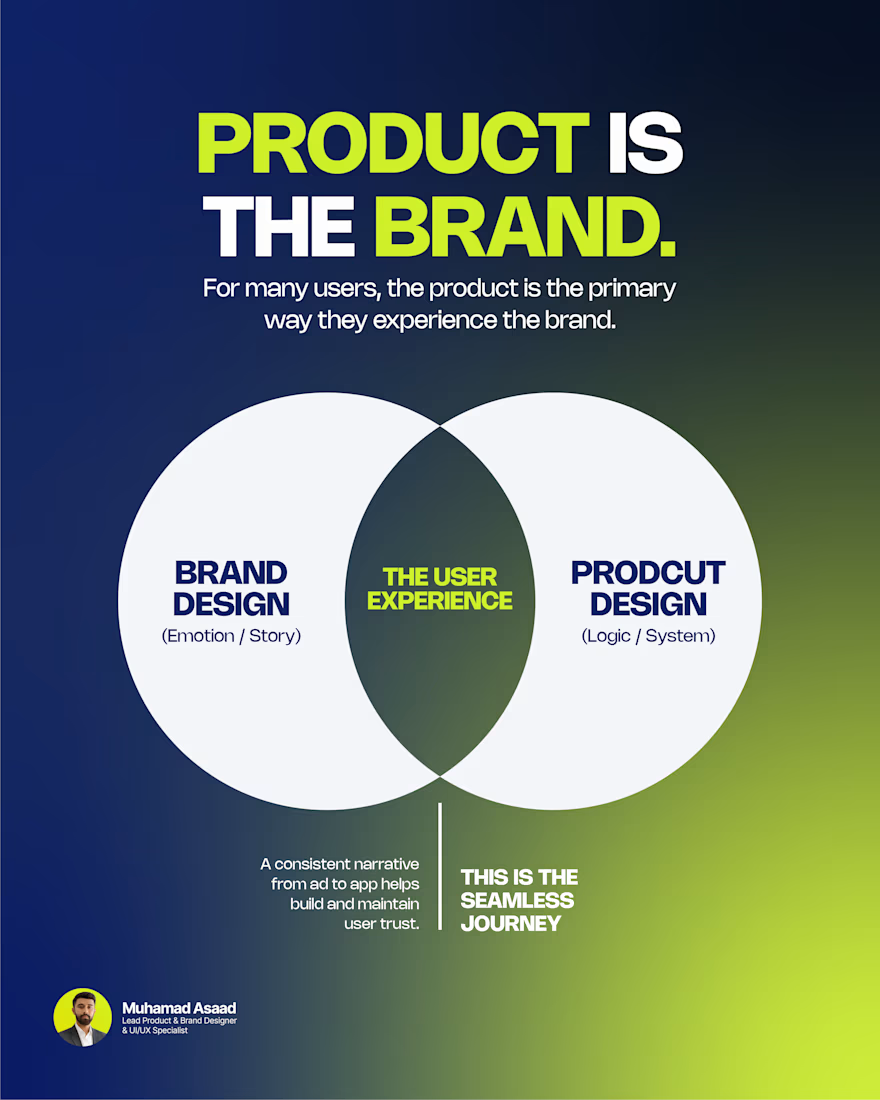
There's often a gap between 𝐛𝐫𝐚𝐧𝐝 𝐝𝐞𝐬𝐢𝐠𝐧 and 𝐩𝐫𝐨𝐝𝐮𝐜𝐭 𝐝𝐞𝐬𝐢𝐠𝐧, and users notice it more than we think.
1️⃣ Brand design focuses on emotion, perception, and creating a memorable first impression.
2️⃣ Product design focuses on usability, functionality, and helping users accomplish their goals with minimal friction.
Both are essential, but when they don't work together, the user experience starts to feel disconnected.
𝐓𝐡𝐢𝐧𝐤 𝐚𝐛𝐨𝐮𝐭 𝐢𝐭:
🎯 You discover a beautifully crafted ad, website, or landing page that feels modern, polished, and premium.
😕 You sign up, log in, and suddenly find yourself navigating a product that feels generic, confusing, or completely different from what was promised.
❌ At that moment, trust begins to erode.
❌ The challenge isn't that either discipline is wrong.
⚠️ The challenge is that they're often designed in isolation.
✅ The strongest digital experiences happen when brand and product design work as a single, continuous experience.
𝐀 𝐟𝐞𝐰 𝐰𝐚𝐲𝐬 𝐭𝐨 𝐛𝐫𝐢𝐝𝐠𝐞 𝐭𝐡𝐞 𝐠𝐚𝐩:
1️⃣ 𝐁𝐫𝐢𝐧𝐠 𝐭𝐡𝐞 𝐛𝐫𝐚𝐧𝐝 𝐢𝐧𝐭𝐨 𝐭𝐡𝐞 𝐝𝐞𝐬𝐢𝐠𝐧 𝐬𝐲𝐬𝐭𝐞𝐦.
Brand identity shouldn't stop at the marketing website. Typography, color, motion, tone, and personality should be reflected throughout the product experience—from onboarding flows to empty states and loading screens.
2️⃣ 𝐁𝐫𝐢𝐧𝐠 𝐩𝐫𝐨𝐝𝐮𝐜𝐭 𝐢𝐧𝐭𝐨 𝐭𝐡𝐞 𝐛𝐫𝐚𝐧𝐝 𝐬𝐭𝐨𝐫𝐲.
A brand is not defined only by its messaging. It's shaped by every interaction users have with the product. If the experience is frustrating, no amount of marketing can compensate for it.
3️⃣ 𝐃𝐞𝐬𝐢𝐠𝐧 𝐟𝐨𝐫 𝐜𝐨𝐧𝐬𝐢𝐬𝐭𝐞𝐧𝐜𝐲, 𝐧𝐨𝐭 𝐣𝐮𝐬𝐭 𝐚𝐞𝐬𝐭𝐡𝐞𝐭𝐢𝐜𝐬.
Users don't separate the brand from the product. They experience them as one journey. Every touchpoint should reinforce the same promise, values, and level of quality.
The most successful products don't just look good and work well.
They create a seamless connection between what users expect and what they experience.
That's where trust is built.
What are your thoughts? Should brand and product design be more closely integrated?
The network for creativity
Join 1.25M professional creatives like you
Connect with clients, get discovered, and run your business 100% commission-free
Creatives on Contra have earned over $150M and we are just getting started





Related posts


The thing I keep relearning: a design is never finished because someone ran out of ideas. It's finished because someone decided to stop. Knowing when to stop is the hardest part.


Damn.... Crazy colors 👏😍

Next intelligence. A brand you can feel.
Ice blue, deep black and refracted glass bring texture, depth and a sense of touch to an invisible technology. An identity designed to be recognised. And felt.
Brand identity and visual direction for Niwos, a platform that brings AI agents together as a digital workforce.
Five modules. One W. A simple idea at the heart of the identity: working as one.
I’ve really enjoyed working on this project with Muhammed. His trust in my design judgement and openness to new ideas gave me the creative freedom to explore fully.
Here’s hoping this is just the first chapter of an exciting journey with him and his team.


👍 nicely done


Does an AI brand still need to look like an AI brand?
Lupr helps small and growing businesses adopt AI without the complexity, so the identity needed to do the same.
We built a clean, approachable system around movement, connection and continuous improvement, without leaning on the usual futuristic tech clichés.
The idea was simple: make AI feel like useful business infrastructure, not something you need to be an expert to understand.
As AI becomes part of everyday business, do you think brands still need to visibly signal “AI”?
Full case study below 👇


Great design it feels alive 🎉🎉❤️❤️


